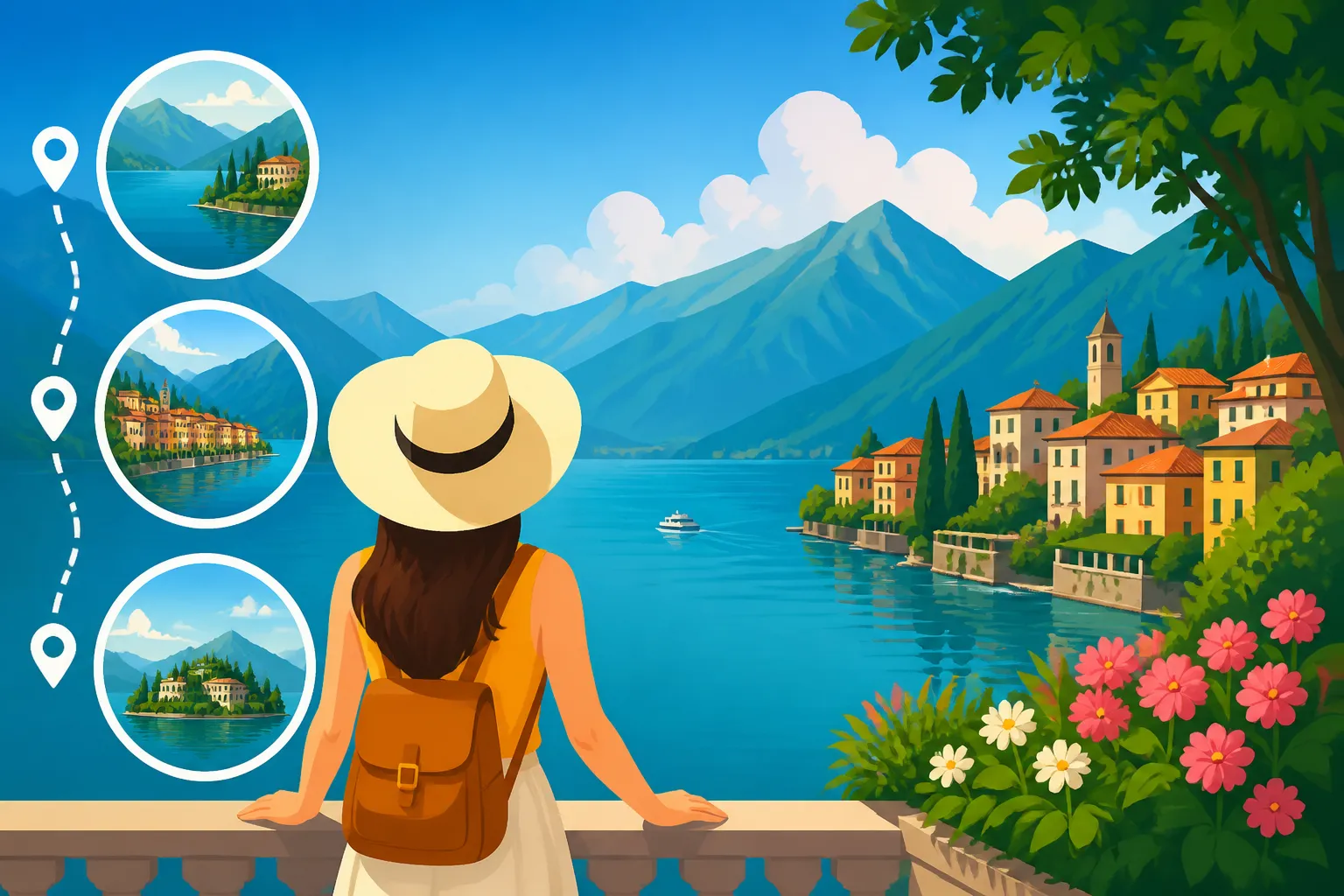
How to See the Italian Lakes in Three Days
Many first-time visitors arrive in Northern Italy with a dream of seeing every major lake in one weekend, only to find themselves trapped in grueling traffic on narrow winding roads or staring at confusing ferry timetables. This guide solves the "over-ambition" trap by providing a realistic, high-impact three-day itinerary focusing on the western lakes, ensuring you spend more time sipping prosecco by the water and less time stressing over logistics.
Disclosure: This post may contain affiliate links. We may earn a commission at no extra cost to you if you make a purchase through these links. Read full disclosure.
Planning Your Three-Day Escape: Choosing the Right Base
The biggest mistake travelers make is trying to hop between Lake Garda, Lake Como, and Lake Maggiore in seventy-two hours. Having lived here through many peak seasons, I can tell you that the geography is deceptively challenging. These lakes are separated by mountain ridges and dense urban traffic around Milan. To actually enjoy your trip, you must choose a cluster. For a three-day window, focusing on Lake Como and Lake Maggiore is the most logical choice because they are relatively close to one another and easily accessible from Milan’s Malpensa airport.
When deciding where to sleep, I always recommend the "Mid-Lake" area of Como or the town of Stresa on Maggiore. If you try to stay in the city of Como itself, you’ll spend half your day just commuting by boat to reach the famous villas. Instead, look at options on Booking.com for towns like Varenna or Menaggio. These spots put you right in the heart of the action. Varenna is particularly special because it has a direct train link to Milano Centrale, making it a dream for those avoiding the stress of Renting a Car in Italy: ZTLs, Insurance, and Driving Tips.
If you are coming from further afield, such as Rome or Florence, you’ll likely arrive via High-Speed Trains in Italy: Trenitalia, Italo, Routes, and Savings. From Milano Centrale, you can use Omio to quickly check the regional connections to the lakes. Using Omio helps you avoid the often-crowded ticket machines at the station and ensures you have your digital ticket ready for the conductor. Once you arrive at the lakeside, your primary mode of transport should shift from rails to the "battello" (ferry).
Day 1: The Elegance and Glamour of Lake Como
Lake Como is the crown jewel for a reason, but it can be overwhelming if you don’t have a plan. I suggest starting your first day in Varenna. It’s less crowded than Bellagio and arguably more picturesque with its "Walk of Lovers" hugging the cliffside. Grab a quick espresso at a bar near the ferry terminal—just remember to follow the local Coffee Culture in Italy: How to Order Like a Local so you don't accidentally pay the "sitting down" tax for a thirty-second drink.
By mid-morning, take the short ferry hop over to Bellagio. Yes, it’s touristy, but the "Pearl of the Lake" is essential. The trick to Bellagio is to get away from the waterfront shops and climb the steep stone staircases (salite) toward the top of the town. This is where you’ll find the quiet silk boutiques and the local leather artisans. For lunch, skip the places with picture menus and look for a small "trattoria" tucked away in the backstreets. If you're worried about quality, my advice on How to Find Authentic Restaurants in Italy (Not Tourist Traps) will help you spot the difference between a microwave meal and a handmade lasagna.
The highlight of your afternoon should be a visit to Villa del Balbianello. Located on the Lenno peninsula, it’s a masterpiece of terraced gardens and loggias. It has served as a backdrop for everything from James Bond to Star Wars. I strongly advise booking a guided tour through GetYourGuide in advance. During the summer, walk-in tickets for the interior of the villa are nearly impossible to secure. The garden tickets are usually available, but seeing the private collections inside is what truly rounds out the experience. Wrap up your day by taking a slow boat back to your base, watching the sunset turn the Grigna mountains a dusty pink.
Day 2: The Grandeur of Lake Maggiore and the Borromean Islands
On your second day, head west to Lake Maggiore. If you have a car, it’s a beautiful drive through the hills of the Varesotto, but watch out for the local drivers who treat these narrow bends like a Formula 1 track. If you’re using public transit, you’ll likely need to head back through a hub like Saronno or Milan, so check your schedules carefully on Omio to minimize waiting times. Lake Maggiore has a completely different vibe than Como; it feels wider, grander, and more "Old World" aristocratic.
Your main destination is Stresa, a town that feels like it’s frozen in the Belle Époque era. From the Lido in Stresa, you can catch the hop-on-hop-off ferries to the Borromean Islands. Do not let the private boat touts overwhelm you; the official public ferry is reliable and affordable. Start with Isola Bella. The Borromeo Palace here is an exercise in baroque excess, featuring grottoes covered in shells and pebbles to escape the summer heat. The gardens are even more famous, home to white peacocks that roam among ten tiers of statues and rare plants.
After the sensory overload of Isola Bella, take the boat to Isola dei Pescatori (Fishermen’s Island) for lunch. This is the only island inhabited year-round, and its narrow, winding alleys are a delight to explore. Order the "persico" (perch), a local lake fish usually served with risotto. As you walk through the small church and the local cemetery, you’ll get a glimpse into Italian Customs, Etiquette, and Social Life that you simply won't find in the more manicured villa gardens. If you have time in the late afternoon, the third island, Isola Madre, offers a world-class botanical garden that is much quieter and more tranquil than its siblings.
Comparing the Logistics: Como vs. Maggiore
| Feature | Lake Como | Lake Maggiore |
|---|---|---|
| Primary Hub | Varenna / Bellagio | Stresa |
| Vibe | Dramatic, steep, glamorous | Wide, aristocratic, serene |
| Best Transport | Mid-lake passenger ferries | Borromean island ferries |
| Top Landmark | Villa del Balbianello | Isola Bella Palace |
| Train Access | Direct from Milan to Varenna | Direct from Milan to Stresa |
| Crowd Levels | Very high (April – Oct) | Moderate to high |
Day 3: Hidden Gems or a Swiss Border Crossing
For your final day, you have a choice: dive deeper into the quiet corners of the lakes or take a quick international detour. If you want to stay on the water, I highly recommend exploring Menaggio on Lake Como’s western shore. It’s the gateway to the Val Menaggio and offers some of the best hiking trails in the region. A walk up to the Rifugio Menaggio provides a panoramic view that helps you understand why The Italian Lakes: Como, Garda, and Maggiore Compared remains a hot topic among travelers—each lake has its own distinct personality and microclimate.
Alternatively, if you started early in Stresa, you could take the "Lago Maggiore Express." This is a spectacular full-day loop that involves a panoramic train ride through the "Hundred Valleys" (Centovalli) in Switzerland and a return by boat across the entire length of Lake Maggiore. You’ll need your passport, even though the border is often invisible. Crossing into Switzerland for a few hours to see Locarno is a fantastic way to see the transition between Italian and Swiss alpine cultures. You can find organized versions of this tour on GetYourGuide if you prefer not to manage the three different tickets (train, scenic rail, and boat) yourself.
Before you head back to Milan for your flight or your next destination, take a moment to breathe. The lakes are meant to be experienced at a slow pace. Don't worry if you didn't see every single villa on the map. The real magic happens when you're sitting on a stone bench in a hidden piazza, watching the local children play while the church bells ring out across the water. While you're enjoying these moments, remember that Staying Safe in Italy: Common-Sense Tips for Travelers still applies—keep an eye on your belongings in crowded ferry terminals, but otherwise, let the "dolce far niente" (the sweetness of doing nothing) take over.
Navigating the Challenges of Lake Travel
One thing no guidebook tells you is how tiring the "lake legs" can be. You will be doing a lot of walking on uneven surfaces. If you are traveling with seniors or young children, prioritize the larger ferries (the ones that carry cars) as they are more stable and have more seating than the fast "aliscafo" (hydrofoil) boats. Also, be aware that the ferry schedules change significantly between the "season" (Easter to October) and the winter months. Always double-check the "Orario" posted at the docks or use the official Navigazione Laghi website.
Another reality of the Italian Lakes is the weather. Even in July, a sudden thunderstorm can roll off the Alps and cancel ferry services for an hour or two. Have a backup plan involving a long lunch or a visit to a museum like the Silk Museum in Como city. Most importantly, book your accommodation early. Using Booking.com at least three to four months in advance is essential if you want a room with a lake view without paying a fortune. The best spots in Varenna and Stresa go fast, and you don't want to end up in a roadside hotel five miles away from the water.
Finally, keep your transit tickets organized. Whether you are using Regional Trains in Italy: How to Use Them and Save or the local bus network, having your digital confirmations in one folder on your phone will save you a lot of grief. The Italian bureaucracy can be frustrating, but being prepared with your Omio or GetYourGuide barcodes makes the process much smoother. Enjoy the views, eat the gelato, and remember that three days is just enough time to fall in love with the lakes—and plan your return trip.
Disclaimer
The information provided in this guide is for informational purposes only. Travel regulations, ferry schedules, and business operating hours in Italy can change without notice. While we strive to provide the most accurate and up-to-date advice based on local expat experience, readers are encouraged to verify specific details such as visa requirements and transport strike schedules before their trip. This guide does not constitute legal or professional travel insurance advice.