Italian Train Classes Explained: Standard, Premium, Business, Executive
Navigating the labyrinthine world of Italian trains can feel like deciphering an ancient scroll, especially when you’re staring at ticket options like "Standard," "Premium," "Business," and "Executive." It’s a common frustration, trying to figure out if that extra cost is truly worth it for a journey across the peninsula. This guide is here to untangle the complexities of Italian train classes for both Trenitalia and Italo, helping you make informed decisions and find the perfect seat for your next adventure with ease, especially when you use a reliable platform like Omio.
Disclosure: This post may contain affiliate links. We may earn a commission at no extra cost to you if you make a purchase through these links. Read full disclosure.
Navigating the Italian Train System: A First Look at Classes
When you first arrive in Italy, or even after living here for a while, the train system can be a bit of a puzzle. Unlike some other countries where train travel is straightforward with just one or two classes, Italy throws a few more options into the mix, especially on its high-speed routes. It’s not just about getting from point A to point B; it’s about how you get there, and the experience can vary dramatically depending on the class you choose.
Why Understanding Classes Matters for Expats and Tourists
For us expats, and for tourists too, understanding these classes isn't just about comfort; it's about value, expectations, and frankly, avoiding a bit of travel stress. Imagine booking what you think is a decent seat, only to find yourself crammed with little legroom for a three-hour journey. Or perhaps you're on a budget, but accidentally book the most expensive option, blowing through your gelato fund before you even arrive. Knowing what each class offers means you can align your ticket purchase with your actual needs and budget. It means you can decide if the complimentary prosecco in Business class is worth the splurge for a special occasion, or if a comfortable Standard seat is perfectly fine for a quick hop. Plus, it helps manage those often-unspoken expectations about Italian service – sometimes a little extra investment goes a long way in making your journey smoother.
The Major Players: Trenitalia vs. Italo
Before we dive into the nitty-gritty of each class, it's crucial to understand that Italy's high-speed rail network is primarily served by two main companies: Trenitalia and Italo. Think of them like rival airlines, each with their own fleet, pricing strategies, and, yes, their own distinct set of class offerings.
Trenitalia is the state-owned, older, and more widespread network. It operates not only the super-fast "Frecce" (Frecciarossa, Frecciargento, Frecciabianca) services that connect major cities but also a vast network of regional and intercity trains. Its high-speed trains, particularly the Frecciarossa, are renowned for their speed and extensive routes. Then there's Italo, a privately owned competitor that burst onto the scene in 2012, offering a more modern, sleeker fleet and often a more consistent passenger experience focused exclusively on high-speed routes between key cities like Rome, Milan, Florence, and Naples. The classes, services, and even the general vibe on an Italo train can be quite different from Trenitalia, so understanding who you’re booking with is the first step. When you use a platform like Omio, you can easily compare options from both operators side-by-side, which is a real lifesaver when trying to navigate these choices.
Trenitalia's World: Standard, Premium, Business, Executive
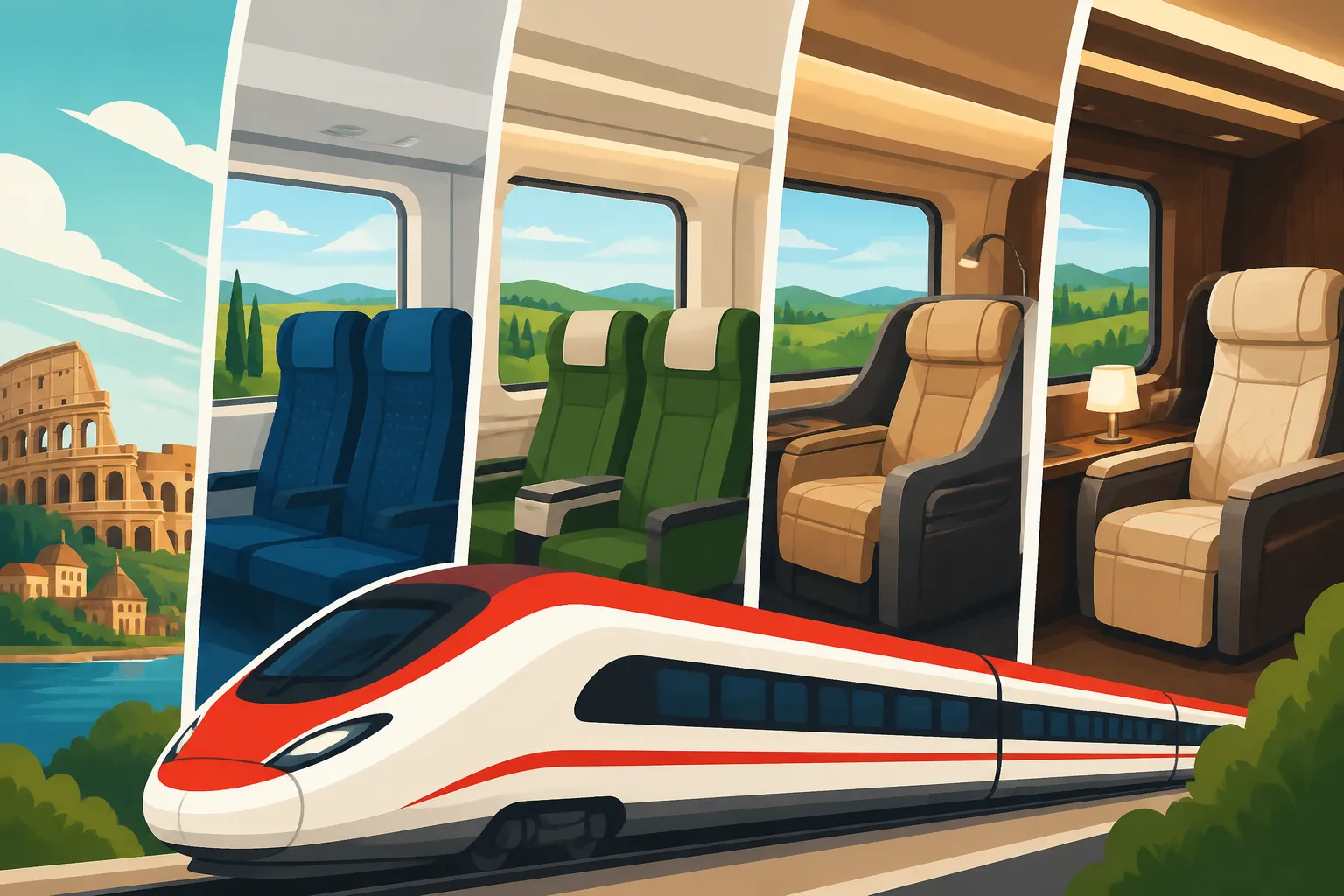
Trenitalia's high-speed Frecce trains, especially the ubiquitous Frecciarossa, are the workhorses of Italian long-distance travel. They offer four distinct classes, or livelli, each designed to cater to different levels of comfort and service. It's not just a fancy name; each step up genuinely adds to your travel experience, from a little extra space to a full-blown executive lounge on rails.
Standard (Livello Standard): The Economical Choice
Standard class on Trenitalia's Frecciarossa is generally where most travelers start, especially if budget is a primary concern. Don't let the "standard" label fool you too much; these aren't your typical cramped commuter train seats. You'll find comfortable, ergonomic seats, typically in a 2+2 configuration, meaning two seats on either side of the aisle. There's usually enough legroom for an average person, and the carriages are clean, well-lit, and air-conditioned. For shorter journeys, say from Florence to Rome, Standard is perfectly adequate.
What you get:
- Comfortable Seating: Reclining seats with individual tray tables.
- Power Sockets: Almost always available at your seat, a godsend for charging devices.
- Free Wi-Fi: While it’s technically available, don't expect blazing speeds, especially when the train is crowded. It's often better for checking emails or light browsing than streaming.
- Luggage Space: Overhead racks and designated areas at the end of the carriage. It’s sufficient for most suitcases, but if you’re traveling heavy during peak times, finding space might be a bit of a wrestle.
What you don't get:
- Complimentary Food/Drink: You'll need to head to the Bistro car or bring your own snacks.
- Extra Space: It's standard seating, so it's efficient but not overly spacious.
- Dedicated Service: No dedicated staff tending to your specific carriage needs.
Standard class is a solid choice for those who prioritize cost-effectiveness and simply need a comfortable, reliable ride. It's far superior to most long-distance buses and often faster than flying once you factor in airport transfers.
Premium (Livello Premium): A Step Up in Comfort
If you’re looking for a noticeable upgrade without breaking the bank, Trenitalia’s Premium class hits a sweet spot. This class aims to provide a more relaxed and comfortable environment, ideal for slightly longer journeys or when you just want a bit more breathing room. The seating configuration is often still 2+2, but the seats themselves are wider, more padded, and offer greater recline. The atmosphere feels a tad more refined, usually with softer lighting and a generally quieter carriage compared to Standard.
What you get:
- Wider, More Reclining Seats: A noticeable increase in comfort and personal space.
- Welcome Drink and Snack: Often includes a choice of coffee, tea, soft drink, or juice, along with a sweet or savory snack. This is a lovely touch, especially on an early morning journey.
- Newspapers/Magazines: Usually a selection of Italian daily newspapers or magazines are offered, though this can vary.
- Enhanced Ambiance: Carriages often feature different color schemes and better sound insulation, contributing to a more tranquil journey.
Premium is great for those two-to-three-hour trips, or even longer, where you want to relax, read, or get some work done without feeling squashed. It’s an ideal compromise between budget and luxury.
Business (Livello Business): For the Discerning Traveler
Business class on Trenitalia is where the experience starts to feel genuinely premium, catering to both business travelers and tourists willing to pay for significant comfort. Here, you'll find even more spacious seating, typically in a 2+1 configuration, meaning a single seat on one side of the aisle and a pair on the other. This immediately offers more privacy and personal space. There are also designated "Salottino" (private compartments for 4 people) or "Area Silenzio" (quiet zones) within Business class, perfect for focused work or quiet contemplation.
What you get:
- Very Spacious Seating: Wide, comfortable leather seats with generous recline and ample legroom.
- Welcome Service: A wider selection of hot/cold drinks and snacks, often served at your seat.
- Access to Freccialounge/Frecciabistrò (often): Depending on the ticket type and station, you might have access to Trenitalia’s lounges.
- Dedicated Luggage Space: More generous and often less contested space for your bags.
- Fast Track: In some major stations, Business class tickets might grant you access to fast-track security lanes.
Business class is highly recommended for longer journeys (over three hours), for those needing to work comfortably, or if you simply want to arrive feeling refreshed and unhurried. The extra space and at-seat service genuinely enhance the travel experience. If you’re planning a significant trip across Italy, comparing Business class options on Omio can show you how much more comfortable your journey could be.
Executive (Livello Executive): The Ultimate Luxury Experience
Trenitalia's Executive class is the crème de la crème, designed for the most discerning travelers who demand unparalleled comfort, privacy, and service. It’s typically found only on the newest Frecciarossa 1000 trains and offers an experience akin to first-class air travel. There are only a handful of seats per Executive carriage, arranged in a luxurious 1+1 configuration, with full swivel armchairs that can rotate 180 degrees. This is less about getting from A to B and more about the journey itself.
What you get:
- Private, Swiveling Armchairs: Incredibly spacious, fully reclining, and capable of turning to face your travel companion or the window.
- Gourmet Meal Service: A full, multi-course gourmet meal served at your seat, often designed by renowned chefs, complete with wine, coffee, and digestifs.
- Dedicated Attendant: A personal onboard attendant caters to your every need.
- Access to Freccialounge/Frecciabistrò: Guaranteed access to Trenitalia's executive lounges at major stations, offering refreshments, Wi-Fi, and a quiet space before or after your journey.
- Fast Track and Priority Boarding: Seamless travel through stations.
- Unlimited Drinks and Snacks: A comprehensive menu of beverages and snacks available throughout the journey.
Executive class is an indulgence, perfect for very long journeys, special occasions, or when you simply want to experience the absolute best in Italian train travel. It's an investment, but for some, the exclusivity and impeccable service are well worth it.
Italo's Offerings: Smart, Prima, Club Executive
Italo, the private high-speed operator, presents a slightly different, more streamlined set of classes, but with a similar philosophy of escalating comfort and services. Many expats find Italo's trains to be consistently modern and clean, often with a slight edge in terms of contemporary design and technology. If you're looking for a smooth, no-frills booking experience and modern trains, Italo is often a great bet, and platforms like Omio make it simple to compare its fares with Trenitalia's.
Smart (Ambiente Smart): Italo's Entry-Level Experience
Italo's Smart environment is their equivalent of Trenitalia's Standard class, and it's a solid, budget-friendly option. The trains are sleek, modern, and provide a pleasant travel environment. Seating is typically in a 2+2 configuration, offering decent legroom and comfortable seats. Smart is generally well-maintained and provides a good baseline experience for high-speed travel across Italy.
What you get:
- Comfortable Seating: Ergonomic seats with individual tray tables.
- Power Sockets: Available at every seat.
- Free Wi-Fi: Generally reliable, allowing for basic browsing and email.
- Vending Machines: Unlike Trenitalia, Italo Smart carriages often have dedicated vending machines for snacks and drinks, which can be convenient.
Italo Smart is an excellent choice for short to medium-distance journeys where affordability and modern comfort are key. It often feels a bit more contemporary than some of Trenitalia's older Standard carriages, though both offer good value.
Prima (Ambiente Prima): Enhanced Comfort and Services
Stepping up to Italo's Prima class brings a noticeable boost in comfort and service, akin to Trenitalia's Premium or a slightly less formal Business class. The seats are wider, recline more generously, and offer increased personal space, often in a 2+1 configuration depending on the carriage type. The atmosphere is calmer and more spacious, making it ideal for longer journeys where you want to feel a bit more pampered without the Executive price tag.
What you get:
- Wider, More Comfortable Seats: Significant improvement in personal space and cushioning.
- Welcome Service: Includes a choice of hot/cold drinks and a sweet or savory snack, served at your seat.
- Newspapers/Magazines: A selection is usually available.
- Dedicated Luggage Space: Often more clearly marked and slightly more abundant than in Smart.
- Access to Lounge (optional add-on): For an additional fee, Prima ticket holders can sometimes access Italo Club Lounges, which is a nice perk if you have a long wait.
Prima class is a fantastic option for those traveling for work or leisure who appreciate enhanced comfort and a small touch of luxury. It’s a popular choice for routes like Milan to Rome, providing a relaxed and productive environment. It's truly a sweet spot for value and comfort on longer trips, and you can easily secure your spot via Omio.
Club Executive (Ambiente Club Executive): Italo's Top Tier
Italo's Club Executive is their most luxurious offering, designed for maximum comfort and privacy, similar to Trenitalia's Executive but with Italo's distinctive modern flair. These carriages are truly exclusive, with very few seats arranged in a 1+1 configuration, featuring extra-wide, reclining armchairs. It’s an environment designed for ultimate relaxation or concentrated work, offering a high degree of privacy that is rarely found on public transport.
What you get:
- Extra-Wide, Reclining Leather Armchairs: Exceptional comfort, ample space, and often with adjustable headrests.
- Dedicated Catering Service: An enhanced menu of fresh, seasonal food, hot and cold beverages, and an alcoholic selection, all served at your seat.
- Access to Italo Club Lounges: Guaranteed access to Italo's stylish lounges at major stations, offering complimentary refreshments and Wi-Fi.
- Fast Track and Priority Boarding: Expedited passage through stations.
- Personal Welcome Service: A dedicated crew member ensures your journey is smooth and pleasant.
- Individual Screens (on some trains): On certain trains, Club Executive seats come with individual screens offering entertainment.
Club Executive is the ultimate Italian train travel experience with Italo, perfect for those who value privacy, gourmet dining, and personalized service. While it comes at a premium, it transforms a journey into a truly enjoyable part of your Italian adventure.
Beyond the Basics: What Each Class Really Gives You
When you're shelling out your hard-earned euros for a train ticket, you want to know exactly what you're getting, right? It's more than just a seat; it's about the entire travel ecosystem the class creates. Let's dig a little deeper into the tangible differences.
Seating, Space, and Privacy Differences
This is arguably the most significant differentiator between classes. In Standard (Trenitalia) and Smart (Italo), you're looking at a 2+2 arrangement, which is perfectly fine for many, but it's efficient, not sprawling. Your knees might touch the seat in front if you're tall, and a full carriage means close quarters. Think of it like economy class on a short-haul flight – functional.
Move up to Premium (Trenitalia) or Prima (Italo), and you immediately feel the difference. Seats are noticeably wider, the recline is more generous, and crucially, the pitch (distance between rows) increases. This means more legroom and elbow room, reducing the feeling of being cramped. Italo's Prima often features a 2+1 configuration on certain trains, which is a real game-changer for solo travelers seeking a single seat away from the aisle. Trenitalia also offers "Area Silenzio" (quiet zones) in some Premium carriages, great for getting some peace.
Then you have Business (Trenitalia) and Club Executive (Italo), where seating configurations often become 2+1 or even 1+1. This is where privacy truly kicks in. The single seats are highly coveted, offering an uninterrupted view and plenty of space. Trenitalia's Business even has "Salottino" sections, small private compartments for four people, perfect for families or small groups who want their own little bubble. Italo's Club Executive is all about that 1+1 layout with truly expansive, reclinable, often swiveling seats. It's like having your own little cabin within the train. These aren't just minor adjustments; these are fundamental shifts in personal space that can significantly impact a long journey.
Amenities and Services: Wi-Fi, Food, and Luggage
The perks start piling up as you ascend the class ladder. In Standard/Smart, Wi-Fi is generally available, but it can be spotty, especially in tunnels or rural areas, and not always robust enough for heavy streaming. You'll need to trek to the Bistro car or vending machines for food and drinks. Luggage space is overhead or at the ends of the carriage, and in crowded times, it's a first-come, first-served free-for-all.
Premium/Prima elevate this with a complimentary welcome drink and a snack served at your seat. It's a small gesture, but it makes a difference, especially if you're rushing to catch the train. Wi-Fi is still there, and sometimes a bit more stable due to fewer users. Luggage space is often the same, but the overall less crowded environment can make it easier to find a spot.
In Business/Club Executive, this is where comprehensive service shines. Wi-Fi is often more reliable, and you get a much broader selection of complimentary beverages and snacks, sometimes a full meal. Trenitalia’s Executive and Italo’s Club Executive offer full gourmet meals at your seat, often with multiple courses and a wine selection. Luggage is also handled better; there's usually more dedicated space, and with fewer passengers, you're not battling for every inch. Crucially, Business and Executive passengers often gain access to the dedicated Freccialounge (Trenitalia) or Italo Club Lounges at major stations. These lounges are a haven of peace with free Wi-Fi, refreshments, and comfortable seating, invaluable for waiting out delays or just relaxing before boarding. If you're planning a trip and want to maximize your time and comfort, comparing these benefits on Omio can show you where the real value lies.
Ticket Flexibility and Perks
Beyond the physical comforts, the higher classes often come with enhanced ticket flexibility, which can be a huge bonus when dealing with unpredictable travel plans in Italy.
Standard/Smart tickets are typically the least flexible. While there are often different fare options (e.g., Super Economy, Economy, Base), the cheapest ones are usually non-refundable and non-changeable, or come with hefty fees. If you miss your train, you're usually out of luck.
As you move into Premium/Prima and especially Business/Club Executive, tickets often include greater flexibility. This could mean free or low-cost changes to your travel date or time, or even being able to get a refund (though typically not 100%). This can be a huge stress-reducer, particularly if you’re traveling for business or have connecting flights that could be delayed. Some Business/Executive tickets also offer Fast Track services at major stations, allowing you to bypass queues for security checks (where applicable) and board more smoothly. This might seem minor, but if you've ever dealt with the chaos of a busy Italian train station, any shortcut is a welcome one.
Choosing the Right Class for Your Journey
Deciding which class to book isn't always straightforward. It depends on a mix of your budget, the length of your journey, and what you prioritize in your travel experience. It’s a bit like choosing a hotel room – do you need a basic, clean place to sleep, or do you want a full-service experience?
Budget Traveler vs. Comfort Seeker: A Comparison
For the budget traveler, Standard on Trenitalia or Smart on Italo are your go-to options. They offer reliable, air-conditioned, high-speed travel at the lowest price point. You'll get to your destination quickly and comfortably enough for most journeys under two to three hours. These classes are perfect if you're backpacking, keeping costs low, or simply don't mind a bustling environment. Just remember to bring your own snacks and perhaps a portable charger if you're prone to running low on battery. For those exploring Italy on a tight budget, choosing these basic classes allows you to save funds for delicious pasta or that extra gelato.
On the other hand, the comfort seeker might find themselves drawn to Premium or Prima as an excellent compromise. The slightly wider seats, extra recline, and complimentary welcome service make a tangible difference in relaxation. If you're a bit taller, or just value personal space, this upgrade is usually worth the extra few euros, especially for mid-range journeys. You're still not paying top-tier prices, but you're getting a much more relaxed environment.
If you're truly all about the luxury experience or need to work uninterrupted, Business or Club Executive are the clear winners. The space, the dedicated service, the gourmet food, and lounge access transform the journey. This is where you pay for peace of mind, productivity, and an elevated travel experience. It's a splurge, yes, but for some, the benefits far outweigh the cost, particularly on long hauls like Rome to Turin. When you're ready to book, using a platform like Omio can really simplify things, allowing you to filter by class and see exactly what each option offers, removing the guesswork.
When to Splurge: Long Journeys and Special Occasions
So, when is it really worth the extra investment?
- Long Journeys: If you're on a multi-hour trek, say from Naples to Milan, the difference between Standard and Business or Executive can be profound. What starts as a tolerable Standard experience can become cramped and tiring after four or five hours. The ability to stretch out, have a meal served, or simply enjoy a quieter environment in a higher class makes the long journey feel significantly shorter and more pleasant.
- Business Travel: If you need to arrive at a meeting feeling sharp and prepared, or if you need to work during the journey, Business or Club Executive are invaluable. The power outlets, stable Wi-Fi, and spacious, quiet environment are perfect for productivity. Plus, the fast track and lounge access can save you precious time and reduce stress at busy stations.
- Special Occasions: Celebrating an anniversary, a honeymoon, or a significant birthday in Italy? Splurging on Executive or Club Executive can be a wonderful part of the overall celebration. It's an experience in itself, complete with gourmet dining and impeccable service, adding a touch of unforgettable luxury to your trip.
- High-Stress Travel: If you're traveling during peak holiday periods, or if you have tight connections and want to minimize stress, the added comfort and services of a higher class can be a sanity saver. The enhanced flexibility of these tickets can also be a lifesaver if plans go awry.
Ultimately, the decision is personal, but considering the duration of your trip and your personal priorities will guide you to the right choice. Don't forget, comparing prices and benefits across Trenitalia and Italo for your desired class is made simple when you use a booking tool like Omio, which aggregates options from both operators. This is also key for finding the best routes and deals.
Practical Tips and Common Pitfalls
Even with a clearer understanding of train classes, navigating Italian train travel still has its quirks. As an expat who's been through it all, I can tell you there are a few things that can trip up even the most seasoned traveler. Knowing these will make your journey that much smoother.
Booking in Advance and Dynamic Pricing
This is probably the single most important tip for saving money on Italian high-speed trains. Both Trenitalia and Italo operate on a dynamic pricing model, similar to airlines. This means that tickets are almost always cheaper when booked far in advance, sometimes by several months. The closer you get to the departure date, and the more popular the route and time slot, the higher the prices will climb. Waiting until the last minute can see a Standard class ticket costing more than an early-bird Business class fare.
For example, a Frecciarossa ticket from Milan to Rome in Standard might cost €29 if booked two months in advance but could easily be €80-€100 or more just a few days before departure. The same applies to Italo. If you have fixed travel dates, lock in your tickets as soon as possible. This is particularly true for weekends, national holidays, and popular routes like the ones connecting Rome, Florence, and Milan. Using a platform like Omio allows you to easily compare prices over a range of dates, helping you spot the best deals and secure them early.
The Importance of Validating Tickets (for regional trains)
While high-speed train tickets (Frecce and Italo) are tied to a specific seat, date, and time, and therefore do not need to be validated, this is a crucial distinction for regional trains (treni regionali). If you purchase a paper ticket for a regional train, you absolutely must validate it before boarding. Look for the small green or yellow machines, usually near the tracks or inside the station building. Insert your ticket, wait for the stamp or beep, and then you're good to go.
Failing to validate a regional ticket, even if you’ve paid for it, is considered traveling without a valid ticket and can result in hefty fines from the conductor. This is a common pitfall for tourists who are used to high-speed trains and forget the regional rules. If you buy e-tickets for regional trains through a platform like Omio or the Trenitalia app, they usually come pre-validated or are valid for a specific time window, eliminating the need for manual validation. But for physical tickets, always validate!
Luggage Allowances and Onboard Storage
Generally speaking, Italian trains are quite generous with luggage compared to airlines. There aren't strict weight limits, and you typically won't pay extra fees unless your luggage is excessively large or numerous. However, there are practical considerations.
- Overhead Racks: These are suitable for smaller bags, backpacks, and carry-ons.
- End-of-Carriage Racks: Larger suitcases go here. During busy times, these can fill up quickly, and you might have to store your bag further down the carriage than your seat.
- Under-Seat Space: Only very small bags or personal items will fit here.
- Larger Items: Bicycles (sometimes requiring a special fee or reservation, and often dismantled), skis, or musical instruments usually need to be stored in designated areas, or you might be asked to purchase an extra ticket for them on regional services.
In higher classes like Business and Executive, the carriages are less crowded, and there's often more dedicated or simply more available space for your luggage, reducing the scramble for a spot. My advice? Try to travel lighter if possible, especially if you’re moving between cities. Hauling multiple heavy suitcases up and down station stairs or through crowded platforms is no fun. Always keep an eye on your belongings, especially at station stops. For those with significant luggage, checking the specifics on Omio or the operator's website before booking can save you a headache.
| Class Feature | Trenitalia Standard | Trenitalia Premium | Trenitalia Business | Trenitalia Executive | Italo Smart | Italo Prima | Italo Club Executive |
|---|---|---|---|---|---|---|---|
| Seating Config. | 2+2 | 2+2 (wider seats) | 2+1 (more space) | 1+1 (private armchairs) | 2+2 | 2+1 (or wider 2+2) | 1+1 (extra-wide seats) |
| Legroom | Standard | Good | Very Good | Excellent | Good | Very Good | Excellent |
| Recline | Moderate | Good | Very Good | Deep (full swivel) | Moderate | Good | Deep |
| Welcome Drink | No | Yes (simple selection) | Yes (wider selection) | Yes (unlimited, gourmet) | No (vending machines) | Yes (simple selection) | Yes (unlimited, gourmet) |
| Meal Service | No | No | No (lounge access) | Yes (gourmet at seat) | No (vending machines) | No (lounge access) | Yes (gourmet at seat) |
| Wi-Fi | Yes (basic) | Yes (basic) | Yes (better stability) | Yes (best stability) | Yes (basic) | Yes (basic) | Yes (best stability) |
| Power Outlets | Yes | Yes | Yes | Yes | Yes | Yes | Yes |
| Lounge Access | No | No | Yes (Freccialounge) | Yes (Freccialounge) | No | No (optional add-on) | Yes (Italo Club Lounge) |
| Flexibility | Limited | Moderate | High | Very High | Limited | Moderate | High |
| Ambience | Lively | Relaxed | Refined/Quiet | Exclusive | Modern/Lively | Modern/Relaxed | Luxurious/Private |
Disclaimer
The information provided in this guide is intended for general informational purposes only and may not constitute the most up-to-date legal or factual advice. Train schedules, services, and pricing models are subject to change by the operators (Trenitalia and Italo). While every effort has been made to ensure accuracy, conditions can vary. Always check the official websites of Trenitalia and Italo, or use a trusted booking platform like Omio, for the most current details, terms, and conditions before making any travel arrangements.