Italian Fare Types: Base, Economy, and Super Economy Change Rules
Ah, the joys of Italian train travel! It's such a fantastic way to see this beautiful country, but let's be honest, trying to decipher the various fare types and their seemingly cryptic rules can feel like trying to solve a Rubik's Cube blindfolded. Many of us expats have been there, staring at the booking screen, wondering if that "Super Economy" deal is truly a steal or a trap waiting to spring when plans inevitably shift. Fear not, fellow adventurer! This guide is here to untangle the complexities of Italy's train fare system, specifically the "Base," "Economy," and "Super Economy" tickets, and show you exactly what you can, and more importantly, can't do with each, while also highlighting how a platform like Omio can make the whole process much less headache-inducing.
Disclosure: This post may contain affiliate links. We may earn a commission at no extra cost to you if you make a purchase through these links. Read full disclosure.
Demystifying Italian Train Fare Types: Base, Economy, and Super Economy
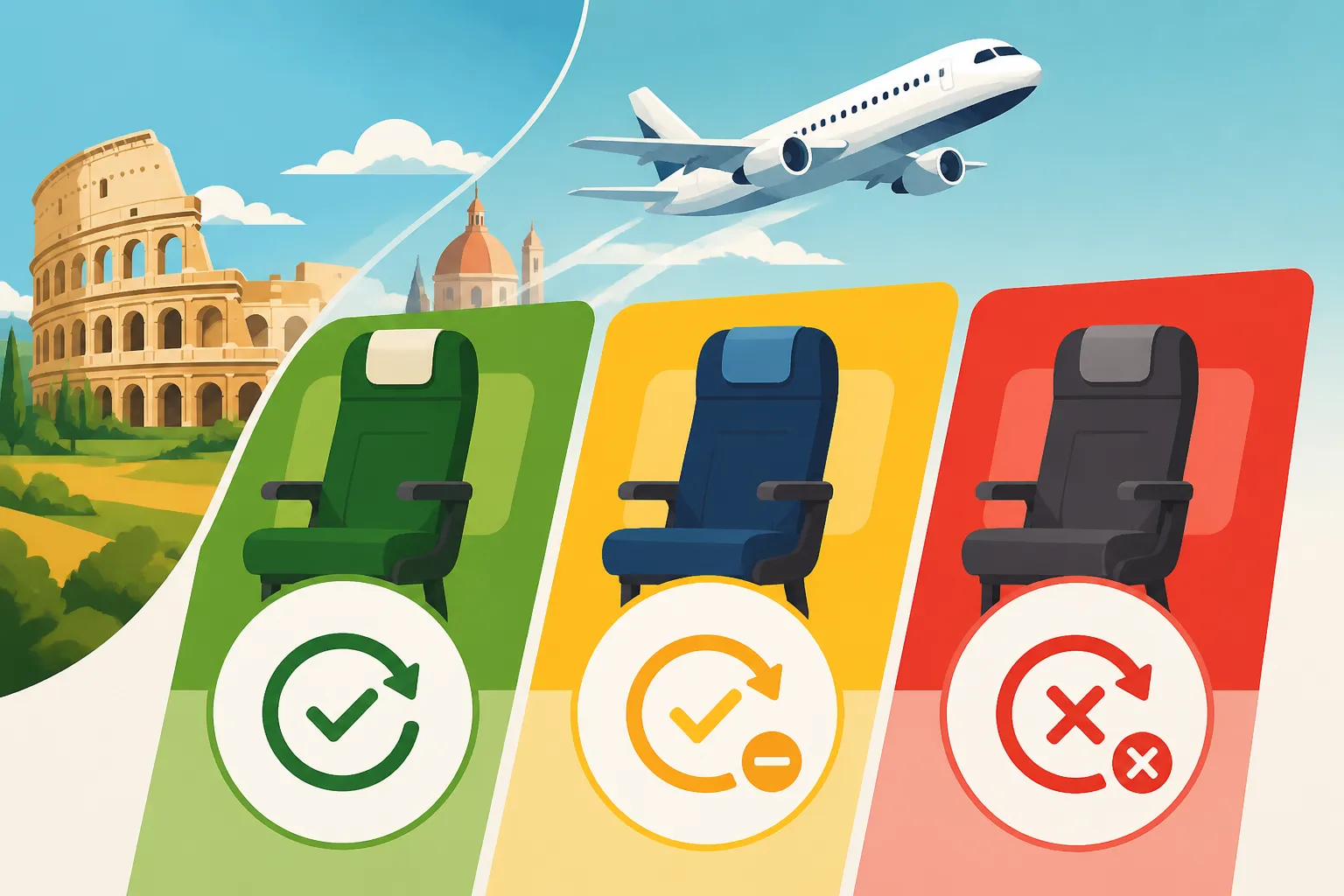
When you go to book a train ticket in Italy, whether it's for a high-speed Frecciarossa or a regional train, you'll primarily encounter three main fare categories: Base, Economy, and Super Economy. Think of them as a sliding scale, where flexibility diminishes as the price drops. It's a system designed to give travelers options, but without understanding the nuances, you might inadvertently opt for a ticket that doesn't suit your travel style or propensity for spontaneous changes.
The "Base" Fare: Flexibility at a Premium
The Base fare, or Tariffa Base, is the most straightforward and, predictably, the most expensive. But here's the thing: you're paying for peace of mind and maximum flexibility. As an expat who's learned the hard way that things often don't go according to plan in Italy, I can tell you that flexibility sometimes feels like a superpower.
What does this flexibility get you? Well, with a Base ticket, you can pretty much change your travel date, time, or even the class of service (if you decide to upgrade to Business or Executive, bella figura!) right up until the train's departure. And yes, you can even get a refund if you cancel your trip, usually with a small administrative fee, up to a certain point before the train leaves. This is a godsend for those unexpected twists life throws your way. Imagine you're on a business trip to Milan, and suddenly a meeting gets rescheduled, or a family emergency calls you back to Rome. With a Base fare, you can simply adjust your ticket without losing your entire investment. It’s also often the default choice if you're booking very last minute, as the other cheaper fares might already be sold out.
"Economy" and "Super Economy" Fares: The Budget-Friendly Balancing Act
Now, let's talk about the more wallet-friendly options: Economy and Super Economy. These are where the real savings often lie, especially if you're planning well in advance or have a rock-solid itinerary. However, these savings come at a cost – a significant reduction in flexibility.
The Economy fare is a step down from Base in terms of price and flexibility. It's designed for those who have a fairly certain travel plan but might still need a little wiggle room. With an Economy ticket, you can generally change the date or time of your journey, but there are catches. You'll usually have to pay a change fee, plus any difference in price if the new ticket is more expensive. This change must typically be made before the original departure time of your train. Crucially, Economy tickets are generally non-refundable. So, if you cancel, you're out of luck. They also don't allow name changes, which can be an issue if you bought a ticket for someone else and they can no longer travel.
Then we have the Super Economy fare. This is the cheapest of the bunch, often offering staggering discounts, especially if you book far in advance. If you're a budget-conscious traveler with unshakeable plans, this is your golden ticket. But here's the brutal truth: Super Economy tickets are extremely restrictive. Once you've bought it, consider it set in stone. Changes to date, time, or name are almost universally not allowed. Refunds? Forget about it. If you miss your train, or your plans change, that ticket is gone, along with your money. It's the ultimate "use it or lose it" fare. I've heard countless stories, and sadly experienced a few myself, where a small change in itinerary meant sacrificing a Super Economy ticket and buying a whole new one at a much higher, last-minute price.
For more general advice on navigating the Italian rail system, you might find our guide on High-Speed Trains in Italy: Trenitalia, Italo, Routes, and Savings incredibly useful, as it delves into the specifics of these major operators.
Navigating the Change and Refund Rules for Each Fare Type
Understanding the different fare types is one thing, but knowing the precise rules for changing or refunding them is where the real knowledge is. This is where most expats get tripped up, often at the most inconvenient times.
Changing Your Base Fare Ticket: The Freedom You Pay For
The Base fare truly lives up to its name when it comes to flexibility. If you've booked a Base ticket with Trenitalia or Italo, you can generally:
- Change the date and time: This is probably the most common change people make. You can move your departure to an earlier or later train on the same day, or even to a different day entirely. Just be aware that if the new ticket is more expensive (e.g., a peak time train or a different class), you'll pay the difference. If it's cheaper, you generally won't get a refund for the price difference.
- Change the class of service: Decided you need more legroom or a quiet carriage for work? You can upgrade your ticket. Again, you'll pay the difference in fare.
- Change the route: This is less common but possible. If you need to go from Rome to Venice instead of Rome to Florence, you can usually adjust this, paying any fare difference.
- Refunds: Base tickets are typically refundable, though usually subject to a small cancellation fee (e.g., 20% for Trenitalia). The refund request must usually be made before the train's scheduled departure.
These changes can usually be made online, at the train station ticket office, or at self-service kiosks. If you're using an aggregator like Omio, the process is often streamlined through their platform, making it easy to see your booking details and available modification options. When plans are up in the air, using Omio to book a Base fare gives you that invaluable layer of protection, allowing you to react to last-minute changes without financial penalty.
The Strictures of Economy and Super Economy: What You Can (and Can't) Do
This is where things get tight, and where many travelers inadvertently learn a hard lesson.
For Economy fares:
- Date and Time Changes: You can change the date or time, but usually only once, and you'll incur a change fee (e.g., €12 for Trenitalia or a percentage for Italo, plus any fare difference if the new ticket is more expensive). This change absolutely must be made before the original departure time of your train. If you miss that window, your ticket becomes invalid.
- Name Changes: Not allowed. If the person traveling is different, you'll need to buy a new ticket.
- Refunds: Generally no refunds. Once bought, that money is committed.
- Route Changes: Usually not allowed.
For Super Economy fares:
- Changes of any kind: Practically impossible. You cannot change the date, time, route, or name on a Super Economy ticket.
- Refunds: Absolutely no refunds.
So, if you snagged a Super Economy ticket from Venice to Naples for a mere €29, and then your flight gets delayed, causing you to miss your train? Poof, that €29 is gone. You'll have to buy a new ticket, likely at the much higher Base fare for a last-minute departure. This is why it's crucial to be absolutely certain of your plans when opting for these deeply discounted tickets. Platforms like Omio make it clear during the booking process which fare type you're selecting and often display the associated rules right there, which is a lifesaver when you're quickly trying to compare options. For those planning longer journeys or trying to adhere to a strict budget, understanding these rules is key to Cost of Living vs Salary: Budget Tips for Italy Expats.
Handy Fare Type Comparison Table
To give you a clearer picture, here's a quick rundown of the main differences between these fare types for high-speed trains (Trenitalia Frecciarossa/Italo):
| Feature | Base Fare (Tariffa Base) | Economy Fare (Tariffa Economy) | Super Economy Fare (Tariffa Super Economy) |
|---|---|---|---|
| Price | Highest | Medium | Lowest |
| Flexibility | High | Limited | Very Limited (Practically None) |
| Changes | Yes, up to departure (with fare diff.) | Yes, once, up to departure (fee + fare diff.) | No changes allowed |
| Refunds | Yes, with fee (up to departure) | No refunds | No refunds |
| Name Changes | Yes (usually free) | No | No |
| Availability | Always available | Limited, typically for advance booking | Very limited, best for early booking |
| Ideal for | Unpredictable plans, business, last-minute | Fairly certain plans, some budget flexibility | Fixed plans, strict budget travel |
Remember, while these are the general rules, minor variations can exist between Trenitalia and Italo, or for specific regional services. Always double-check the exact conditions when booking. Our guide on How to Buy Trenitalia and Italo Tickets and Save Money provides additional tips on finding the best deals.
Strategic Booking: When to Choose Which Fare
Choosing the right fare isn't just about the immediate price tag; it's about evaluating your risk tolerance and the certainty of your travel plans. As an expat who's been here a while, I've learned that sometimes paying a bit more upfront saves a lot of stress (and money) down the line.
When to Splurge on a Base Fare
You should strongly consider a Base fare if:
- Your plans are genuinely uncertain: Perhaps you're waiting on a meeting confirmation, or you're traveling with family members who might get sick or change their minds last minute. The peace of mind of knowing you can adjust without penalty is invaluable.
- You're traveling for business: Business itineraries are notorious for last-minute shifts. A Base fare is often a company expense anyway, and the ability to reschedule is paramount to avoiding missed meetings.
- You're a first-time visitor to Italy: Navigating a new country can be overwhelming. Giving yourself the buffer of a flexible ticket can reduce a lot of anxiety, especially if you get lost or miss a connection.
- You're booking very close to your travel date: Often, the cheaper Economy and Super Economy fares are sold out as the departure date approaches, leaving Base as your only option.
- Traveling with children or elderly companions: Unexpected events are more likely, and having the option to adjust can make the journey smoother for everyone.
Think of it as an insurance policy. It costs more, but it protects you from potential losses if things go awry. Our guide on Getting Around Italy: Trains, Buses, Flights, and Car Hire elaborates on broader transportation strategies.
Maximizing Savings with Economy and Super Economy
These fares are fantastic if you're traveling on a tight budget or your plans are set in stone.
- Fixed itineraries: If you're on a meticulously planned vacation, say a week-long tour of Italy's Regions: A Traveler's Overview with pre-booked accommodation, and you know exactly when you'll be on each train, these fares are ideal.
- Budget-conscious travel: Students, backpackers, or anyone keeping a close eye on their euros will find these fares essential. The savings can be significant, freeing up money for that extra gelato or a delicious pizza.
- Short, uncomplicated trips: A quick hop from Florence to Bologna for a day trip? If you know you'll be on that specific morning train and back on that specific evening train, a Super Economy ticket is perfect.
- Booking far in advance: The best deals for Economy and Super Economy fares appear when tickets are first released, usually several months before the travel date. Snapping them up early can lead to huge savings.
However, remember the strict rules. If you're prone to changing your mind, or if your travel schedule has a lot of variables, these fares might end up costing you more in the long run if you have to re-purchase tickets.
Beyond Fare Types: Other Factors to Consider
Beyond the fare types themselves, there are a few other things to keep in mind when booking your Italian train adventure:
- The Booking Platform: While you can book directly with Trenitalia or Italo, platforms like Omio can save you a lot of hassle. Omio brings together options from both major operators, allowing you to compare prices and schedules side-by-side. This means you don't have to jump between multiple websites to find the best deal, and it's all in English, which is a huge bonus when dealing with potentially confusing Italian terms.
- Travel Insurance: For longer trips, or if you're making significant financial commitments, consider travel insurance. It can offer a safety net for non-refundable tickets if unforeseen circumstances (like illness or a serious emergency) prevent you from traveling.
- Seasonality and Demand: Prices for all fare types will fluctuate based on demand. Peak season (summer, holidays) and popular routes will see higher prices and quicker sell-outs of cheaper fares. Booking in advance is almost always beneficial. Our post on Seasonal Italy: When to Visit and What's On can help you plan your travel timing.
Making Your Italian Train Travel Smoother with Omio
As an expat, I've seen firsthand how platforms that simplify travel logistics can make all the difference. Italian bureaucracy and diverse service providers can be a maze. That's why I heartily recommend a tool like Omio for booking your train tickets here.
Why Omio Simplifies Italian Train Booking
Omio is a multi-modal travel platform that truly streamlines the process, especially when dealing with the nuances of Italian train fares.
- One-Stop Shop: Instead of flipping between Trenitalia's site and Italo's site, Omio aggregates results from both. You see all available trains, times, and importantly, all the Base, Economy, and Super Economy fare options for each. This side-by-side comparison is a game-changer for making informed decisions.
- Clear Information, No Language Barrier: Omio provides all the booking details and fare rules in clear, concise English. This eliminates the guesswork and potential misunderstandings that can arise from navigating Italian-only booking portals or poorly translated pages. When it comes to understanding if that "offerta" is truly flexible, Omio cuts through the confusion.
- Easy Comparison of Fare Types: The platform clearly labels the different fare categories (Base, Economy, Super Economy) and their associated restrictions, allowing you to instantly weigh the cost savings against the flexibility you need. This direct comparison is invaluable when you're trying to figure out if that Super Economy ticket is worth the risk for your particular trip.
- Mobile Tickets and Easy Access: Once booked, your tickets are readily available on your phone via the Omio app. No need to print, no fumbling with paper tickets at the station – just show your QR code and you're good to go. This convenience is priceless when you're rushing to catch a train.
Using Omio means you spend less time wrestling with booking systems and more time enjoying the beautiful Italian landscape. Whether you're planning a trip from Rome to Florence or venturing further afield, Omio makes navigating Getting Around Italy: Trains, Buses, Flights, and Car Hire incredibly easy.
Real-World Scenarios Where Omio Shines
Let me give you a couple of real-world scenarios where using Omio can really save your bacon, or at least your sanity:
Imagine you're planning a last-minute weekend getaway from Bologna to Rome. You pull up Omio and search for trains. Immediately, you see options from both Trenitalia and Italo, with their respective departure times and, crucially, the different fare types available. You might notice that for some trains, only Base fares are left, while for others, a few Economy tickets are still lingering. Omio clearly presents these choices, making it straightforward to decide if the savings of an Economy ticket are worth giving up some of the flexibility of a full Base fare.
Or, consider this: you've been invited to a spontaneous dinner in Naples next month, and you know you absolutely have to be there. You're certain of the date and time. You hop onto Omio, search for your route, and instantly see a handful of Super Economy fares pop up for incredibly low prices because you're booking far in advance. Because Omio has already clearly laid out that Super Economy means no changes and no refunds, you can confidently grab that cheap ticket, knowing exactly what you're committing to, and celebrate your savings over a plate of pasta later. Omio helps you make these decisions with clarity, preventing those dreaded "I wish I had known" moments. It really is a powerful tool to have in your expat travel arsenal.
Disclaimer
Please remember that while this guide provides comprehensive information based on current practices in Italy, train fare rules and policies can sometimes change. Always double-check the specific terms and conditions of your ticket at the time of purchase, especially directly on the Trenitalia or Italo websites, or through reputable platforms like Omio, which strives to keep its information up-to-date. This article is intended for informational purposes only and does not constitute legal or financial advice.