COVID-19 Testing for Travel in Italy: How It Works
Navigating COVID-19 testing in Italy is highly straightforward once you understand the local healthcare infrastructure. This comprehensive guide covers where to find rapid antigen and PCR tests, expected costs, turnaround times, and how to secure valid medical certificates for your international journey.
Disclosure: This post may contain affiliate links. We may earn a commission at no extra cost to you if you make a purchase through these links. Read full disclosure.
Introduction to COVID-19 Testing for Travel in Italy
In the mid-2020s, the global travel landscape has largely returned to normal. The days of mandatory digital passenger locator forms, widespread quarantine hotels, and universal border testing have vanished, replaced by the familiar ease of presenting a passport and a boarding pass. However, the infrastructure that Italy built to handle mass public health testing did not disappear; it was simply integrated into the everyday medical framework of the country.
Today, getting a COVID-19 test in Italy for travel purposes is a localized, highly efficient process. You no longer need to navigate government mandates to enter the country, but knowing how to access testing is an invaluable tool for your travel arsenal. Many specific travel sectors, particularly the international cruise industry operating out of major Italian ports like Civitavecchia, Genoa, and Naples, occasionally maintain their own private health requirements for vulnerable voyages. Furthermore, expatriates working in specialized fields, such as international healthcare, diplomacy, or global logistics, may still face employer-mandated health screenings before crossing certain borders.
Understanding the difference between an at-home testing kit and a certified travel document is crucial. A simple line on a plastic cassette is not sufficient for international border agents or cruise line doctors; you need official, verifiable documentation. This extensive guide is designed to demystify the entire process of securing a travel-compliant COVID-19 test in Italy. We will explore the specific types of tests available, where to find them, how to book an appointment even if you do not speak Italian, what costs to expect, and what steps to take if your travel plans are unexpectedly derailed by a positive result.
The Shifting Landscape of Travel Requirements
Before you begin searching for a testing clinic in Rome, Milan, or Florence, it is vital to assess whether you actually need a test. The Italian government has lifted all pandemic-era health entry requirements for tourists, business travelers, and returning residents. You can read more about the broader immigration and border policies in our detailed overview of COVID-19 Travel and Entry Requirements for Italy.
Since Italy does not require tests for entry, the need for a test is entirely dictated by your onward destination or your mode of transportation. For example, if you are an expatriate living in Italy and planning a business trip to a nation that still requires medical screening for certain visa classes, you must obtain a test before departing from Italian soil.
Additionally, medical transit requirements are a common reason for testing. If you are traveling with an elderly or immunocompromised family member and plan to utilize specific private medical transport services, the transport company may require a negative polymerase chain reaction (PCR) test for all accompanying passengers.
The most common reason tourists seek testing in Italy today is for maritime travel. While many major cruise lines have dropped universal testing, specific long-haul voyages, transatlantic repositioning cruises, or itineraries visiting highly protected ecological zones may still require passengers to present a negative rapid antigen test taken within forty-eight hours of embarkation. Always meticulously check the terms and conditions of your specific travel carrier before your departure date.
Understanding the Types of COVID-19 Tests Available
If you determine that you need a test for your upcoming journey, you must ensure you request the correct type. Travel authorities and medical institutions are highly specific about which tests they will accept. In Italy, testing terminology is slightly different than in English-speaking countries.
Tampone Rapido (Rapid Antigen Test)
The rapid antigen test, known locally as a tampone rapido or test antigenico rapido, is the most common, accessible, and affordable option for travelers. This test detects specific proteins from the virus and is administered via a nasal swab.
The primary advantage of the tampone rapido is speed. The physical swabbing takes a few seconds, and the clinical results are processed on-site, usually within fifteen to twenty minutes. This test is generally accepted by cruise lines and for most basic travel requirements. However, it is slightly less sensitive than laboratory-based tests. It is crucial to note that while you can buy rapid antigen self-test kits at Italian supermarkets (fai da te kits), these self-administered tests are never valid for official travel certificates because there is no medical professional to verify the identity of the person taking the test.
Tampone Molecolare (PCR Test)
The polymerase chain reaction test, universally known in Italy as a tampone molecolare or simply a PCR test, is the gold standard for diagnostic accuracy. This test detects the genetic material of the virus and is highly sensitive, capable of detecting the virus even when the viral load is incredibly low.
Because the swab must be sent to a specialized laboratory for processing, the turnaround time for a PCR test is significantly longer than an antigen test. In Italy, you can typically expect your PCR results within twenty-four to forty-eight hours, although some private clinics offer expedited “express” PCR tests for a premium fee. You will generally only need a tampone molecolare if your onward destination country explicitly demands it for visa entry, or if you are entering a highly secure medical facility.
Where to Get Tested: The Italian Infrastructure
Italy has decentralized its COVID-19 testing, moving away from large, government-run drive-through centers and integrating the service into the established private and public healthcare infrastructure. As a traveler or expat, you have three primary avenues for securing an official test.
The Italian Pharmacy (La Farmacia)
For a rapid antigen test (tampone rapido), your best, cheapest, and most convenient option is the local pharmacy. Italian pharmacies are ubiquitous, marked by illuminated green crosses that are visible on almost every main street.
During the height of the pandemic, pharmacies erected large white tents on the sidewalks to conduct testing. Today, those tents are gone, and testing is conducted discreetly inside the pharmacy in a dedicated, sanitized clinical room. Not every single pharmacy offers testing, but the vast majority in city centers and tourist zones do. The pharmacist administering the test is a highly trained medical professional. To better understand the expansive role of these vital institutions, including their operating hours and services, explore our guide on Finding and Using Pharmacies in Italy.
Private Medical Clinics and Laboratories
If you require a PCR test (tampone molecolare), or if you prefer a more formal medical environment, you should visit a private medical laboratory (laboratorio di analisi).
There are several large, highly reputable private diagnostic chains operating across Italy, such as Synlab, Lifebrain, and Cerba HealthCare. These clinics specialize in blood work, diagnostics, and viral testing. They are exceptionally clean, efficient, and accustomed to dealing with international clients who need official documentation for travel. While you can sometimes get an antigen test at these labs, they are the absolute best choice when you need a guaranteed PCR test processed by a specific deadline.
Airport and Train Station Testing Centers
If you are unable to get tested in the city before your departure, major Italian transit hubs still maintain private testing facilities. Airports such as Rome Fiumicino (Leonardo da Vinci), Milan Malpensa, and Venice Marco Polo have on-site private clinics (often operated by groups like DataMedica or similar providers) that offer rapid antigen and expedited PCR testing.
While airport testing is incredibly convenient, it should generally be viewed as a backup plan. Airport clinics charge a premium for their location, and if you test positive just hours before your flight, navigating the logistics of isolation and rebooking while standing in the departures terminal is highly stressful.
Step-by-Step Guide to Getting a Pharmacy Test
Securing a rapid antigen test at a local Italian pharmacy is a smooth process, but knowing the exact steps will save you from potential miscommunications.
Step 1: Make an Appointment (Prenotazione)
While some pharmacies in high-traffic tourist areas allow walk-ins for testing, it is always safer to book an appointment (una prenotazione), especially if you are traveling during a busy holiday weekend. You can simply walk into the pharmacy a day or two before you need the test and ask the pharmacist: “Vorrei prenotare un tampone rapido per il viaggio” (I would like to book a rapid test for travel). They will ask for your preferred date and time and write your name in their ledger.
Step 2: Bring the Correct Documentation
When you arrive for your test, you must bring your physical passport. If you are a registered resident of Italy, you can bring your Tessera Sanitaria (Health Card) and your Codice Fiscale (Tax Code), but for international travel certificates, the passport is the most critical document. The pharmacist must link the test result to the exact passport number you will use to cross the border or board the ship.
Step 3: The Administration of the Test
You will be led into a private room. The pharmacist will ask you to lower your mask just below your nose. They will insert a long, thin swab into both nostrils. The process is slightly uncomfortable and may make your eyes water, but it lasts less than ten seconds.
Step 4: Waiting for Results
After the swab, you will be asked to wait in a designated area or step outside the pharmacy for about fifteen minutes while the reagent processes the sample.
Step 5: Receiving the Certificate
Once the test is complete and negative, you must specifically ask for the printed certificate for travel. You can say: “Posso avere il certificato in inglese, per favore?” (Can I have the certificate in English, please?). The pharmacist will print a formal document containing your name, passport number, the date and time of the test, the type of test used, and the negative result, accompanied by an official pharmacy stamp and signature.
Understanding Costs and Turnaround Times
The cost of COVID-19 testing in Italy is no longer subsidized by the government for travel purposes; it is an out-of-pocket expense. However, because the market is highly regulated and competitive, the prices are generally very reasonable compared to North America or Northern Europe.
If you are an expatriate planning your long-term budget, understanding how these out-of-pocket diagnostic costs fit into your broader financial landscape is important. You can find more comprehensive financial information in our guide regarding the Cost of Healthcare in Italy: What Expats Need to Know.
Table: Comparison of Travel Testing Options in Italy
| Test Type | Location / Provider | Estimated Cost | Turnaround Time | Best Used For |
| Rapid Antigen Test (Tampone Rapido) | Local Pharmacy (Farmacia) | €15 – €25 | 15 – 20 Minutes | Cruise ship embarkation, general travel requirements. |
| Standard PCR Test (Tampone Molecolare) | Private Laboratory (Laboratorio di Analisi) | €50 – €80 | 24 – 48 Hours | Strict visa entry requirements, specific airline mandates. |
| Express PCR Test | Private Laboratory / Airport Clinic | €90 – €130 | 2 – 12 Hours | Last-minute travel requirements, missed testing windows. |
| Self-Test Kit (Fai da te) | Supermarket / Pharmacy | €3 – €8 | 15 Minutes | Personal peace of mind ONLY. Not valid for travel. |
Note: Prices can vary slightly by region. Pharmacies in major city centers or airport terminals tend to charge at the higher end of these estimates.
Test Results and the EU Digital Health Format
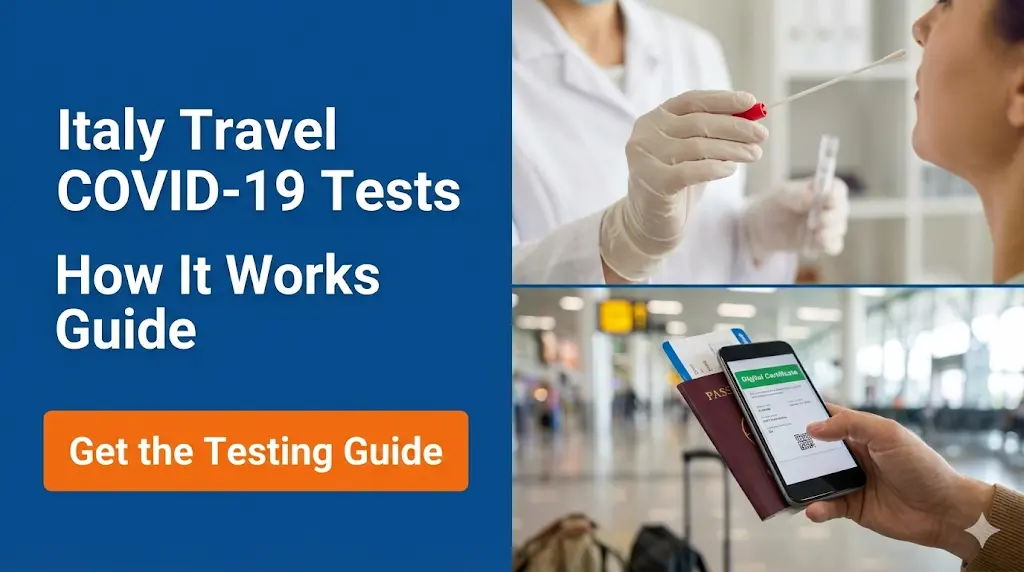
When you receive your official test result in Italy, the format will likely look familiar to anyone who traveled extensively during the early 2020s. Italy utilizes the standard European Union digital health certificate format.
Even though the “Green Pass” is no longer legally required to enter restaurants or museums in Italy, the digital infrastructure is still used by pharmacies and labs to generate medical records. Your printed test certificate will feature a prominent, square QR code.
This QR code is internationally recognized. If an airline agent, border guard, or cruise terminal employee needs to verify the authenticity of your test, they can scan this QR code using a dedicated verification application. The scan will instantly confirm your identity, the time the swab was taken, and the negative result, effectively preventing fraudulent certificates.
In addition to the physical printout, most pharmacies and private laboratories will offer to email the PDF version of the certificate directly to your smartphone. It is highly recommended to have both the digital PDF saved on your phone and the physical paper copy in your travel folder. If your phone battery dies while waiting in a long embarkation line, the physical paper copy will save you from a major logistical headache.
What to Do if You Test Positive Before Your Flight
One of the most anxiety-inducing aspects of travel testing is the possibility of receiving a positive result just hours before your scheduled departure. While the legal mandates surrounding isolation have evolved, testing positive still requires immediate, responsible action.
The Medical Protocol
If your rapid antigen or PCR test returns a positive result, the pharmacist or laboratory technician is legally obligated to register that positive result in the regional health database.
In Italy today, there are no armed guards forcing you into a quarantine hotel. However, the Italian Ministry of Health strongly advises individuals who test positive for COVID-19 to behave responsibly to prevent transmission. If you are positive and actively symptomatic (fever, severe cough), you should isolate yourself in your hotel room or rental apartment until your symptoms subside.
If you must go outside to purchase food or medical supplies, it is highly recommended, and considered basic common courtesy in Italy, to wear a high-quality FFP2 (N95) mask in all public spaces.
Managing Your Travel Plans
A positive official test means you cannot use that certificate to board your flight or your cruise ship. You must immediately contact your airline or travel agent to rebook your passage.
This scenario underscores the absolute necessity of robust travel insurance. A premium travel insurance policy will cover the costs associated with a sudden trip interruption due to a documented illness. Your insurance can reimburse you for the cost of extending your hotel stay, the penalty fees for changing your flights, and any necessary medical consultations.
Seeking Medical Treatment
For the vast majority of healthy travelers, a positive COVID-19 result will mean a few days of resting in a hotel room with over-the-counter flu medication. However, if your symptoms become severe—if you experience a persistently high fever, severe chest pressure, or difficulty breathing—you must seek immediate medical attention.
Do not hesitate to utilize the Italian public emergency services if you are in distress. The Italian healthcare system provides life-saving emergency care to everyone on Italian soil, regardless of nationality.
Post-Travel Testing and Continuing Care
If you are an expatriate living in Italy permanently, your approach to testing might be slightly different than that of a short-term tourist. After returning from an international trip, you may choose to test yourself at home using a pharmacy-bought kit simply for peace of mind before visiting elderly Italian relatives or returning to a crowded office environment.
If you test positive at home, you are not legally required to report the result to the authorities. You can simply manage your symptoms at home. However, if you require a formal medical certificate to excuse your absence from your Italian workplace, you will need to contact your assigned general practitioner (Medico di Base) or complete an official registered test at a pharmacy so that your illness is formally logged in the national system, generating the necessary sick leave documentation for your employer.
Conclusion
The era of navigating convoluted, constantly changing travel restrictions has thankfully passed, allowing us to focus on the joy of exploration and the thrill of international travel. However, the legacy of that era remains in the form of a highly efficient, deeply integrated testing infrastructure.
Securing a COVID-19 test for travel in Italy today is a simple, standardized errand. By understanding the difference between an antigen tampone rapido and a molecular PCR test, you can easily select the correct diagnostic tool for your specific travel needs. Utilizing the vast network of Italian pharmacies and private laboratories ensures that you can obtain accurate, internationally recognized medical certificates in English with minimal disruption to your itinerary.
By familiarizing yourself with these procedures, anticipating the costs, and knowing exactly what to do in the unlikely event of a positive result, you eliminate the stress of uncertainty. You can approach your travel planning with profound peace of mind, knowing that whatever health documentation the world asks of you, the Italian medical system is perfectly equipped to provide it. Safe travels, and enjoy the magnificent journey ahead.
References
Primary sources (official)
- Ministero della Salute (Italian Ministry of Health): The central governmental portal detailing current public health protocols, guidelines for isolation, and information regarding respiratory virus monitoring in Italy. https://www.salute.gov.it/
- Viaggiare Sicuri (Safe Travel): Operated by the Italian Ministry of Foreign Affairs, providing official, real-time updates on travel requirements, health alerts, and border regulations for individuals departing from and arriving in Italy. https://www.viaggiaresicuri.it/
Other helpful sources
- Rome Fiumicino Airport (ADR) Official Site: Offers practical information on private medical clinics, testing facilities, and health services available directly within the airport terminals for departing passengers. https://www.adr.it/
- Synlab Italia: One of the largest networks of private medical laboratories in Italy, providing information on booking PCR tests, diagnostic services, and expected turnaround times for travel certificates. https://www.synlab.it/
Disclaimer
The information provided in this article is intended for general educational and informational purposes only and does not constitute official medical, legal, or immigration advice. International travel regulations, airline requirements, and cruise ship embarkation policies are subject to change without notice. COVID-19 testing protocols and associated costs in Italy may vary by region and private provider. Always verify the specific testing requirements of your onward destination, airline, or cruise carrier immediately prior to your travel date to ensure full compliance.