Resources for Expats on Health in Italy
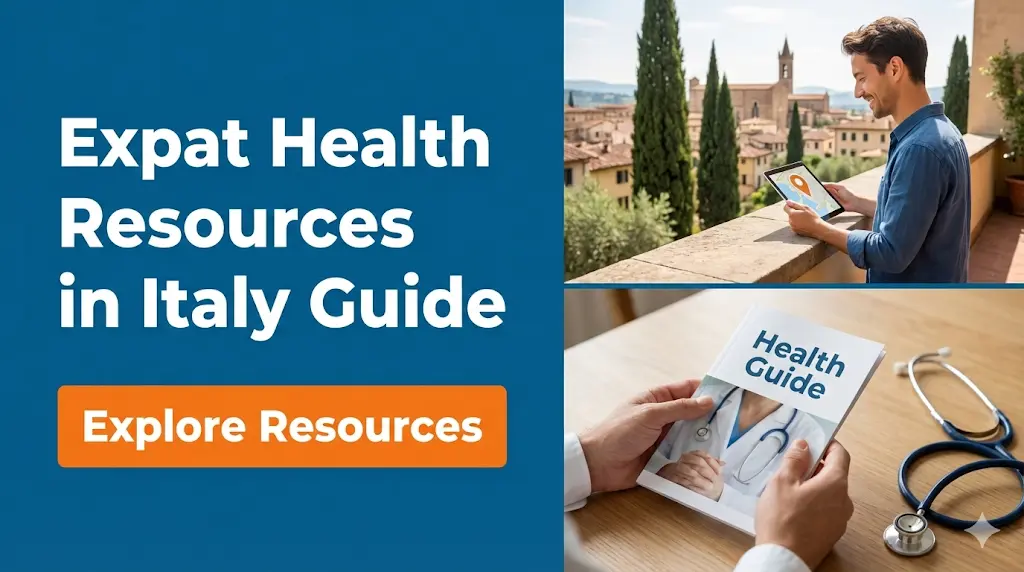
Navigating the Italian medical system can be challenging for newcomers. This comprehensive guide highlights the most reliable health resources for expats in Italy, from official government portals and finding English-speaking doctors to emergency services and digital telemedicine platforms.
Disclosure: This post may contain affiliate links. We may earn a commission at no extra cost to you if you make a purchase through these links. Read full disclosure.
Introduction to Resources for Expats on Health in Italy
Italy is globally renowned for possessing one of the most efficient, high-quality healthcare systems in the world, consistently ranking high in life expectancy and medical outcomes. However, the system is deeply complex, heavily regionalized, and operates primarily in the Italian language. For an expatriate, a digital nomad, or an international student, simply knowing that good healthcare exists is not enough; you must know exactly how to access it, who to call in an emergency, and where to find reliable information when you need it most.
Building a personal toolkit of reliable medical resources is one of the most important steps you can take to ensure a safe and successful relocation. From government websites that explain your legal rights to mobile applications that can dispatch an ambulance to your exact GPS coordinates, the resources available to expatriates have never been more abundant.
This extensive guide serves as your ultimate directory for health resources in Italy. We will explore the official state portals you need to navigate the public system, highlight the best digital platforms for finding English-speaking doctors in the private sector, and break down the essential smartphone applications that every expat should download upon arrival. Furthermore, we will delve into out-of-hours medical care, pharmacy locators, and mental health support networks. By familiarizing yourself with these invaluable tools, you can replace medical anxiety with profound peace of mind, ensuring that you and your family are always protected. To build a solid foundation before utilizing these tools, you may also want to review our broader overview on Healthcare in Italy: An Expats’ Guide.
Understanding the Dual Italian Healthcare System
Before you can effectively utilize health resources in Italy, you must understand the framework in which they operate. The Italian medical landscape is divided into two distinct, parallel systems: the public Servizio Sanitario Nazionale and the private healthcare sector. Your residency status, your budget, and your immediate medical needs will dictate which system—and therefore which resources—you will use.
The Servizio Sanitario Nazionale is the state-funded public healthcare system. It provides universal coverage to citizens and legal residents, offering free or highly subsidized care, including hospitalizations, emergency room visits, and appointments with a general practitioner. However, the public system is notorious for long waiting lists for non-urgent specialist appointments and a stark lack of English-speaking administrative staff.
Conversely, the private healthcare sector offers rapid access to top-tier specialists, luxurious clinic environments, and a high probability of encountering bilingual doctors. Private care is paid entirely out-of-pocket or through private international health insurance. Many successful expatriates adopt a hybrid approach, utilizing the public system for emergencies and chronic medication management, while relying on private resources for fast diagnostic tests and specialized consultations. Understanding this dichotomy is essential, as the resources listed below often cater specifically to one sector or the other.
Official Government and Regional Health Portals
Your first line of defense and the most authoritative source of information regarding public healthcare in Italy is the government itself. While navigating Italian bureaucratic websites can require patience, they are indispensable for understanding your legal rights and administrative obligations.
The official website of the Italian Ministry of Health is the ultimate national resource. This portal provides comprehensive, up-to-date guidelines on national health initiatives, mandatory vaccination schedules, and the overarching laws governing the Servizio Sanitario Nazionale. While the primary language is Italian, the site offers a dedicated English section that outlines the basic rights of foreign citizens, EU nationals, and non-EU expats regarding emergency care and system enrollment.
However, because Italian healthcare is administered at the regional level, your most frequently visited official resource will be the website of your Local Health Authority. The Local Health Authority is responsible for the day-to-day management of clinics, hospitals, and public doctors in your specific municipality. Every region has its own portal. Through your local portal, you can find the addresses of public clinics, download the necessary forms for selecting a family doctor, and access the regional centralized booking system to schedule public specialist appointments.
The Electronic Health Record System
One of the most powerful digital resources provided by the Italian state is the Electronic Health Record. This is a secure, regional online portal that compiles your entire medical history within the Italian public healthcare system.
Once you are a registered resident with a valid Italian health card, you can activate your Electronic Health Record using your digital identity credential. This portal is a game-changer for expats. Whenever you undergo a blood test at a public laboratory, visit the emergency room, or receive an electronic prescription from your public general practitioner, the documents are automatically uploaded to this secure digital vault.
You no longer need to travel back to the hospital to pick up physical paper results or worry about losing your prescription barcodes. You can simply log into the portal from your computer or smartphone, download your medical reports as PDF files, and show your digital prescriptions directly to your local pharmacist. Furthermore, this system allows your various public doctors to seamlessly share information, ensuring a highly coordinated approach to your ongoing medical care.
Consular and Embassy Medical Directories
When you require specialized medical attention and cannot afford to struggle through a language barrier, your home country’s embassy or consulate is an incredibly valuable resource. The diplomatic missions in Italy fully understand the challenges their citizens face when navigating foreign medical systems.
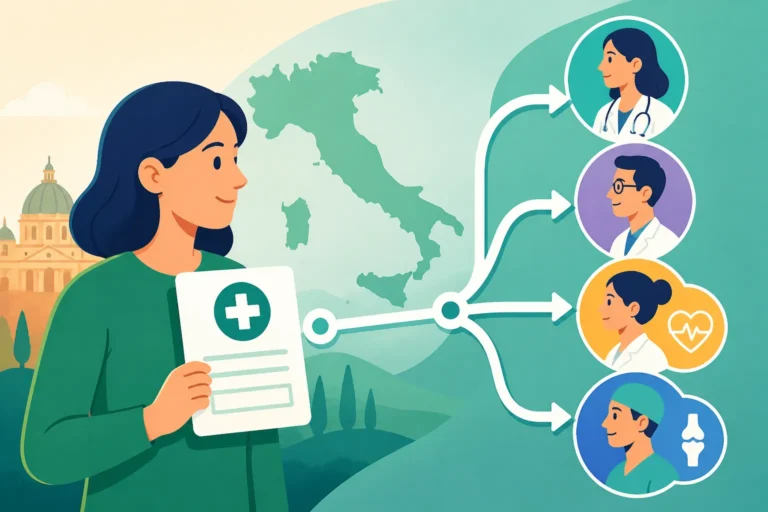
The embassies of the United States, the United Kingdom, Canada, and Australia all publish extensive, carefully vetted directories of medical professionals operating in Italy. These lists are typically organized by consular district and categorize doctors by their specific medical specialty, ranging from general practitioners and pediatricians to orthopedic surgeons and cardiologists.
The greatest advantage of utilizing these consular lists is trust. The doctors and clinics featured on these directories have been verified to speak fluent English, and many possess international medical qualifications or have practiced abroad. While the embassy does not officially endorse these private practitioners, they serve as an excellent, reliable starting point for finding high-quality care in your native language. If you are beginning to build your personal medical network, you can explore further strategies in our dedicated guide on Where to Find English-Speaking Doctors and Clinics.
Booking Platforms for Private Medical Care
If you choose to utilize the private healthcare sector to bypass public waiting lists, finding and booking a doctor has been vastly simplified by modern digital platforms. You no longer need to flip through local phone directories or rely entirely on word-of-mouth recommendations.
The most prominent and widely used medical booking platform in Italy is MioDottore. Functioning similarly to popular restaurant reservation apps, MioDottore allows you to search for private doctors across thousands of specialties in your specific city or zip code. The platform is an extraordinary resource for expatriates because it features robust filtering options. You can filter your search specifically to find doctors who speak English, French, Spanish, or other languages.
Furthermore, MioDottore provides transparent pricing for private consultations, allowing you to budget accordingly before you book. Every doctor’s profile features verified reviews from previous patients, details regarding their medical background, and a digital calendar where you can instantly secure an appointment slot with a few clicks. This platform removes the anxiety of having to call a receptionist and navigate the booking process in broken Italian.
Telemedicine and Virtual Health Platforms
The global events of the early 2020s catalyzed a massive technological leap within the Italian medical sector, leading to the rapid rise and normalization of telemedicine. For minor acute illnesses, prescription refills, or general medical advice, virtual health platforms are an incredibly efficient resource.
Several highly reputable private telehealth companies cater explicitly to the international community in Italy. Platforms such as Mobi Doctor and Doctors in Italy offer on-demand, virtual consultations with fully licensed, English-speaking European physicians. You can connect with a doctor via a secure video call from your hotel room or apartment within minutes.
These digital doctors can assess your symptoms, provide professional medical advice, and, most importantly, issue valid electronic prescriptions that are accepted at any pharmacy in the country. This resource is particularly invaluable for expats living in rural Italian towns where physical English-speaking doctors are completely unavailable, or for individuals who fall ill on a Sunday when standard private clinics are closed.
Finding and Using Italian Pharmacies
In Italy, the pharmacy is not merely a retail store; it is a critical frontline healthcare resource. Italian pharmacists are highly educated clinical professionals who can provide expert advice, triage minor ailments, and recommend potent over-the-counter remedies that are kept strictly behind the counter.
To utilize this resource effectively, you must know how to find an open pharmacy when you need one. Standard pharmacies adhere to traditional Italian business hours, often closing for a long lunch break in the afternoon and remaining closed on Sundays. However, Italy operates a brilliant, legally mandated duty roster system to ensure that emergency pharmaceutical care is available twenty-four hours a day, seven days a week.
The official website of the Italian National Federation of Pharmacy Owners provides a reliable, real-time national locator for duty pharmacies. By entering your province and municipality into their digital portal, you can instantly see which specific pharmacy is assigned to the overnight or holiday shift in your immediate area. Understanding how this rotating system works and what to expect when you arrive is crucial; you can find a thorough breakdown in our guide covering 24-Hour Pharmacies and How They Work in Italy.
Mental Health and Psychological Support Networks
Relocating to a foreign country exerts a profound psychological toll. Managing culture shock, homesickness, relationship strain, and the sheer exhaustion of administrative hurdles can lead to anxiety and depression. Protecting your mental well-being is just as important as managing your physical health, and Italy offers specialized resources to support expats in this specific area.
Because psychotherapy relies almost entirely on linguistic nuance and cultural understanding, finding a therapist who speaks your native language is paramount. While the public healthcare system offers community mental health centers, finding an English-speaking public psychologist is incredibly difficult. Therefore, expatriates lean heavily on specialized private networks.
Several digital directories and professional networks in Italy are dedicated specifically to international mental health. Platforms exist that connect expats with licensed, bilingual clinical psychologists and psychotherapists who offer both in-person sessions in major cities and remote teletherapy across the country. Additionally, for immediate crisis intervention, there are national, confidential listening services and hotlines that provide emotional support.
Essential Smartphone Applications for Health and Safety
Your smartphone is one of the most powerful health resources you possess in Italy, provided you download the right applications before an emergency strikes.
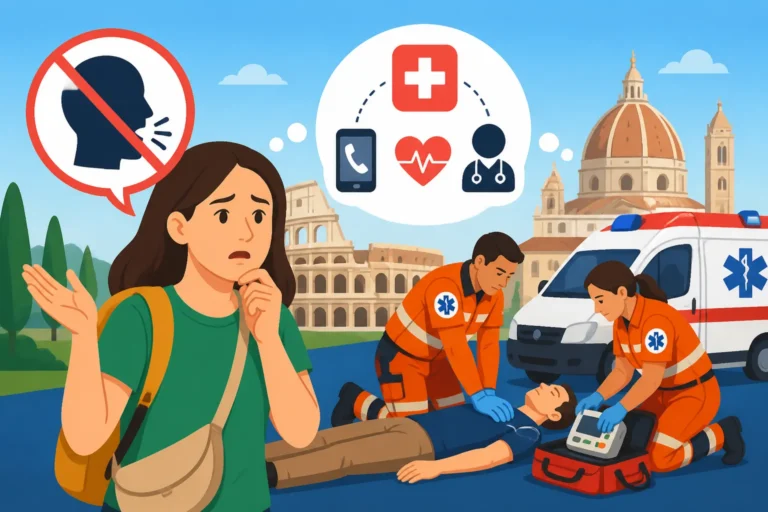
The absolute most important application any resident or tourist can download is the “112 Where Are U” app. Officially endorsed by the Italian government and the European Emergency Number Association, this app connects you directly to the universal emergency dispatch center. Its defining feature is that it automatically beams your exact GPS coordinates to the dispatch operator the moment you initiate the call.
If you are hiking in an unfamiliar region, involved in a traffic accident on a rural road, or simply panicking and unable to remember your street address in Italian, this app ensures that paramedics can find you immediately. The application also features a “silent call” function and a text chat option, which are vital if you are hiding during a home invasion or if a medical emergency prevents you from speaking aloud.
Navigating Out of Hours Care and Emergency Services
Knowing who to contact outside of standard business hours is a fundamental component of your health resource toolkit. If you develop a non-life-threatening illness, such as a severe ear infection or a high fever, during the night, on a weekend, or on a public holiday, you should not go to the hospital emergency room, as you will face an agonizingly long wait.
Instead, you must utilize the state-run out-of-hours medical service. This service provides continuity of care when your regular general practitioner is off duty. You can call your regional out-of-hours hotline, and a doctor will assess your symptoms over the phone. They can offer medical advice, invite you to their specific evening clinic for a physical examination, or even dispatch a doctor to perform a house call if you are too ill to travel. During the summer months, many tourist-heavy regions also operate a specialized variation of this service designed exclusively for non-residents and foreign visitors, ensuring that everyone has access to basic medical care.
For severe, life-threatening crises—such as heart attacks, strokes, massive trauma, or uncontrollable bleeding—the ultimate resource is the public emergency room. The Italian public hospital system is legally required to provide immediate, life-saving medical intervention to anyone on Italian soil, regardless of their nationality, residency status, or ability to pay.
Expat Community Forums and Social Media
While official government portals and professional medical directories are essential, you should never underestimate the power of community knowledge. The lived experiences of fellow expatriates often provide the most practical, nuanced, and immediate health resources available.
Social media platforms, particularly Facebook, host massive, highly active groups dedicated to expats living in Italy. Groups such as “Expats in Italy,” “Americans in Rome,” or “Foreigners in Milan” are invaluable digital resources. If you are struggling to find a pediatrician who embraces a specific vaccination schedule, searching for an English-speaking gynecologist, or trying to understand a confusing letter from the local health authority, posting a question in these groups will almost always yield rapid, tested advice.
Fellow expats can provide personal reviews of local private clinics, warn you about specific bureaucratic bottlenecks in your regional health office, and recommend trusted professionals who are accustomed to dealing with international patients. This crowdsourced community support acts as an informal but deeply comforting safety net during your transition.
Quick Reference Guide Top Health Resources for Expats in Italy
To help you organize your personal health toolkit, the following table categorizes the most vital resources you will need during your time in Italy.
| Resource Category | Name of Platform / Service | Best Used For | Access / Cost |
| Emergency Safety | “112 Where Are U” App | Calling ambulances with instant GPS tracking. | Free (Public) |
| Finding Doctors | MioDottore Platform | Booking private, English-speaking specialists. | Free to use (Pay for doctor) |
| Out-of-Hours Care | Regional Out-of-Hours Service | Non-urgent illnesses at night or on weekends. | Free or minimal fee (Public) |
| Pharmacy Locator | Federfarma Website | Finding the nearest open 24-hour duty pharmacy. | Free to search |
| Virtual Care | Mobi Doctor / Doctors in Italy | Instant online consultations and digital prescriptions. | Fixed private fee |
| Medical Records | Electronic Health Record | Accessing public test results and prescriptions. | Free (Requires Digital ID) |
| Vetted Clinics | US/UK Embassy Websites | Finding trusted, internationally accredited doctors. | Free directory |
Conclusion
Securing your health and navigating the complexities of a foreign medical system should never overshadow the joy of living in Italy. While the initial bureaucratic learning curve is undoubtedly steep, the Italian healthcare landscape is deeply humane, technologically advanced, and fiercely dedicated to patient care.
By proactively building your arsenal of health resources before an emergency arises, you take absolute control over your expatriate experience. Bookmark the official regional portals to understand your public rights, utilize diplomatic directories and platforms like MioDottore to build a network of trusted English-speaking professionals, and ensure that vital emergency applications are installed on your smartphone. Whether you are managing a chronic condition, scheduling a routine check-up, or seeking late-night relief from a trusted pharmacist, these resources guarantee that world-class medical support is always just a click or a phone call away. Embrace the magnificent Italian lifestyle with the profound confidence that your health is thoroughly protected.
References
Primary sources (official)
- Ministero della Salute: The official Italian Ministry of Health portal detailing national healthcare guidelines, the structure of the Servizio Sanitario Nazionale, and emergency care rights for foreigners. https://www.salute.gov.it/
- Agenzia per l’Italia Digitale: Official information regarding the activation, security, and usage of the Electronic Health Record across all Italian regions. https://www.fascicolosanitario.gov.it/
Other helpful sources
- US Embassy and Consulates in Italy: Provides comprehensive, vetted directories of English-speaking medical professionals, hospitals, and emergency services organized by Italian consular districts. https://it.usembassy.gov/
- 112 Where Are U: The official European Emergency Number Association application portal, detailing how the app interfaces with Italian emergency dispatch centers. https://where.areu.lombardia.it/
Disclaimer
The information provided in this article is for general educational and informational purposes only and does not constitute official medical, legal, or administrative advice. Healthcare regulations, digital portal access requirements, and the availability of English-speaking medical professionals in Italy are subject to change. Always consult directly with a licensed Italian medical professional, your local health authority, or your country’s embassy to verify current procedures and receive personalized medical advice. In the event of a severe, life-threatening medical emergency, please dial 112 immediately to access emergency services.