Kidney Dialysis Access for Foreigners in Italy
Planning a trip or relocating to Italy shouldn’t be restricted by End-Stage Kidney Disease. This guide explains how foreigners can access hemodialysis, outlining EHIC benefits, private “holiday dialysis” programs, associated costs, and SSN enrollment for long-term expats.
Disclosure: This post may contain affiliate links. We may earn a commission at no extra cost to you if you make a purchase through these links. Read full disclosure.
Introduction to Kidney Dialysis Access for Foreigners in Italy
Italy is one of the world’s most coveted destinations, renowned for its art, culture, and spectacular culinary traditions. For many individuals living with End-Stage Kidney Disease (ESKD), the idea of traveling or relocating abroad can seem impossibly daunting. The logistical complexities of securing life-sustaining medical treatments in a foreign country often deter patients from realizing their dreams of an Italian getaway or a permanent Mediterranean relocation.
However, your medical needs do not have to ground you. Italy boasts a highly advanced, universally accessible healthcare system that is well-equipped to manage chronic conditions like kidney failure. In fact, Italy has actively developed a robust medical tourism sector specifically catering to international dialysis patients. Known locally as dialisi in vacanza (holiday dialysis), these programs are designed to provide seamless continuity of care for tourists and expatriates alike.
Whether you are a European citizen planning a short Roman holiday using your EHIC, a non-EU tourist seeking private care along the Amalfi Coast, or a prospective expat figuring out how to transition your chronic care to the Italian National Health System, this comprehensive guide will detail everything you need to know. We will explore the differences between public and private access, outline the costs, and provide a step-by-step approach to booking your sessions, ensuring your time in Italy is safe, healthy, and unforgettable.
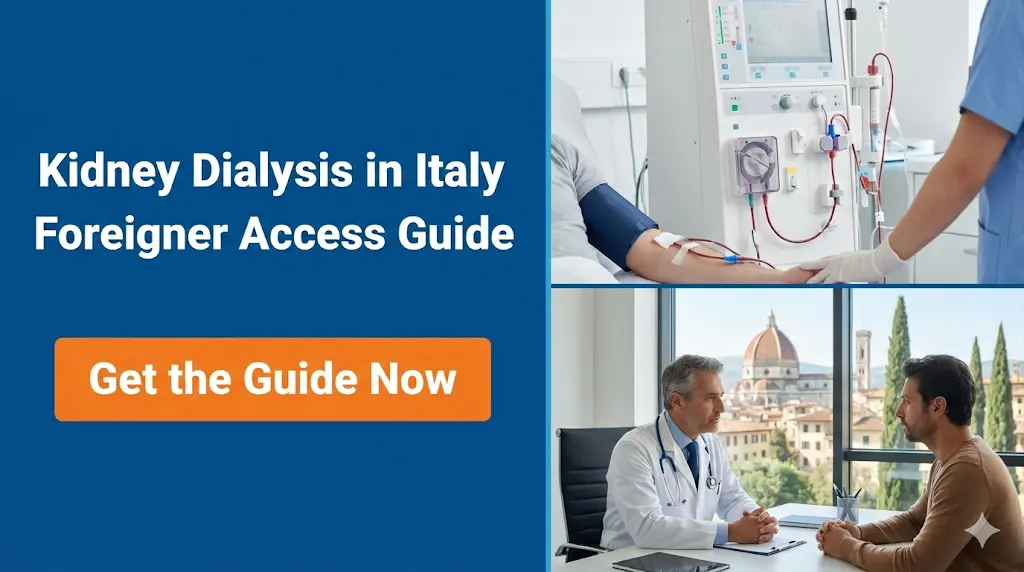
Understanding Dialysis in the Italian Healthcare System
The Italian medical landscape operates on a dual-track system: the state-funded public sector and the independent private sector. The Servizio Sanitario Nazionale (SSN) is the bedrock of Italian healthcare, providing universal coverage to citizens and registered residents. Within the public system, hemodialysis and peritoneal dialysis are considered essential, life-saving treatments and are heavily subsidized or provided entirely free of charge to those enrolled.
However, access to these public dialysis centers for non-residents depends heavily on your nationality and the length of your stay. Because public hospitals are primarily designed to serve the local population, their dialysis units often operate at high capacity. For short-term visitors, the private sector often steps in to fill the gap. Private clinics and specialized holiday dialysis centers offer greater flexibility, multilingual staff, and the ability to pre-book sessions months in advance—a critical necessity for travelers.
To better grasp how this dual system impacts your overall medical options, taking the time to review our comprehensive overview on Healthcare in Italy: An Expats’ Guide is highly recommended.
EHIC and GHIC Access for European Tourists
If you are a citizen of a European Union member state, Iceland, Liechtenstein, Norway, or Switzerland, you have a distinct advantage when traveling to Italy. The European Health Insurance Card (EHIC) entitles you to state-provided healthcare during a temporary stay under the same conditions as Italian residents. Following Brexit, UK citizens can utilize the Global Health Insurance Card (GHIC) in the exact same manner.
It is a common misconception that the EHIC only covers emergency room visits. The EHIC explicitly covers treatments for chronic pre-existing conditions that require continuous care, including oxygen therapy, chemotherapy, and kidney dialysis. However, there is a massive caveat: you cannot simply show up at an Italian hospital and expect to receive dialysis. Because hemodialysis requires dedicated machinery, specific staffing, and scheduled time slots, you are legally required to arrange your treatment with the Italian facility well before your arrival.
- Locate a Public Clinic: You must find a public hospital or an SSN-accredited private clinic (known as struttura convenzionata) at your Italian destination.
- Contact the Nephrology Department: Reach out to the clinic’s nephrology ward at least two to three months in advance to inquire about guest patient availability.
- Submit Documentation: You will need to provide your recent medical records, virology reports (HIV, Hepatitis B and C), and your dialysis prescription.
- Present Your Card: Upon arrival, you must present your valid EHIC/GHIC and your passport.
Under the EHIC scheme, the cost of the dialysis session itself will be covered by the Italian state, which then bills your home country. You may only be required to pay a small administrative co-payment, known as a ticket, depending on the specific region of Italy. For a deeper understanding of these cross-border medical rights, consult our detailed guide on Using Your European Health Insurance Card (EHIC) in Italy.
Dialysis for Non EU Tourists and Short Term Visitors
For visitors from the United States, Canada, Australia, and other non-EU countries, the EHIC is not an option. If you are a non-EU tourist, you are responsible for the full cost of your medical care while visiting Italy. Therefore, accessing dialysis will primarily be done through the private healthcare sector or by paying out-of-pocket at a public facility.
The Cost of Private Dialysis in Italy
The cost of a private hemodialysis session in Italy varies depending on the region, the luxury level of the clinic, and the specific type of treatment required (e.g., standard hemodialysis versus hemodiafiltration). On average, a single private dialysis session in Italy costs between €150 and €300.
Because travelers typically require three sessions per week, a two-week vacation can accumulate between €900 and €1,800 in medical costs. It is absolutely crucial to contact your domestic health insurance provider before you travel to determine if they offer reimbursement for out-of-network, overseas medical care. Many patients pay upfront in Italy and submit the translated commercial invoices (fatture) to their insurance upon returning home.
The Dialisi in Vacanza Holiday Dialysis Programs
Recognizing the demand from international travelers, Italy has cultivated a thriving niche medical tourism sector dedicated to holiday dialysis. Regions with high tourist traffic—such as Sicily, Veneto, Tuscany, and Campania—host specialized clinics that specifically cater to foreign guests.
Networks like Diaverum (which operates the d.HOLIDAY platform) and independent centers like Dialisi Mucaria in Sicily have revolutionized the travel experience for ESKD patients. These centers offer:
- Multilingual Staff: Doctors and nurses who speak fluent English, eliminating the anxiety of a language barrier during a complex medical procedure.
- Concierge Services: Many holiday dialysis clinics go beyond medical treatment by helping patients arrange accessible hotel accommodations, organizing wheelchair-friendly airport transfers, and even booking specialized local tours that fit around the patient’s dialysis schedule.
- Streamlined Onboarding: These clinics are highly accustomed to evaluating international medical records and seamlessly transferring your home prescription to their machines.
Relocating to Italy Dialysis for Expats
If you are planning to move to Italy long-term, your strategy shifts from booking holiday clinics to establishing permanent, chronic care within the Italian system.
Registering with the SSN
To receive free or heavily subsidized ongoing dialysis in Italy, you must become a legal resident and enroll in the Servizio Sanitario Nazionale. The process depends on your visa status:
- Workers and Family Members: If you are moving to Italy on a work visa or via family reunification, your enrollment in the SSN is mandatory and free of charge.
- Retirees and Students: If you are moving on an Elective Residence Visa or a Student Visa, you must undergo “voluntary registration” (iscrizione volontaria). This requires paying an annual fee to the state, which is calculated based on your global income (or a flat rate for students).
Once you are registered with the SSN, you will be issued a Tessera Sanitaria (Health Card). You must then register with a local general practitioner, who will formally refer you to a public nephrologist to manage your long-term dialysis schedule.
Comparing Dialysis Access Options in Italy
To help clarify the different pathways for receiving kidney dialysis in Italy, please review the comparative table below.
| Visitor Status | Healthcare Pathway | Expected Cost per Session | Booking Lead Time | Key Requirements |
| EU / UK Tourist | Public Hospital / Accredited Clinic via EHIC/GHIC | Free (or small regional ticket co-pay) | 2 to 3 months | Valid EHIC/GHIC, pre-approval from the Italian clinic, medical records. |
| Non-EU Tourist | Private Clinic / Holiday Dialysis Center | €150 – €300 out-of-pocket | 1 to 3 months | Private travel medical insurance, upfront payment, medical records. |
| Legal Expat (Resident) | SSN Public Nephrology Department | Free (covered by state taxes or voluntary SSN fee) | N/A (Integrated into chronic care plan) | Tessera Sanitaria, local residency, referral from an Italian GP. |
Practical Steps to Book Dialysis in Italy
Whether you are using the EHIC or paying privately, the administrative preparation required for receiving dialysis abroad is significant. Follow these steps to ensure a flawless experience:
- Start Early: Begin your search and contact clinics at least 8 to 12 weeks before your intended departure date. Summer months (June to September) are peak tourist seasons in Italy, and guest dialysis slots in coastal towns fill up incredibly fast.
- Gather Medical Documentation: The Italian clinic will require a comprehensive medical dossier from your home nephrologist. This typically includes:
- A detailed medical history and current physical examination report.
- Your exact dialysis prescription (dry weight, dialyzer type, blood flow rate, dialysate composition).
- Recent virology blood tests (usually taken within 30 days of travel) screening for HIV, Hepatitis B (HBsAg, HBsAb, HBcAb), and Hepatitis C (HCV). Note: Clinics strictly segregate positive patients to prevent cross-contamination, so these tests are non-negotiable.
- A recent standard blood panel (CBC, electrolytes, urea, creatinine).
- Translate Your Documents: Italian medical staff must be able to read your charts with absolute precision. While holiday clinics may accept English documents, public hospitals often require Italian translations. Utilizing professional Using Medical Translation and Interpretation Services guarantees that your medical metrics are accurately conveyed, preventing dangerous clinical errors.
- Confirm the Logistics: Once accepted, get a written confirmation of your dialysis dates, times, and the exact address of the clinic. Confirm the payment method (cash, credit card, or direct insurance billing) and ask if you need to bring your own specialized medications, such as Erythropoietin (EPO), as clinics do not always provide these for guest patients.
Overcoming Language Barriers and Logistics
The physical toll of dialysis can leave patients feeling fatigued, making the prospect of navigating foreign public transportation daunting. When booking your accommodation, use tools like Google Maps to calculate the realistic travel time between your hotel and the dialysis center. In cities like Venice, where transport relies on water buses (vaporetti), or hilltop towns in Tuscany with steep, cobblestone streets, accessibility can be a major challenge.
If you are not using a specialized holiday dialysis concierge service, speak to the reception desk at your hotel. Italian hospitality is world-renowned, and hotel concierges are usually more than happy to pre-arrange reliable, air-conditioned taxis to transport you to and from your medical appointments, ensuring you can focus entirely on your recovery and relaxation.
Conclusion
End-Stage Kidney Disease fundamentally alters your daily routine, but it does not have to extinguish your wanderlust or prevent you from building a new life abroad. Italy’s commitment to high-quality healthcare, combined with its burgeoning holiday dialysis sector, makes it one of the most accessible and welcoming destinations in Europe for patients requiring chronic renal care.
By understanding the vital role of the EHIC for European citizens, anticipating the out-of-pocket costs for private non-EU visitors, and knowing how to integrate into the SSN as a long-term expatriate, you can confidently take control of your medical journey. The key to a successful Italian experience lies in meticulous, proactive preparation. Consult your home nephrologist, gather your medical records early, and book your clinic slots well in advance. With the logistics securely in place, you can sit back, enjoy your treatment, and look forward to savoring the magnificent art, culture, and cuisine that Italy has to offer.
References
Primary sources (official)
- Ministero della Salute: The official portal of the Italian Ministry of Health, providing guidelines on the Servizio Sanitario Nazionale, chronic disease management, and the rights of foreign patients. https://www.salute.gov.it/
- European Commission – EHIC: Official information regarding the usage, coverage limitations, and application process for the European Health Insurance Card. https://ec.europa.eu/social/main.jsp?catId=559
Other helpful sources
- Diaverum d.HOLIDAY: A leading global renal care provider offering a specialized digital platform to book holiday dialysis across numerous Italian clinics. https://www.diaverum.com/
- Dialisi Mucaria: A prominent holiday dialysis center based in Sicily that specializes in medical tourism, offering comprehensive treatment and vacation concierge services. https://www.dialisimucaria.it/
Disclaimer
The information provided in this article is intended for general educational and informational purposes only and does not constitute official medical, legal, or travel insurance advice. Healthcare regulations, the cost of private medical procedures, and the specific admission requirements for dialysis clinics in Italy are subject to change without notice. Always consult directly with your primary nephrologist to determine if you are medically fit for international travel. You must verify all treatment protocols, costs, and availability directly with the Italian dialysis facility prior to booking your travel arrangements.