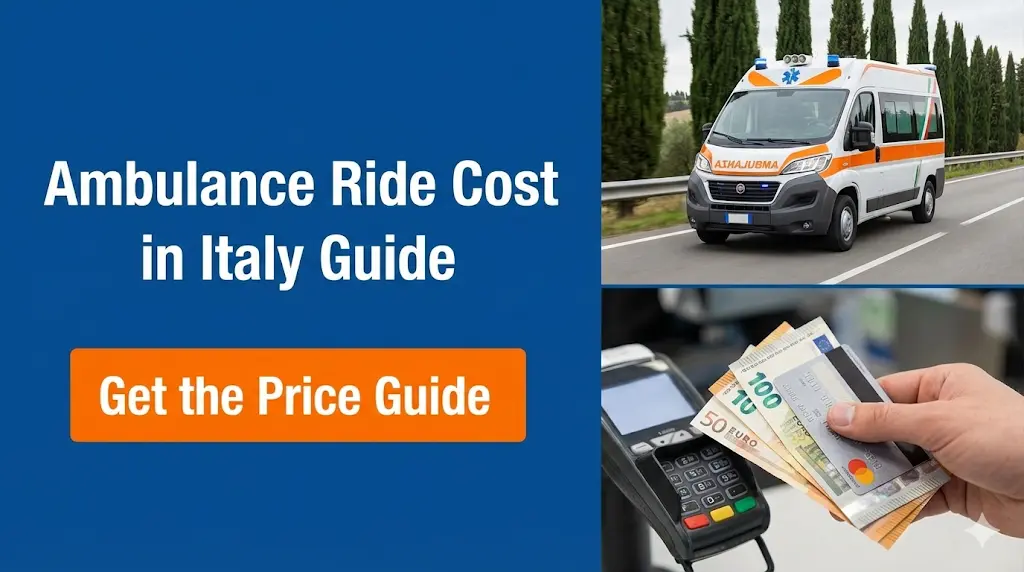
Cost of an Ambulance Ride in Italy
Navigating emergency services in a foreign country can be stressful. This guide explains the costs of ambulance rides in Italy, detailing when the service is free under the SSN, regional differences in fees, and how to handle medical emergencies as an expat.
Disclosure: This post may contain affiliate links. We may earn a commission at no extra cost to you if you make a purchase through these links. Read full disclosure.
Introduction to Cost of an Ambulance Ride in Italy
Italy operates a world-class public healthcare system known as the Servizio Sanitario Nazionale (SSN). This system is designed to provide universal coverage to all citizens and legal residents, funded primarily through national and regional taxation. One of the most critical pillars of this system is the emergency medical response network. In Italy, emergency care is considered a fundamental right, and the infrastructure is built to ensure that no one is denied life-saving transport due to their inability to pay.
However, the “cost” of an ambulance ride is not always zero. While true emergencies are handled with a spirit of total solidarity, the Italian system also has safeguards to prevent the misuse of emergency resources. Whether you are a registered resident with a health card, a tourist with a European Health Insurance Card (EHIC), or a non-EU visitor with private insurance, the financial outcome of your ambulance ride depends on the severity of your medical condition and the region in which you are located. This guide will provide an exhaustive breakdown of how emergency transport works in Italy, the different levels of urgency, the potential costs for non-emergencies, and how to navigate the system as a foreigner.
The Universal Emergency Number: 112 and 118
Before discussing costs, it is vital to know how to summon help. In Italy, the traditional number for medical emergencies was 118. While this number still works in many regions, Italy has transitioned to the universal European emergency number: 112.
When you dial 112, you are connected to a centralized operator who can dispatch the police, fire brigade, or medical services. If you have a medical crisis, they will transfer you to the Centrale Operativa 118. These operators are trained in medical triage. They will ask a series of questions to determine the location and the severity of the situation. It is important to remain calm and provide as much detail as possible, as the “triage code” assigned during this call is what ultimately determines the cost of the service.
Triage Codes and Their Impact on Cost
The Italian emergency system uses a color-coded triage system to categorize patients. This system is used both in the ambulance and at the hospital’s Pronto Soccorso (Emergency Room). Understanding these codes is essential for understanding your potential financial liability.
Red Code (Codice Rosso)
This indicates an immediate threat to life. Examples include cardiac arrest, severe respiratory failure, massive trauma, or unconsciousness. In a Red Code situation, the ambulance ride and all subsequent life-saving treatments are completely free for everyone in Italy, regardless of residency status or insurance. The priority is solely on saving the patient’s life.
Yellow/Orange Code (Codice Giallo/Arancione)
This indicates a serious condition that is not immediately life-threatening but could deteriorate rapidly. Examples include severe bone fractures, significant chest pain, or high fever with respiratory distress. For registered residents and EU citizens with an EHIC, these rides are also almost always free of charge.
Green Code (Codice Verde)
This indicates a minor urgency. The patient requires medical attention, but their life is not in danger and their condition is stable. If you call an ambulance for a Green Code situation, you may be subject to a co-payment (known as a ticket) in some regions, especially if the doctor at the hospital determines that you could have reached the facility by private means.
White Code (Codice Bianco)
This is a non-urgent situation. Examples include minor cuts, mild cold symptoms, or using the ambulance as a “taxi” to the hospital because you don’t have a car. In a White Code scenario, the ambulance ride is frequently not covered by the SSN. You may be billed for the full cost of the transport, which can range from €100 to €500 depending on the distance and the equipment used. For a broader view of how these costs fit into the national framework, you can read about the Healthcare in Italy: An Expats’ Guide.
Regional Differences in Ambulance Fees
One of the most complex aspects of the Italian healthcare system is its decentralization. The SSN is managed at the regional level, meaning that the rules in Tuscany might differ slightly from those in Lombardy or Sicily.
In some regions, the ticket for a non-urgent ambulance ride is a flat fee (e.g., €50). In others, it is calculated based on the kilometers traveled. Some regions are more lenient with “Green Code” cases, while others are very strict about billing for anything that isn’t a “Yellow” or “Red” emergency. Generally, northern regions like Lombardy and Emilia-Romagna have highly digitized systems that are quick to issue invoices for non-urgent use, whereas southern regions may be more informal but also have more limited resources.
Costs for Non-EU Tourists and Visitors
If you are visiting Italy from a non-EU country (like the USA, Canada, or Australia) and you are not registered with the SSN, the financial situation is different. While the 118 service will always respond to your call and transport you to the hospital in an emergency, you do not have the underlying “solidarity” coverage that residents pay for through their taxes.
For a true “Red Code” life-saving emergency, many public hospitals still do not bill tourists, viewing it as a human rights obligation. However, for any other level of transport, you should expect to receive a bill. This is why having comprehensive travel medical insurance is mandatory for most visas and highly recommended for all visitors. If you are planning a trip, you should review International Health Insurance Options for Italy to ensure you are covered for emergency transport.
Using the EHIC Card for EU Citizens
If you are a citizen of an EU member state, Iceland, Liechtenstein, Norway, or Switzerland, you are protected by reciprocal agreements. By presenting your European Health Insurance Card (EHIC), you are entitled to the same emergency services as an Italian citizen.
If an Italian resident would get the ambulance ride for free, you will too. If they would have to pay a ticket for a “Green Code” visit, you will be charged that same amount. It is essential to carry your physical EHIC card with you at all times. If you are an EU citizen moving to Italy, you can find more specific details in our guide on Using the EHIC Card in Italy for EU Citizens.
Private Ambulance Services
In addition to the public 118 system, there are numerous private ambulance services in Italy, often operated by organizations like the Red Cross (Croce Rossa Italiana) or the Misericordia.
These private services are typically used for:
- Transporting a patient from one hospital to another for a specialized test.
- Discharging a non-mobile patient from the hospital to their home.
- Standby medical support at sporting events or concerts.
When you hire a private ambulance, you are responsible for the full cost. These services are not “triaged” by the 118 operators; they are private contracts. The price is usually composed of a “call out” fee plus a per-kilometer charge.
| Type of Service | Estimated Cost | Coverage |
| Emergency (Red Code) | €0 | Fully covered for everyone |
| Urgent (Yellow Code) | €0 – €50 | Usually free for residents/EHIC |
| Non-Urgent (White Code) | €100 – €500 | Often billed to the patient |
| Private Transport | €150 – €600+ | Fully paid by the patient |
Ambulance Costs and the “Pronto Soccorso”
The cost of the ambulance ride is often linked to the subsequent care at the Pronto Soccorso (Emergency Room). If you arrive by ambulance but are triaged as a “White Code” at the hospital, you will not only be billed for the ambulance but also for the ER visit itself.
The ticket for a non-urgent ER visit is generally around €25 to €50. However, if the hospital doctors decide to admit you, or if they perform significant diagnostic tests, the “White Code” is usually upgraded, and the fees are waived. To avoid these costs, it is always better to visit your GP or an urgent care clinic for minor issues. If you are unsure who your primary doctor is, see our guide on Registering with an Italian Family Doctor (Medico di Base).
Air Ambulance and Mountain Rescue
Italy’s diverse geography, from the Alps to the Mediterranean islands, requires specialized emergency response. The Elisoccorso (Helicopter Emergency Medical Service) is an integral part of the SSN.
For life-saving emergencies (Red Code), the helicopter is free. However, in regions like Valle d’Aosta, Trentino-Alto Adige, and Veneto, mountain rescue can be extremely expensive if it is determined that the rescue was necessitated by the person’s negligence (e.g., hiking in flip-flops or ignoring weather warnings). If the rescue is not medically necessary, the “bill” for a helicopter dispatch can exceed €100 per minute of flight time, often reaching €5,000 to €10,000. For outdoor enthusiasts, specialized “mountain rescue” insurance is a must.
How to Handle a Bill for an Ambulance
If you are billed for an ambulance ride, the invoice will typically be sent to your registered residential address or the address on your passport.
- Residents: If you are a resident and believe the bill was sent in error (e.g., you had a life-threatening emergency but were billed for a White Code), you can appeal to the local ASL (Azienda Sanitaria Locale). You will need medical documentation from the hospital supporting your claim.
- Tourists: If you have travel insurance, you should pay the bill and then submit the receipt and the medical report to your insurance provider for reimbursement.
- Non-payment: Ignoring a bill from a public Italian health authority is not advisable. It can lead to legal complications, debt collection, and potential issues with future visa applications or residence permit renewals.
Triage in Italy: A Visual Guide
To help you understand how the medical staff evaluates your condition upon arrival, it is useful to visualize the triage hierarchy. This determines who gets seen first and who might have to wait—and potentially pay.
- Red: Immediate resuscitation.
- Orange/Yellow: High priority, potential threat to vital functions.
- Green: Deferred urgency, stable patient.
- White: Non-urgent, no risk.
Voluntary Organizations and the “Misericordia”
A unique aspect of the Italian emergency landscape is the role of volunteer organizations. Many of the ambulances you see on the streets are not staffed by government employees, but by highly trained volunteers from organizations like the Croce Rossa, Croce Bianca, or the Misericordia (particularly in Tuscany).
These organizations work under contract for the 118 system. Even though they are volunteers, if they respond to a 118 emergency call, the same rules regarding SSN coverage and triage codes apply. You do not pay the volunteers directly. Any billing is handled through the regional health authority.
Conclusion
The cost of an ambulance ride in Italy is a reflection of the country’s social contract. If you are in genuine, life-threatening danger, the system will move heaven and earth to save you without asking for a credit card. The peace of mind that comes from knowing that a “Red Code” emergency is free for all is one of the greatest benefits of living in or visiting Italy.
However, as an expat or traveler, responsibility is key. Using the emergency system for minor ailments that could be handled by a local pharmacy or a GP is not only a drain on public resources but can also lead to significant out-of-pocket costs. By understanding the triage codes, maintaining valid health insurance, and knowing when to dial 112, you can navigate Italy’s emergency services with confidence. Italy is a beautiful place to live, and its healthcare system is there to catch you when you fall—just make sure you’re falling for the right reasons.
References
Primary sources (official)
- Ministero della Salute (Ministry of Health): The official portal for health regulations in Italy, detailing the SSN framework and emergency triage protocols. https://www.salute.gov.it/
- 112.gov.it: The official site for the European Emergency Number in Italy, explaining how dispatch and triage work across the country. https://112.gov.it/
Other helpful sources
- Croce Rossa Italiana (Italian Red Cross): Information on the role of volunteer ambulance services and their integration with the 118 system. https://www.cri.it/
Disclaimer
The information provided in this article is for general informational purposes only and does not constitute medical or legal advice. Healthcare regulations and emergency service costs in Italy are managed at the regional level and are subject to change. Always consult with official local health authorities (ASL) or your insurance provider for the most up-to-date information regarding your specific situation. In the event of a medical emergency in Italy, dial 112 or 118 immediately.