How to Donate Blood in Italy as a Foreign Resident
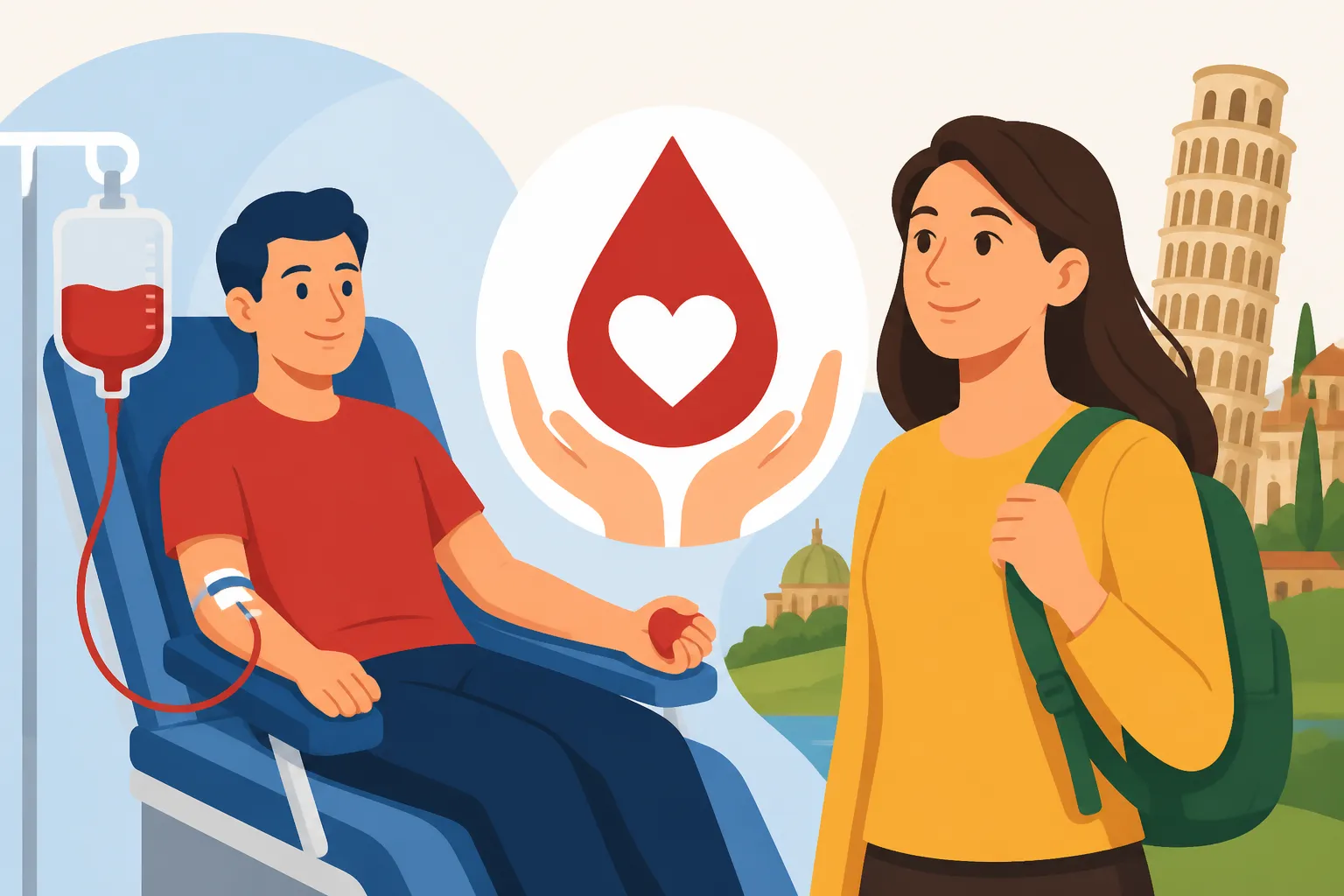
Navigating the Italian medical system can feel like an uphill battle, especially when you want to give back to the community but are worried about language barriers or restrictive bureaucracy. I remember standing outside an AVIS center in Florence years ago, clutching my residency permit and wondering if my blood was even "allowed" in the system. This guide clarifies exactly how to donate blood in Italy as a foreign resident, ensuring you can contribute safely and confidently.
Disclosure: This post may contain affiliate links. We may earn a commission at no extra cost to you if you make a purchase through these links. Read full disclosure.
Understanding the Eligibility Criteria for Foreign Donors
The first hurdle many expats face is simply knowing if they are eligible. Italy has some of the strictest blood safety protocols in Europe, which is a good thing for the recipient, but it means the screening process for the donor is quite rigorous. As a foreigner, the most important thing to understand is that your eligibility is not based on your nationality, but on your health history and your legal residency status.
To start, you must be between 18 and 65 years old. If you have donated before, some centers allow you to continue until 70, but for your first time in Italy, 65 is the cutoff. You also need to weigh at least 50 kilograms (about 110 pounds). While these are the physical basics, the administrative side requires you to have a valid form of identification and, crucially, an Italian tax code. If you are still in the process of settling in, you might find my guide on How to Get a Codice Fiscale in Italy (and Why You Need One) helpful for clearing this specific hurdle.
The medical interview is the most "Italian" part of the process. It is a deep dive into your lifestyle. You will be asked about recent tattoos, piercings, dental work, and travel. If you have recently traveled outside of Europe, you might be deferred for a few weeks or months depending on the endemic diseases in that region. For those who are still moving between countries and relying on International Health Insurance Options for Italy like SafetyWing, it is worth noting that your travel history will be scrutinized more than a local who hasn't left the province in a decade.
Required Documentation and the Registration Process
You cannot simply walk into a hospital and demand to donate. The system is highly organized, usually managed through associations like AVIS (Associazione Volontari Italiani del Sangue) or FIDAS. Your first step is registration. You will need to present your Carta d’Identità and your Tessera Sanitaria. If you are still waiting for your plastic card, the paper replacement from the ASL usually suffices. Knowing How to get a Tessera Sanitaria as a New Resident in Italy is vital here, as the blood center needs to link your donation to your national health record.
During registration, you will be asked to fill out a lengthy questionnaire. It covers everything from your sexual history to whether you’ve had a cold in the last two weeks. My advice? Be brutally honest. The doctors are not there to judge your lifestyle; they are there to protect the blood supply. If your Italian is a bit shaky, don't be afraid to ask for clarification. Many doctors in larger cities like Rome or Milan speak English, but the forms will almost certainly be in Italian.
Once the paperwork is filed, you won't actually donate blood on your first visit. In Italy, the standard procedure for a "new" donor (aspirante donatore) is a preliminary screening called the "prima visita." This involves a comprehensive blood test and an EKG (electrocardiogram) to ensure your heart and blood are fit for the task. This is part of Italy's commitment to Wellness and Preventive Care: Stay Healthy in Italy, as they want to make sure the act of donating doesn't harm you.
| Requirement | Detail | Document Needed |
|---|---|---|
| Age | 18 – 65 years (first-time donor) | Identity Card / Passport |
| Weight | Minimum 50kg | N/A |
| Residency | Legal resident in Italy | Permesso di Soggiorno (for non-EU) |
| Health ID | Registered with the SSN | Tessera Sanitaria / Codice Fiscale |
| Language | Ability to understand the medical interview | N/A |
| Timing | No tattoos/piercings in last 4 months | N/A |
The "Prima Visita" and Your First Donation Day
The Italian approach to blood donation is a "marathon, not a sprint." The preliminary check-up is a fantastic benefit for expats because it provides a free, high-level health screening. They will check your iron levels, cholesterol, and screen for infectious diseases. You will receive these results via mail or a secure online portal, which is a great addition to your personal records if you are also managing your health through providers like Cigna Global. If everything looks good, the center will contact you to schedule your actual donation, usually a few weeks later.
On the day of your donation, the routine is slightly different than what you might be used to in the US or UK. In many countries, you are told to eat a hearty breakfast. In Italy, the advice is to have a light breakfast—think plain tea or coffee and a few dry biscuits (fette biscottate). Avoid fats and dairy (milk or cornetti) on the morning of the donation, as they can interfere with the blood analysis. After you’ve given your 450ml of blood, the "merenda" (snack) is a sacred ritual. Most centers have a dedicated bar area where you’ll be given juice, coffee, and a sandwich or pastry to recover.
If you are working a standard "contratto di lavoro," you are entitled to a paid day off on the day you donate. This is a legal right under Italian law (Legge 219/2005). The blood center will provide you with a "certificato di giustificazione" to give to your employer. This reflects the high value Italy places on Healthcare in Italy: An Expats' Guide and the role of volunteers within that system. It is one of the few times Italian bureaucracy actually works in your favor to give you a bit of a break!
Common Obstacles and Temporary Deferrals
It is incredibly frustrating to show up ready to help only to be told "no." For expats, the most common reason for a temporary deferral is travel. If you have recently visited a country with a risk of malaria or West Nile Virus, you will be barred from donating for a set period. Even a quick trip back home to see family in certain parts of the Americas or Asia can trigger a 6-month wait.
Medication is another area that can cause issues. If you are Bringing Prescription Medications into Italy for chronic conditions, you must disclose them. Most common medications, like birth control or mild blood pressure meds, are fine, but antibiotics or certain skin treatments require a waiting period. Always check with the doctor during the interview. They will also check your hemoglobin levels on the spot with a quick finger-prick test. If you’ve been pushing yourself too hard or not eating enough iron-rich food, they might tell you to come back in a month.
Another hurdle is the language. The medical interview is a legal requirement. If the doctor feels you cannot fully understand the questions or the risks involved, they may decline the donation for safety reasons. If you aren't confident in your Italian yet, I highly recommend bringing a trusted friend to help translate, though some centers may require you to be able to communicate directly with the physician. You can find more tips on navigating these interactions in my post on Finding Doctors and Hospitals in Italy.
Why Donating Blood is the Ultimate Expat Integration Hack
Beyond the altruistic impact, donating blood in Italy is one of the fastest ways to feel like a "local." You are entering into a social contract with your neighbors. In Italy, the blood supply is not sold; it is a gift from citizens to citizens. By participating, you are effectively saying, "I am part of this community." It also helps you understand the nuances of Cost of Healthcare in Italy: What Expats Need to Know because you see firsthand where the resources come from.
Moreover, the regular check-ups that come with being a frequent donor are an invaluable part of your healthcare toolkit. Every time you donate, you get a full blood panel sent to you. If any values are off, the AVIS doctors will often call you in for a consultation. This is especially helpful if you are also navigating Mental Health Support in Italy: Resources for Expats or other long-term wellness goals, as it provides a baseline of your physical health at no cost.
In conclusion, the process might seem heavy on the paperwork initially, but once you are in the system, it becomes a smooth, rewarding routine. Whether you are motivated by the paid day off, the free health check, or the simple desire to help, becoming a "donatore" is a badge of honor in Italian society. It proves that you aren't just living in Italy; you are contributing to its very lifeblood.
Disclaimer
This guide is for informational purposes only and does not constitute medical or legal advice. Blood donation requirements and regulations in Italy are subject to change by the Ministry of Health and individual regional health authorities. Always consult with a qualified medical professional at a certified donation center (such as AVIS, FIDAS, or a local hospital) to determine your eligibility and discuss your specific health situation. Ensure you are following all local laws regarding residency and documentation when interacting with the Italian healthcare system.