How Long Is the Waiting List to Register with an Italian Doctor?
Discover the truth about Italian healthcare wait times. This comprehensive guide clarifies the timeline for registering with an Italian family doctor, explains the bureaucratic steps required, and outlines the actual waiting lists for specialist medical appointments in Italy.
Disclosure: This post may contain affiliate links. We may earn a commission at no extra cost to you if you make a purchase through these links. Read full disclosure.
Introduction
The Italian healthcare system, known as the Servizio Sanitario Nazionale (SSN), is a robust, regionally managed public health network that provides universal coverage to citizens and legal residents. It is consistently ranked among the top healthcare systems globally for quality of care and life expectancy outcomes. At the heart of this system is the Medico di Medicina Generale (General Practitioner), commonly referred to as the Medico di Base or family doctor.
To access the public healthcare system, you must select and register with a Medico di Base. This doctor acts as your primary point of contact, your health advocate, and the gatekeeper for all referrals to public specialists and diagnostic testing. The anxiety surrounding “waiting lists” to get a doctor stems from a misunderstanding of how the Italian system operates. In reality, the moment you are legally and administratively ready to register for healthcare, the act of picking a doctor is instantaneous. There is no line to stand in to be assigned a primary care physician.
Instead, the true waiting periods in Italy exist in two entirely different phases of your expatriate journey. First, there is the waiting period to obtain the foundational immigration and residency documents required to unlock the healthcare system. Second, once you have your doctor, there are the infamous liste di attesa (waiting lists) for specialized medical treatments, surgeries, and diagnostic scans. This exhaustive guide will break down the exact timelines you can expect, how to navigate the administrative bottlenecks, and what to do if the doctor you want has a full patient roster.
Demystifying the Registration Misconception
Let us address the primary question directly: How long is the waiting list to register with a Medico di Base? The answer is zero days.
In the Italian public healthcare system, there is no centralized waiting list where you place your name and wait to be assigned a general practitioner. The system operates on an active choice model. Once you possess the correct paperwork, you either walk into your local health authority office—the Azienda Sanitaria Locale (ASL)—or log into your regional digital health portal. You are presented with a list of doctors practicing in your municipality who have open spots on their patient roster. You select the doctor you want from that list, and you are officially registered with them that exact same day.
You leave the ASL office with a piece of paper confirming your doctor’s name, clinic address, and operating hours. From that moment, you are their patient and can begin booking appointments. The friction that expats experience is not a waitlist for a doctor, but rather the wait required to gather the legal documents that the ASL demands before they will show you that list of available doctors.
The Real Bottleneck Administrative Prerequisites
Before you can ask the ASL for a doctor, you must prove that you are a legal resident of Italy entitled to public healthcare. The timeline for gathering these documents is the true “waiting list” of the Italian healthcare experience. Depending on your municipality and your country of origin, this process can take anywhere from a few weeks to over six months.
To successfully register for a Medico di Base, you typically need three foundational elements:
- A Valid Residency Permit: For non-EU citizens, this is the Permesso di Soggiorno. After arriving in Italy on a valid visa, you must apply for this permit within eight days. Processing times for the physical card can be notoriously slow, sometimes taking three to six months. Fortunately, most ASL offices will accept the official post office receipt (ricevuta) of your permit application to grant you temporary healthcare access.
- A Tax Code: The Codice Fiscale is your unique Italian identification number. You can usually obtain this quickly from the Agenzia delle Entrate (Revenue Agency) or via your local Italian consulate before you even move.
- Registered Residency: This is where the longest delays often occur. You must register your physical address with the local town hall (Comune) in a process called Iscrizione Anagrafica. The local police must visit your home to verify that you actually live there. By law, this process should take no more than 45 days, but administrative backlogs in major cities like Rome or Milan can extend this timeline.
Until these three pillars are established, the ASL will not allow you to register for a permanent primary care physician. To understand the intricacies of this specific card and how it ties into your administrative status, you can review the process for Obtaining the Italian Health Card (Tessera Sanitaria).
The Process of Choosing Your Doctor
Once your paperwork is in order, the actual registration process is swift. You will visit the specific ASL office that covers your residential district.
When your number is called at the ASL counter, you will hand over your passport, Codice Fiscale, residency certificate, and Permesso di Soggiorno. The clerk will input your data into the regional healthcare database. They will then turn their monitor toward you or print out a list of the General Practitioners in your immediate area.
This list will show the doctors’ names, the location of their clinics (ambulatori), and their opening hours. You simply point to the doctor you prefer. The clerk registers the choice, issues a temporary paper health document, and triggers the physical Tessera Sanitaria plastic card to be mailed to your home address. The entire interaction at the counter usually takes less than fifteen minutes. For a more detailed breakdown of what to look for when choosing from that list, you can refer to the guide on Registering with an Italian Family Doctor (Medico di Base).
Understanding Patient Limits and Full Rosters
While there is no waiting list to get a doctor, you may find that you cannot get the specific doctor you want. This is because the Italian Ministry of Health imposes strict limits on how many patients a single doctor can manage.
This limit is known as the massimale. For a standard Medico di Base, the legal maximum is 1,500 patients. For a Pediatra di Libera Scelta (the public pediatrician assigned to children under 14), the limit is typically 800 patients.
If you have received a recommendation for an excellent, English-speaking doctor in your neighborhood, you might go to the ASL specifically to request them. If that doctor’s roster has already reached 1,500 patients, the ASL clerk will inform you that the doctor is “full” (pieno). You cannot be put on a waiting list for that specific doctor; you must choose another doctor from the list who currently has availability.
There are only a few very specific legal exceptions (deroghe) to this rule. For example, if you are marrying an Italian citizen or moving in with a family member who is already registered with a full doctor, the ASL may permit a “family reunification” exception, allowing you to join that doctor’s roster even if they are slightly over the 1,500-patient limit. Otherwise, you must monitor the situation yourself. If you choose a different doctor but still want your original preference, you can log into the digital health portal periodically to see if a spot has opened up (due to patients moving or passing away) and switch your registration instantly online.
Waiting Times for Routine GP Appointments
Once you are successfully registered, a different timeline comes into play: how long does it take to actually see your new doctor when you are sick?
Unlike the centralized clinic systems in some countries, Italian general practitioners operate as independent contractors within the public system. They manage their own clinics and their own schedules. Most Medico di Base clinics operate on a hybrid model of walk-in hours and booked appointments.
If you have a sudden, non-life-threatening illness like a fever or a mild infection, you can usually see your doctor on the same day or the next day by attending their designated walk-in hours (orario di ambulatorio ad accesso libero). You may have to sit in the waiting room for an hour or two alongside other patients, but you will be seen. If you need a routine check-up, a prescription renewal, or a non-urgent consultation, you will call the doctor’s secretary to book an appointment. These routine appointments are generally scheduled within two to five days. Therefore, the waiting time for primary care in Italy is exceptionally short and highly accessible.
The Real Waiting Lists Specialist and Diagnostic Care
If securing a GP is fast, where does the notorious reputation of Italian healthcare wait times come from? The answer lies in specialized medicine and diagnostic testing.
In the Italian public system, you cannot book a specialist (such as a cardiologist, dermatologist, or neurologist) or an MRI without a referral from your Medico di Base. This referral is an electronic document called an impegnativa or ricetta rossa. When your GP issues this referral, they must assign a clinical priority code based on the severity of your symptoms. This code dictates the legally mandated maximum waiting time for your specialist appointment.
When you take this referral to the centralized booking system (the Centro Unico di Prenotazione, or CUP) either online, by phone, or at a local pharmacy, the system will search for the first available appointment within your priority timeframe across all public hospitals in your district.
Triage Priority Codes and Mandated Wait Times
To understand how the public system prioritizes specialized care, refer to the table below detailing the national priority codes (Classi di Priorità) established by the Italian Ministry of Health.
| Priority Code | Urgency Level | Description | Maximum Mandated Wait Time |
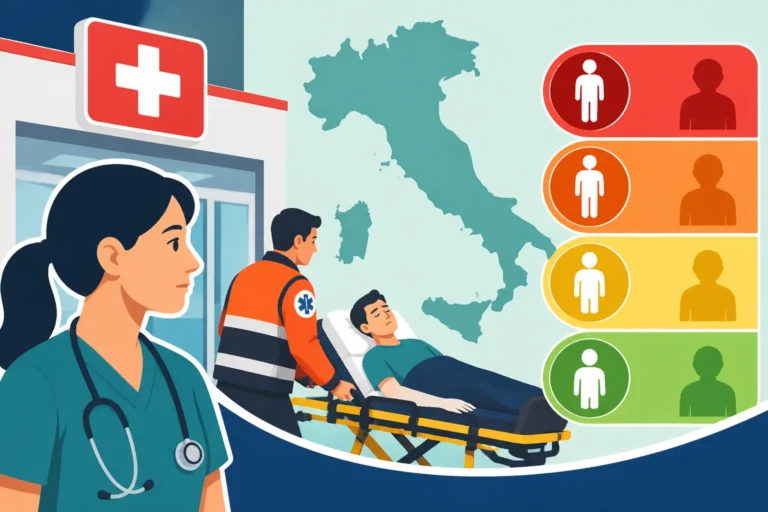
| U (Urgente) | Urgent | Potentially life-threatening or rapidly deteriorating conditions. | Within 72 hours |
| B (Breve) | Short | Conditions requiring rapid assessment but not immediate emergency care. | Within 10 days |
| D (Differibile) | Deferrable | Initial diagnostic visits or tests where a delay does not severely risk health. | 30 days for visits, 60 days for diagnostic tests |
| P (Programmata) | Planned | Routine check-ups, follow-ups, and non-urgent chronic disease monitoring. | Within 120 days |
While these maximum times are legally mandated by the National Plan for Managing Waiting Lists (PNGLA), the reality on the ground can be different. In highly populated areas or regions with strained healthcare resources, the public system often fails to meet the targets for ‘D’ and ‘P’ codes. It is not uncommon for a patient with a routine ‘P’ code for a non-urgent dermatology check or a knee ultrasound to be told the next available public appointment is eight or ten months away. This is the “waiting list” that frustrates Italians and expats alike. For a deeper understanding of how to navigate this specific referral structure, consult the GP Referral Process for Specialized Care in Italy.
Regional Discrepancies in Wait Times
It is critical to understand that Italy’s healthcare system is highly decentralized. While the national government sets the standards (the Essential Levels of Care), the actual delivery and funding of healthcare are managed by the 20 individual regions.
Because of this, the waiting lists for specialists vary drastically depending on where you live. Northern regions such as Lombardy, Veneto, and Emilia-Romagna generally benefit from better-funded healthcare infrastructure and highly digitized booking systems, often resulting in shorter wait times for public specialists. In contrast, some southern regions and islands may experience significant infrastructural challenges and medical staff shortages, leading to notoriously long public waiting lists even for standard diagnostic procedures.
Strategies to Bypass the Wait Private Care and Intramoenia
Faced with a six-month wait for a specialist appointment in the public system, many patients look for alternatives. Italy has a massive and highly efficient private healthcare sector that operates entirely outside the public waiting lists.
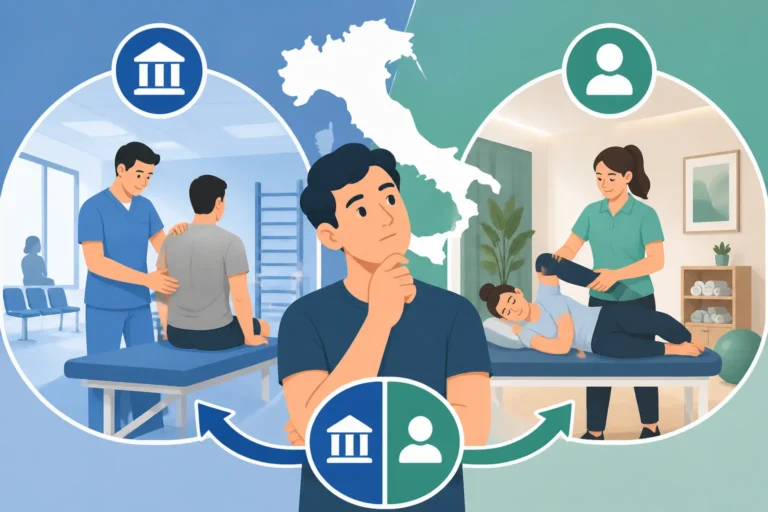
If you are willing to pay out of pocket, you can book an appointment directly with a private specialist, often securing a visit within a few days. This is a highly popular route for expatriates who have purchased supplemental international health insurance, which can reimburse these private costs.
Furthermore, the Italian system offers a unique hybrid model called Libera Professione Intramuraria, commonly known as Intramoenia. Under this system, top doctors who work for public hospitals are allowed to use the hospital facilities after hours to see patients privately. You pay a private fee directly to the public hospital, which then compensates the doctor. This allows you to completely bypass the public waiting list, secure an appointment within days, and still receive care from a highly vetted public hospital specialist.
The Challenge of Finding an English Speaking Doctor
For expatriates, the most significant barrier in Italian healthcare is not the waiting time, but the language. Finding a public Medico di Base who is fluent in English, comfortable practicing medicine in English, and currently has open spots on their patient roster is akin to finding a needle in a haystack.
The ASL databases do not officially filter doctors by language proficiency. To find an English-speaking public doctor, you must rely heavily on word-of-mouth recommendations from local expat communities, Facebook groups, or embassy lists. If you do find one, there is a high probability that their 1,500-patient roster is already full, precisely because every other expat in the city has flocked to them. Because of this linguistic bottleneck, many newly arrived expats initially bypass the public primary care system entirely, preferring to pay for private English-speaking clinics until they are comfortable enough with the Italian language to utilize a local public doctor.
Temporary Healthcare Access for New Arrivals
If the true waiting list in Italy is the time it takes to process your residency and immigration paperwork, what do you do for healthcare during your first few months in the country?
- Private Travel Insurance: It is highly recommended to arrive in Italy with a robust travel or expatriate health insurance policy that covers emergency and routine care for at least the first six months.
- Guardia Medica: If you fall ill at night, on a weekend, or during a public holiday before you have registered with a GP, you can access the Guardia Medica (Continuity of Care doctor). This is a public service designed to handle urgent but non-life-threatening issues out of hours.
- Paying Out of Pocket: You always have the legal right to visit any public Medico di Base as a temporary private patient. You can look up the clinic hours of a doctor in your neighborhood, walk in, explain that you are waiting for your paperwork, and ask to be seen. The doctor will charge you a regulated, minimal fee (usually between €15 and €30) for a basic consultation and can write you a prescription.
Conclusion
The narrative that expatriates must languish on waiting lists just to be assigned a doctor in Italy is largely a myth born from a misunderstanding of local bureaucracy. The Italian National Health Service empowers you to choose your own primary care physician the moment your administrative paperwork is complete. The true test of patience lies in gathering those foundational residency documents and, later on, navigating the triage-based waiting lists for non-urgent specialist care in the public sector.
By understanding the difference between the immediate registration for a Medico di Base and the priority-coded booking system for specialists, you can manage your healthcare expectations effectively. Embrace the efficiency of the local ASL for primary care, and utilize the private sector or the Intramoenia system when you need to bypass public wait times for specialized diagnostics. Armed with this knowledge, you can navigate the Italian medical landscape confidently, ensuring your health remains fully protected while you enjoy your expatriate adventure.
References
Primary sources official
- Ministero della Salute: The central portal for the Italian Ministry of Health, providing detailed guidelines on the National Plan for Managing Waiting Lists (PNGLA) and priority coding. https://www.salute.gov.it/
- Agenzia delle Entrate: Official information regarding the issuance of the Codice Fiscale, a mandatory requirement for healthcare registration. https://www.agenziaentrate.gov.it/
Other helpful sources
- Cittadinanzattiva: A prominent Italian civic participation non-profit that actively monitors and reports on public healthcare waiting times and patient rights across different regions. https://www.cittadinanzattiva.it/
Disclaimer
The information provided in this article is intended for general educational and informational purposes only and does not constitute official medical, legal, or administrative advice. Healthcare regulations, legally mandated waiting times for specialist appointments, and the specific procedures for registering with the Azienda Sanitaria Locale (ASL) are subject to frequent legislative updates and vary significantly by Italian region. Always consult directly with your local ASL office or a certified immigration professional regarding your specific residency status and healthcare eligibility. In the event of a severe, life-threatening medical emergency, do not wait for a scheduled appointment; please dial the universal European emergency number 112 immediately.