Airalo vs a Local Italian SIM: When Buying on Arrival Actually Wins
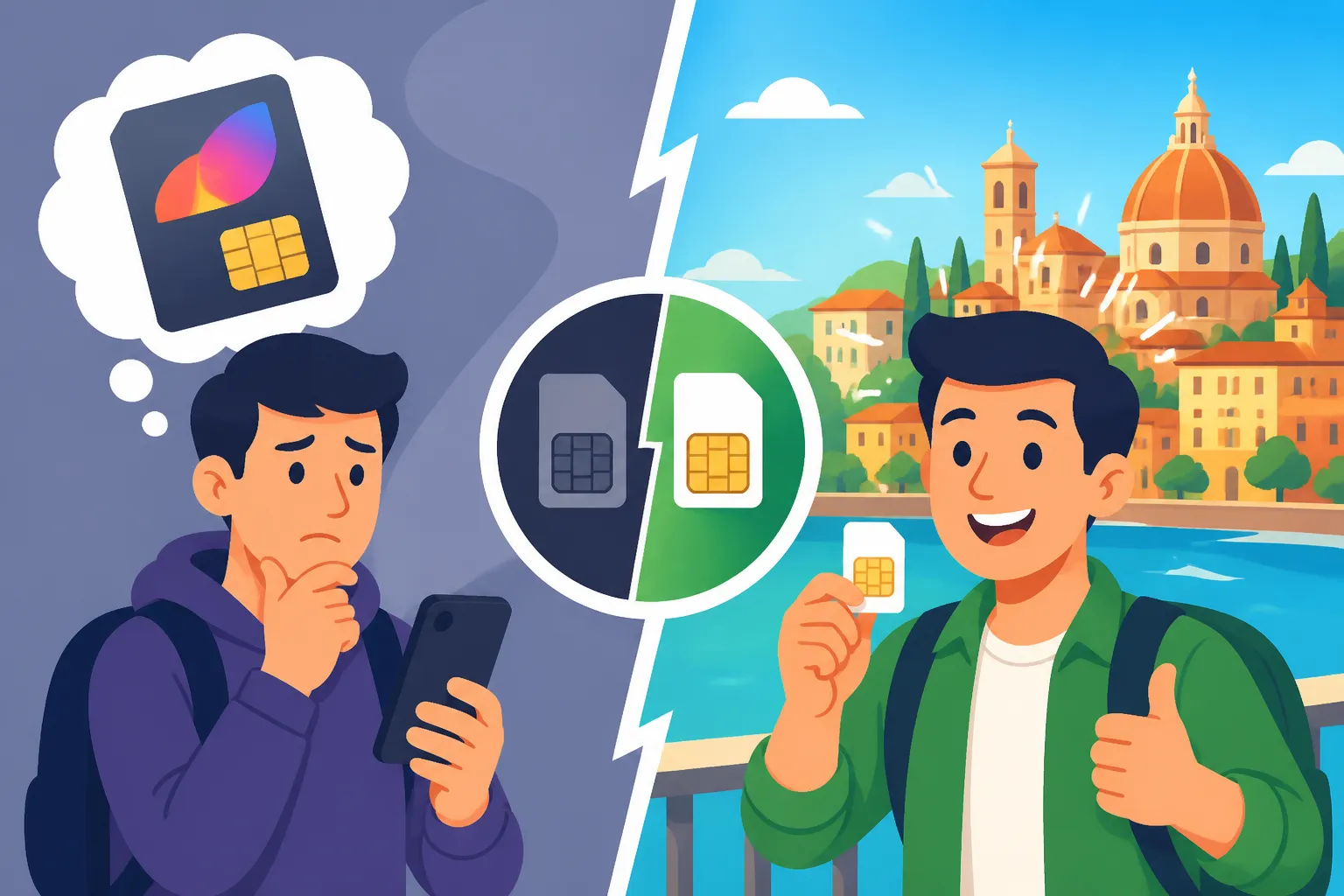
Landing in Italy is always a rush – the scent of espresso, the bustling piazzas, the sheer joy of it all! But let's be real, that euphoria can quickly turn to panic when you realize you need to call your Airbnb host, check train times, or simply tell your family you've arrived, and your phone has no service. The eternal expat dilemma of how to get connected quickly and affordably upon arrival is a very real source of stress, and today we're going to dive deep into whether an eSIM solution like Airalo truly trumps grabbing a local Italian SIM from the get-go.
Disclosure: This post may contain affiliate links. We may earn a commission at no extra cost to you if you make a purchase through these links. Read full disclosure.
The Initial Rush: Connectivity Upon Arrival
Picture this: you’ve just stepped off a long-haul flight into Rome Fiumicino or Milan Malpensa, jet lag is setting in, and you're navigating a new airport, a new language, and a different pace of life. The very first thing many of us expats and seasoned travelers want – no, need – is reliable internet access. It’s not just a convenience; it’s a lifeline, a navigation tool, and a peace-of-mind provider all rolled into one.
The Immediate Need for Data: Why It Matters More Than You Think
That instant connection is more critical than many first-time visitors or even seasoned travelers realize. You need to pull up your booking confirmation for your transfer, perhaps use Google Maps to find the bus stop, or even translate a sign that’s entirely in Italian. For many, communication with family back home is paramount. Imagine arriving late at night, your accommodation details are on your phone, and you can't access them because you're still hunting for Wi-Fi or, worse, a SIM card store that's open. It’s a recipe for instant anxiety, trust me. I’ve been there, fumbling with paper maps and trying to remember the few Italian phrases I knew, wishing I had thought about connectivity more strategically before leaving home.
Beyond immediate practicalities, there’s the social aspect. You want to share that first glimpse of the Colosseum or the taste of that perfect gelato with your friends and family. A quick post on social media, a video call to show off your new surroundings – these moments are part of the joy of travel, and they require a working internet connection. For those who need to work remotely, even briefly, upon arrival, instant connectivity is non-negotiable. Trying to find free, reliable, and secure Wi-Fi at an airport or train station can be a gamble, often leading to slow speeds and questionable security.
The Stress of the Italian Airport or Train Station Dash
Okay, so you've landed, cleared customs, grabbed your luggage. Now what? Your immediate thought might be, "I'll just grab a SIM card at the airport." Sounds simple enough, right? Wrong. The reality of getting a local SIM card at an Italian airport or major train station can be surprisingly frustrating. First, you need to find the specific telecom provider’s shop – usually a TIM, Vodafone, or WindTre store. Then, you might face a queue, especially if multiple flights have just landed. Once it's your turn, you'll need to present your passport, possibly your Italian tax code (Codice Fiscale) if you have one, and fill out paperwork, all while trying to communicate your needs in a language that might not be your strong suit. The staff might not speak fluent English, and explaining what kind of data plan you need can feel like an Olympic sport.
Then comes the activation period. While some SIMs activate almost instantly, others can take hours, or even a full day, leaving you in that dreaded digital limbo when you need connectivity the most. And let's not forget the price. Airport shops, much like anywhere else, often have inflated prices for convenience, or they might push plans that are far more extensive (and expensive) than what you actually need. All of this adds unnecessary stress to what should be an exciting start to your Italian adventure. The initial few hours are about soaking in Italy, not wrestling with bureaucracy for a SIM card.
Diving Deep into Airalo: Your Digital Lifeline
This is where the magic of eSIMs, and specifically Airalo, truly shines as a game-changer for anyone traveling to Italy. Think of it as bypassing all those initial stresses and landing already connected. It's truly a godsend for the modern traveler.
What is Airalo and How Does It Work in Italy?
Airalo is a pioneering eSIM marketplace that allows you to buy digital SIM cards (eSIMs) for hundreds of countries, including Italy, directly from their app or website. For those unfamiliar, an eSIM is essentially a virtual SIM card embedded directly into your phone’s hardware. This means no physical card to insert or swap, no tiny little ejector tools to lose, and no fiddling around with plastic chips. If your phone supports eSIM technology (most newer smartphones do – iPhones XR and newer, many Samsung Galaxy models, Google Pixels, etc.), you can simply download and install an Airalo eSIM profile onto your device.
Here's how it works for Italy: Before you even leave home, or while you're waiting for your flight, you download the Airalo app. You then select Italy (or Europe, if you're traveling across the continent) and choose a data package that suits your needs. You pay for it right there in the app, and within minutes, you'll have instructions to install the eSIM. This usually involves scanning a QR code or entering a few details manually in your phone’s settings. Once installed, your phone recognizes it as a new cellular plan. The beauty is you can activate it whenever you land. As soon as you step off the plane in Italy, you just switch on the Airalo data plan in your phone settings, and bam! – you’re connected. You’ll have a local data connection, often on a strong network like Vodafone Italy or TIM, without ever needing to find a shop, show your passport, or fill out a single form. It's the ultimate convenience for travelers.
The Undeniable Advantages of Airalo for Italy Travel
Let's unpack why Airalo is often the superior choice for most travelers to Italy, especially upon arrival.
First and foremost, it’s immediate connectivity. Imagine getting off the plane, switching on your data, and being able to immediately order a taxi, navigate public transport, or message your loved ones. No scrambling, no anxiety. This peace of mind is invaluable, particularly when you're in a new environment and might be tired or disoriented.
Secondly, you completely bypass Italian bureaucracy. As an expat who's been here a while, let me tell you, Italian bureaucracy is legendary. It’s slow, it requires paper, and it can be a significant headache even for simple things like getting a local SIM card. With Airalo, you sidestep all of this. No passport checks, no Codice Fiscale, no waiting for activation. It's a frictionless experience. This is a huge win, especially if you're only here for a short trip and don't want to get tangled up in local administrative processes.
Third, Airalo offers flexibility and multiple plan options. You're not locked into a long contract or forced to buy more data than you need. Whether you're in Italy for a weekend city break and need just 1GB, or a two-week tour needing 10GB, Airalo has various packages to suit different durations and data appetites. Many of their regional plans also cover all of Europe, which is fantastic if your Italian adventure is part of a larger European tour. This flexibility means you only pay for what you use, and you can easily top up if you run out of data.
Moreover, you keep your home number active. Because an eSIM works alongside your existing physical SIM (or other eSIMs), you can keep your primary phone number active for calls and texts. This means friends and family can still reach you on your familiar number, while you use Airalo for data. This is a huge benefit, as forwarding calls or juggling multiple numbers can be a pain. It allows you to maintain critical connections while enjoying seamless local data.
Choosing the Right Airalo Plan for Your Italian Adventure
Airalo offers a range of options, and choosing the right one depends on your travel style and data consumption habits. For Italy specifically, you'll typically find individual country plans or regional Europe plans.
- For Shorter Trips (1-7 days): If you're just doing a quick city break to Rome or Florence, a smaller data package, like 1GB for 7 days, might be perfectly sufficient. This covers essential navigation, messaging, and light social media use. Remember, many cafes and accommodations offer Wi-Fi, so you won't always be relying solely on cellular data.
- For Medium Trips (7-15 days): For a classic two-week Italian holiday exploring multiple regions, a 3GB or 5GB plan for 15-30 days would be a safer bet. This allows for more extensive map usage, photo sharing, and perhaps even some video calls without constantly worrying about hitting your limit.
- For Longer Stays or Heavier Users (15+ days or remote work): If you're planning an extended trip, a multi-week plan with 10GB or even 20GB might be necessary. Airalo also offers regional plans for Europe, which are excellent if you plan to visit neighboring countries like France or Switzerland during your Italian journey. These plans offer consistent data across borders, saving you the hassle of buying a new eSIM for each country.
It's always a good idea to consider your habits. Are you a heavy streamer? Do you upload lots of videos? Or are you mostly using data for navigation and messaging? If you're unsure, starting with a slightly larger plan gives you peace of mind, and topping up is usually straightforward within the Airalo app if you find yourself running low. Checking the coverage map on the Airalo website for specific regions in Italy you plan to visit can also be helpful, though they generally partner with major networks providing excellent national coverage.
The Traditional Route: Local Italian SIM Cards
While Airalo offers unparalleled convenience, it’s only fair to consider the traditional alternative: grabbing a physical SIM card from an Italian provider once you're on the ground. This route has been the standard for decades, and for certain situations, it still has its place.
Navigating Italian Telecom Providers on the Ground
Italy has several main mobile network operators: TIM, Vodafone Italia, WindTre, and Iliad. Each offers various prepaid SIM card options, often marketed towards tourists or new residents.
- TIM: One of the oldest and largest providers, TIM generally offers good coverage, especially in more rural areas. They often have specific "Tourist SIM" packages that bundle data, calls, and texts for a set period.
- Vodafone Italia: Known for its strong network coverage and speed, Vodafone is a popular choice. Like TIM, they also have plans tailored for temporary visitors.
- WindTre: This is a merger of Wind and 3 Italia, offering competitive prices and decent coverage, particularly strong in urban areas.
- Iliad: A newer entrant, Iliad disrupted the market with very aggressive pricing. They are known for offering large data allowances at low monthly costs, but their coverage might not be as extensive as the established players in very remote locations.
Finding these providers is usually quite easy in larger cities and towns. You'll spot their branded stores (e.g., "TIM Store," "Vodafone Negozio") on main streets, in shopping centers, and sometimes at airports or major train stations. However, the experience of actually getting a SIM can vary wildly.
The Bureaucratic Hurdle: Documents, Activation, and Italian Paperwork
This is where the local SIM route often loses its appeal for short-term visitors. To purchase a prepaid SIM card in Italy, you absolutely must present valid identification, typically your passport. For most expat residents, you'd also need your Codice Fiscale (Italian tax code), which can be a whole bureaucratic adventure to obtain on its own. The staff will need to make a copy of your passport, and you'll be asked to sign several forms – often entirely in Italian – agreeing to terms and conditions you might not fully understand.
Even after completing the paperwork, the SIM card might not be immediately active. While some activate within minutes, it’s not uncommon to wait a few hours, or even up to 24 hours, for the service to fully kick in. This delay can be incredibly inconvenient if you need immediate connectivity. I remember one time, trying to set up a new SIM for a friend who had just arrived. We spent over an hour in the Vodafone store, only for the data to start working 6 hours later! It really makes you appreciate the instant gratification of an eSIM. This process can be made even more complex if there's a language barrier, leading to misunderstandings about the plan details, activation process, or potential hidden fees.
Hidden Costs and Unexpected Quirks of Local SIMs
Beyond the initial purchase price, local Italian SIMs can sometimes come with unexpected quirks and costs.
- Activation Fees: Many providers charge an activation fee on top of the plan cost, which can add €5-€10 to your initial outlay.
- Expiry Dates: Prepaid SIM cards typically have a validity period, and if you don't top up within a certain timeframe (e.g., 6 or 12 months), the SIM and its number might expire, along with any remaining credit. This is less of an issue for short-term visitors but important to note.
- Mandatory Bundles: Sometimes, the most appealing "tourist plans" bundle more calls or texts than you'll ever need, driving up the cost for what is essentially a data-only requirement. You might feel pressured into a plan that isn't truly optimized for your usage.
- Roaming Abroad: While Italy is part of the EU, meaning EU residents can "Roam Like At Home," non-EU travelers with an Italian SIM might face significant roaming charges if they leave Italy for another non-EU country, like Switzerland, even if it's just a day trip.
- The Codice Fiscale Dilemma: While tourists typically only need a passport, some smaller shops or specific plans might ask for a Codice Fiscale. If you're a long-term visitor or planning to register your residency, you'll definitely need one for anything beyond a basic tourist SIM. This can add another layer of complexity for those just arriving.
These little details, while not deal-breakers for everyone, can add up to a less smooth and potentially more expensive experience compared to the transparent and straightforward nature of an eSIM like Airalo.
When a Local SIM Might Actually Win: The Niche Scenarios
While Airalo is generally the champion for convenience and immediate connectivity, there are specific situations where a physical Italian SIM card could actually be a better fit. It's about understanding your unique travel duration, data needs, and tolerance for local administrative hurdles.
Long-Term Stays or Residency: The Cost-Benefit Analysis
If you're not just visiting for a few weeks but are moving to Italy for an extended period – say, for a university program, a new job, or even settling down with an Elective Residence Visa – then a local Italian SIM card typically becomes the more sensible and cost-effective option in the long run.
Here's why: local plans, especially those not specifically branded as "tourist SIMs," usually offer much more generous data allowances and unlimited calls/texts within Italy at a lower monthly price. Once you have your Codice Fiscale and are properly registered as a resident (I highly recommend understanding the process for How to Get a Codice Fiscale in Italy (and Why You Need One)), you can access these residential plans. For example, a local SIM from Iliad or WindTre might offer 100GB or even unlimited data for around €10-€15 per month, which is far more competitive than what an eSIM can offer for an equivalent duration and data volume. You can also opt for contract plans that bundle home internet, which makes sense if you’re setting up a permanent residence. So, if you're planning to stay for several months or years, the initial hassle of getting a local SIM and the associated paperwork pays off in significantly lower monthly costs and higher data caps.
Extreme Data Users and Unlimited Plans: Finding the Best Value
If you are an absolute data guzzler – someone who streams constantly, uploads large files, engages in frequent video calls for work, or tethers multiple devices – you might find that the data packages offered by eSIMs like Airalo, while convenient, don't quite meet your demands for an extended period without becoming costly.
Local Italian providers, particularly TIM and Vodafone, often have truly unlimited data plans, or plans with very high data caps (e.g., 200GB+), although these usually come with a higher monthly price and might require a contract. If your usage is so high that you'd be constantly topping up an Airalo eSIM, a local SIM offering a large or unlimited plan could work out to be more economical. However, be aware that "unlimited" often comes with fair usage policies, and sometimes even local plans can have hidden throttling after a certain threshold. It’s critical to read the fine print, which, again, can be a challenge without good Italian language skills or a trusted local helper. For the average tourist, even a heavy user for a couple of weeks, Airalo's larger plans are usually sufficient.
Specific Regional Coverage Needs
While Italy generally has good mobile network coverage, there are always pockets in very remote mountain areas (like parts of the Dolomites or Apennines) or tiny, isolated islands where coverage can be patchy. Major providers like TIM and Vodafone generally have the most extensive reach, including these more challenging geographical areas.
If your Italian adventure involves significant time in very specific, off-the-beaten-path regions, and you know from local research (perhaps asking in expat groups or forums specific to that region) that one particular provider offers superior coverage there, then purchasing a physical SIM from that specific provider might give you a more reliable connection. For instance, sometimes TIM might have slightly better coverage in certain mountainous zones compared to WindTre, or vice-versa. Airalo often partners with one or two of the major networks (e.g., Vodafone, TIM), so while good, it might not always align perfectly with the absolute best network in a hyper-specific, remote locale. This is a very niche scenario, however, and for 99% of travelers visiting cities, popular regions, and well-trafficked tourist areas, Airalo’s network partners will provide perfectly adequate coverage.
Making Your Decision: Airalo's Value Proposition for Italy
So, after all this, how do you decide? For most people traveling to Italy, especially for shorter trips or those who value convenience above all else, Airalo emerges as the clear winner. Its core value proposition is difficult to beat when you factor in the true cost of time and stress.
Weighing Convenience vs. Cost Savings: The True Value of Time in Italy
Let's be honest, your time in Italy is precious. Are those few euros you might save on a local SIM worth the potential hassle? The hidden costs of going the traditional route aren't just monetary; they're also measured in minutes spent queuing, frustration with language barriers, and the anxiety of being disconnected.
With Airalo, you pay a little more for the absolute luxury of landing already connected. You use those precious minutes at the airport to grab a proper Italian coffee, enjoy the first glimpses of la dolce vita, or simply confirm your transport without breaking a sweat. For most travelers on a week or two-week holiday, the monetary difference between a local SIM and an Airalo eSIM might be marginal – perhaps €5-€10. Is that €5-€10 worth bypassing the paperwork, potential language barriers, and activation delays? Absolutely, in my opinion. Your holiday begins the moment you land, not after you've successfully navigated a telecom store. The peace of mind and immediate usability provided by Airalo justify the slight potential cost premium for the vast majority of visitors.
Seamless Travel vs. Local Hassle: Why Airalo Wins for Many
The reality is that seamless travel experiences are what most people seek. Airalo provides that by removing a significant point of friction. No hunting for shops, no deciphering Italian contracts, no worrying about carrying an ejector tool for your SIM tray. It integrates effortlessly into your travel plans. You simply arrive, switch it on, and you're good to go.
This seamlessness extends beyond arrival. If you're traveling around Italy, you don't have to worry about regional differences in SIM card policies or the risk of losing a tiny physical SIM. You maintain constant control over your data usage and can easily top up if needed. This is particularly valuable for those who travel with multiple devices or rely heavily on their phone for navigation, translation, and communication throughout their trip. While getting your Italian Health Card (Tessera Sanitaria) or Registering With Your Local ASL in Italy: A Practical Guide might require interaction with local bureaucracy, your phone connectivity should be as smooth as possible.
Practical Steps to Get Connected: No Matter Which Path You Choose
Regardless of whether you choose the convenience of Airalo or the deeper integration of a local SIM, having a plan is key.
For Airalo:
- Check Device Compatibility: First, ensure your smartphone supports eSIM technology. Most newer models do, but it's worth a quick check on your phone manufacturer's website.
- Download the App: Get the Airalo app on your phone (available for iOS and Android).
- Choose Your Plan: Select Italy or a regional Europe plan that matches your data needs and trip duration.
- Install the eSIM: Follow the clear instructions in the app to install the eSIM profile. Do this before you travel, ideally in a place with reliable Wi-Fi.
- Activate Upon Arrival: Once in Italy, simply enable your Airalo eSIM in your phone's cellular settings, and you're connected! You can even manage your data and top up directly from the app.
For a Local Italian SIM:
- Research Providers: Before you arrive, do a quick search on TIM, Vodafone, WindTre, and Iliad to see their current prepaid offers.
- Locate a Store: Plan to visit a branded store in a major city or airport upon arrival. Be prepared for queues.
- Gather Documents: Have your passport ready. If you plan a longer stay, consider obtaining your Codice Fiscale first.
- Language Prep: Learn a few key Italian phrases related to buying a SIM, or have a translation app ready.
- Be Patient: Expect the process to take some time, from paperwork to activation.
But for the vast majority of tourists, Airalo's seamless experience is a clear winner.
Here's a quick comparison table to help you visualize the trade-offs:
| Feature | Airalo (eSIM) | Local Italian SIM Card |
|---|---|---|
| Ease of Purchase | Online, pre-arrival, quick setup | In-store, requires time, queues, paperwork |
| Immediate Connectivity | Yes, upon landing | Potentially delayed (hours to 24+ hours) |
| Bureaucracy | Minimal to none (no passport/Codice Fiscale) | Passport required, forms, potential Codice Fiscale |
| Cost for Short Trips | Competitive, slightly higher for convenience | Potentially cheaper, but activation fees may apply |
| Cost for Long Stays | Higher for extensive, long-term data | Lower monthly rates, larger data bundles |
| Network Coverage | Uses major local networks (e.g., Vodafone, TIM) | Directly on chosen local network |
| Keep Home Number | Yes, can use alongside existing SIM | No, replaces your physical SIM (unless dual SIM phone) |
| Flexibility | Easy top-ups, various plans (country/regional) | Often fixed plans, harder to change/top up remotely |
| Physical Card | No physical card needed | Physical card required |
Insider Tips for Staying Connected in Italy
No matter your choice, a little extra planning can make your Italian connectivity experience truly stress-free.
Wi-Fi Hotspots and Public Networks
While Airalo gives you freedom, don't forget the power of Wi-Fi. Many Italian cafes, restaurants, hotels, and even some public squares offer free Wi-Fi. Always ask for "il Wi-Fi" or "la password del Wi-Fi." While convenient, public Wi-Fi can sometimes be slow, unreliable, and less secure. Avoid sensitive transactions like online banking on public networks. For those moments when you just need to send a quick message or check an email, they are certainly handy. Remember to download offline maps from Google Maps or other navigation apps before venturing out, which can save you data and be a lifesaver in areas with spotty signal. This helps stretch your Airalo data further.
Battery Life and Power Banks
All that delightful connectivity comes at a cost: battery life. Using data, especially for navigation, photography, and social media, can drain your phone's battery faster than usual. Always carry a portable power bank (or two!) to ensure your phone stays charged throughout your day exploring Italy's wonders. There's nothing worse than running out of battery just when you need to consult your map or capture that perfect shot of the Pantheon. Many cafes and train stations have charging points, but having your own portable charger is always the safest bet. Planning to study in Italy? Ensuring your devices are always charged is crucial when navigating Applying to Italian Universities Through the Universitaly Portal or attending virtual classes.
Staying Secure Online
Whether you're using Airalo's mobile data or a local Wi-Fi network, online security is paramount. Consider using a Virtual Private Network (VPN) for an added layer of protection, especially when connecting to public Wi-Fi. This encrypts your internet traffic, protecting your personal data from potential snooping. Always be cautious about what information you share online and where you log in, especially during your travels. Being smart about your online habits ensures your digital safety while you're enjoying your time in Italy.
Ultimately, the choice is yours, but for the modern traveler seeking a smooth, stress-free start to their Italian adventure, Airalo's eSIM solution is hard to beat. It removes the initial connectivity hurdle, allowing you to immerse yourself in Italy from the moment you land.
Disclaimer
Please note that visa, immigration, and administrative regulations, as well as telecom offerings and pricing, can change frequently in Italy. The information provided in this article is for general guidance only and is based on current knowledge. Always consult official government websites, accredited legal counsel, or the specific service providers for the most up-to-date and personalized advice before making any decisions related to your travel or relocation to Italy. We are not responsible for any inaccuracies or outdated information.