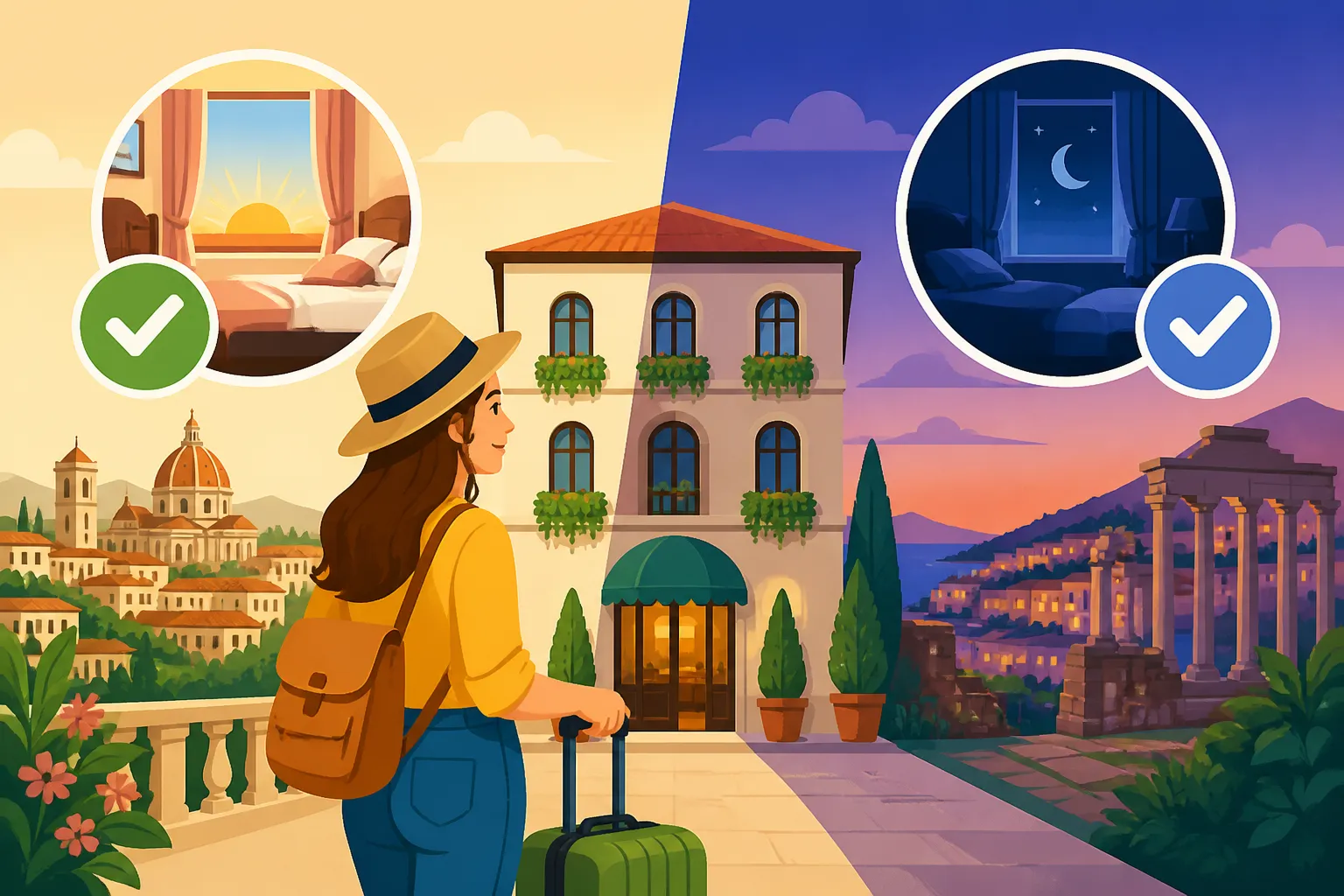
Early Check-In and Late Check-Out in Italy: Who Actually Offers It
Oh, the age-old travel dilemma: you've just arrived in Italy after a long, red-eye flight, bags in hand, desperately craving a shower and a moment of peace, only to find your hotel's check-in isn't until 3 PM. Or perhaps you have a late evening flight out, but checkout is at a rigid 10 AM, leaving you stranded with luggage and hours to kill. These little logistical hurdles can throw a real wrench in your Italian adventure. This guide is here to walk you through the realities of early check-in and late check-out in Italy, helping you navigate these situations like a seasoned expat, and showing you how powerful platforms like Booking.com can be in making your life easier.
Disclosure: This post may contain affiliate links. We may earn a commission at no extra cost to you if you make a purchase through these links. Read full disclosure.
Understanding Italian Hotel Norms for Check-In and Check-Out
Let's be real, the idea of strolling into your hotel at 8 AM and dropping your bags in your room, or lingering until evening on departure day, is often a pipe dream here in Italy. While Italian hospitality is legendary, the practicalities of running a hotel, B&B, or even an agriturismo mean there are standard procedures in place, and they're usually quite strict.
Standard Times and the Rationale Behind Them
Most accommodations in Italy adhere to a standard check-in time of around 2 PM or 3 PM, and a check-out time of 10 AM or 11 AM. Why so rigid, you ask? It's not out of malice, but pure operational necessity. Think about it: during those few hours between one guest leaving and another arriving, staff are in a whirlwind. Rooms need to be thoroughly cleaned, beds stripped and remade, bathrooms sanitized, and amenities restocked. This is especially true for smaller, family-run establishments where the same few people might be managing reception, cleaning, and breakfast service. In popular destinations like Florence or Venice, where demand is high year-round, every minute counts to flip a room for the next eager traveler.
For larger hotels, particularly those in bustling cities like Milan or Rome, there's a delicate dance of logistics involving hundreds of rooms. Early arrivals mean potentially disrupting the cleaning schedule, causing delays for other guests checking in on time, and putting stress on an already stretched team. Many places simply don't have enough staff to accommodate requests on the fly, especially during peak season when every room is booked solid. It’s important to remember that these aren't just arbitrary rules; they're the grease that keeps the hospitality machine running smoothly.
The "Bella Figura" of Accommodation and Guest Experience
Italians have a concept called "bella figura," which roughly translates to making a good impression and maintaining a certain standard of elegance and composure. This extends to how businesses operate, including hotels. From a hotel's perspective, they want to present a perfectly prepared room to every guest. Handing over a room that isn't quite ready, or rushing a cleaning job, goes against this principle of "bella figura." They'd rather politely decline an early check-in than offer a less-than-perfect experience. This means they are often more focused on ensuring that when you do get your room, it's immaculate and everything is just right, rather than prioritizing speed.
This focus on the ideal guest experience also means they might be reluctant to offer late check-out if it means potentially delaying the next guest's arrival into a clean room. For a hotel, maintaining their reputation for quality and smooth operations is paramount. While it might feel frustrating when you're the one waiting, understand that it's part of a broader cultural value that values presentation and order. They want your stay to start and end with a sense of calm and perfection, even if that means a bit of waiting on your part.
Regional Variations: City Hotels vs. Agriturismi
While the general rule of thumb for check-in/check-out times holds true across Italy, you might find some slight variations depending on the type of accommodation and its location. In major cities such as Rome, Florence, or Milan, where hotels operate with high occupancy rates and tight schedules, flexibility is often at a premium. These urban hotels are typically more rigid due to the constant flow of guests and the logistical demands of a high-volume business. You're more likely to encounter strict adherence to the stated times, and any deviation might come with an additional fee.
Conversely, if you're staying in a more rural setting, like an agriturismo in Tuscany or Umbria, or a smaller B&B in a less-trafficked town, you might find a bit more leeway. These smaller, often family-run establishments might have fewer rooms and a more relaxed pace, which can translate into greater flexibility. If their schedule allows, and they don't have an immediate incoming guest for your room, they might be more inclined to accommodate an early arrival or a slightly later departure without extra charge. However, this is never a guarantee and should always be confirmed in advance. The key takeaway is to manage your expectations: assume rigidity in cities and hope for pleasant surprises in the countryside.
Smart Strategies for Requesting Early Check-In or Late Check-Out
Even with the rigid norms, it's not entirely impossible to get what you want. A little foresight and politeness can go a long way. This is where your inner diplomat needs to shine, and where smart use of booking platforms really comes into play.
Proactive Communication: The Power of Contacting Your Hotel Directly
The single most effective strategy is to communicate early and directly. As soon as your travel plans are firm, and ideally several days before your arrival, send a polite email to your accommodation asking about their policy on early check-in or late check-out. Don't just show up and expect it. When you make your request, clearly state your expected arrival or departure time and briefly explain why you're asking (e.g., "Our flight lands at 7 AM, and we would greatly appreciate it if an early check-in were possible, even if it's just to drop our bags and freshen up before exploring").
Framing your request politely and with understanding for their operational constraints can make a big difference. Emphasize that you understand it depends on availability and that you're happy to wait if needed, or to utilize their luggage storage. Sometimes, they might not be able to give you the room immediately, but they might offer to prioritize cleaning your room or at least guarantee secure luggage storage so you can start your day exploring Rome for First-Time Visitors: Neighborhoods and Highlights without being weighed down. Remember, the earlier you ask, the more time they have to adjust their schedule if possible.
Checking Policies: What to Look For on Booking Platforms and Hotel Websites
Before you even book, or definitely once you've booked, scour the accommodation's page on platforms like Booking.com, or their direct website, for any stated policies. Many hotels will explicitly mention whether early check-in or late check-out is available, often with a disclaimer about availability and potential extra charges. Sometimes, this information is hidden in the "Policies" or "FAQ" section. If you can't find it, that's your cue to reach out directly.
Booking.com is particularly useful here because it often includes a "Special Requests" box during the booking process, or allows you to message the property directly after booking. This creates a clear written record of your request. While a special request isn't a guarantee, it flags your preference to the hotel well in advance, giving them more opportunity to plan. Always remember to check your confirmation email for instructions on contacting the hotel directly if the booking platform's messaging system isn't responsive enough for you.
The Art of the Polite Request: In-Person and Via Email
Whether you're sending an email or speaking to someone at reception, politeness and a clear understanding of the situation are your best tools. If you're requesting early check-in in person, arrive with a smile and ask, "Buongiorno! We know check-in is later, but would it be at all possible to check in early today if a room happens to be ready?" (using a phrase like "se per caso fosse possibile" – if by chance it were possible). This shows you're not demanding but hopeful.
If you're asking for a late check-out, the same applies. "We have a late flight, and we were wondering if it would be possible to check out a bit later than 10 AM? We understand there might be a charge, or it might not be possible, but we wanted to ask." Again, the emphasis is on being understanding and flexible yourself. Offering to pay a half-day rate might also open doors, as it gives the hotel a financial incentive. The key is to make it easy for them to say yes, or at least to offer a helpful alternative like luggage storage. Being demanding or expecting it as a right will almost certainly lead to a polite but firm "no."
When and Where to Find Flexibility: Making Booking.com Your Ally
This is where your booking platform, especially Booking.com, truly becomes your best friend. In a country like Italy, where bureaucracy and traditions run deep, having a tool that helps you navigate these little administrative hurdles is invaluable.
Filtering for Flexibility and Communicating via Booking.com
Booking.com offers an incredible array of filters, and while "early check-in" or "late check-out" isn't a direct filter, you can look for properties that emphasize flexibility in their descriptions or reviews. More importantly, once you've booked, Booking.com's robust messaging system allows for direct communication with the property. This is a game-changer. Instead of hunting for an email address or worrying about language barriers on the phone, you can send a clear, written message through the platform, stating your request in advance.
Often, property owners or managers are more responsive through Booking.com's system than through direct email, as they are actively monitoring it for guest inquiries. Be specific in your message: "Hi, our booking is under [Your Name], arriving on [Date]. We are scheduled to arrive around [Time]. Would it be possible to check in a bit earlier? We understand if there's a fee or if it depends on availability." This proactive approach, facilitated by Booking.com, dramatically increases your chances of a positive outcome or at least a clear understanding of the property's capabilities. It empowers you to make your needs known without the usual stress of international communication.
Member Perks and Loyalty Programs: The Booking.com Genius Advantage
If you travel frequently and use Booking.com, you might have achieved "Genius" status. This loyalty program offers various benefits, and one of them can sometimes be free room upgrades, free breakfast, or even late check-out. While it's not a universal guarantee for every property, many participating hotels on Booking.com do offer these perks to Genius members when available. This is a fantastic incentive to consistently use the platform.
Imagine the relief of knowing that, simply by being a loyal customer, you might automatically qualify for a later check-out, giving you those precious extra hours to enjoy your last Italian Food Culture: Eating Well as a Visitor or do some last-minute souvenir shopping. It's not a free pass, and availability still plays a role, but having that Genius status definitely gives you a leg up and makes properties more inclined to accommodate you. When searching for accommodations, keep an eye out for properties that explicitly offer Genius benefits, especially if late check-out is a priority for you. Booking.com truly rewards its frequent users with thoughtful considerations like these.
Identifying Flexible Properties: What Booking.com Reveals
Beyond direct communication and loyalty programs, Booking.com often highlights properties that inherently offer more flexibility. Look for keywords in the property descriptions or policies such as "24-hour reception," "flexible check-in/check-out," or "luggage storage available." While these aren't always a guarantee of early check-in or late check-out, they signal a property that is generally more service-oriented and potentially more accommodating.
For instance, a hotel with 24-hour reception is much more likely to be able to handle an odd-hours check-in or facilitate luggage storage than a small B&B where the owner leaves after breakfast. Read recent reviews on Booking.com too; sometimes past guests will mention whether the property was accommodating with arrival or departure times. This anecdotal evidence from fellow travelers can be incredibly insightful and help you choose a place that aligns with your needs for a smoother travel experience. By leveraging Booking.com's extensive information, you can make a much more informed decision before you even click "book."
Alternative Solutions and Maximizing Your Time in Italy
So, what happens when early check-in or late check-out just isn't possible? Don't despair! Italy is incredibly well-equipped for travelers, and there are plenty of ways to make the most of those in-between hours, baggage-free.
The Lifesaving Convenience of Luggage Storage Options
When your room isn't ready or you've checked out, the number one priority is to ditch your luggage. Thankfully, Italy offers numerous convenient options. Most hotels, even if they can't offer early check-in, will gladly hold your bags for you free of charge. This is the simplest and often most overlooked solution. Just drop your bags at reception, get a tag, and head out to enjoy the city.
Beyond hotels, major train stations in cities like Florence (Firenze Santa Maria Novella), Rome (Roma Termini), and Milan (Milano Centrale) have manned left-luggage offices (deposito bagagli) or automated lockers. These services are secure and relatively inexpensive, allowing you to explore sites like the Duomo in Florence for First-Time Visitors: What to See and Skip or the Colosseum without dragging heavy suitcases. There are also private luggage storage services popping up in many tourist-heavy areas, often affiliated with local shops or cafes, which you can find with a quick online search. Always make sure to check operating hours and current prices for these services.
| Location Type | Availability | Typical Cost | Security | Notes |
|---|---|---|---|---|
| Your Hotel/Accommodation | High (most offer it) | Free | High | Best and most convenient option. |
| Major Train Stations | High (e.g., Roma Termini, Milano Centrale) | Moderate | High (manned/lockers) | Great for transfers between cities. |
| Private Storage Services | Growing, especially in tourist hubs | Moderate | Varies | Companies like Radical Storage, LuggageHero. |
| Airports | Limited (some have services, check in advance) | High | High | Only practical if your flight is soon. |
Considering Day Use Rooms: A Treat for Exhausted Travelers
If you truly need a place to rest, shower, or work during those awkward hours, some hotels offer "day use" rooms. These are rooms rented for a block of hours during the day, typically from morning until late afternoon, without an overnight stay. They are often offered at a reduced rate compared to a full night's stay. This can be a godsend if you have a very long layover, need to freshen up before an important meeting, or simply can't face spending hours in a cafe with your laptop.
While not all hotels advertise day-use rooms, it's worth inquiring directly, especially with larger business hotels or those near airports. You might find them listed on specific "day use" booking websites, or you can contact a hotel directly and ask, "Do you offer day rates for rooms for a few hours in the afternoon?" It's a luxury, for sure, but sometimes the comfort and convenience are absolutely worth the cost, especially if you're feeling the effects of Travel Logistics in Italy: Money, Safety, and Connectivity and need a moment to recharge.
Exploring the City Bag-Free and Making the Most of Your Time
Once your bags are securely stowed, the city is your oyster! Don't let awkward check-in/check-out times eat into your precious travel days. Use those hours to explore freely. If you're in Milan City Guide: Fashion, Art, and the Duomo, hit up some of the city's incredible museums or enjoy an extended aperitivo. In Rome, you could take a leisurely walk through Villa Borghese, or grab a coffee and people-watch in Piazza Navona.
This is also a perfect time to do activities that are difficult with luggage, like riding public transportation Getting Around Italian Cities: Metro, Tram, and Buses, visiting a local market, or even heading to a park for some relaxation. Think of it as an unexpected bonus time to see the city from a different perspective, without the burden of your belongings. You might even discover a hidden gem you wouldn't have otherwise found. Just be sure to keep your valuables, like your passport and wallet, on your person, following good advice for Staying Safe in Italy: Common-Sense Tips for Travelers.
Disclaimer
This article is for general informational purposes only and does not constitute professional advice. Laws, prices and regulations vary by location and change over time. Consult a qualified professional for guidance on your specific situation.