Healthcare for Retirees in Italy: Elective Residence Considerations
Moving to Italy for retirement is a dream of sun-drenched piazzas and slow afternoons, but the administrative nightmare of securing medical coverage can quickly sour the limoncello. I remember sitting in a dusty office in Perugia, clutching a stack of papers and wondering if I’d ever actually see a doctor. This guide demystifies the healthcare requirements for the Elective Residence Visa, ensuring your golden years are spent enjoying Italy, not fighting its bureaucracy.
Disclosure: This post may contain affiliate links. We may earn a commission at no extra cost to you if you make a purchase through these links. Read full disclosure.
Understanding the Italian National Health Service for Retirees
The Italian National Health Service, or Servizio Sanitario Nazionale (SSN), is often lauded as one of the best in the world, but as a retiree on an Elective Residence Visa (ERV), your access isn't automatic or free. Unlike workers who contribute through payroll taxes, retirees generally fall into the category of "voluntary enrollment." This means you have the right to access the same care as any Italian citizen, but you must pay an annual fee to do so.
Mandatory vs. Voluntary Registration
When you first arrive, you’ll realize there is a massive distinction between mandatory and voluntary registration. Mandatory registration applies to those with work contracts or family reunification permits. As a retiree, you will likely be looking at Enrolling in Italy’s National Health System (SSN) through the voluntary path, known as iscrizione volontaria. This is a conscious choice you make once you have your residency established, and it is valid for a calendar year—meaning it always expires on December 31st, regardless of when you paid.
I’ve seen many expats get caught out by this. If you register in October, you still pay the full annual fee, and your coverage still ends in December. It feels unfair, and honestly, it is a bit of a sting, but it’s the price of entry for high-quality public care. The coverage is comprehensive, including GP visits, hospitalizations, and discounted prescriptions, but you must be prepared for the "ticket" system—a small co-payment for tests and specialist visits.
The Role of the Elective Residence Visa
The Elective Residence Visa is specifically designed for those who can support themselves without working. Because you aren't contributing to the economy via labor, the Italian government requires absolute proof that you won't become a burden on the state. This is why Healthcare for Retirees in Italy: Elective Residence Considerations starts long before you board the plane. Your local Italian consulate will demand proof of private health insurance just to issue the visa.
However, once you arrive in Italy and receive your Permesso di Soggiorno (Residence Permit), the private insurance you bought for the visa is often just a bridge. Many retirees choose to maintain private coverage for a few months while they navigate the local Azienda Sanitaria Locale (ASL) to sign up for the SSN. It is a multi-step process that requires patience, a bit of Italian, and a lot of espresso.
The Financial Reality of Healthcare in Italy
Budgeting for your retirement in Italy requires a clear-eyed look at what medical care actually costs. While Italy is significantly cheaper than the United States, it is not "free." You need to account for the voluntary SSN contribution, the "tickets" for specialist visits, and the potential cost of private supplemental insurance.
Calculating the Voluntary SSN Contribution
The cost for voluntary enrollment in the SSN is calculated based on your total global income from the previous year. For most retirees, the rate is roughly 7.5% of income up to a certain threshold, though recent budget laws have introduced a minimum flat fee for certain visa types that can exceed 2,000 EUR per year. You must provide a self-declaration of your income, which the Italian authorities may verify.
If you are a high-income retiree, the SSN contribution might actually be more expensive than a high-quality private plan. This is where you need to do the math. For many, the Cost of Healthcare in Italy: What Expats Need to Know is still a bargain compared to private premiums in Northern Europe or North America, especially since the SSN covers pre-existing conditions without those pesky "waiting periods" or exclusions found in private contracts.
Why Private Insurance is Crucial for New Arrivals
Before you can even set foot in an ASL office, you need private insurance. Consulates are very specific about this: the policy must have zero deductible, offer at least 30,000 EUR in coverage, and be valid throughout the Schengen Area. This is where a provider like Cigna Global becomes invaluable, as they offer the comprehensive documentation that Italian consuls recognize immediately.
For the initial move-in phase, some younger retirees or those waiting for their permit might use a more flexible option like SafetyWing to cover the gap, but keep in mind that "travel medical" insurance is often rejected for the Elective Residence Visa. You need a "long-stay" or "international" policy. I personally kept my private coverage for the first year because the peace of mind of having an English-speaking helpline while I was still learning the difference between farmacia and para-farmacia was worth every cent.
| Coverage Type | Typical Annual Cost (Estimate) | Best For | Pre-existing Conditions |
|---|---|---|---|
| SSN (Voluntary) | 2,000 EUR – 7,000 EUR | Long-term residents | Covered fully |
| Private (International) | 1,500 EUR – 5,000 EUR | Visa requirements / Fast track | Often excluded |
| Private (Local Italian) | 800 EUR – 2,000 EUR | Supplemental care | Limited coverage |
Managing Chronic Health Conditions and Medications
If you’re retiring to Italy, chances are you might have a recurring prescription or a condition that requires regular monitoring. The way Italy handles chronic care is very different from the "on-demand" system in many English-speaking countries. It is a system built on the relationship with your family doctor.
The Specialist Referral System
In Italy, you cannot simply call up a cardiologist and book an appointment if you want the state to pay for it. Everything goes through your Medico di Base (Family Doctor). You visit them, explain the issue, and they issue an impegnativa—a red or electronic prescription/referral. This is how the Specialist Referrals in Italy: How the Impegnativa Works in practice. Once you have this paper, you call the Centro Unico di Prenotazione (CUP) to book your appointment.
The wait times in the public system for non-urgent specialist visits can be long—sometimes several months. This is why many retirees choose a hybrid approach. They use the SSN for their regular prescriptions and major surgeries but pay out-of-pocket for private specialist visits when they want to be seen within a week. Understanding How Much Is the Health Ticket for a Specialist Visit in Italy? helps you decide when to go public and when to spend the 100-150 EUR for a private consultation.
Accessing Long-term Medications
Bringing a six-month supply of medication from home is a common expat tactic, but eventually, you’ll need to integrate into the Italian pharmacy system. Most chronic medications are heavily subsidized or even free under the SSN, provided you have a prescription from an Italian doctor. You cannot simply show your foreign prescription to an Italian pharmacist and expect them to fill it.
You will need to take your foreign medical records—ideally translated into Italian—to your new Choosing a Medico di Base (Family Doctor) in Italy. They will review your history and then transcribe those prescriptions into the Italian system. This transition can take time, so don't wait until you're on your last pill to start the process. I once spent a frantic afternoon in a Florentine pharmacy trying to explain "blood thinners" with hand gestures; save yourself the stress and get your Italian doctor sorted early.
Practical Steps to Securing Your Health Card
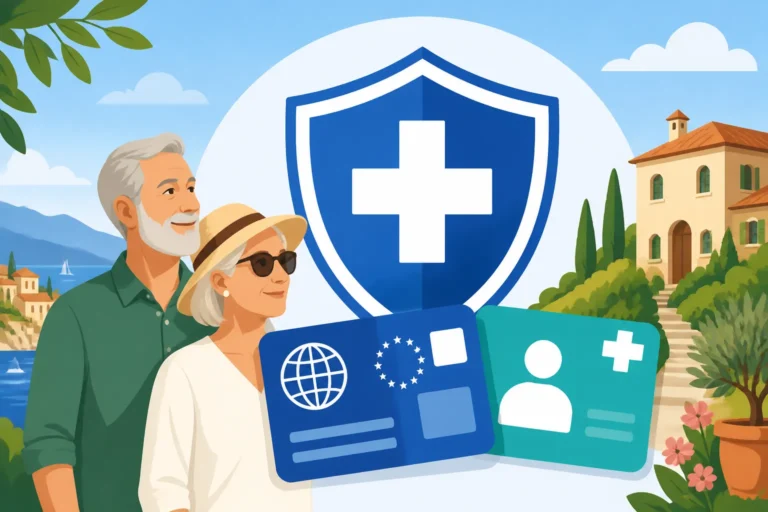
The Tessera Sanitaria is the golden ticket of Italian life. It’s a plastic card that serves as your tax code, your health card, and your proof of right to care. Getting it as a retiree involves a specific dance through three different government offices.
Securing the Tessera Sanitaria
The process usually looks like this: First, you visit the Post Office to pay your voluntary contribution using a bollettino postale. You have to get the account number and the exact amount right for your specific region. Then, you take that receipt, your Permesso di Soggiorno (or the receipt showing you’ve applied for it), your passport, and your proof of residence to the ASL office.
At the ASL, you will be asked to choose a doctor from a list. Don't just pick the first name; ask your neighbors or check expat forums for recommendations. Once registered, they will print a paper version of your card. The actual plastic Obtaining the Italian Health Card (Tessera Sanitaria) will arrive in the mail weeks or months later. This card is essential not just for health, but for everything from buying a SIM card to signing a utility contract.
Finding an English-Speaking Family Doctor
While many younger Italian doctors speak excellent English, it is not a requirement. In smaller villages, you might find your doctor only speaks the local dialect and Italian. If your Italian is still in the "ordering coffee" stage, finding an English-speaking GP is a priority.
In major cities like Rome, Milan, or Florence, the ASL lists often indicate which languages a doctor speaks. If you are in a more rural area, you might need to bring a friend to translate during your first few visits. Many retirees find that using a premium private service like Cigna Global allows them access to a secondary network of English-speaking doctors they can call for advice, even while they use the SSN for their routine prescriptions. It acts as a linguistic safety net.
Regional Variations in Quality and Access
One thing no one tells you until you arrive is that there isn't really one "Italian Healthcare System." Instead, there are 20 regional systems. The quality, funding, and efficiency of care can vary wildly depending on whether you retire in the shadow of the Alps or on the shores of Sicily.
North vs. South Healthcare Divide
Generally speaking, the healthcare systems in Lombardy, Veneto, and Emilia-Romagna are world-class, often outperforming private systems in other countries. The wait times are shorter, and the facilities are more modern. As you move south, the system can become more strained. This is part of the Regional Healthcare Differences in Italy: North vs South that every retiree must consider when choosing their new home.
If you have a complex medical condition, retiring to a remote village in Calabria might be romantic, but you might find yourself driving two hours to reach a specialized hospital. In contrast, retiring in a city like Bologna puts you in one of the densest medical hubs in Europe. Always research the local hospital, or ospedale, before signing a long-term lease. Knowing where the nearest Emergency Medical Numbers in Italy (112, 118, 1500) will lead you is vital.
The Importance of Local ASL Offices
Your local ASL office will become the center of your administrative universe. Each ASL has its own quirks. Some allow you to book appointments online via a regional portal, while others require you to stand in line at 7:00 AM. In Tuscany, for example, the system is quite digitized, whereas in other regions, you might still be dealing with carbon-copy paper.
When you are house hunting, ask other expats in the area about their experience with the local ASL. Are they helpful? Do they have an office nearby? Is it easy to get a specialist appointment? These "boring" logistical questions are actually the most important factors for your long-term happiness and health in Italy.
The Transition Period: From Tourist to Resident
The most dangerous time for a retiree’s health is the "limbo" period—the 3 to 6 months after you arrive but before your residency is fully processed and your SSN card is in hand. During this time, you are technically a visitor in the eyes of the healthcare system, even if you have your visa.
Managing the Gap with Private Insurance
During this transition, if you have a medical emergency, you will likely be treated at an emergency room, known as a Pronto Soccorso. Without an SSN card, you will be billed as a private patient. This is exactly why you have that initial private insurance. If you have a policy from SafetyWing, for instance, it can cover unexpected injuries or acute illnesses that happen while you are waiting for your Codice Fiscale and ASL registration to clear.
Always keep your insurance policy number and the "emergency" phone number on your person. If you are admitted to a hospital, the hospital staff will need to coordinate with your private insurer to guarantee payment. Once your Differences between Public and Private Healthcare in Italy are clear, you can decide whether to keep the private policy as a supplement or rely solely on the state. Most veteran expats suggest keeping a "catastrophic" private plan just in case you need to be repatriated or want a private room in a hospital, which the SSN does not guarantee.
Emergency Care for New Residents
In a true emergency, the Italian system is incredible. They will treat you first and ask for paperwork later. If you experience a heart attack or a major accident, the 112 operators and ambulance crews provide high-level care regardless of your visa status. However, once the "emergency" is over and you are stabilized, the billing department will come calling.
For retirees, the goal is to move out of this "emergency-only" phase as quickly as possible. Secure your residency, pay your SSN fee, and get your doctor assigned. Having that Tessera Sanitaria in your wallet is the ultimate sign that you are no longer a guest in Italy, but a member of the community. It’s a hurdle, certainly, but once you’re on the other side, you can finally get back to the important business of enjoying your retirement.
Disclaimer
This guide is provided for informational purposes only and does not constitute legal, financial, or medical advice. Italian immigration and healthcare laws are subject to frequent changes at both national and regional levels. Always verify requirements with the official website of the Italian Ministry of Health or your local Italian Consulate before making any financial or relocation decisions.