How to Count Years of Residence for Italian Citizenship
Trying to calculate exactly when you become eligible for Italian citizenship can feel like trying to solve a puzzle where the pieces keep changing shape. I remember sitting in my local Anagrafe office, clutching a stack of papers, only to be told my "start date" wasn't what I thought it was. This guide solves the confusion by detailing exactly how the Italian government counts your years, so you don't waste time applying a day too early.
Disclosure: This post may contain affiliate links. We may earn a commission at no extra cost to you if you make a purchase through these links. Read full disclosure.
Understanding the Difference Between Physical Presence and Legal Residence
One of the most common mistakes I see expats make is assuming that the clock starts ticking the moment they land at Malpensa or Fiumicino. In the eyes of the Italian Ministry of the Interior, your presence in Italy is divided into two distinct categories: your right to stay (immigration) and your official registration (residency). If you haven't mastered the distinction between these two, you might find yourself waiting years longer than expected.
The Anagrafe vs The Questura
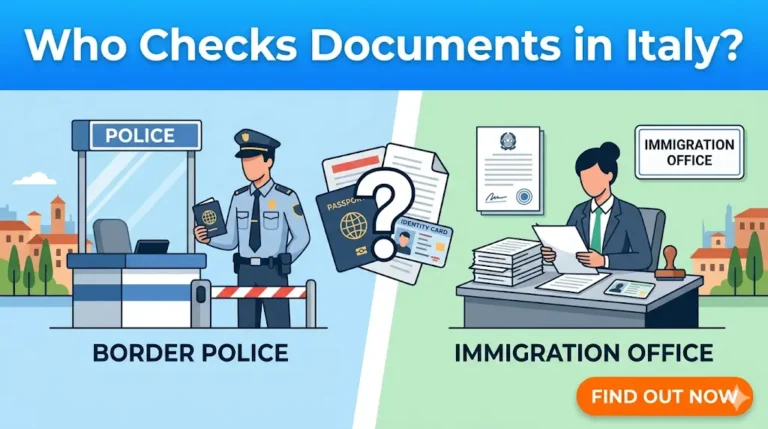
The Questura (police headquarters) handles your Permesso di Soggiorno (Italian Residence Permit): Guide, which gives you the legal right to be in the country. However, the clock for citizenship only starts when you register at the Anagrafe (Civil Registry) of your local Comune. This act is known as iscrizione anagrafica.
I’ve met countless foreigners who lived in Italy for three years on various permits but forgot to "fix their residency" at the town hall. For the purposes of citizenship, those three years effectively do not exist. You must be registered as a resident in the population registry of an Italian municipality for the entire duration required by law. This is why Registering Residency in Italy (Residenza and Anagrafe) is arguably the most important administrative step you will take after arriving.
Why the Date on Your Visa Is Not the Start Date
Your visa is an entry document; it is not a residency document. Even after you get your first permit, the "years of residence" count only begins from the date you signed the residency application at the Comune. If you waited six months after arriving to visit the town hall, you have to add those six months to your total waiting time.
It is also vital to ensure that your residency is "continuous." If there is a gap where you were not registered in any Italian Comune—perhaps because you moved and the new town took too long to process your file—the clock might reset to zero. This is a devastating bureaucratic trap that requires meticulous record-keeping to avoid.
The Magic Number: How Many Years Do You Specifically Need
The number of years required for "citizenship by residency" (cittadinanza per residenza) depends entirely on your original nationality and your specific circumstances. Italy is quite strict with these timelines, and unlike some other European nations, there is very little room for negotiation or "merit-based" shortcuts.
Non-EU Citizens and the 10-Year Marathon
For most of us coming from outside the European Union—whether from the US, Canada, Australia, or elsewhere—the standard requirement is 10 years of legal, continuous residency. This is a long-haul commitment. During these ten years, you are expected to not only live in Italy but to be a productive member of society.
One thing the veteran expats won't always tell you is that you also need to meet a specific income threshold for the last three years of that ten-year period. If you fall below the required amount (usually around 8,300 Euros for a single person, though it increases if you have dependents), your 10 years of residency won't matter; the application will likely be rejected. You can find more details on how these finances are calculated in our guide on Italian Income Tax (IRPEF) Brackets Explained.
EU Citizens and the 4-Year Fast Track
If you are a citizen of another EU member state, the process is significantly faster. You only need to prove 4 years of legal residency in Italy. The logic here is that as an EU citizen, you already have the right to live and work in Italy, so the "integration" period is viewed as shorter.
However, the "continuous" rule still applies. If you lived in Italy for two years, moved back to Germany for six months, and then returned to Italy, your 4-year clock usually starts over from the moment you re-registered at the Comune.
Special Cases: Birth, Marriage, and Ancestry
There are several exceptions to the 10-year rule that can shorten your path:
- Foreigners born in Italy: If you were born on Italian soil to foreign parents and have lived here legally and uninterrupted until age 18, you have a one-year window to claim citizenship.
- Citizenship by Marriage: If you are married to an Italian citizen, the residency requirement drops to 2 years (or 3 years if you live abroad). If you have children together, these times are halved. You should look into How to Apply for Italian Citizenship by Marriage for the specific document list.
- Ancestry: If you have an Italian parent or grandparent, the residency requirement is often reduced to 3 years.
| Category of Applicant | Years of Legal Residency Required |
|---|---|
| Non-EU Citizen | 10 Years |
| EU Citizen | 4 Years |
| Stateless Person or Refugee | 5 Years |
| Child/Grandchild of Italian Citizen | 3 Years |
| Foreigner Born in Italy | Until age 18 (uninterrupted) |
Proving Your Continuity: The Documents and the Income Trap
Once you reach the 10-year mark (or 4, or 3), you have to prove it. The Ministry doesn't just take your word for it; they will cross-reference your records with the Anagrafe and the tax authorities.
The Certificato di Residenza Storico
The "Holy Grail" of your application is the Certificato di Residenza Storico (Historical Residency Certificate). This document lists every address you have lived at in Italy and the exact dates you were registered there. I highly recommend learning How to Get a Certificato di Residenza in Italy well before you plan to apply, just to check for any errors. If a clerk made a typo in 2018, it’s better to fix it now than during the citizenship process.
When you gather your foreign documents, like birth certificates or criminal records from your home country, they must be translated and apostilled. Services like Translayte or RushTranslate are often used by expats for these high-stakes translations to ensure they meet the rigorous standards of the Italian consulates and prefectures.
The Financial Threshold Requirement
You cannot count years where you did not have a taxable income in Italy, unless you were a dependent of someone who did. The Ministry requires the Certificato Unico (CU) or Modello 730 for the last three years of your residency. If you were a student for 5 years and a worker for 5 years, you have technically hit the 10-year mark, but you must ensure your income during those final working years meets the legal minimum.
If you had a gap in your employment or were between contracts, you might have relied on International Health Insurance Options for Italy or private coverage while you weren't contributing to the national system. While private insurance like Cigna Global is great for staying protected, the citizenship office primarily cares about your iscrizione to the SSN (National Health Service) and your tax contributions through INPS.
Common Pitfalls That Reset Your Clock
The "continuous" part of the "legal and continuous residency" requirement is where most applications fail. It is the silent killer of citizenship dreams.
Gaps Between Permits
Technically, if your Permesso di Soggiorno expires and you wait too long to apply for a renewal, there could be a "legal gap." While the law generally protects you if you have the receipt (cedolino) showing you applied for a renewal on time, any period where you were technically "irregular" can be used to reset your residency clock. Always keep every single post office receipt from your permit renewals; they are proof of your legal continuity.
Moving Between Comuni Without Notifying the Registry
If you move from Rome to Milan, you must register in Milan immediately. The two Comuni will communicate to transfer your file. However, if you "cancel" your residency in Rome and forget to register in Milan for a few months, those months represent a break in continuity. I have seen people lose seven years of progress because of a four-month gap between registrations.
During these transitions, if you are worried about maintaining your healthcare or other benefits, ensuring you have Obtaining the Italian Health Card (Tessera Sanitaria) updated is a good way to verify that the system still sees you as a resident.
The B1 Language Requirement
Finally, remember that counting your years is only half the battle. Even if you have 10 perfect years, you cannot submit your application without a B1 level language certificate. This is a non-negotiable requirement introduced in recent years. You can read more about the specific exams and where to take them in our guide on the Italian Citizenship Language Requirement (B1) Explained.
Navigating the Final Stretch
The moment you hit that 10th anniversary of your residency registration, you can finally log into the Ministry of the Interior's portal to start your application. It is a long, digital process that requires Applying for Italian Citizenship: An Overview to navigate successfully.
Prepare your documents early. Birth certificates and foreign criminal records usually need to be "fresh" (often less than six months old). If you are using a service like RushTranslate or Translayte, make sure you account for the time needed for the physical apostille process in your home country.
I’ve lived through the "Year 9 anxiety," checking my Certificato Storico every month to make sure no one had accidentally deleted me from the system. It’s a bureaucratic marathon, but once you have that decree in your hand and you're standing in the town hall taking your oath, the ten years of counting will feel like a small price to pay for a lifetime in the Bel Paese.
Disclaimer
The information provided in this article is for informational purposes only and does not constitute legal advice. Immigration laws and residency requirements in Italy are subject to change and may vary based on individual circumstances. Always consult with a qualified immigration lawyer or the official portal of the Italian Ministry of the Interior before submitting any citizenship applications.