How to Keep Italian Residency If You Travel Often
You finally secured your permit, found the perfect apartment with a view of a terracotta roof, and mastered the art of ordering a caffè corretto without hesitation. But then life happens—a family emergency back home, a lucrative remote project, or simply the irresistible urge to use Italy as a base for global travel. I remember the paralyzing anxiety I felt at Fiumicino Airport after being away for five months, clutching my permit and wondering if the border police would see my frequent stamps as a reason to revoke my life here. This guide solves the complex puzzle of maintaining your legal standing in Italy while living the lifestyle of a frequent traveler.
Disclosure: This post may contain affiliate links. We may earn a commission at no extra cost to you if you make a purchase through these links. Read full disclosure.
The Golden Rules of Physical Presence in Italy
One of the most common misconceptions I hear in expat circles is that as long as your Permesso di Soggiorno hasn't expired, you are free to come and go as you please. This couldn't be further from the truth. The Italian government views residency as a commitment to making Italy your primary "center of life." If you disappear for long stretches, they may decide that you no longer need the privilege of living here.
Breaking Down the Six-Month Absence Limit
For most holders of a standard, limited-duration residency permit—such as those for work, study, or elective residence—the general rule is that you cannot be absent from Italy for more than six consecutive months. If you are outside the country for six months and one day, the Questura (police headquarters) technically has the right to revoke your permit upon your return. This is a hard limit that catches many people off guard.
In my early years here, I knew a fellow American who spent seven months in the States caring for a sick relative. When she tried to renew her permit, the authorities checked her passport stamps and denied the renewal because she had "interrupted" her residency. This rule applies regardless of whether your permit is still valid. The logic is simple: if you can live elsewhere for half a year, Italy assumes you’ve moved your life elsewhere. If you have a two-year permit, the rule is even stricter; you cannot be away for more than half the total duration of the permit’s validity.
Long-Term Residents and the Twelve-Month Rule
If you have survived the first five years and managed to upgrade your status, the rules become slightly more generous but no less strict in their enforcement. Knowing How to Apply for the Carta di Soggiorno in Italy is vital for frequent travelers because this long-term EU residency permit allows you to stay outside of Italy for up to twelve consecutive months.
However, even with the Permesso di Soggiorno UE per Soggiornanti di Lungo Periodo, you aren't completely off the hook. While you can wander for a year, if you exceed that 12-month window, you risk losing the "long-term" status. You might not lose your right to live in Italy entirely, but you would be downgraded back to a limited-duration permit, forcing you to start the five-year clock all over again for permanent residency. I’ve seen this happen to expats who took a one-year "gap year" to travel Southeast Asia and returned to find their bureaucratic life in shambles.
Tax Residency vs. Legal Residency: The Invisible Tether
This is where the "I've-been-there" advice becomes crucial: legal residency and tax residency are two different monsters that live in the same house. You might satisfy the Questura that you are in Italy enough to keep your permit, but you might simultaneously trigger massive headaches with the Agenzia delle Entrate (Italian Tax Office).
The 183-Day Fiscal Trap
In Italy, the "tax year" follows the calendar year. If you spend 183 days or more in Italy during a single calendar year, you are automatically considered a tax resident. This means you owe the Italian government a slice of your global income, regardless of where it was earned. For frequent travelers, this is a dangerous balancing act. If you travel too much and drop below that 183-day threshold, you might think you’re saving money on taxes, but you are also signaling to the immigration authorities that Italy is no longer your primary home.
Maintaining your status requires consistency. If you are aiming for citizenship, you need to be aware of How to Count Years of Residence for Italian Citizenship. Any significant gap in your tax filings or your presence in the national database can reset your ten-year counter to zero. I always tell newcomers to keep a dedicated "travel log" or a simple spreadsheet of every entry and exit. It sounds obsessive, but when you’re standing in a cold government office three years from now, that log will be your best friend.
Declaring Foreign Income While Traveling
If you are working remotely while traveling, you must ensure that your paperwork reflects your Italian residency. Many digital nomads make the mistake of using a "home" address in the US or UK for their contracts while maintaining a residency permit in Italy. This is a major red flag. To keep your residency safe, your paper trail—invoices, bank statements, and contracts—should ideally reflect your Italian address.
When you are renewing your permit after a year of heavy travel, the Questura will often ask for proof of income. If your bank statements are in a foreign language or from a foreign bank, you will likely need professional help. Companies like RushTranslate or Translayte are invaluable here for getting your financial documents into a format that Italian bureaucrats will actually accept. Having a clear, translated record of your income showing that you can support yourself while living in Italy is the best way to prove that your travels are temporary.
Keeping Your Paperwork Alive Across Borders
The most stressful time for any traveling expat is the "renewal window." In Italy, the renewal process can take anywhere from three months to over a year, depending on which city you call home. During this time, you are in a state of bureaucratic limbo.
Traveling with the Post Office Receipt (Cedolino)
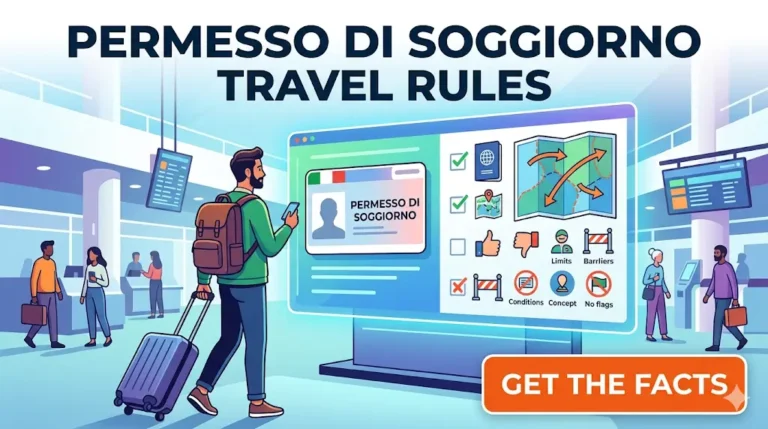
When you apply to renew your permit, the post office gives you a small, unimpressive slip of paper with a hologram on it—the cedolino. This is your temporary lifeline. You can travel with this receipt, but the rules are very specific. You must travel directly between Italy and your home country (the country of your citizenship). You cannot, for example, fly from Rome to Paris to New York if you only have a cedolino. You must take a direct flight or transit through a non-Schengen country.
I once made the mistake of trying to fly through Frankfurt with a renewal receipt. The German border police were less than impressed, and I spent two hours in a small room explaining Italian immigration law in broken German. If you must travel during your renewal, ensure you know How to Renew an Expiring Permesso di Soggiorno in Italy and always carry your expired permit along with the original receipt. Never carry just a photocopy; the original is the only thing that counts.
Maintaining Your Health Coverage (SSN) and Insurance
Your right to healthcare is tied to your residency. If you are registered with the National Health Service (SSN), your coverage is usually tied to the validity of your Permesso di Soggiorno. For detailed steps on this, you should look at Healthcare in Italy: An Expats' Guide. However, if you are out of the country for more than six months, your local ASL (health office) may technically remove you from the rolls of your family doctor.
For frequent travelers, relying solely on the SSN is a risk. This is where private options like Cigna Global become essential. Having a private policy ensures that if you fall ill in London or Lisbon, you aren't stuck trying to navigate a foreign system with a "resident-only" Italian health card. It also provides a secondary layer of "proof of residency" for the Questura, showing that you are a responsible resident who isn't a burden on the public system.
Proving Your Center of Life: A Documentation Strategy
If you travel often, you need to build a "fortress of proof" that Italy is your home. The Questura isn't just looking at your passport stamps; they are looking for signs that you actually live here.
Essential Paperwork and Certified Translations
A resident who travels is still a resident who pays bills. Keep every utility bill, every internet receipt, and every Amazon Italy delivery confirmation. If you are away for four months but your electricity and water usage remains consistent (perhaps due to a house sitter or a smart home system), that is proof of a maintained household.
If you ever need to justify your absence due to a medical procedure abroad or a family event, you will need those documents translated. Using Translayte or RushTranslate to get official, sworn translations of foreign hospital records or employment letters can be the difference between a smooth renewal and a rejection. The Italian bureaucracy runs on paper, and the more official that paper looks, the better.
Managing the Anagrafe and Your Residenza
Beyond the immigration office, you have the Anagrafe (the registry office at the local City Hall). Keeping your "residenza" active is key. If the local police (Vigili) come by for a spot check and find you've been gone for months, they can strike you from the registry. This is called being "irreperibile" (untraceable). If this happens, you lose your right to the health card, your right to vote (if applicable), and your years-of-residency counter for citizenship resets.
Make sure you are familiar with Registering Residency in Italy (Residenza and Anagrafe). If you plan to be away for a while, have a trusted neighbor or friend check your mail. In Italy, official notices are sent via registered mail (raccomandata). If a notice from the tax office or the Questura goes unclaimed for 30 days, it is considered "served," and you could be facing legal action or permit revocation without even knowing it.
| Permit Type | Max Single Absence | Total Absence Allowed |
|---|---|---|
| Standard (1-year) | 6 Consecutive Months | 6 Months Total |
| Standard (2-year) | 6 Consecutive Months | 12 Months Total |
| Long-term (Carta di Soggiorno) | 12 Consecutive Months | Varies (Must return to EU) |
| EU Blue Card | 12 Consecutive Months | 18 Months within EU |
Financial and Administrative Continuity
Traveling often means you might miss the rhythm of Italian life—and its deadlines. One of the biggest mistakes expats make is forgetting the local taxes that don't come in a neat envelope. For example, you must ensure you stay on top of the Annual Car Registration Fee (Bollo Auto) in Italy if you leave a vehicle behind. Forgetting this for a few years can lead to the police impounding your car when you finally return for a drive through the countryside.
Similarly, make sure your digital presence is solid. Ensure your SPID (digital ID) is working and that you have access to your Italian Income Tax (IRPEF) Brackets Explained information. Being able to log in from a hotel room in Tokyo to check your Italian tax status or book a residency appointment is the only way a modern expat can truly balance a life of travel with the rigid requirements of Italian residency.
Medical Emergencies and Legal Protections
Finally, always have a plan for what happens if your travel plans are involuntarily extended. If you are stuck abroad due to illness, you need a paper trail immediately. A hospital note from a foreign country is only valid in the eyes of the Questura if it is properly legalized and translated.
This is another reason to maintain a private insurance policy like Cigna Global. They often provide the administrative support needed to get medical records summarized for foreign authorities. If you can prove that your absence was "beyond your control," the six-month rule can sometimes be waived. But "I wanted to stay for the surf season in Bali" is not a legal excuse. Italy loves its residents, but it expects you to be here to enjoy the pasta, the chaos, and the bureaucracy in person.
Disclaimer
This guide is intended for informational purposes only and does not constitute legal, financial, or professional immigration advice. Italian immigration laws and "Decreto Flussi" quotas are subject to frequent changes. Always consult with a qualified immigration lawyer or a professional "Pratiche" agency before making long-term travel plans that could affect your residency status. Individual circumstances, such as your country of origin and specific permit type, may lead to different legal requirements.