Interrail and Eurail in Italy: Reservation Fees and Whether It Works Here
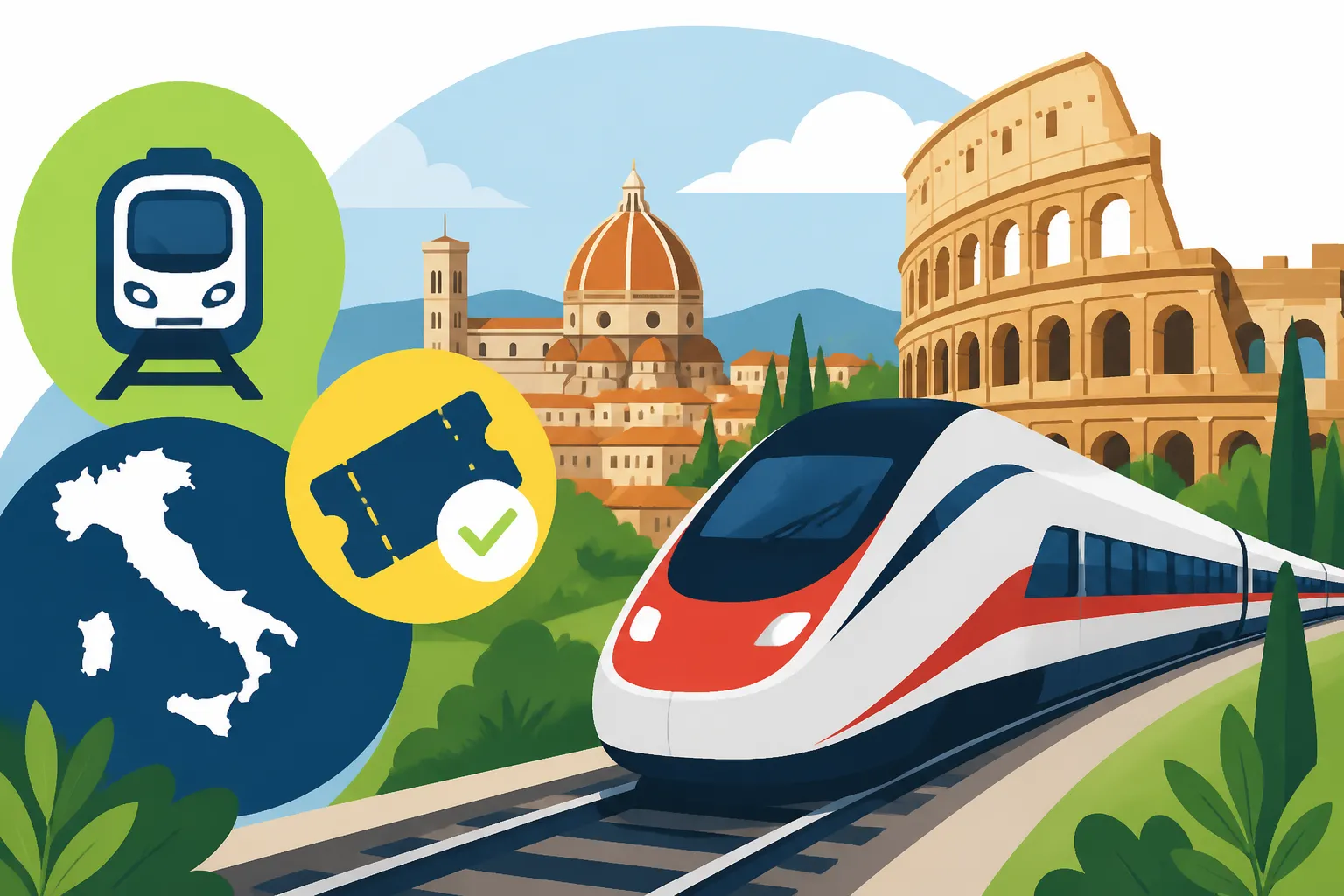
Ah, the dream of gliding through Italy on a train, gazing at vineyards and ancient ruins, all on one magical pass. Many of us expats, and plenty of starry-eyed tourists, arrive in Italy with an Interrail or Eurail pass in hand, imagining seamless travel. The reality, as often happens in Italy, can be a bit more… nuanced. Between mandatory reservations and the quirks of the Italian rail system, what seems like a simple travel solution can quickly turn into a headache. This guide is here to demystify how Interrail and Eurail truly work in Italy, especially when it comes to those elusive reservation fees, and why a tool like Omio can become your secret weapon.
Disclosure: This post may contain affiliate links. We may earn a commission at no extra cost to you if you make a purchase through these links. Read full disclosure.
Understanding Interrail and Eurail Passes in Italy
When you first hear about Interrail (for European residents) or Eurail (for non-European residents), it sounds like the ultimate freedom ticket. Unlimited train travel across a continent, hopping on and off as you please. It’s a fantastic concept, truly. But Italy, bless its beautiful, bureaucratic heart, has its own way of doing things, and it's essential to understand that before you commit.
What are Interrail and Eurail, really?
At their core, Interrail and Eurail passes offer a set number of travel days within a specific period or unlimited travel within Europe (or a single country) for a given duration. You buy the pass, activate it, and then theoretically, you're free to explore. For many countries, especially those with extensive regional train networks, this works beautifully. You just show up, flash your pass, and board. The appeal is clear: budget control, flexibility, and the romantic notion of spontaneous adventure.
However, the "pass" itself is not always your complete ticket. It grants you the right to travel, but in many cases, particularly on popular routes or high-speed services, you'll still need to secure a separate seat reservation. This is where Italy often throws a curveball. The Italian rail system, primarily run by Trenitalia and also by Italo, relies heavily on high-speed trains for intercity travel, and these almost always require reservations. This is a crucial distinction that many travelers only discover once they're already here, standing bewildered at a train station.
Why Italy is a Special Case for Pass Holders
Italy’s train network is incredibly efficient for getting between major cities quickly, thanks to its extensive high-speed (Alta Velocità – AV) lines. We're talking Frecciarossa, Frecciargento, and Frecciabianca trains that zip from Rome to Florence in under two hours, or Milan to Naples in about five. These are sleek, modern trains that are generally a pleasure to ride. The catch? They are very popular, especially during peak seasons and holidays, and seat capacity is strictly managed.
Because of this, all high-speed trains in Italy mandate a seat reservation, even if you have an Interrail or Eurail pass. This isn't just a suggestion; it's a non-negotiable requirement. If you try to board an AV train without a reservation, you risk a hefty fine and being asked to disembark. This requirement extends to most InterCity (IC) trains as well, which are slightly slower but still connect major cities. Regional trains (Regionale, Regionale Veloce) are generally the only ones where you can simply hop on with your pass, but they come with their own set of considerations, which we'll dive into. This system means that while your pass gives you access to the network, it doesn't give you carte blanche to just jump on any train. It requires planning, and often, additional fees.
Navigating Reservation Fees: The Hidden Costs
The term "pass" implies everything is covered, right? Not quite in Italy. Those mandatory seat reservations often come with an extra fee, and these aren't always immediately obvious when you're planning your trip or even when you're at the station. This can be a source of real frustration for travelers who've budgeted for a fixed-price pass.
Mandatory Reservations on High-Speed Trains
As mentioned, Italy's high-speed and InterCity trains are the backbone of intercity travel, and they all require reservations. For Interrail and Eurail pass holders, the fee for these reservations is typically a flat rate per journey. For Trenitalia's high-speed Frecciarossa, Frecciargento, and Frecciabianca trains, this reservation fee is currently around €10 per person per journey for 2nd class. For InterCity trains, it’s usually around €3. The reservation is tied to a specific train, date, and time, and it ensures you have a seat.
What does this mean in practice? If you're planning a trip from Milan to Naples, you'll pay for your pass, and then you'll pay an additional €10 for the reservation. If you decide to break up your journey with a stop in Florence and Rome, that's two or three separate high-speed segments, each incurring its own €10 reservation fee. These fees can quickly add up, significantly increasing the actual cost of your "unlimited" travel. This is a critical point that many overlook until they see their budget slowly evaporating.
Regional Trains: The Reservation-Free Alternative (Mostly)
For those looking to avoid reservation fees altogether, regional trains are your best friend in Italy. These trains, categorized as Regionale (R) or Regionale Veloce (RV), connect smaller towns and make more stops. They are generally much slower than high-speed trains and don't offer the same level of comfort (think basic seating, no dining car, and sometimes a bit more worn around the edges). Crucially, you do not need a reservation for these trains, so you can indeed just hop on with your active Interrail or Eurail pass.
However, relying solely on regional trains for extensive travel can be impractical, especially if you're covering long distances. A journey that might take two hours on a Frecciarossa could easily take four or five hours on regional trains, potentially involving multiple changes and longer waiting times. They're fantastic for exploring a specific region, like bouncing between towns in Tuscany or along the Ligurian coast, but less so for cross-country treks. Think of them as your local bus service on rails. They offer freedom, but at the cost of speed and sometimes convenience. For instance, traveling from Florence to Venice on regional trains would be a proper odyssey compared to the direct high-speed journey.
The Booking Gauntlet: How to Actually Make a Reservation
Making these mandatory reservations can be a bit of a bureaucratic dance. You have a few options:
-
At the Train Station Ticket Counter: This is often the most straightforward, but be prepared for potential queues, especially at major stations or during peak travel times. Language can also be a barrier, though staff at bigger stations usually have some English speakers. You show your pass, state your desired train, and pay the fee. This is also where you might learn that your preferred train is fully booked.
-
Trenitalia Website (and App): The Trenitalia website allows you to book reservations online, but it’s notoriously tricky for pass holders. You usually have to select "Global Pass" or "Eurail Pass" as your fare type, but this functionality can be buggy or not always available, especially for all routes. Many pass holders report frustration with the online system.
-
Third-Party Booking Platforms: This is where platforms like Omio shine. They act as intermediaries, allowing you to search for routes, see which trains require reservations, and purchase those reservations separately. They simplify the process, often offering a more user-friendly interface than the national rail operators' sites, and present all the available options clearly. This means less head-scratching and more clarity on exactly what you’re paying for. Omio integrates directly with Trenitalia's system, making it a reliable way to secure those essential bookings.
| Train Type | Requires Reservation? | Typical Reservation Fee (EUR) | Speed / Comfort | Best For |
|---|---|---|---|---|
| Frecciarossa | Yes | ~€10 | Fastest, most comfortable, modern | Long-distance, intercity travel |
| Frecciargento | Yes | ~€10 | Fast, comfortable, slightly less modern than Frecciarossa | Long-distance, connecting specific cities |
| Frecciabianca | Yes | ~€10 | Moderately fast, decent comfort | Longer regional routes, older high-speed lines |
| InterCity (IC) | Yes | ~€3 | Slower than Freccia, more stops, good comfort | Intercity travel on non-AV lines |
| Regionale (R) | No | €0 | Slowest, many stops, basic comfort | Short-distance, local exploration |
| Regionale Veloce (RV) | No | €0 | Faster regional, fewer stops, basic comfort | Medium-distance regional routes |
The Great Debate: Is an Interrail/Eurail Pass Worth It for Italy?
So, after all this talk of fees and booking hurdles, the big question remains: should you even bother with an Interrail or Eurail pass for Italy? It's not a simple yes or no answer, and it really depends on your travel style, priorities, and budget.
Pros and Cons for Italy-Specific Travel
Let's lay it out honestly.
Pros of Using a Pass in Italy:
- Flexibility (for regional travel): If your itinerary focuses on slow travel, hopping between smaller towns within a region, the pass offers incredible freedom on regional trains.
- Budgeting (sometimes): If you're planning a very extensive trip, covering many cities across Europe and including a lot of high-speed travel, the overall cost of the pass plus reservations might be less than buying individual point-to-point tickets for every segment. This requires careful calculation.
- Convenience (once reserved): Once you've secured those elusive reservations, having your pass means you don't have to worry about buying individual tickets at each station.
- The "Experience": For many, there's an undeniable romance to train travel with a pass, even if Italy adds a few wrinkles.
Cons of Using a Pass in Italy:
- Mandatory Reservation Fees: As discussed, these add-on costs for high-speed and InterCity trains can quickly erode the perceived value of your pass.
- Booking Hassle: The process of making reservations can be cumbersome, especially if you're trying to do it directly through Trenitalia or at busy stations.
- Limited Spontaneity (for high-speed): While the pass promises spontaneity, if you want to use the faster trains, you still need to book in advance, especially during peak times. A truly spontaneous trip usually means slower regional trains.
- Cost vs. Point-to-Point: For many Italy-only itineraries, especially if you book high-speed tickets in advance, purchasing individual point-to-point tickets (especially with Trenitalia's "Super Economy" fares) can often be cheaper than a pass plus reservation fees. This is particularly true if you only plan to visit a few major cities.
- Time Commitment: Relying solely on regional trains to avoid fees will significantly increase your travel time.
When a Pass Might Make Sense
An Interrail or Eurail pass for Italy is probably best suited for a specific type of traveler:
- The Extensive European Traveler: If Italy is just one stop on a much longer European adventure, and you'll be utilizing the pass across multiple countries where reservations are less common or cheaper, then including Italy might still make sense for the overall value of the pass.
- The Slow Traveler/Regional Explorer: If your dream Italian vacation involves spending weeks exploring one or two regions, delving into smaller towns and villages, and you're not in a hurry, then the reservation-free regional trains make the pass very appealing.
- The "Last Minute" Planner (with a caveat): If you hate booking tickets far in advance and are comfortable with the reservation fees, a pass means you only need to secure a reservation a few days or even hours before, rather than buying expensive full-fare tickets last minute. But remember, trains do sell out, particularly during holidays or peak seasons.
- The Young Adventurer on a Tight Budget (and time): If you have more time than money, and prioritize saving cash over speed, regional trains are your friend, and the pass covers those easily.
For most visitors planning a typical itinerary covering Rome, Florence, and Venice, I often find that booking individual, advance purchase tickets through a platform like Omio is more cost-effective and less stressful than dealing with a pass and its associated reservations. You can often snag significant discounts by booking early, especially for the high-speed trains. These discounts on regular tickets can often beat the "pass + reservation fee" combination. Remember, if you’re looking into Getting Around Italy: Trains, Buses, Flights, and Car Hire, weighing these options carefully is key.
Simplifying Italian Train Travel with Omio
Okay, so we've established that Interrail and Eurail passes in Italy can be a bit of a mixed bag. But regardless of whether you choose a pass or decide to buy individual tickets, there's one tool that consistently makes navigating Italian train travel much, much easier: Omio. For us expats who've wrestled with Italian ticketing systems, Omio often feels like a godsend.
Omio: Your Ally for Italian Train Bookings
Omio is an online travel platform that aggregates information for trains, buses, and flights across Europe (and beyond). Think of it as a one-stop shop for comparing travel options. It’s incredibly user-friendly and, crucially for Italy, it integrates directly with Trenitalia and Italo, allowing you to easily find and book tickets and, yes, even those tricky seat reservations for your Interrail or Eurail pass.
Here’s why Omio becomes your best friend:
- Clear Comparison: When you search for a route, Omio shows you all the available options from different operators (Trenitalia, Italo, and even bus companies), their prices, and journey times side-by-side. This helps you quickly see if a high-speed train + reservation fee is truly worth it compared to a cheaper, slower regional train, or even a direct bus. This transparency is invaluable.
- Simplified Reservation Process: For pass holders, Omio streamlines the reservation process. Instead of struggling with Trenitalia's sometimes clunky "Global Pass" option, you can often find your desired train on Omio, and the platform will guide you through adding the necessary pass reservation. It takes away a huge chunk of the headache that many travelers experience.
- Easy E-Tickets: Once booked through Omio, you'll receive your tickets and reservations directly to your email and the Omio app. No need to print anything in most cases – just show the QR code on your phone when asked. This digital convenience is a huge relief when you're on the go.
- English Language Interface: For those of us who haven't quite mastered "perfect Italian for navigating complex train booking systems," Omio's clear English interface is a massive plus. It reduces misunderstandings and makes the entire process far less intimidating.
- Customer Support: Should something go wrong, or you have a question, Omio offers customer support, which can be a lifeline when you're dealing with travel changes in a foreign country.
Whether you're trying to figure out "How to Buy Trenitalia and Italo Tickets and Save Money" or simply attempting to secure a seat on a specific Frecciarossa, Omio provides a clear, concise, and reliable way to handle your bookings.
Why Omio is a Game-Changer for Pass Holders
For those committed to using their Interrail or Eurail pass in Italy, Omio is arguably the easiest and most reliable way to navigate the reservation system. You can input your journey details, and Omio will not only show you the reservation options but often directly facilitate the purchase of these separate seat bookings. This bypasses the often-frustrating experience of trying to do it directly through the Italian national rail website or dealing with potential language barriers at a busy train station.
Imagine this: you're in Florence and decide you want to head to Venice tomorrow. You pull up the Omio app, search for Florence to Venice, and it shows you all the trains. You see the Frecciarossa option, click on it, and Omio prompts you to add your pass reservation. A few clicks, a small fee, and boom – your seat is confirmed. It removes so much of the guesswork and anxiety that comes with Italian train travel for pass holders. This kind of seamless experience is invaluable when you're trying to enjoy your trip without getting bogged down in bureaucracy. It's truly a must-have tool for optimizing your travel, allowing you to spend less time worrying about tickets and more time experiencing Italy, whether you're exploring Venice for First-Time Visitors: Beyond the Crowds or planning your next leg towards Milan City Guide: Fashion, Art, and the Duomo.
Disclaimer
Please remember that travel rules and regulations, especially those concerning international passes and rail operators, can change. While I strive to provide the most up-to-date and accurate information, it's always wise to double-check the latest terms and conditions directly with Interrail/Eurail and the relevant Italian rail operators (Trenitalia, Italo) before making your final travel plans. This guide is for informational purposes only and should not be considered legal or professional advice.