How to Visit Lake Maggiore and the Borromean Islands
Most travelers arriving in Northern Italy gravitate instinctively toward Lake Como, only to find themselves trapped in George Clooney-fueled traffic jams and overcrowded ferries. This guide solves the logistical puzzle of visiting the more elegant, aristocratic alternative: Lake Maggiore and its crown jewels, the Borromean Islands. By the time you finish reading, you will know exactly how to navigate the transport web, which islands to prioritize, and how to avoid the common expat pitfalls of the Piedmontese lakeshore.
Disclosure: This post may contain affiliate links. We may earn a commission at no extra cost to you if you make a purchase through these links. Read full disclosure.
The Logistics of Arriving: Trains, Boats, and Avoiding the ZTL
Getting to Lake Maggiore is deceptively simple if you are coming from Milan, but it requires a bit of insider knowledge to avoid wasting hours. The most common gateway is the town of Stresa. If you are coming from Milan’s Centrale or Porta Garibaldi stations, you’ll be looking for trains headed toward Domodossola or even the Swiss border. I always recommend using Omio to check the latest schedules because the Italian rail system can sometimes have "gaps" in the regional timetable that aren't immediately obvious on the station boards.
Once you arrive at the Stresa station, don’t be fooled by its sleepy appearance. It is a bit of a walk downhill to the "imbarcadero" (ferry terminal). If you have heavy luggage, there are usually a few taxis, but the walk gives you your first real glimpse of the grand Belle Époque hotels lining the shore. If you are planning a multi-city trip, you might also be looking at High-Speed Trains in Italy: Trenitalia, Italo, Routes, and Savings to get to Milan first, but from Milan to Stresa, you will almost certainly be on a regional line. These Regional Trains in Italy: How to Use Them and Save are quite affordable, though you must remember to validate your paper ticket at the green or yellow machines before boarding, or you’ll face a grumpy conductor and a hefty fine.
For those who prefer the freedom of four wheels, Renting a Car in Italy: ZTLs, Insurance, and Driving Tips is an essential read before you hit the road. Stresa and the surrounding towns like Baveno and Verbania are relatively car-friendly compared to Florence or Rome, but parking near the ferry terminals in the height of summer is a nightmare. I’ve spent many a frustrated hour circling the blue-lined spots (which require payment) only to end up in a white-lined spot (free) three kilometers away. If you are driving, check Omio for bus alternatives if you’d rather leave the car at your hotel and avoid the stress of the lakeside lungomare.
Navigating the Ferry System: Public vs. Private
Once you reach the water, you are faced with a choice: the "Navigazione Lago Maggiore" (the big public ferries) or the "Motoscafisti" (the private boat taxis). The public ferries are larger, slower, and have a very specific schedule. They are perfect if you want to sit on the top deck and feel the breeze, and they are generally the most cost-effective way to hop between the islands. You can buy a "libera circolazione" ticket which allows you to hop on and off all day.
The private taxis, usually found at the small piers clustered around the main ferry terminal, are faster and more flexible. They often run more frequently to Isola Bella and Isola dei Pescatori. However, they can feel a bit like a sales pitch. If you are in a rush, they are great, but for the true "dolce vita" experience, the slow public ferry is my personal choice. It gives you time to appreciate the view of the Alps reflected in the water, a view that is a staple of Lombardy and the Italian Lakes: What to See despite Maggiore technically being shared with Piedmont and Switzerland.
Choosing Your Lakeside Base
Stresa is the undisputed queen of the lake, home to the most famous hotels and the best access to the islands. It’s where most people use Booking.com to find those iconic rooms with a balcony overlooking the water. However, if you want something a bit more "local" and a little less "grand tour," look at Baveno or Verbania. Verbania, specifically the Pallanza area, feels like a real Italian town where people actually live and work, rather than just a tourist hub.
I’ve often stayed in Baveno when I wanted to save a few Euros but still be within a five-minute train ride or a ten-minute boat ride of the action. Using Booking.com to compare the smaller guest houses in Baveno versus the palatial resorts in Stresa can save you enough money to afford a really spectacular dinner on Isola dei Pescatori. Regardless of where you stay, the entire western shore is well-connected by Getting Around Italy: Trains, Buses, Flights, and Car Hire options, including local buses that run the length of the lake.
The Borromean Islands: A Trio of Distinct Personalities
The Borromean Islands—Isola Bella, Isola Madre, and Isola dei Pescatori—belonged (and largely still belong) to the aristocratic Borromeo family. Each island has a completely different vibe, and if you try to rush all three into a single afternoon, you’ll end up with a blur of baroque statues and fried lake fish. You need to give them space.
I highly suggest checking GetYourGuide for combined entry tickets to the palace and gardens. Buying them in advance saves you from standing in the sun in the ticket queue on Isola Bella, which can get incredibly long during the July and August peak. The palace on Isola Bella is a masterpiece of Lombard Baroque, but it’s the "Grotte" (the shell-covered rooms on the lower level) that really capture the imagination. They were designed to keep the family cool during the sweltering Italian summers, and even today, stepping into them feels like entering an underwater kingdom.
Isola Bella: The Baroque Showstopper
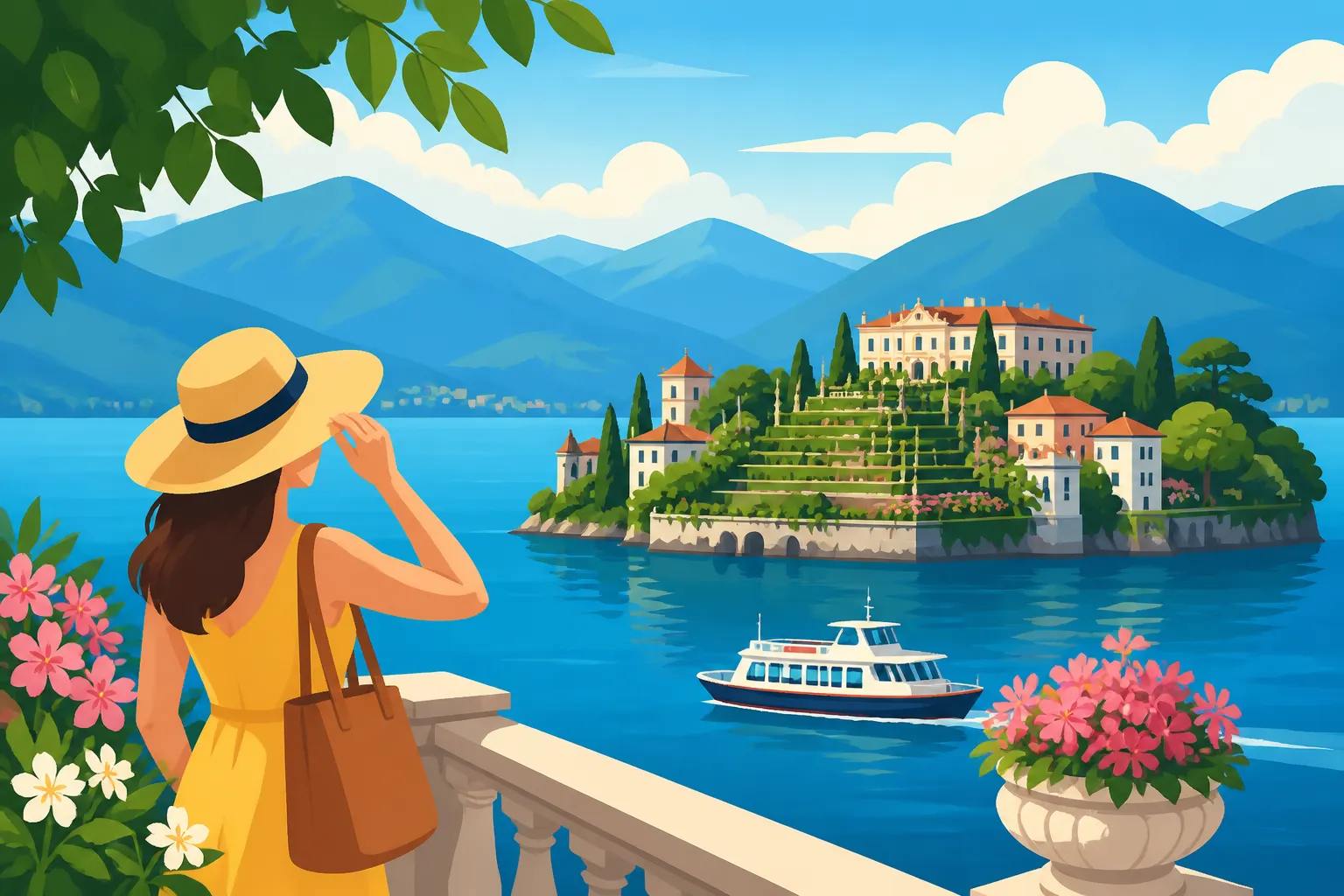
Isola Bella was essentially a rocky crag until the 17th century when the Borromeos decided to turn it into a floating palace shaped like a ship. The gardens are the main event here. They are laid out over ten terraces, culminating in the "Teatro Massimo," a massive structure topped with a statue of a unicorn (the Borromeo family crest). You’ll see white peacocks strutting across the manicured lawns like they own the place—and frankly, they do.
While it is tempting to spend all your time taking photos of the peacocks, make sure you explore the interior of the Palazzo Borromeo. The "Gallery of Tapestries" and the "Hall of Honor" are breath-taking. If you’ve booked a tour through GetYourGuide, you might get a bit more historical context on how the family managed to host everyone from Napoleon to Hemingway. It’s a place that demands a certain level of respect for the sheer audacity of its construction.
Isola Madre: The Botanical Escape
If Isola Bella is the flashy, dramatic sibling, Isola Madre is the quiet, intellectual one. It is the largest of the three islands and is almost entirely covered by a botanical garden. It’s much more peaceful than Isola Bella, mainly because it lacks the dense village and souvenir shops of its neighbors. The Palazzo on Isola Madre is less about gold leaf and more about family history, featuring a fascinating collection of puppet theaters and ancient marionettes.
The garden here is world-renowned for its camellias, azaleas, and rhododendrons. There is also a massive Kashmir Cypress that was nearly destroyed in a storm in 2006 but was saved by an incredible engineering feat. Walking through these gardens feels like an escape from the modern world. It’s the perfect place to sit on a bench and just breathe. If you find yourself hungry, there is a small café on the island, but I usually save my appetite for the next stop.
Isola dei Pescatori: The Soul of the Lake
Isola dei Pescatori (Fishermen’s Island) is the only one of the islands that is permanently inhabited by a non-aristocratic community. It doesn't have a grand palace or a sprawling botanical garden, but it has narrow, winding alleys and some of the best food on the lake. It’s where you go to learn How to Find Authentic Restaurants in Italy (Not Tourist Traps). Look for the places that serve "Pesce del Lago" (lake fish) like perch or whitefish.
Many tourists leave the islands by 5:00 PM, but the real magic of Isola dei Pescatori happens after the last ferry departs. If you’ve used Booking.com to snag one of the very few rooms available on the island itself, you’ll have the place almost to yourself. Dinner on the terrace as the sun dips behind the mountains is one of those "core memory" experiences. Just remember that Tipping in Italy: When, Where, and How Much is a bit different than in North America; a few Euros for exceptional service is appreciated, but the "coperto" (cover charge) usually covers the basics.
| Island | Primary Attraction | Best For | Recommended Time |
|---|---|---|---|
| Isola Bella | Palazzo Borromeo & Terraced Gardens | Photography, History, "Wow" Factor | 2-3 Hours |
| Isola Madre | Botanical Gardens & Puppet Museum | Peace, Nature, Garden Enthusiasts | 2 Hours |
| Isola dei Pescatori | Traditional Village & Seafood Restaurants | Lunch, Local Atmosphere, Wandering | 2-3 Hours (or overnight) |
Beyond the Islands: Hidden Gems and Local Life
While the islands are the main draw, the mainland shore of Lake Maggiore holds some of my favorite "veteran" spots. One place you absolutely cannot miss is the Eremo di Santa Caterina del Sasso. It’s a monastery clutched to a sheer rock face on the eastern (Lombard) shore. You can reach it by ferry from Stresa, and the approach from the water is the only way to truly appreciate its gravity-defying architecture. It’s a quiet, spiritual place that feels worlds away from the luxury hotels of the western shore.
Back on the Stresa side, if you have a car or don't mind a bit of a hike, head up to the Mottarone. You can take a cable car (when it's operational) or drive up to the summit for a 360-degree view that includes seven different lakes and the Monte Rosa massif. On a clear day, it’s one of the most spectacular vistas in all of Italy. It’s also a great spot to see how Lake Holidays in Italy: What to Expect can vary from alpine hiking to lakeside lounging within the span of a single afternoon.
The Garden of Villa Taranto
Located in Verbania, the gardens of Villa Taranto are often cited as some of the best in the world. They were established by a Scottish Captain, Neil McEacharn, who wanted to create a piece of Britain in Italy. The result is a staggering collection of thousands of plant species arranged in a way that feels both wild and meticulously planned. It’s quite a long walk, so make sure you’ve mastered the art of How to Order Coffee in Italy Like a Local before you start your trek. A quick "caffè" at the entrance bar will give you the stamina you need.
I recommend visiting Villa Taranto in the morning when the light is soft and the crowds are thin. You can take a ferry directly to the "Villa Taranto" stop. Using GetYourGuide to find a local guide for the gardens can be worth it if you are a serious horticulturist, as the sheer volume of rare species can be overwhelming without someone to point out the highlights.
Evening Rituals in Stresa
As the day winds down, Stresa transforms into a theater of people-watching. The "Aperitivo" culture here is strong. You’ll see locals and expats alike gathered at the bars in Piazza Cadorna. While the hotels on the waterfront offer grand views, the small bars in the piazza offer a more intimate look at local life. Order a Spritz or a local Piedmontese wine and watch the world go by.
If you are staying in one of the luxury hotels you found on Booking.com, you might be tempted to dine in their formal restaurants every night. I urge you to wander into the backstreets of Stresa instead. You’ll find small "osterie" serving hearty Piedmontese fare like risotto with porcini mushrooms or "brasato al Barolo" (beef braised in Barolo wine). This is where you get to experience the real culinary heart of the region, which is often much richer and more meat-focused than the coastal regions of Italy.
Disclaimer
The information provided in this guide is based on personal experience and current travel conditions in Italy. Travel logistics, including train schedules, ferry operations, and ticket prices for the Borromean Islands, are subject to change. Always check the official websites of Navigazione Laghi and Trenitalia, or consult a local travel professional before finalizing your itinerary. Prices and availability for services mentioned via Omio, Booking.com, and GetYourGuide may vary by season.