Moving to Italy from the UK: ToR Relief, Customs Declarations, and Costs
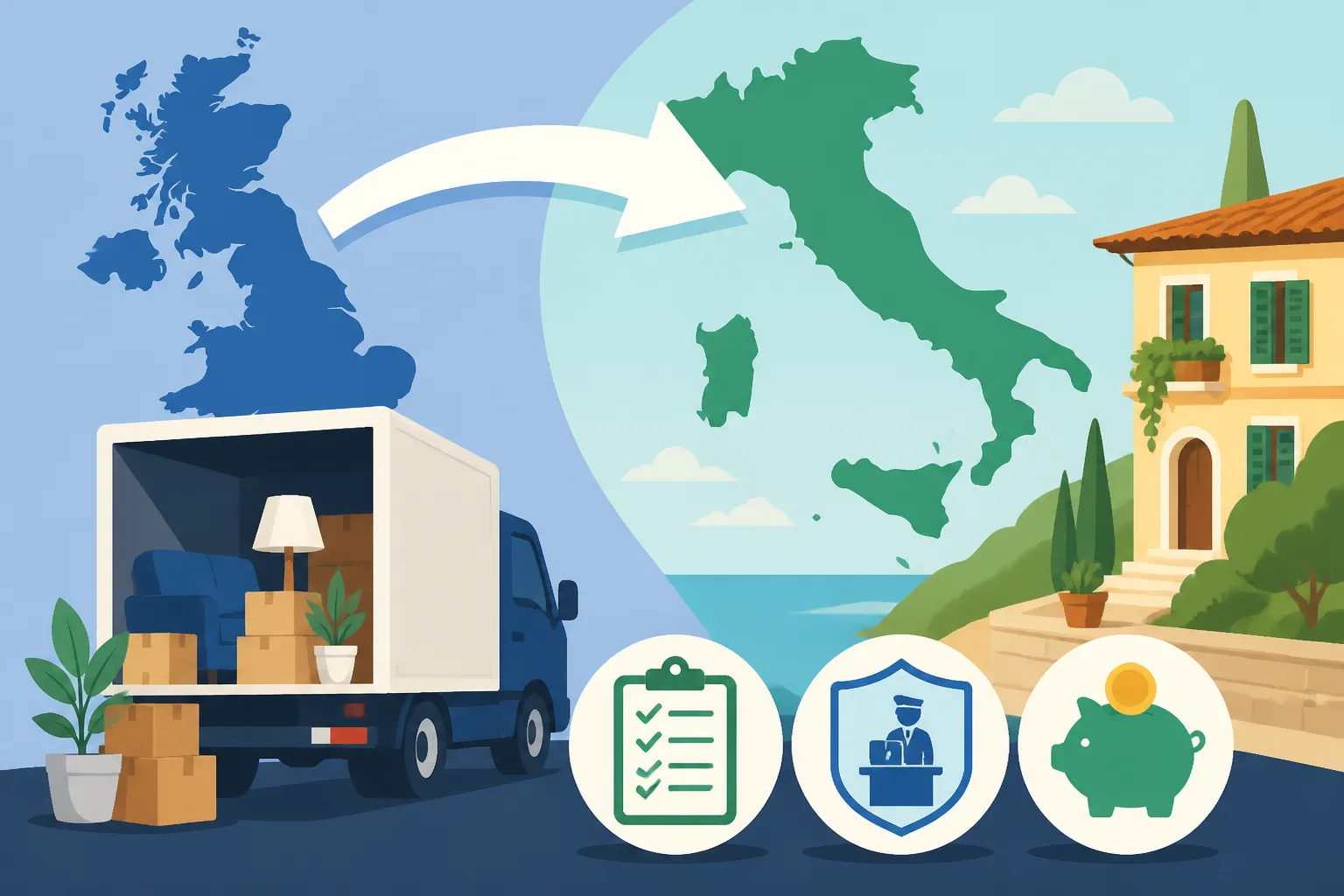
Moving from the UK to Italy has become a considerably more intricate dance with bureaucracy since the days of seamless EU freedom of movement. What was once a relatively straightforward process of packing your bags and hopping on a ferry now involves a maze of customs declarations, tax relief forms, and shipping logistics that can quickly turn your exciting new chapter into a paperwork nightmare. This comprehensive guide is here to unravel that complexity, offering clarity on Transfer of Residence (ToR) relief, customs duties, the often-surprising costs, and how services like Sirelo can genuinely streamline your move, allowing you to focus on the dolce vita rather than endless forms.
Disclosure: This post may contain affiliate links. We may earn a commission at no extra cost to you if you make a purchase through these links. Read full disclosure.
Understanding Post-Brexit Moving Realities to Italy
The dream of relocating to sunny Italy, perhaps to a rustic farmhouse in Tuscany or a vibrant apartment in Milan, remains as strong as ever for many from the United Kingdom. However, the path to achieving this dream has undeniably changed. Gone are the days when you could simply drive your belongings across borders with little more than a wave. Brexit has introduced significant new hurdles, transforming what was once an intra-EU move into an international one, complete with customs checks and a whole new set of rules.
The New Landscape for UK Movers
Before Brexit, moving from the UK to Italy was, for all intents and purposes, a domestic relocation within a larger single market. Your personal possessions, your car, your furniture – they all flowed freely without customs intervention. The biggest headache was often just finding a reliable moving company and perhaps navigating a new rental contract.
Now, things are different. The UK is considered a "third country" by the EU, and Italy, like other EU member states, applies its standard import regulations to goods coming from outside the bloc. This means that every single item you bring with you from the UK is subject to potential customs duties, Value Added Tax (VAT), and rigorous scrutiny, unless you can prove it qualifies for specific exemptions. This shift isn't just a minor administrative tweak; it's a fundamental change that impacts timelines, costs, and the sheer volume of documentation required. It means careful planning and understanding these new rules are no longer optional but absolutely critical for a smooth transition. Failing to acknowledge this new landscape can lead to significant delays, unexpected charges, and a level of frustration that will test even the most patient expat.
Common Pitfalls and How to Avoid Them
It happens often: excited movers from the UK arrive in Italy, only to find their household goods stuck at a port or warehouse, incurring daily storage fees because a crucial document was missing or incorrectly filed. One of the most common pitfalls is underestimating the sheer volume and specificity of the required paperwork. Many assume that because they've lived with their belongings for years, they're automatically exempt from duties. Not true. You need to prove your intent to transfer residence and that your items are indeed personal effects, not commercial goods or newly purchased items for resale.
Another significant issue is timing. People often wait until the last minute to organize their customs declarations or to engage a professional mover. This can lead to frantic scrambling, mistakes, and ultimately, delays. Customs processes can take time, especially if there are queries or missing information. To avoid these traps, start early. Research thoroughly. And consider utilizing a service like Sirelo that connects you with experienced movers who specialize in international relocations and understand the intricacies of post-Brexit UK-to-Italy customs. They can guide you, ensuring you have every t crossed and every i dotted long before your container even leaves British shores, saving you a world of stress and unexpected expenses.
Navigating Customs and Taxation for Your Household Goods
This is where the rubber truly meets the road, and where many dreams of an effortless move can quickly turn into a logistical nightmare without proper preparation. Understanding how Italy's customs rules apply to your personal belongings is absolutely paramount to avoiding hefty fees and frustrating delays. It's not just about filling out a form; it's about providing robust proof that you're genuinely moving your life, not just importing commercial goods.
What is Transfer of Residence ToR Relief?
The good news for those making a permanent move is that Italy, like other EU countries, offers what's known as "Transfer of Residence" (ToR) relief. This relief allows individuals moving their normal place of residence from a non-EU country (like the UK) to an EU country (Italy) to import their personal belongings free of customs duties and VAT. Sounds great, right? It is, but there are strict conditions.
To qualify for ToR relief, you must generally meet several key criteria:
- Residency Period: You must have lived outside the EU for a continuous period of at least 12 months immediately before moving to Italy. This proves your previous residence was truly outside the EU.
- Ownership and Use: The goods you are importing must have been owned and used by you at your former residence for at least six months prior to your departure. This prevents people from buying new items specifically to import them duty-free.
- No Commercial Intent: The goods must be for your personal use or for the use of your household. You cannot intend to sell, rent, or dispose of them within 12 months of their importation into Italy. This is crucial for proving the "personal effects" nature of your shipment.
- Application Timeline: You must apply for the relief within 12 months of establishing your new residence in Italy. Don't drag your feet on this!
- Establishing Residency in Italy: You need to have initiated the process of establishing residency in Italy, typically by applying for your long-stay visa and subsequently your Permesso di Soggiorno (residence permit). This is a critical piece of evidence.
The goal of ToR relief is to facilitate genuine relocations, not to create loopholes for duty-free shopping. When you work with an experienced moving service found through a platform like Sirelo, they'll be well-versed in these requirements and can advise you on how to best present your case to Italian customs, minimizing the risk of issues.
The Dreaded Customs Declaration: Documents Required
This is arguably the most intimidating part of the process, but armed with the right knowledge, it becomes manageable. The customs declaration for personal effects under ToR relief requires a meticulous compilation of documents to satisfy Italian authorities. Think of it as painting a complete picture of your life in the UK and your legitimate move to Italy.
Here’s a breakdown of the typical documents you'll need:
- Proof of Identity: A valid passport and copies.
- Proof of Previous Residence: Utility bills (electricity, gas, water, internet) or rental agreements from your UK address, spanning at least 12 months prior to your move. These demonstrate your continuous residency outside the EU.
- Proof of New Residence in Italy: A copy of your long-stay Italian visa (if applicable, for non-EU citizens), your Permesso di Soggiorno application receipt (ricevuta), or if you’re an EU citizen, proof of your A.I.R.E. registration or Iscrizione Anagrafica. A rental contract for your Italian home also helps solidify this. You will absolutely need your Codice Fiscale: Why It’s Essential for Finance in Italy.
- Detailed Inventory/Packing List: This is non-negotiable. Every box must be numbered, and its contents listed in detail. General terms like "kitchen stuff" or "clothes" won't cut it. Customs officials want specifics: "Box 12: 4 ceramic plates, 6 glasses, 2 cooking pots," and "Box 23: 5 shirts, 3 pairs of trousers, 1 jacket." This list must be dated, signed, and correspond exactly to what's in your shipment.
- Declaration of Value: While you’re moving personal effects, Italian customs will still want a declared value for insurance purposes and to assess risk. Don't undervalue things too much, but be realistic.
- Employment Contract or Proof of Income (if applicable): If you're moving for work, a copy of your Italian employment contract helps prove your intent to reside long-term. For retirees on an Elective Residence Visa, proof of your passive income is vital.
- Signed ToR Declaration Form: This is the specific form declaring your intent to claim ToR relief, stating that the goods meet all the criteria (owned for 6 months, no commercial intent for 12 months, etc.).
- Consignment Note (Bill of Lading/Air Waybill): Provided by your shipping company, this document details the shipment itself.
Any discrepancy or missing document can trigger delays, additional inspections, or even a demand for duties and VAT. This is why many expats choose to engage a customs broker or a full-service moving company that handles these declarations on their behalf. A service like Sirelo can help you find companies that offer this crucial administrative support, saving you from a lot of potential headaches.
Avoiding Import Duties and VAT on Personal Belongings
The primary goal of obtaining ToR relief is, of course, to avoid paying import duties and VAT (currently 22% in Italy) on your beloved personal belongings. Imagine paying an extra 22% on the declared value of all your furniture, electronics, and kitchenware – that’s a significant chunk of change you’d rather spend on The Ultimate Guide to Renting and Buying a Home in Italy or delicious Italian food.
The consequences of not qualifying for ToR relief or failing to submit the correct paperwork are severe.
- Full Duties and VAT: If your application is rejected, or if you simply don't apply, you'll be liable for the full import duties and VAT on all your goods. These charges are often calculated based on a valuation determined by customs, which might be higher than you expect.
- Storage Fees: Your shipment will be held at the port or a customs warehouse until all duties, VAT, and associated fees are paid. These facilities charge daily storage fees, which can quickly accumulate, adding hundreds or even thousands of euros to your moving costs.
- Delays: The entire process will grind to a halt. You could be waiting weeks or even months to get your goods, all while incurring storage costs and living without your familiar possessions.
- Fines: In some cases, if customs authorities suspect deliberate misdeclaration or attempts to avoid duties, you could face fines in addition to the taxes themselves.
This is not a process to take lightly or attempt without thorough understanding. It's the moment when expert advice truly pays off. Reputable international moving companies, often found through platforms like Sirelo, have dedicated customs departments that specialize in navigating these rules, acting as your intermediary with Italian customs to ensure your application for ToR relief is as watertight as possible. They are your best bet for a smooth, duty-free transition of your household goods into Italy.
The Actual Costs of Moving Your Belongings to Italy
Let's be real: moving internationally is never cheap. And moving from the UK to Italy post-Brexit comes with its own unique set of financial considerations, extending far beyond just the removal van. Many expats get caught off guard by costs they simply hadn't anticipated, largely because of the new customs landscape.
Breaking Down Shipping and Logistics Costs
The core cost of your move will, naturally, be the actual shipping and logistics of getting your items from Point A (your UK home) to Point B (your Italian home). This is not a one-size-fits-all figure; it depends on several key factors:
- Volume and Weight: This is the most significant determinant. Are you moving a few boxes or an entire three-bedroom house? Shipping companies charge based on cubic meters (volume) or weight, whichever is greater. Consolidating your belongings and decluttering before you move can significantly reduce costs.
- Distance and Accessibility: While the UK to Italy is a well-traversed route, the exact distance from your specific UK postcode to your Italian one matters. Is your Italian home in a bustling city center with easy access for large trucks, or a remote village up a narrow, winding road where a smaller, more expensive shuttle vehicle might be needed?
- Method of Transport:
- Road Freight: Most common for UK to Italy, usually involving a dedicated truck or a shared container (groupage). Groupage is cheaper but takes longer as the truck consolidates loads from multiple clients.
- Sea Freight: Less common for this route due to longer transit times, but can be cost-effective for very large volumes or if you're not in a rush.
- Air Freight: Extremely fast but prohibitively expensive for anything other than a few essential boxes.
- Service Level: Are you opting for a door-to-door service (the mover packs, ships, clears customs, and delivers to your new home, including unpacking)? Or a more budget-friendly option where you pack yourself and only receive delivery to the curb? Full-service options, while more expensive upfront, often save you immense stress and time, which can be invaluable when dealing with Italian bureaucracy.
- Special Items: Do you have a piano, antique furniture, or other fragile or oversized items? These will require specialized packing, handling, and potentially additional insurance, all of which add to the cost.
On average, a full move from the UK to Italy for a 2-3 bedroom house can range from €3,000 to €8,000 or more, depending on these variables. For smaller moves, say a few cubic meters, you might look at €800-€2,500. These are just ballpark figures; getting a precise quote tailored to your needs is essential, and this is where platforms like Sirelo excel in connecting you with multiple, reliable providers.
Hidden Fees and Unexpected Expenses
This is where your budget can quickly go off the rails if you’re not prepared. Beyond the headline shipping cost, there are several "hidden" or easily overlooked fees that can add up:
- Customs Brokerage Fees: Even if you qualify for ToR relief, a customs broker (often part of your moving company’s service, or an outsourced agent) will charge a fee for preparing and submitting your customs declarations. This is a vital service, so don't try to skimp here.
- Port or Terminal Handling Charges: Your goods don't just magically appear at your door. They arrive at a port or logistics hub in Italy, and there are charges for their handling, unloading, and temporary storage before onward delivery.
- Storage Costs: If your Italian home isn't ready, or if there are delays with customs, your goods might need to be stored. Daily or weekly storage fees can be substantial.
- Insurance: While not hidden, many people underestimate the cost of comprehensive transit insurance. Given the value of your possessions, this is an absolute must. Standard liability coverage from movers is often minimal. Factor in 1.5-3% of the declared value of your goods for proper coverage.
- Shuttle Service/External Lift: If your new Italian home is in a pedestrian-only zone, has very narrow access, or is on a high floor without a suitable elevator, a smaller shuttle van or an external lift might be required for final delivery. These services come with extra charges.
- Dismantling/Reassembling: If your moving company dismantles and reassembles furniture, this is usually an additional service cost.
- Waste Disposal: Once you've unpacked, you'll have a mountain of packing materials. Disposing of these responsibly in Italy may incur local waste disposal fees, or you might need to arrange for your moving company to take them away (another potential add-on).
- Currency Exchange Rates: If you're paying in GBP for a service that operates in EUR, exchange rate fluctuations can subtly increase your costs.
Always ask for a detailed, itemized quote from any moving company, ensuring it covers all potential charges from door-to-door. A reputable company will be transparent about these potential additional costs.
Budgeting for Your Move: Getting Accurate Quotes
Effective budgeting starts with accurate information. This isn’t a time for guesstimates. The best way to budget for your move is to get multiple, detailed, and binding quotes from international moving companies.
Here's how to approach it:
- Declutter Ruthlessly: Before contacting movers, go through every item. What do you truly need and love in Italy? What can you sell, donate, or discard? Less stuff equals lower costs.
- Create a Detailed Inventory: Walk through your home and list everything you intend to move. This will help movers accurately estimate volume and weight.
- Request In-Home (or Virtual) Surveys: Many reputable movers will offer a free survey of your home, either in person or via video call, to provide a precise estimate of your belongings. This is far more accurate than just giving them a room count.
- Specify Service Levels: Be clear about whether you want full packing and unpacking, or if you plan to do some of it yourself.
- Inquire About Customs Support: Confirm that the quote includes assistance with customs documentation for ToR relief. This is critical.
- Ask for All-Inclusive Quotes: Request quotes that explicitly detail all potential fees, including customs brokerage, port charges, delivery surcharges, and insurance options.
This is exactly where a service like Sirelo becomes invaluable. Sirelo acts as a neutral platform that allows you to easily compare multiple moving companies and get detailed quotes for your specific UK-to-Italy relocation. You input your moving details, and Sirelo connects you with vetted, reliable movers who specialize in this route. This saves you hours of research and ensures you receive competitive pricing and transparency, which is key to effective budgeting. By comparing offers side-by-side, you can choose the mover that best fits your budget and service needs, avoiding nasty surprises down the line.
Step-by-Step Guide to a Smooth UK to Italy Move
Moving to a new country can feel like climbing Mount Vesuvius blindfolded. But with a clear roadmap, you can navigate the path confidently. A successful move from the UK to Italy, especially post-Brexit, hinges on meticulous planning and an organized approach, from the first thought of moving to the final box unpacked.
Pre-Move Planning and Inventory Creation
The secret sauce to a stress-free move begins months before moving day. This is the stage where you lay the groundwork, and trust me, shortcuts here will cost you dearly later.
First, establish your timeline. Are you aiming for summer, spring, or autumn? Factor in visa processing times, potential waiting lists for movers, and the general pace of Italian bureaucracy. If you're applying for a How to Obtain an Italian Work Visa, for example, this can take time, and you'll need it before your belongings can clear customs under ToR.
Next, declutter, declutter, declutter! Seriously. Go through every cupboard, every drawer, every forgotten box in the attic. Moving less means paying less. Hold a garage sale, donate to charity, or simply discard items you haven't used in years. Remember the "six-month rule" for ToR relief – newly purchased items might not qualify, so be strategic about what you buy just before the move.
The most critical task in this phase is creating a detailed inventory. This isn't just a list for your own sanity; it's a mandatory document for Italian customs. Take your time.
- Categorize: Group items by room or type.
- Number Boxes: Assign a unique number to each box.
- List Contents Precisely: For each box number, list every single item. "Books" is vague; "5 paperback novels, 3 hardcover textbooks" is better. "Kitchenware" is too broad; "4 ceramic plates, 6 mugs, set of cutlery for 4" is perfect.
- Consider Value: Note down approximate values for higher-value items for insurance purposes.
- Take Photos/Video: Document the condition of valuable items before packing, especially electronics and furniture. This is invaluable for insurance claims.
This inventory will be the backbone of your customs declaration for ToR relief, and an experienced mover found via Sirelo will often ask for this early on to help you prepare.
Choosing the Right Moving Company
Choosing a moving company for an international relocation is not like picking a local removal service. This decision can make or break your entire moving experience. You need a partner, not just a carrier.
Here’s what to look for:
- International Experience: Do they specialize in moves from the UK to Italy, especially post-Brexit? Do they have a dedicated customs department or strong partnerships with customs brokers? This is absolutely non-negotiable now.
- Accreditations: Look for companies accredited by international moving associations (e.g., FIDI, IAM). These organizations set high standards for service, ethics, and financial stability.
- Insurance Options: Understand their standard liability and inquire about comprehensive transit insurance. Insist on "all-risk" coverage for your peace of mind.
- Transparency in Quoting: As discussed, watch out for hidden fees. A good company will provide a clear, itemized quote.
- Customer Reviews: Check online reviews (like those on Sirelo!) and testimonials. What do past clients say about their reliability, communication, and handling of issues?
- Communication: How responsive are they? Do they have English-speaking staff who can clearly explain the complex processes?
This is precisely where Sirelo steps in as an indispensable tool. Instead of trawling through endless search results and vetting companies one by one, Sirelo provides a streamlined platform to request quotes from multiple reputable international movers specializing in the UK-Italy route. You submit your details once, and you get competitive offers from vetted companies. This not only saves you immense time but also allows you to compare services and prices side-by-side, giving you the power to choose the best fit for your needs and budget. By using Sirelo, you’re not just finding a mover; you’re finding a reliable partner to help navigate the post-Brexit complexities.
On Arrival: Unpacking and Settling In
Congratulations, your belongings have arrived in Italy! While the biggest hurdle (customs) is now behind you, there's still work to be done to truly settle into your new Italian life.
- Check Your Inventory: As your boxes are offloaded, cross-reference them against your detailed inventory. Note any missing boxes or obvious damage immediately on the delivery receipt (Bill of Lading) before the movers leave. Take photos! This is crucial for any potential insurance claims.
- Unpacking Strategy: Don't feel pressured to unpack everything at once. Start with essentials – kitchen items, bedding, toiletries, and important documents. Create a "survival box" for the first few days.
- Waste Disposal: You’ll have a mountain of cardboard and packing paper. Familiarize yourself with Italy's Waste Sorting in Italy (Raccolta Differenziata): How It Works rules in your local Comune. Many moving companies offer a "debris removal" service, which might be worth the extra cost.
- Utilities and Internet: If you haven't already, now's the time to finalize Setting Up Utilities (Electricity, Gas, Water) in Italy and get your internet connected. This might involve setting up direct debits with your Italian bank account.
- Local Registration: Continue with your local administrative tasks. This might include finalizing your residency registration at the Anagrafe in your Comune, applying for your actual Permesso di Soggiorno card, and registering with the How to Register for Italian Healthcare (SSN) as a Foreigner.
- Emotional Adjustment: Don't underestimate the emotional toll of moving. Give yourself time to adjust to your new surroundings, the language, and the culture. Connect with local expat groups; they can be a lifeline for practical advice and social support.
Remember, the goal is not just to get your stuff there, but to build a new life. Take it one step at a time, and don’t hesitate to ask for help from your moving company, expat forums, or new Italian friends.
Essential Paperwork Beyond Customs for Your Italian Life
While getting your household goods into Italy is a significant hurdle, it's just one piece of the larger puzzle. To truly integrate and enjoy life in Italy, you'll need to tackle a broader spectrum of administrative tasks and obtain several crucial documents. These are the foundations of your new life here, enabling everything from opening a bank account to seeing a doctor.
Securing Your Visa and Residence Permit
For non-EU citizens, your journey to Italy legally begins with the right visa, obtained from an Italian consulate in the UK before your departure. This isn't just a travel document; it's your entry ticket that allows you to apply for the much more important Permesso di Soggiorno (Residence Permit) once you're on Italian soil.
The type of visa you need depends entirely on your purpose for moving:
- Work Visa: If you're coming to work, your employer in Italy must initiate a Nulla Osta (work authorization) on your behalf before you can even apply for the visa. It's a complex dance between employer, immigration office, and consulate. You can find more details in our guide on the Permesso di Soggiorno Italian Residence Permit Explained.
- Family Reunification Visa: For those joining family members already in Italy, this visa allows you to unite with your spouse, children, or parents. Our guide on Family Reunification Italy: Bringing Your Spouse and Kids provides detailed steps.
- Elective Residence Visa: Often called the "retirement visa," this is for those with substantial passive income who do not intend to work in Italy.
- Student Visa: If you're coming to study at an Italian university or language school.
Once you arrive in Italy with your long-stay visa, you have a strict 8-day window to apply for your Permesso di Soggiorno. This usually involves filling out a kit postale (forms obtained from a post office), paying fees, and mailing it. After this, you'll have an appointment at the Questura (police headquarters) for fingerprinting and to submit original documents. The Permesso is your legal right to live in Italy long-term, so treat it with utmost importance. Without it, you cannot legally reside, work, or access many public services.
Obtaining Your Codice Fiscale
Ah, the Codice Fiscale! If there’s one document that embodies the spirit of Italian bureaucracy, it’s this alphanumeric code. And it’s absolutely, utterly essential. It's your unique tax identification number, but its utility extends far beyond just taxes. Think of it as your Italian social security number, national ID number, and more, all rolled into one.
You will need a Codice Fiscale for almost everything you do in Italy, including:
- Signing a rental contract
- Opening a bank account in Italy
- Setting up utilities (electricity, gas, water, internet)
- Registering for the national healthcare system (SSN)
- Buying a mobile phone SIM card
- Purchasing a car
- Even simply picking up a parcel at the post office sometimes!
You can apply for your Codice Fiscale at the Agenzia delle Entrate (Italian Revenue Agency) office in your chosen city. It's a relatively straightforward process, often quicker than other bureaucratic tasks. You’ll need your passport and visa (if applicable). Many moving companies, like those found through Sirelo, can provide guidance on where to go and what to bring. Some might even offer assistance as part of their relocation services. Do not delay in obtaining this document; it unlocks virtually every other administrative step for you. Our detailed guide, How to Get a Codice Fiscale in Italy (and Why You Need One), walks you through the entire process.
Registering for Italian Healthcare
Once you're legally residing in Italy and have your Codice Fiscale, registering with the Servizio Sanitario Nazionale (SSN), Italy’s public healthcare system, is a critical step. This provides you with access to doctors, hospitals, and subsidized medical care, which is a huge relief when you’re building a new life.
The process typically involves:
- Obtaining your Permesso di Soggiorno: This is a prerequisite for most non-EU citizens to register with the SSN.
- Registering at your local ASL (Azienda Sanitaria Locale): You’ll need your Codice Fiscale, Permesso di Soggiorno, passport, and proof of residence (e.g., a Certificato di Residenza from your Comune).
- Choosing a Medico di Base (Family Doctor): Once registered, you'll choose a general practitioner from a list provided by the ASL. This GP will be your primary point of contact for most health issues and referrals to specialists.
- Receiving your Tessera Sanitaria (Health Card): This card is your proof of enrollment and is essential for accessing medical services, prescriptions, and more.
Access to healthcare is a fundamental right for residents, and while the SSN provides excellent coverage, it's wise to understand how it works. For a deep dive into the system and how to navigate it, check out our comprehensive guide, Healthcare in Italy: An Expats' Guide. This will ensure you're prepared for any medical needs once you've settled into your new Italian rhythm.
Key Documents for Moving Your Belongings to Italy
To ensure your move from the UK to Italy goes smoothly, especially regarding customs and ToR relief, here's a quick reference table of essential documents. This isn't an exhaustive list for every situation, but it covers the main bases you'll need to address.
| Document Category | Specific Documents Needed | Purpose | When Needed |
|---|---|---|---|
| Personal Identification | Valid Passport (copy and original) | Proof of identity and nationality. | Visa application, customs, residency registration |
| Residency Proof (UK) | Utility bills (12+ months), rental contracts | To prove you've continuously resided outside the EU for the required period for ToR relief. | Customs declaration for ToR relief |
| Residency Proof (Italy) | Italian Visa (for non-EU), Permesso di Soggiorno application receipt/card, Rental Contract, Certificato di Residenza | To prove you are establishing or have established residence in Italy, essential for ToR and all other Italian bureaucratic processes. | Visa application, customs, Permesso di Soggiorno application |
| Customs & Shipment | Detailed Inventory/Packing List (itemized & valued) | Mandatory for customs to classify your goods as personal effects and assess value (for insurance/risk). | Before shipment, for customs declaration |
| ToR Declaration Form (signed) | Official declaration stating your intent to claim Transfer of Residence relief and confirming goods meet criteria. | Before shipment, for customs declaration | |
| Consignment Note (Bill of Lading/Air Waybill) | Provided by mover, details the shipment contract and route. | Before shipment, for customs clearance | |
| Italian Bureaucracy | Codice Fiscale | Your indispensable Italian tax code, needed for almost all administrative tasks. | ASAP upon arrival, for everything! |
| Proof of Financial Means (e.g., bank statements, employment contract, pension statements) | Required for certain visas (e.g., Elective Residence) and for general proof of financial stability. | Visa application, Permesso di Soggiorno application, bank account opening | |
| Health | Health Insurance Certificate (if private), SSN registration proof, Tessera Sanitaria | Essential for accessing medical care in Italy, either via private insurance (often required for visas) or the public system. | Visa application, ASL registration |
Remember, while this table highlights the key documents, specific situations might require additional paperwork. Always consult with your chosen international moving company (easily found and compared via Sirelo) and Italian consulate for the most up-to-date and personalized requirements for your move from the UK to Italy. The journey may be complex, but with proper planning and the right resources, your dream of living in Italy is absolutely achievable.
Disclaimer
The information provided in this guide is for general informational purposes only and does not constitute legal, financial, or immigration advice. While we strive to keep the information up-to-date and accurate, regulations and procedures in Italy, especially concerning immigration and customs for UK citizens post-Brexit, can change frequently. It is highly recommended to consult with official Italian government sources, the Italian Consulate in your region, a qualified immigration lawyer, a commercialista (Italian tax accountant), or a specialized international moving company (like those found through Sirelo) for advice tailored to your specific situation. We cannot be held responsible for any errors or omissions, or for any actions taken based on the information provided here.