Italy to Malta and Tunisia: Ferry and Flight Options From Sicily
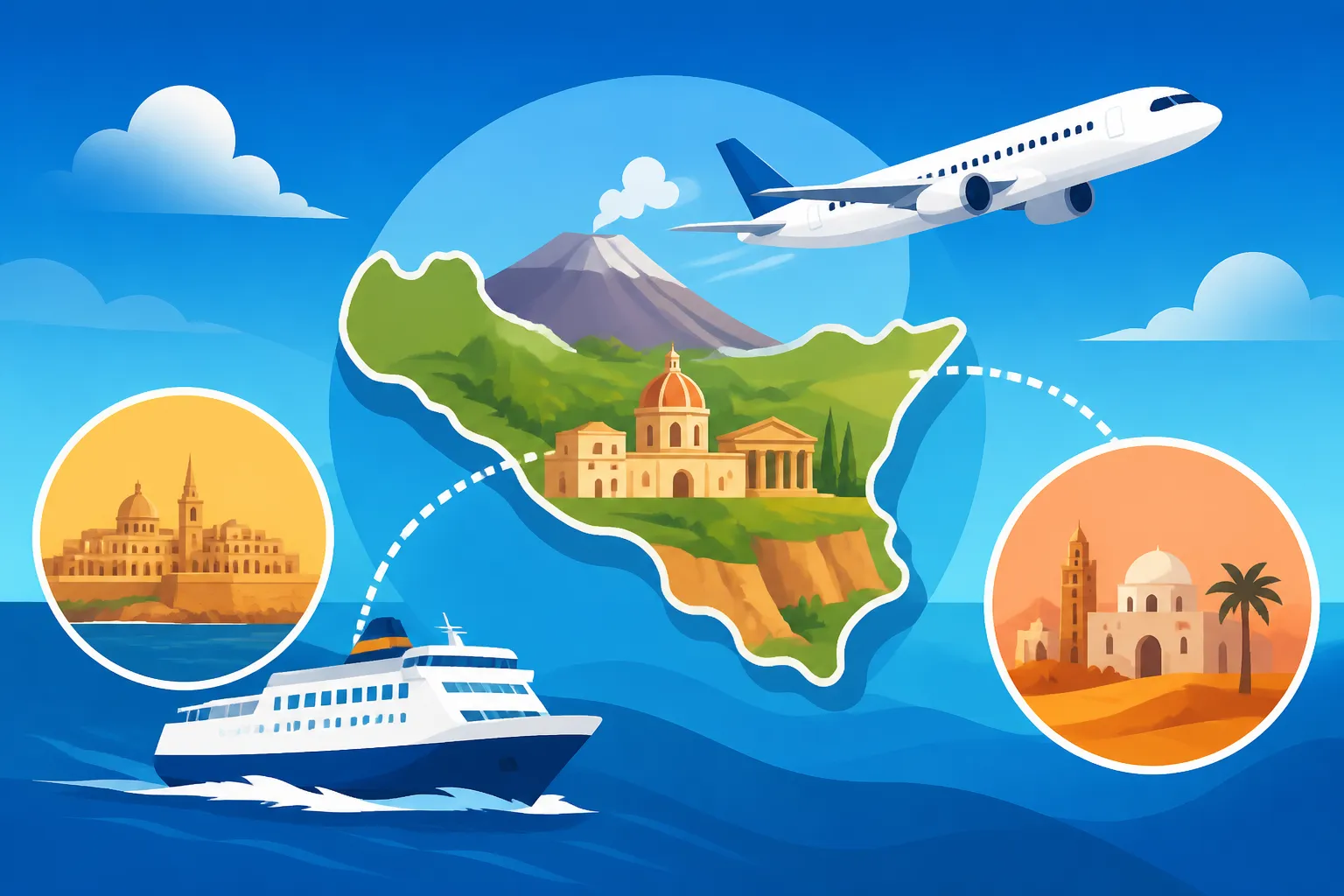
Oh, the wanderlust! I remember those days living in Sicily, gazing out across the shimmering Mediterranean, and feeling the pull towards nearby shores. It’s a common itch among us expats to explore beyond the boot, and Malta and Tunisia are such intriguing neighbors. But figuring out the best way to get from the glorious chaos of Sicily to these distinct destinations can feel like solving a particularly tricky Italian crossword puzzle. This guide is going to cut through the confusion, helping you navigate the ferry terminals and airport gates, and making sure your journey from Sicily to Malta or Tunisia is as smooth as a freshly pulled espresso, all with a little help from your trusty travel companion, Omio.
Disclosure: This post may contain affiliate links. We may earn a commission at no extra cost to you if you make a purchase through these links. Read full disclosure.
Why Sicily is Your Gateway to Malta and Tunisia
Sicily isn't just a stunning island in its own right; it's a strategic launchpad for your Mediterranean adventures. Its location, smack in the middle of the sea, means you're incredibly well-placed to hop over to the historical archipelago of Malta or the vibrant North African coast of Tunisia. It’s not just geography, either; these connections are woven deep into the historical and cultural fabric of the region.
Geographical Proximity and Historical Ties
Think about it: from the southern tip of Sicily, Malta is practically a stone's throw away. This isn't a new phenomenon; people have been traversing these waters for millennia. The Knights of St. John, various empires, and countless traders have all used Sicily as a crucial waypoint to and from Malta. You can literally feel that history when you’re on the deck of a ferry, looking back at Sicily fading into the horizon or seeing Malta emerge.
Tunisia, while a bit further, is also historically and culturally intertwined with Sicily. You see echoes of North African influence in Sicilian cuisine, architecture, and even some local dialects. It’s a fascinating blend, and experiencing both sides of this Mediterranean coin truly enriches your understanding of the region. For an expat in Italy, this proximity offers incredible opportunities for short getaways that feel like an entirely different world, without too much travel hassle.
Initial Considerations for Your Trip
Before you even think about booking, there are a few important things to mentally tick off your list. Trust me, I've learned these the hard way.
First, visa requirements. For Malta, if you're already legally residing in Italy as an EU/Schengen area citizen or hold a valid Italian residence permit, you generally won't need a separate visa for a short tourist stay, as both Italy and Malta are part of the Schengen Area. However, for Tunisia, it's a different story. Many nationalities, including Americans, Canadians, Australians, and most EU citizens, can enter Tunisia for up to 90 days without a visa, but always double-check the latest requirements for your specific nationality with the Tunisian embassy or consulate closest to you or a reliable travel advisory website. Don't just assume! There's nothing worse than arriving at the port or airport only to be turned away.
Second, consider the best time to travel. Sicily's summer heat can be intense, which might be lovely for a beach trip to Malta but perhaps less ideal for exploring the souks of Tunis. Spring (April-June) and Autumn (September-October) offer much more pleasant temperatures for sightseeing in both destinations, with fewer crowds. Keep in mind that ferry schedules can be more limited during the low season (winter).
Finally, a quick thought on local transport once you arrive. Malta has a good public bus system, and taxis are plentiful. In Tunisia, you'll find shared taxis (louages), private taxis, and some urban bus networks. Planning how you'll get from the port or airport to your accommodation will save you a lot of fumbling around when you're tired and new to the surroundings. And don't forget to look into Mobile Data and eSIMs for Travel in Italy before you go, so you're not left without navigation or communication!
Unpacking Your Travel Options: Ferry vs. Flight
Now, let's get down to the nitty-gritty: how are you actually going to get there? You essentially have two main choices: the scenic route by sea or the speedy route by air. Both have their charm and their quirks, and I’ve tried both.
Taking the Ferry: The Scenic Route (Malta and Tunisia)
Ah, the ferry. There’s something undeniably romantic about traveling by sea, watching the coastline shrink and then another emerge. It's often a slower journey, but it allows you to truly feel the transition between countries.
For Malta: Virtually a Neighbor
From Sicily to Malta, the Virtu Ferries service is your primary and most reliable option. They operate modern catamarans that offer a comfortable and relatively quick journey.
- Departure Ports in Sicily: The main departure point is Pozzallo, a lovely port town on the southeastern coast of Sicily. During peak season, there might also be departures from Catania, which is a fantastic alternative if you're based further north in Sicily.
- Arrival Port in Malta: You'll arrive in Valletta, Malta's stunning capital, specifically at the Grand Harbour. It’s a spectacular entrance, with the ancient bastions rising majestically as you sail in.
- Journey Time: The high-speed catamaran from Pozzallo usually takes around 1 hour and 45 minutes, a mere blink of an eye for international travel! From Catania, it’s a bit longer, usually around 3 hours.
- Costs: Fares vary widely depending on the season, how far in advance you book, and whether you're taking a vehicle. Expect to pay anywhere from €60-€100 for a round trip as a foot passenger. Booking in advance, especially through platforms like Omio, is always advisable to secure better prices and availability.
- What to Expect on Board: These are comfortable vessels with seating, snack bars, and usually duty-free shops. You can often step out onto the deck for some fresh sea air and fantastic views. It’s a very civilised way to travel.
For Tunisia: An Intercontinental Voyage
Traveling by ferry from Sicily to Tunisia is a much longer, more substantial journey that often feels like a mini-cruise. The primary operators are Grandi Navi Veloci (GNV) and sometimes Grimaldi Lines.
- Departure Ports in Italy: The most common departure port from Sicily itself is Palermo, though you might also find options from other Italian mainland ports like Civitavecchia (near Rome) or Genoa, which would involve getting across Italy first. For this guide, let's focus on Palermo.
- Arrival Port in Tunisia: Ferries from Italy typically arrive at the Port of La Goulette, which is about 10 kilometers from downtown Tunis. From there, you'll need to arrange onward transport into the city.
- Journey Time: This is an overnight journey, typically lasting around 10-12 hours, depending on the specific route and vessel.
- Costs: Fares are more substantial for Tunisia ferries, especially if you want a cabin (which you will, for an overnight journey!). Prices can range from €80 for a basic seat to €300+ for a private cabin, one way. Bringing a car will significantly increase the cost. Again, using a platform like Omio can help you compare prices and options efficiently.
- What to Expect on Board: These ferries are much larger, equipped with restaurants, bars, and a variety of cabin classes. It’s like a floating hotel, giving you a chance to relax, have a meal, and wake up in a new country. It’s a genuine experience, but certainly not for those in a rush.
Pros and Cons of Ferry Travel
Pros:
- Experience: It’s an adventure, seeing the land disappear and reappear.
- Space: Much more room to move around than on a plane.
- Luggage: Generally more generous luggage allowances.
- Vehicles: Ability to take your car (essential if you plan extensive travel in Tunisia).
- Scenery: Stunning sea views and often a memorable arrival.
Cons:
- Time: Significantly longer travel times, especially to Tunisia.
- Weather Dependent: Can be delayed or cancelled due to rough seas. If you get seasick, this might not be your best bet!
- Comfort (without a cabin): An overnight journey to Tunisia without a cabin can be less comfortable.
- Limited Routes: Fewer options compared to flights.
Flying High: The Fastest Way (Malta and Tunisia)
If time is of the essence, or you simply prefer the efficiency of air travel, flying is definitely your go-to. Both Malta and Tunisia are well-served by flights from Sicily.
Major Sicilian Airports
You'll primarily be flying out of Catania Fontanarossa Airport (CTA) or Palermo Falcone Borsellino Airport (PMO). Both are international airports with good connections. Catania is often busier and has more direct routes.
For Malta: A Short Hop
Malta is extremely well-connected by air, largely thanks to budget carriers.
- Airlines: Ryanair is probably the most frequent operator, offering multiple flights a week, sometimes daily, from both Catania and Palermo. Air Malta also operates routes, usually from Catania.
- Journey Time: The flight itself is incredibly short, typically around 30-40 minutes in the air. Add on airport procedures, and you're still looking at a total travel time far less than the ferry.
- Costs: Flights can be incredibly cheap, especially if booked in advance with low-cost carriers like Ryanair. You might find one-way tickets for as little as €20-€50 if you’re flexible and book early. However, remember to factor in baggage fees, which can quickly add up. For the most comprehensive overview of flight options and prices, I always recommend checking Omio.
- Arrival in Malta: All flights arrive at Malta International Airport (MLA), the country's only airport, located near Luqa. From there, it's a short bus or taxi ride to Valletta or other main towns.
For Tunisia: Bridging the Continent
Flights to Tunisia are also readily available, offering a swift connection to North Africa.
- Airlines: Tunisair is the national carrier of Tunisia and operates direct flights from Palermo and Catania to Tunis. You might also find options with ITA Airways (Italy's national carrier) or other European airlines, often with a layover, though direct flights are preferable for ease.
- Journey Time: Direct flights typically take around 1 hour to 1 hour and 15 minutes. Again, this is significantly faster than the ferry.
- Costs: Prices for flights to Tunisia can be a bit higher than to Malta, especially if flying with national carriers. Expect one-way fares from €80 to €200+, depending on the season and how early you book. Baggage fees are generally included with full-service airlines but extra with budget options. This is another area where Omio shines in comparing options.
- Arrival in Tunisia: You’ll land at Tunis-Carthage International Airport (TUN), located about 8 kilometers from Tunis city center. Taxis are readily available, and there are public bus services as well.
Pros and Cons of Flying
Pros:
- Speed: Unquestionably the fastest way to get between destinations.
- Frequency: Often more daily options, especially for Malta.
- Comfort (short flights): Less chance of seasickness!
- Less Affected by Weather: While very severe weather can affect flights, they are generally less impacted than ferries by typical Mediterranean chop.
Cons:
- Airport Hassle: Security checks, boarding, waiting times – it all adds up.
- Luggage Restrictions: Strict limits on size and weight, and extra fees for checked bags can make budget flights not so budget-friendly.
- Less Scenic: You miss the sea journey experience.
- Environmental Impact: For those conscious of their carbon footprint, ferries are generally a greener option.
To summarize, here's a quick comparison:
| Feature | Ferry (Sicily to Malta) | Ferry (Sicily to Tunisia) | Flight (Sicily to Malta) | Flight (Sicily to Tunisia) |
|---|---|---|---|---|
| Main Operator | Virtu Ferries | GNV, Grimaldi Lines | Ryanair, Air Malta | Tunisair, ITA Airways |
| Departure Sicily | Pozzallo, Catania | Palermo | Catania, Palermo | Catania, Palermo |
| Arrival | Valletta (Malta) | La Goulette (Tunis) | Luqa (Malta International Airport) | Tunis-Carthage (Tunis) |
| Travel Time | 1h 45m – 3h | 10h – 12h (overnight) | 30m – 40m (air time) | 1h – 1h 15m (air time) |
| Typical Cost | €60-€100 RT (foot) | €80-€300+ OW (seat/cabin) | €20-€100 OW (excl. baggage) | €80-€200+ OW (excl. baggage) |
| Luggage | More generous | More generous | Strict limits, fees extra | Standard limits, fees vary |
| Experience | Scenic, relaxed | Mini-cruise, unique | Quick, efficient | Quick, efficient |
| Visa Impact | Schengen friendly | Non-Schengen (check requirements) | Schengen friendly | Non-Schengen (check requirements) |
Mastering Your Booking with Omio: Your Go-To Tool
Alright, so you’ve weighed your options, probably scrolled through a few travel blogs (like this one!), and now you’re ready to book. This is where Omio really shines and becomes your absolute best friend. Seriously, it's a game-changer for anyone navigating multi-modal travel, especially when you're dealing with different operators and countries.
Finding the Best Deals: How Omio Simplifies the Process
Trying to check every single airline website and ferry operator's schedule individually? That's a recipe for a headache and a lot of lost time. Omio is designed to prevent exactly that kind of frustration. It aggregates transport options – trains, buses, ferries, and flights – all in one place.
Imagine you're standing in front of a giant information board with every possible route and price laid out for you. That's essentially what Omio does. You simply input your departure point (e.g., Catania, Italy) and your destination (e.g., Valletta, Malta or Tunis, Tunisia), your travel dates, and bam! – Omio pulls up all the available ferries and flights from various providers. It presents them in an easy-to-compare format, showing you journey times, prices, and even potential layovers if you’re looking at more complex flight routes. This side-by-side comparison means you can instantly see if that super-cheap Ryanair flight actually works out better than a slightly longer, but more comfortable, Virtu Ferries journey once baggage is factored in. It takes the guesswork out of it and ensures you’re making an informed choice, often saving you money and definitely saving you sanity.
Step-by-Step Booking Guide with Omio
Using Omio is incredibly intuitive, even if you’re still getting the hang of booking travel in a foreign country.
- Head to the Omio Website or App: Start by going to Omio.com or downloading their mobile app (which is excellent for on-the-go planning, by the way).
- Input Your Journey Details: Enter your departure city (e.g., Palermo), your arrival city (e.g., Tunis), and your desired travel dates. Don’t forget to specify if it’s a one-way or round trip.
- Browse Results: Omio will then display all the relevant options. You’ll see tabs at the top for "Flights," "Ferries," and sometimes "Buses" or "Trains" if they are applicable to the start of your journey (e.g., taking a train to Pozzallo for the ferry). This allows you to quickly filter and focus on the mode of transport you're interested in.
- Filter and Sort: Use the filters on the left side to refine your search. You can filter by price, duration, departure/arrival times, and even specific operators. This is fantastic if you have a tight schedule or a strict budget. For example, if you know you have to be in Malta by noon, you can quickly find flights that get you there.
- Select Your Journey: Once you find an option that works for you, click on it to see more details, including specific departure/arrival times, any stops, and detailed pricing breakdown.
- Book Directly: Omio usually allows you to book directly through their platform, streamlining the entire purchase process. This means one consistent booking experience, rather than jumping between multiple vendor sites. You just fill in your passenger details, payment information, and confirm. Your tickets are then sent straight to your email or are accessible in the Omio app.
- Manage Your Bookings: Your Omio account keeps track of all your bookings, making it easy to access your tickets, check journey details, or even make changes if needed.
This consolidated approach is invaluable when you're dealing with multiple legs of a journey or when comparing international travel options like those from Sicily to Malta and Tunisia.
Handling the Unexpected: Flexibility and Support with Your Bookings
Let's be real, travel plans can sometimes go sideways, especially when you're mixing different modes of transport or crossing borders. That’s why having a reliable booking platform like Omio is so helpful. While they connect you to various carriers, their integrated platform means you have one central point for your booking information. If you need to check details, confirm schedules, or even look into changes, all that information is usually accessible right within your Omio account. This can significantly reduce stress compared to trying to track down booking confirmations from five different websites.
Moreover, if you face a cancellation or a major delay, Omio's customer support can often assist in navigating the process or finding alternative options, acting as a valuable intermediary. This kind of peace of mind is precious when you’re traveling in a foreign country and might not be fully fluent in the local language, or familiar with the specifics of Italian or Maltese consumer rights for travel.
Practical Tips for a Smooth Journey
Even with the perfect booking, a little local knowledge goes a long way. Having navigated these waters (literally and figuratively) many times, I’ve picked up a few tricks.
Essential Documents and Border Control
This is non-negotiable. Always, always, always double-check your documents well in advance of your travel date.
- Passport/ID Card: Ensure your passport is valid for at least six months beyond your intended stay for Tunisia. For Malta, if you're an EU citizen, your national ID card is sufficient, but a passport is always a good idea for international travel. If you’re a non-EU citizen with an Italian residence permit (Permesso di Soggiorno), carry both your passport and your permit. You'll need it for re-entry to Italy!
- Visa: Reiterate: for Tunisia, confirm if you need one. For Malta, if you're traveling on a non-Schengen passport, confirm the requirements. Don't rely on hearsay.
- Tickets: Have your Omio e-tickets easily accessible on your phone or printed out. While digital is usually fine, a backup printout has saved me more than once when my phone decided to die at the most inconvenient moment.
- Proof of Onward Travel/Accommodation: Especially for Tunisia, officials might ask for proof of your return ticket or confirmed accommodation.
- Border Control: Expect passport checks when leaving Sicily for Tunisia and upon arrival. The Malta route, being Schengen, will typically involve fewer formal border checks unless you're explicitly stopped. Remain calm, be polite, and have your documents ready. Sometimes, there can be longer waits, so pack some patience! For those new to the intricacies of Italian immigration, understanding documents like the Italian Residence Permit Permesso di Soggiorno Explained can prevent last-minute panic.
Packing Smart and Local Transport
Nobody wants to be lugging around an enormous suitcase in the heat or through crowded ports.
- Packing Light: For Malta, a compact carry-on is usually sufficient for a short trip. For Tunisia, consider comfortable, modest clothing for exploring historical sites and souks. Layers are always your friend. Don't forget a universal travel adapter if your devices aren't European standard.
- Baggage Policies: If flying, be acutely aware of your chosen airline's baggage policies. Ryanair, in particular, is notorious for strict hand luggage rules and costly checked bag fees. Omio will show you who you're flying with, so you can check their specific rules.
- Arrival Transport: From Malta Airport (MLA), regular bus services (X1, X2, X3, X4) connect to various parts of the island, including Valletta. Taxis are also plentiful and metered. From Tunis-Carthage Airport (TUN), white metered taxis are the easiest option. Agree on a price or insist on the meter, and remember that tipping isn't mandatory but appreciated for good service. If you're arriving by ferry to La Goulette in Tunis, taxis will be waiting there, too. For those planning to drive, be aware of Driving in Italy: Obtaining an Italian Driver’s License and international driving permits, as similar considerations apply in Malta and Tunisia if you intend to rent a car.
Currency and Communication
Small things can make a big difference!
- Currency: Malta uses the Euro (€), just like Italy, so no currency exchange needed there! Tunisia uses the Tunisian Dinar (TND). You cannot legally import or export Tunisian Dinars, so you'll need to exchange currency upon arrival. There are exchange offices at the airport and port, and ATMs are widely available in cities. It's always a good idea to have some local currency for smaller purchases, especially outside tourist hubs.
- ATMs and Cards: Major credit and debit cards are generally accepted in larger hotels, restaurants, and shops in both Malta and Tunisia, but always carry some cash, particularly in Tunisia's markets or smaller establishments. Be aware of potential foreign transaction fees from your home bank.
- Language: Maltese and English are the official languages of Malta. Italian is also widely understood. In Tunisia, Arabic is the official language, but French is very widely spoken and understood, especially in urban areas and among those involved in tourism. English speakers are less common but increasing in tourist zones. Learning a few basic phrases in Maltese, Arabic, or French will go a long way in showing respect and enhancing your experience.
- Staying Connected: As mentioned, consider purchasing a local SIM card upon arrival or using an eSIM for data. Most cafes and hotels offer Wi-Fi, but having your own data is crucial for navigation and emergencies. Before you leave, check out Mobile Data and eSIMs for Travel in Italy for general tips on staying connected abroad.
Going on these adventures truly helps you appreciate the incredible diversity right on Italy's doorstep. With a little planning and the right tools like Omio, your journey from Sicily to Malta or Tunisia will be a fantastic extension of your expat life. Buon viaggio!
Disclaimer
The information provided in this guide is intended for general informational purposes only and is subject to change. While we strive to keep the content up-to-date and accurate, travel regulations, visa requirements, transport schedules, and prices can fluctuate without notice. Always verify the latest information with official sources such as embassies, consulates, airline carriers, and ferry operators before making any travel arrangements. We cannot be held responsible for any inaccuracies or for any loss or damage incurred as a result of relying on this information.