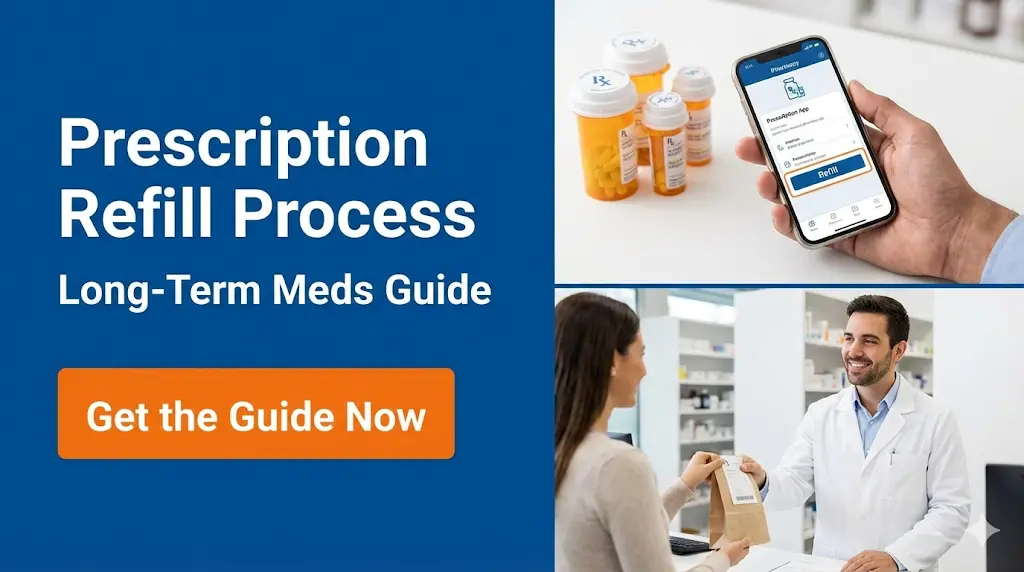
Prescription Refill Process for Long-Term Medications
Managing a chronic health condition abroad requires preparation. This comprehensive guide explains Italy’s prescription refill process for long-term medications, detailing how to use the SSN, obtain electronic prescriptions, navigate the pharmacy system, and apply for chronic illness cost exemptions.
Disclosure: This post may contain affiliate links. We may earn a commission at no extra cost to you if you make a purchase through these links. Read full disclosure.
Introduction
Navigating the Italian pharmaceutical landscape requires learning new terminology, understanding the vital role of the local pharmacist, and deciphering the bureaucratic steps necessary to transition your care from a foreign doctor to the Italian Servizio Sanitario Nazionale (SSN). It is a common misconception among new arrivals that a valid prescription from the United States, the United Kingdom, or Australia will be seamlessly honored at an Italian pharmacy counter. In reality, Italian pharmacists are legally bound to dispense prescription drugs only upon the authorization of a doctor licensed to practice within Italy or the broader European Union.
This means that establishing a relationship with an Italian physician is not an optional task; it is an absolute necessity for anyone taking chronic medication. While this initial transition can feel daunting, the Italian healthcare system is exceptionally supportive of patients with long-term illnesses. Once you are properly integrated into the system, the process of securing refills becomes highly efficient, heavily subsidized, and completely digital. This exhaustive guide will walk you through every stage of the prescription refill process in Italy, from your arrival and private consultations to fully leveraging the public health system, ensuring your health remains fully protected while you enjoy your new life abroad.
Preparing for Your Move Bringing a Transition Supply
Before you even board your flight to Italy, proactive planning is essential. Because it takes time to secure your residence permit, register with the local health authority, and find an Italian doctor, you must not arrive empty-handed.
It is highly recommended to bring at least a ninety-day supply of your long-term medications to bridge the gap during your relocation. When traveling with substantial amounts of medication, you must carry them in their original, clearly labeled pharmacy packaging. Furthermore, you should ask your current home-country physician to write a detailed, formal letter. This letter should explicitly state your medical diagnosis, the generic chemical name of your medication (as brand names vary wildly across borders), the exact dosage, and a statement confirming that the medication is for your personal, ongoing treatment.
Having this translated letter not only prevents any issues at customs but also serves as your foundational medical dossier when you sit down with your new Italian doctor for the first time, proving your established need for chronic care.
The Role of the Medico di Base in Prescription Refills
The absolute cornerstone of chronic disease management in the Italian public healthcare system is the General Practitioner, officially known as the Medico di Medicina Generale (MMG) or colloquially as the Medico di Base.
To enter the public system, you must complete the bureaucratic steps outlined in our comprehensive overview, Healthcare in Italy: An Expats’ Guide. Once you are registered and hold a valid Tessera Sanitaria (Health Card), you will select your Medico di Base. This doctor becomes your primary healthcare advocate and the gatekeeper for all your subsidized prescriptions.
During your first appointment, you will present your translated medical records. Your Italian doctor will evaluate your condition and effectively transcribe your foreign prescriptions into the Italian system. It is important to note that the doctor will prescribe the active pharmaceutical ingredient (il principio attivo) rather than the specific commercial brand you might be used to.
Once your chronic care plan is established in the doctor’s computer system, you will rarely need to book a formal, in-person physical appointment just to request a routine refill. The process shifts to a streamlined administrative task.
The Digital Shift Ricetta Elettronica Dematerializzata
Historically, Italian public doctors issued a “Red Prescription” (Ricetta Rossa)—a physical piece of paper that patients had to collect by hand. Today, Italy has completely modernized this process.
When your Medico di Base authorizes a refill for your long-term medication, they generate a dematerialized electronic prescription (Ricetta Elettronica Dematerializzata). The system creates a unique barcode and an Electronic Prescription Number (Numero Ricetta Elettronica, or NRE).
The doctor can transmit this NRE directly to your smartphone via SMS, send it via email, or push it to a dedicated patient-doctor communication app if their clinic utilizes one (such as MioDottore). You do not need to print anything out. You simply walk into the pharmacy with the NRE code on your phone screen and your physical Tessera Sanitaria.
Step by Step Guide to Refilling Your Medication
For expats integrated into the SSN, the monthly or quarterly routine of refilling chronic medication generally follows these simple steps:
- Request the Refill: Contact your Medico di Base to request your next batch of medication. Depending on the doctor’s preference, this is often done by sending a quick email, dropping a written note into a designated box outside their clinic door, or using a clinic app. You should specify your name, your tax code (Codice Fiscale), and the exact medication needed.
- Receive the NRE: Within 24 to 48 hours, the doctor processes the request and sends you the electronic NRE barcode.
- Visit the Pharmacy: Take your Tessera Sanitaria and the NRE to any pharmacy in your region.
- Dispensation: The pharmacist scans your health card and the barcode, pulls the authorized medication from the system, and hands you your prescription.
Navigating the Italian Pharmacy Culture
In Italy, the pharmacy (la farmacia) is not just a retail store; it is a primary healthcare institution. Identifiable by a large, illuminated green cross, these establishments are staffed by highly educated clinical professionals.
Unlike in some countries where you might browse aisles of pills and toss a bottle of ibuprofen into your shopping basket alongside groceries, all medications in Italy—even basic over-the-counter painkillers—are kept strictly behind the counter. You must speak directly to the pharmacist (il farmacista) to request them.
When picking up your chronic medication refills, you will interact with the pharmacist, who will ensure the dosage aligns with your electronic prescription. If the specific brand your doctor requested is out of stock, the pharmacist is legally authorized to offer you the exact generic equivalent (il farmaco equivalente). To fully understand the nuances of these vital community hubs, you should review our guide on Finding and Using Pharmacies in Italy.
Understanding Medication Classifications and Costs
The Italian Ministry of Health categorizes pharmaceutical drugs into specific bands (fasce) to determine how they are priced and to what extent they are subsidized by the state.
- Class A Drugs (Fascia A): These are essential medications and drugs used for treating chronic, life-threatening conditions (e.g., insulin, heart medications, specific asthma inhalers). If prescribed via an electronic SSN prescription, these drugs are heavily subsidized. The patient either pays nothing or pays a small regional co-payment called a “ticket,” which usually ranges from 1 to 3 euros per box.
- Class C Drugs (Fascia C): These are non-essential medications, symptomatic relief drugs, and many over-the-counter products (e.g., mild painkillers, certain birth control pills). The SSN does not cover Class C drugs, and the patient must pay the full retail price out of pocket, regardless of whether a doctor prescribed them.
- Class H Drugs (Fascia H): These are highly specialized, often expensive medications (e.g., advanced chemotherapy drugs, specialized biologics) that can only be administered or dispensed directly by a hospital pharmacy, not a standard street pharmacy.
The Chronic Illness Exemption Esenzione per Patologia
One of the most profound benefits of the Italian healthcare system for those with long-term health needs is the Exemption for Chronic Disease (Esenzione per Patologia). The Italian government recognizes that individuals suffering from chronic illnesses should not face financial hardship simply to stay alive and healthy.
If you are officially diagnosed with a recognized chronic condition—such as diabetes, severe hypertension, rheumatoid arthritis, or epilepsy—you are legally entitled to an exemption code.
To obtain this, your Italian specialist or Medico di Base must issue a formal medical certificate confirming your diagnosis. You take this certificate to your local health authority office (ASL). The ASL will register your chronic status and issue a specific exemption code (for example, code 013 for diabetes).
Once this code is digitally linked to your Tessera Sanitaria, the system automatically applies it whenever your doctor prescribes a Class A medication specifically related to your chronic illness. When you go to the pharmacy to pick up your refill, the standard regional “ticket” co-pay is completely waived. You will receive your life-saving medication absolutely free of charge.
Fascicolo Sanitario Elettronico The Digital Health Record
The modernization of Italian healthcare has culminated in the creation of the Fascicolo Sanitario Elettronico (FSE), or Electronic Health Record. This is a secure, regional digital vault that stores your entire medical history, including specialist reports, hospital discharge summaries, laboratory blood test results, and a complete log of your electronic prescriptions.
By logging into your regional FSE portal or smartphone app using your Italian digital identity credentials (SPID or CIE), you can instantly view your active prescriptions. If you lose the SMS containing your NRE barcode, you can simply log into your FSE, pull up the active prescription, and show the screen to the pharmacist. The FSE empowers expats to take total control of their medical administration without relying on physical paperwork.
Private Doctors and Telemedicine Refills
The reality of expatriate life is that you may run out of your initial medication supply before your official SSN registration is complete, or you may choose to bypass the public system entirely to seek care in English.
If you visit a private doctor, or if you utilize virtual health platforms as detailed in our guide Telemedicine Services in Italy: Online Doctor Appointments, the refill process is different. A private doctor cannot issue a subsidized electronic NRE prescription. Instead, they will write a “White Prescription” (Ricetta Bianca).
A White Prescription is a standard paper prescription or a digitally signed PDF on the private doctor’s letterhead. When you take a Ricetta Bianca to the pharmacy, the pharmacist will dispense the medication, but you will be required to pay the full out-of-pocket retail price for the drug, even if it is a Class A medication that would otherwise be free under the public system. Because the Italian government strictly regulates pharmaceutical prices, you will often find that the full retail price in Italy is still significantly cheaper than the insured co-pay in countries like the United States.
Rules for Controlled Substances and Specialized Medications
It is vital to understand that the streamlined electronic refill process does not apply uniformly to all classes of drugs. Italy maintains exceptionally strict regulations regarding controlled substances, psychotropic drugs, strong opioid painkillers, and medications for conditions like ADHD.
For these highly controlled pharmaceutical agents, Italian regulations prioritize direct, in-person physician assessment. You cannot simply send an email asking for a refill of a controlled substance, nor can these be filled by online telehealth providers. The doctor is legally required to physically evaluate you to establish a continuous care relationship. Furthermore, prescriptions for these medications often require specific, multi-part paper forms, and pharmacies track their dispensation with intense scrutiny. If your chronic care relies on controlled substances, you must establish a rigid, in-person appointment schedule with an Italian psychiatrist or pain management specialist to ensure your supply is never disrupted.
Dealing with Medication Shortages and Pharmacy Ordering
Sometimes, your specific dosage or a less common medication might not be physically in stock when you walk into your local pharmacy. In many countries, this would require you to drive to multiple different pharmacies to hunt down your prescription. In Italy, the logistical supply chain for pharmacies is remarkably efficient.
If a pharmacist scans your electronic prescription and realizes they do not have the required boxes on their shelves, they will simply order it from their central regional warehouse. In almost all cases, if you place the order in the morning, the medication will be delivered to the pharmacy by the late afternoon. If you order it in the evening, it will be waiting for you the following morning. The pharmacist will usually print a small reminder receipt for you to bring back when you return to collect the medication. This efficiency further reinforces the benefit of establishing a relationship with one specific, trusted neighborhood pharmacy rather than bouncing between multiple shops.
The European Cross Border Prescription Directive
What happens if you are an EU citizen living in Italy, or an expat traveling from Italy to another EU country and you run out of your chronic medication? The European Union has implemented a Cross-Border Healthcare Directive that allows prescriptions written in one EU country to be recognized and dispensed in another.
If your Italian Medico di Base writes a prescription that you intend to use in France or Spain, you must explicitly ask them to write a “cross-border prescription.” While the dematerialized electronic NRE barcode is fantastic within Italy, the digital systems of different European countries are not yet fully integrated. Therefore, you must request a physical, paper prescription.
This paper document must contain specific, internationally recognized information, including the patient’s full details, the prescribing doctor’s direct contact information and medical license number, the date of issue, and the generic international non-proprietary name (INN) of the active ingredient, rather than the Italian commercial brand name. When you present this paper prescription at a pharmacy in another EU member state, they are legally obligated to dispense the medication. However, it is vital to remember that cross-border prescriptions function strictly as private prescriptions. You will be required to pay the full out-of-pocket retail price in the country where you collect the medication, regardless of whether you hold an Italian chronic illness exemption. You can later attempt to claim reimbursement from your regional Italian health authority upon your return, but this is a complex bureaucratic process with no guarantee of full repayment.
Comparing Public vs Private Prescription Refills
To help clarify the differences between navigating the public SSN and the private healthcare sector for your medication needs, please review the comparative breakdown in the table below:
| Feature | Public System (SSN) Refill | Private Sector Refill |
| Prescribing Doctor | Medico di Base or Public Specialist | Private General Practitioner or Private Specialist |
| Type of Prescription | Electronic Prescription (NRE Barcode) | White Prescription (Ricetta Bianca – Paper/PDF) |
| Cost of Medication | Subsidized (Free or small ticket co-pay) | Full out-of-pocket retail price |
| Use of Exemptions | Chronic exemptions (Esenzioni) fully apply | Exemptions cannot be used; full price applies |
| Language Spoken | Predominantly Italian | English frequently available via international clinics |
| Best Suited For | Long-term residents established in the public system | Newly arrived expats, tourists, and those seeking immediate English support |
Claiming Tax Deductions for Private Prescriptions
If you find yourself paying out of pocket for White Prescriptions or Class C medications, you can still recoup some of the costs if you file taxes in Italy. The Italian government allows residents to deduct 19% of their medical and pharmaceutical expenses on their annual tax return.
To claim this deduction at the pharmacy, you must hand your Tessera Sanitaria or your Codice Fiscale to the pharmacist before you pay. You must ask for a “talking receipt” (scontrino parlante). This specific receipt explicitly prints your tax code alongside the medication purchased, automatically registering the expense with the Italian Revenue Agency (Agenzia delle Entrate) for your end-of-year tax declaration.
Conclusion
Transitioning your long-term medical care to a foreign country is undeniably a complex undertaking, but the Italian pharmaceutical framework is designed to provide unparalleled support and security to those who need it most.
By understanding the profound shift toward the dematerialized electronic prescription system, establishing a collaborative relationship with your local pharmacist, and securing your rightful chronic illness exemptions, you can essentially automate your prescription refill process. Italy’s commitment to universal, accessible healthcare ensures that your chronic condition remains a meticulously managed aspect of your background, leaving you entirely free to focus on the vibrant, beautiful, and enriching adventure of your expatriate life.
References
Primary sources official
- Ministero della Salute: The central governmental health portal detailing the national pharmaceutical classification system, electronic prescriptions, and the legal framework for chronic disease exemptions. https://www.salute.gov.it/
- Agenzia Italiana del Farmaco (AIFA): The Italian Medicines Agency providing official databases on drug availability, active pharmaceutical ingredients, and pricing regulations within the Italian Republic. https://www.aifa.gov.it/
Other helpful sources
- Federfarma: The National Federation of Pharmacy Owners in Italy, offering insights into the role of the Italian pharmacist and pharmaceutical distribution regulations. https://www.federfarma.it/
- Expatica Italy: A comprehensive resource hub for foreign residents navigating the Italian healthcare system and medication rules. https://www.expatica.com/it/healthcare/
Disclaimer
The information provided in this article is intended for general educational and informational purposes only and does not constitute official medical, legal, or administrative advice. Pharmaceutical regulations, the categorization of specific medications, and the bureaucratic requirements for accessing the Italian public healthcare system are subject to frequent legislative updates by national and regional health authorities. Always consult directly with a licensed Italian medical professional (Medico di Base or specialist) for personalized medical advice, diagnosis, and prescription management. In the event of a severe, life-threatening medical emergency or a critical shortage of a life-saving medication, please dial the universal European emergency number 112 or proceed immediately to the nearest public hospital emergency room (Pronto Soccorso).