Religious and Missionary Visas in Italy: Requirements
This comprehensive guide outlines the eligibility and application process for Italy’s Religious Visa (Visto per Motivi Religiosi). Learn about the specific documentation needed for clergy and missionaries, financial requirements, and the steps to secure your residence permit for a spiritual mission in Rome and beyond.
Disclosure: This post may contain affiliate links. We may earn a commission at no extra cost to you if you make a purchase through these links. Read full disclosure.
Introduction to Religious and Missionary Visas in Italy
For centuries, Italy has been a central destination for spiritual pilgrimage and religious vocation. Home to the Vatican City and thousands of historic sites, it attracts clergy, monks, nuns, and missionaries from every corner of the globe. However, entering Italy for religious purposes requires more than just faith; it requires strict adherence to Italian immigration law.
Unlike tourists or business travelers, those entering Italy to perform pastoral duties or engage in missionary work must apply for a specific category of entry: the Religious Visa (Visto per Motivi Religiosi). This visa is designed strictly for individuals who are officially ordained or recognized by their religious organization and are traveling to Italy to participate in evangelization, ecclesiastical training, or the internal life of a religious community.
Navigating the bureaucracy can be as challenging as the mission itself. The requirements for this visa are distinct from standard work permits, involving a unique set of documents that prove both your spiritual status and your material support. Whether you are a Catholic priest assigned to a parish in Milan or a Protestant missionary organizing community outreach in Naples, understanding these regulations is the first step toward a successful ministry.
This guide provides a detailed roadmap for obtaining a Religious Visa for Italy. We will cover the eligibility criteria, the essential document checklist, and the critical steps you must take upon arrival to legalize your stay.
What is the Italian Religious Visa?
The Religious Visa is a National Visa (Type D) intended for foreign nationals who wish to stay in Italy for long-term religious activities. It is governed by the Ministry of Foreign Affairs and allows the holder to reside in Italy to perform duties strictly related to their religious confession.
Who Is Eligible?
This visa is not open to laypeople who simply wish to volunteer for a church. It is reserved for:
- Catholic Clergy: Priests, nuns, monks, and friars belonging to orders recognized by the Holy See or the Italian State.
- Ministers of Other Faiths: Rabbis, Imams, Pastors, and other religious leaders belonging to denominations that have an agreement (Intesa) with the Italian State or are legally recognized as religious entities in Italy.
- Missionaries: Individuals sent by a recognized religious body to perform proselytizing or humanitarian work under a religious mandate.
The key distinction here is official recognition. You must provide documented proof of your ordination or religious vow. If you are coming to Italy to study theology but are not yet ordained, you might need to apply for a student visa instead. For a broader overview of how this fits into the general system, you might find our Ultimate Guide to Visas and Immigration in Italy helpful.
Distinguishing Between Religious Work and Standard Employment
One of the most common points of confusion is the difference between a religious visa and a work visa.
- Religious Activity: Includes preaching, pastoral care, leading worship, and living in a monastic community. This is not considered “labor” in the traditional economic sense, and therefore, it is exempt from the annual entry quotas known as the Decreto Flussi.
- Secular Work: If a religious organization hires you to work as an accountant, janitor, or IT specialist, you do not qualify for a religious visa. You would need a standard work visa.
Because religious visas bypass the quota system, immigration authorities scrutinize applications heavily to ensure they are not being used to bypass labor laws.
Required Documents for the Application
To apply, you must visit the Italian Consulate or Embassy in your country of residence. The dossier you present must be complete and translated where necessary.
1. Proof of Religious Status
This is the most critical document.
- For Catholic Religious: A letter from the Holy See (Secretariat of State) or the relevant Apostolic Nunciature confirming your status and assignment in Italy.
- For Non-Catholic Religious: A certificate from the supreme authority of your religious organization in Italy, authenticated by the Italian Ministry of the Interior (specifically the Directorate General for Religious Affairs). This document must certify your appointment and the nature of your mission.
2. Invitation and Hospitality
You must demonstrate that a religious entity in Italy is waiting for you. This requires an official letter of invitation from the host community (e.g., the convent, diocese, or mosque) detailing:
- The duration of your stay.
- The specific activities you will undertake.
- Confirmation that they will provide accommodation.
3. Financial Means of Support
Unlike other visas where you show personal bank statements, for a religious visa, the financial guarantee often comes from the religious order itself.
- The host institution must sign a declaration taking full financial responsibility for your sustenance, medical expenses, and eventual repatriation.
- If the organization is not funding you, you must show personal funds equivalent to the standard residency requirement (roughly €6,079 per year).
4. Travel and Health Insurance
You must hold a valid health insurance policy covering emergency medical treatment and hospitalization for the entire duration of your stay, or at least until you are registered with the national system.
5. Passport and Photos
- A passport valid for at least 3 months beyond the visa expiry date.
- Two recent biometric passport-sized photos.
The Application Process Step-by-Step
Navigating the timeline is crucial, especially if you have a specific start date for your mission.
Step 1: Secure Italian Authorization
Before you even go to the consulate, your host organization in Italy must secure the necessary clearances. For non-Catholic ministers, this involves getting the stamp of approval from the Ministry of the Interior in Rome. This internal bureaucratic step can take several weeks or even months.
Step 2: Consular Interview
Once you have your invitation and authorization documents, book an appointment at the Italian Consulate in your home country.
- Tip: Be prepared to answer questions about your theological training and your specific duties in Italy.
- Booking: Consulates are busy. Use our guide on Booking Your Italian Visa Appointment: Tips and Tricks to secure a slot efficiently.
Step 3: Visa Issuance
If approved, the consulate will place a Type D visa in your passport. This allows you to enter Italy.
Arrival in Italy and the Permit to Stay
The visa gets you into the country, but it does not make you a legal resident. The clock starts ticking the moment you land.
The 8-Day Rule
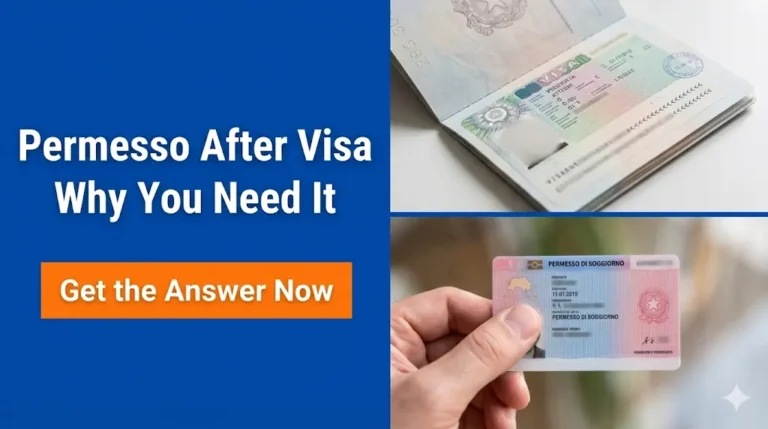
Within 8 working days of your arrival in Italy, you must apply for a Residence Permit (Permesso di Soggiorno) for Religious Reasons.
- Go to the Post Office: Visit a Poste Italiane branch with a “Sportello Amico” logo.
- The Kit: Request the “Yellow Kit” (Kit Giallo). Fill out Form 1 (Modulo 1).
- Submission: Enclose copies of your passport, visa, and the guarantee letters from your religious order. Pay the administrative fees (approx. €30 for the card + €30.46 for the electronic permit + €16 revenue stamp).
- Receipt: You will receive a receipt (ricevuta). Keep this safe; it is your temporary ID.
For a detailed walkthrough of this process, read our Italian Residence Permit (Permesso di Soggiorno) Explained.
Fingerprinting at the Questura
After submitting the kit, you will be assigned an appointment at the Questura (Police Headquarters) to have your fingerprints taken. You will eventually be notified to pick up your plastic residence card.
Healthcare Access for Religious Visa Holders
One major benefit of the religious visa is the pathway to healthcare.
- Mandatory or Voluntary? Religious personnel are generally not “employees” paying income tax, so they do not get automatic free healthcare. However, they are eligible to voluntarily register with the Italian National Health Service (Servizio Sanitario Nazionale – SSN).
- The Cost: You pay an annual fee (typically a percentage of income, or a flat fee for religious personnel with no income).
- The Benefit: This grants you a Tessera Sanitaria and access to a family doctor (Medico di Base), hospital care, and prescriptions just like an Italian citizen.
Comparison Table: Religious Visa vs. Charity/Volunteer Visa
It is common to confuse missionary work with general volunteering. The table below clarifies the differences.
| Feature | Religious Visa (Motivi Religiosi) | Volunteer Visa (Volontariato) |
| Eligibility | Ordained Clergy / Official Missionaries | Laypeople / Volunteers (ages 20-30 usually) |
| Sponsor | Recognized Religious Body | Recognized NGO / Charity / EVS Program |
| Duration | Renewable Long-Term | Typically 1 Year (Non-renewable) |
| Quotas | Exempt from Decreto Flussi | Subject to specific Volunteer quotas |
| Work Rights | Strictly Religious Duties | No Work Allowed (Volunteer only) |
| Conversion | Cannot convert to standard work | Cannot convert to work |
Tax Obligations and the Codice Fiscale
Even if you have taken a vow of poverty, you still need a tax code in Italy.
The Codice Fiscale
The Codice Fiscale is an alphanumeric code used to identify you in all dealings with public administration. You will need it to:
- Register your rental contract (if living privately).
- Open a bank account.
- Get a SIM card.
- Register for healthcare.
You can usually obtain this from the consulate before you leave or at the Agenzia delle Entrate upon arrival.
Taxation
If you receive a stipend or salary from your religious order, it may be subject to IRPEF (Personal Income Tax). Italy has specific tax rules for clergy. However, if you are supported solely by room and board without a cash salary, your tax situation is simpler. Always consult with the administrator (economo) of your religious institute.
Converting and Renewing the Permit
Renewal
The religious residence permit is usually issued for the duration of your assignment or one year, whichever is shorter.
- Process: You must renew it via the Post Office at least 60 days before it expires.
- Requirement: You must prove that your religious status and assignment are still valid.
Conversion
Generally, a permit for religious reasons cannot be converted into a permit for work (lavoro subordinato). If you decide to leave the priesthood or ministry to take a secular job in Italy, you typically cannot simply switch permits. You would likely need to return to your home country and apply for a work visa under the quota system, unless specific exemptions apply.
Cost of Living for Missionaries
While many religious personnel live in community housing provided by their order, independent missionaries need to budget carefully. Italy can be expensive, particularly in major cities like Rome or Milan.
- Rent: A small apartment in Rome can cost €900+.
- Groceries: €300+ per month.
- Utilities: Energy costs are high in Italy.
Conclusion
Obtaining a Religious Visa for Italy is a privilege that opens the door to serving in one of the most historically and spiritually significant nations on earth. While the process requires gathering official ecclesiastical documents and navigating the secular requirements of the Italian state, the path is well-trodden.
By ensuring your authorization from the Ministry of the Interior or the Holy See is in order, and by following the strict timeline for your residence permit application, you can ensure that your focus remains on your mission, not on your paperwork.
References
Primary sources (official)
- Ministry of Foreign Affairs (Visto per l’Italia): https://vistoperitalia.esteri.it/home/en
- Ministry of the Interior (Department of Civil Liberties and Immigration – Religious Affairs): https://www.interno.gov.it/it/temi/culti-e-diritti-civili
Other helpful sources
- Caritas Italiana (Immigration resources): https://www.caritas.it/
Disclaimer
The information provided in this article is for educational and informational purposes only and does not constitute official legal or immigration advice. Visa requirements, fees, and government regulations are subject to change by the Italian government and the Holy See. Always verify the latest requirements with the Italian Consulate in your jurisdiction or the relevant religious authority before submitting any applications.