Verifying Italian Doctors Accepting SSN Patients
Discover how to successfully verify and choose Italian doctors accepting Servizio Sanitario Nazionale (SSN) patients. This comprehensive guide covers navigating local ASL offices, utilizing regional digital health portals, understanding patient quotas, and securing specialized public healthcare across Italy.
Disclosure: This post may contain affiliate links. We may earn a commission at no extra cost to you if you make a purchase through these links. Read full disclosure.
Introduction
Securing your legal residency and obtaining your Italian tax code are just the first steps in your expatriate journey. Once you hold your physical health card, you are officially entitled to public medical care. However, a health card alone does not automatically grant you a doctor. You must actively choose one. This brings forth a critical challenge for many foreigners: how do you actually find a doctor, and more importantly, how do you verify that the doctor you have found operates within the public healthcare framework rather than strictly in private practice?
In Italy, the line between public and private healthcare is often blurred. A highly respected physician might work for a public hospital in the morning and operate a private, out-of-pocket clinic in the afternoon. If you walk into the wrong office without verifying their status beforehand, you may find yourself facing a substantial medical bill instead of receiving the free or heavily subsidized care you are entitled to. Furthermore, the public system operates on strict patient quotas, meaning that even if you verify a doctor is part of the public system, they may not have the legal capacity to accept you as a new patient.
This extensive guide is designed to demystify the entire process. We will explore the architecture of the Italian national health service, explain why verifying your physician’s status is an absolute necessity, and provide you with a detailed, step-by-step methodology for checking patient rosters, utilizing regional digital portals, and confidently selecting a doctor who will serve as your primary healthcare advocate in Italy.
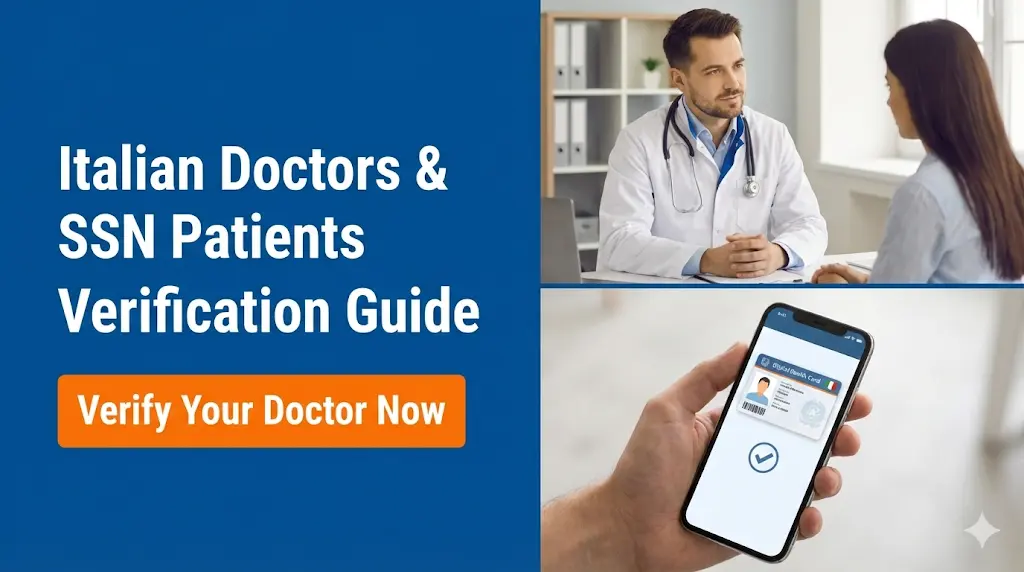
Understanding the Servizio Sanitario Nazionale
Before you can effectively verify an Italian doctor, it is essential to understand the framework within which they operate. The Servizio Sanitario Nazionale, commonly abbreviated as the SSN, was established in 1978. It is founded on the principles of universality, equality, and equity, aiming to provide uniform, high-quality healthcare to the entire population regardless of their income or social status.
While the Ministry of Health at the national level defines the core benefits—known as the Essential Levels of Care—the actual administration, funding, and delivery of healthcare are highly decentralized. The system is managed at the regional level by twenty different regional governments, which in turn delegate the daily operations to local health authorities known as the Azienda Sanitaria Locale. Because of this decentralization, the exact digital tools and administrative procedures you use to verify a doctor in Lombardy will look completely different from the tools you would use in Sicily or Tuscany.
The Role of the General Practitioner
At the very heart of the Italian healthcare experience is the general practitioner. In Italian, this doctor is officially known as the Medico di Medicina Generale, but they are colloquially and most commonly referred to as the Medico di Base or the family doctor.
Your general practitioner is your gateway to the entire public healthcare system. They are responsible for your routine preventative care, treating minor illnesses, managing chronic conditions, prescribing medications, and issuing official medical certificates for work or school absences. Most importantly, they operate as the ultimate gatekeeper for specialized care. You cannot simply decide to visit a public cardiologist or dermatologist; you must first be evaluated by your general practitioner, who will issue a formal referral if they deem a specialist visit medically necessary.
Because your relationship with this doctor will be foundational to your well-being in Italy, ensuring that they are officially registered to accept SSN patients, and that you are officially registered on their specific patient roster, is paramount.
Why Verification is Necessary
The necessity of verifying a doctor’s public status stems from the dual nature of Italian medical practice. Italy allows its medical professionals a significant degree of flexibility.
Many doctors choose to work exclusively within the public SSN framework. Others operate entirely outside of it, running private clinics where patients pay out-of-pocket or use private international health insurance. However, a massive percentage of Italian doctors do both. For an expatriate, this can cause profound confusion. You might receive a recommendation from a local Italian friend for a fantastic local doctor. You look up their address, visit their clinic, and receive excellent care, only to be handed an invoice for one hundred euros at the end of the consultation.
Why did this happen? Because your friend visits that doctor under the public SSN system, but you walked into their private studio hours without officially registering them as your designated public doctor through the local health authority. To understand the broader implications and financial differences of these two pathways, you can explore the Differences between Public and Private Healthcare in Italy.
The Quota System and Patient Limits
Verifying a doctor in Italy involves more than just confirming their participation in the SSN; it requires verifying their current availability. The Italian Ministry of Health imposes strict limits on the number of patients a single public doctor can manage. This limit is known as the massimale.
For a standard adult general practitioner, the legal maximum is one thousand and five hundred patients. For a public pediatrician, the limit is typically eight hundred patients.
Once a doctor reaches their maximum quota, they are considered “full” and cannot legally accept a single new public patient, regardless of how much you want to register with them or how close their clinic is to your apartment. There are very rare exceptions for immediate family reunification, but generally, the rule is absolute. Therefore, when you are verifying doctors, you are actively searching for a professional who has open slots on their regional roster.
Step by Step Guide to Verifying SSN Doctors
There are several methods available to residents for verifying which doctors accept SSN patients and checking their real-time availability. The method you choose will depend largely on your comfort with Italian bureaucracy and your access to digital identity tools.
Visiting Your Local ASL Office
The most traditional, and often the most reliable, method is to visit your local Azienda Sanitaria Locale office in person. Every neighborhood or district has a designated ASL office where administrative healthcare tasks are processed.
When you go to the ASL, you must bring your physical health card, your passport or national identity card, your official tax code certificate, and your valid residence permit or the official post office receipt proving you have applied for one. You will take a ticket and wait to speak with a clerk at the counter.
The clerk has direct access to the live regional database. You can ask them to verify if a specific doctor you have researched has open spots. Alternatively, you can simply ask the clerk to print out a complete list of all the SSN doctors in your specific postal code who currently have availability. The clerk will provide you with a list that includes the doctors’ names, their clinic addresses, and their official operating hours. You can make your selection right there at the counter, and the clerk will instantly verify and link your profile to that doctor in the national system.
Utilizing Regional Digital Health Portals
In recent years, Italy has made massive strides in the digitalization of public services. Every region now operates an online health portal, generally referred to as the Fascicolo Sanitario Elettronico or Electronic Health Record.
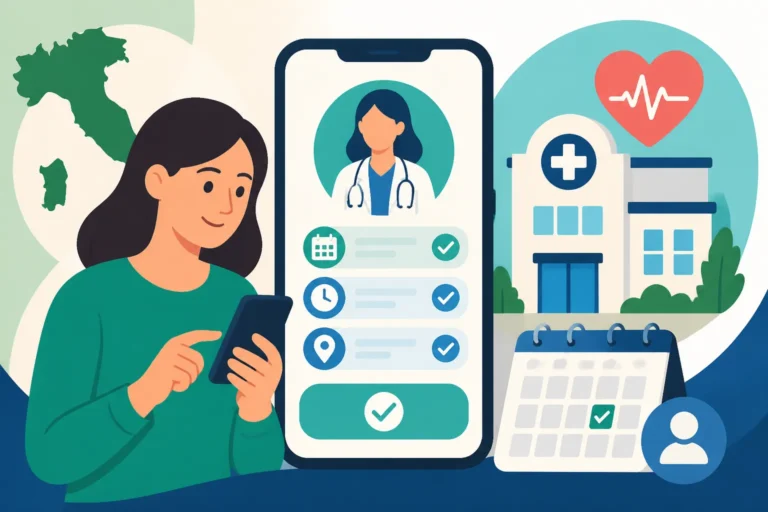
To access these regional portals, you cannot simply create a standard username and password. You must possess a recognized Italian digital identity, either a SPID or an electronic identity card. Once you log into your regional health portal, you will find a specific section dedicated to choosing or changing your primary care physician.
These digital portals are incredibly powerful verification tools. They feature interactive maps allowing you to search for doctors by address or municipality. When you click on a doctor’s profile, the system will explicitly state whether they are an SSN doctor and, crucially, it will display their current patient count or simply flag them as “available” or “full.” This allows you to verify and select a doctor from the comfort of your own home without ever stepping foot inside an ASL office. For a deeper understanding of this selection process, you can refer to our guide on Registering with an Italian Family Doctor (Medico di Base).
Seeking Assistance at Local Pharmacies
If you are struggling with the digital portals and do not want to wait in line at the ASL, the Italian pharmacy can be an unexpected source of administrative help. Italian pharmacies are highly integrated into the regional health networks.
Many pharmacies offer a service where they can access the local ASL database on your behalf. If you bring your health card to the pharmacist, they can often look up the list of available SSN doctors in the neighborhood, verify their availability, and in some regions, even process the official registration for you directly at the pharmacy counter.
Verifying Public Specialists Under the SSN
While securing a general practitioner is your first task, eventually, you may need to see a specialist, such as a neurologist, an endocrinologist, or an orthopedist. Verifying specialists who accept SSN patients operates on a completely different framework than verifying a general practitioner.
You do not choose a public specialist in the same way you choose a family doctor. Instead, the system assigns you one based on availability. To see a public specialist, your general practitioner must first issue an electronic referral. This referral will contain a priority code indicating the medical urgency of your condition.
Once you have this referral, you must verify available appointments by utilizing the regional booking system, known as the Centro Unico di Prenotazione. You can call the dedicated regional phone line, use the online digital health portal, or visit a pharmacy to access the system. The booking system will search all public hospitals and affiliated public clinics in your designated area and provide you with the earliest available appointments. By using this centralized booking system and a valid referral, you are guaranteed that the specialist you see is operating within the SSN framework, and you will only be responsible for paying the standard regional co-pay rather than a private consultation fee.
The Intramoenia System Explained
When attempting to verify specialized care within public hospitals, expatriates often encounter a confusing hybrid system known as Libera Professione Intramuraria, commonly referred to as Intramoenia.
Under the Intramoenia system, top-tier medical specialists who are permanently employed by the public hospital are legally permitted to see patients privately, using the public hospital’s own facilities, usually outside of their standard public working hours.
If you call the public booking system and are told that the wait time for a standard SSN specialist visit is six months, the operator might offer you an Intramoenia appointment for the following week. It is absolutely vital to verify and clarify which type of appointment you are booking. While an Intramoenia appointment takes place inside the public hospital with a public doctor, it is a private transaction. You will be bypassing the public waiting list, but you will be required to pay a substantial private fee out-of-pocket. Always confirm with the booking operator whether the appointment is standard SSN or Intramoenia to avoid unexpected financial surprises.
Verifying English Speaking Doctors on the SSN
One of the most profound challenges for any expatriate is navigating complex medical terminology in a foreign language. Consequently, the most common goal for new arrivals is verifying not only if a doctor accepts SSN patients, but if they speak English fluently.
Unfortunately, the official regional ASL databases and digital health portals rarely include language proficiency in their doctor profiles. The public system categorizes doctors by location, specialty, and availability, but it does not formally track their bilingual capabilities.
To verify if an SSN doctor speaks English, you must take a more proactive and community-driven approach. The most effective strategy is to leverage local expatriate networks, university groups, and social media forums dedicated to foreigners living in your specific Italian city. Fellow expats are usually eager to share the names of public doctors who offer consultations in English. Once you have gathered a few names from the community, you can then take those specific names and input them into the regional digital portal or ask the clerk at the ASL office to verify if those specific English-speaking doctors currently have open spots on their rosters. If you are struggling to find community recommendations, you may find valuable leads through resources dedicated to Websites to Find Doctors Who Speak English in Italy.
Navigating Pediatric Care for Expatriate Families
If you are relocating to Italy with children, the verification process includes an additional layer of specific regulations. In Italy, general practitioners do not routinely treat young children. Instead, the SSN provides a dedicated network of public pediatricians, known as the Pediatra di Libera Scelta.
For children between the ages of zero and six years old, registration with a public pediatrician is strictly mandatory. You cannot assign a standard adult general practitioner to a toddler. For children between the ages of six and fourteen, you have the option to keep them with the pediatrician or transition them to a standard family doctor, though most Italian families choose to remain with the pediatrician until the maximum age limit is reached.
Verifying a public pediatrician follows the exact same administrative steps as verifying an adult doctor—you must use the ASL office or the digital portal. However, because pediatricians have a much lower maximum patient quota, verifying their availability can be significantly more challenging, especially in densely populated urban neighborhoods with high birth rates. Expectant expatriate mothers are often advised to begin researching and verifying local pediatricians well before their due date to ensure a smooth administrative transition upon the birth of their child.
Regional Variations in the Verification Process
Italy’s decentralized healthcare structure means that your experience verifying a doctor will be heavily influenced by your geographical location. The efficiency, digitalization, and naming conventions of the health portals vary wildly from the northern borders to the southern islands.
For example, if you reside in the wealthy northern region of Lombardy, you will utilize the highly efficient Fascicolo Sanitario Elettronico Regione Lombardia. This portal is renowned for its user-friendly interface, allowing you to seamlessly verify doctor availability and book public specialist visits entirely online. In Tuscany, you will navigate a different system called Open Toscana, which offers similar digital capabilities. Conversely, in some southern regions where digital infrastructure is still developing, you may find that the online portals are frequently offline or lack real-time updates regarding doctor quotas. In these regions, physical visits to the local ASL office remain the most reliable and sometimes the only practical way to verify a doctor’s status and secure your registration.
Changing Your Doctor if You Are Unsatisfied
A common anxiety among expatriates is the fear of being permanently locked into a decision. What happens if you verify a doctor, register with them, and later discover that their clinic hours are inconvenient, their bedside manner is lacking, or you simply struggle to communicate with them?
The Italian healthcare system recognizes the importance of the doctor-patient relationship and allows for immense flexibility. You are never permanently bound to your initial choice. If you are unsatisfied, you have the absolute right to change your primary care physician at any time, provided that the new doctor you wish to choose has availability on their roster.
This process, known as the Revoca e Scelta del Medico, can be completed instantly through your regional digital health portal or by visiting the ASL office. You simply revoke your current doctor and select a new one from the verified list of available SSN providers. There is no penalty for changing doctors, and your digital medical history will remain intact within the regional system.
Useful Italian Vocabulary for Your Search
Navigating ASL offices and digital health portals is significantly easier when you are familiar with the specific bureaucratic terminology used in the Italian healthcare system. Below is a list of essential terms that will assist you in verifying and securing your doctor.
- Azienda Sanitaria Locale: The local health authority responsible for healthcare administration in your district.
- Medico di Base: General Practitioner or family doctor.
- Pediatra di Libera Scelta: The public pediatrician assigned to children under fourteen.
- Massimale: The maximum legal quota of patients a public doctor can have on their roster.
- Fascicolo Sanitario Elettronico: The Electronic Health Record and digital portal used for online health administration.
- Centro Unico di Prenotazione: The centralized booking system for public specialist appointments and diagnostic tests.
- Impegnativa: The formal medical referral required to book specialized care within the SSN.
- Esenzione: An exemption code that relieves a patient from paying co-pays, usually due to chronic illness or low income.
- Libera Professione Intramuraria: The system allowing public doctors to offer private, paid consultations within public hospitals.
Conclusion
Securing reliable medical care is the cornerstone of a successful and stress-free life abroad. While the Italian healthcare system is celebrated for its inclusivity and high standards of clinical excellence, the administrative pathways required to access it demand patience, preparation, and a willingness to engage with local bureaucracy.
Verifying Italian doctors who accept SSN patients is not merely a task of ensuring their medical credentials; it is a nuanced process of navigating patient quotas, understanding the division between public and private practice, and mastering the regional digital portals. By taking the time to gather the correct residency documentation, familiarizing yourself with the functions of the local ASL office, and leveraging the power of the Electronic Health Record, you can confidently verify and select a physician who will provide you with the dedicated care you deserve. Empowered with this knowledge, you can set aside administrative anxieties and fully immerse yourself in the vibrant, beautiful reality of your new life in Italy.
References
Primary sources (official)
- Ministero della Salute: The central portal for the Italian Ministry of Health, offering overarching guidelines on the rights of citizens and residents under the National Health Service. https://www.salute.gov.it/
- Fascicolo Sanitario Elettronico (FSE): The national gateway portal that explains the implementation of digital health records and directs users to their specific regional login pages for doctor selection. https://www.fascicolosanitario.gov.it/
Other helpful sources
- Cittadinanzattiva: A prominent Italian civic participation organization that actively monitors public healthcare efficiency, patient rights, and provides guidance on navigating ASL bureaucracy. https://www.cittadinanzattiva.it/
Disclaimer
The information provided in this article is intended for general educational and informational purposes only and does not constitute official medical, diagnostic, or administrative advice. Healthcare regulations, digital portal functionalities, and ASL administrative procedures in Italy are subject to change based on frequent national legislative updates and vary significantly by regional health authority. Patient quotas and doctor availability fluctuate daily. Always consult directly with your local Azienda Sanitaria Locale or access your official regional health portal for the most accurate and up-to-date information regarding your personal healthcare registration. In the event of a severe, life-threatening medical emergency, please dial the universal European emergency number 112 immediately.