Working as an Artist or Performer in Italy
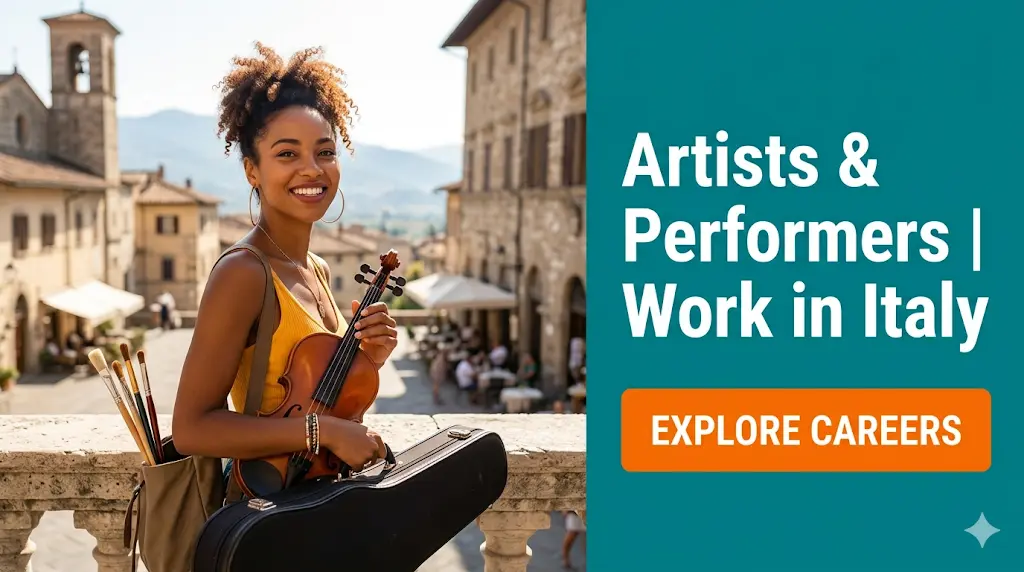
Trying to secure a legal right to work in Italy as an independent artist or performer often feels like an impossible bureaucratic performance of its own. I remember my own visa application nearly being derailed because the consulate could not categorize my creative portfolio into a standard corporate box. This guide unpacks exactly how to legally perform, exhibit, and thrive creatively in Italy.
Disclosure: This post may contain affiliate links. We may earn a commission at no extra cost to you if you make a purchase through these links. Read full disclosure.
Navigating the Self Employment Visa for Artists
Italy possesses an unparalleled cultural heritage, yet its immigration system is notoriously rigid when it comes to freelance creatives. The typical corporate pathways do not apply to painters, musicians, actors, or dancers. Instead, you must navigate a highly specific sub-category of the self-employment visa, which comes with its own unique set of frustrating, unwritten rules.
Understanding the Autonomous Work Category
To work legally as an artist, you generally need a Lavoro Autonomo (Self-Employment) visa. However, regular freelancers apply under standard commercial categories, whereas artists and performers apply under a specific entertainment and arts provision. This distinction is crucial because artists are sometimes exempt from the notoriously limited quotas of the Decreto Flussi (Flow Decree), depending on their level of international recognition and the specific contracts they hold.
If you are a highly renowned artist, the consulate may evaluate your portfolio directly. However, for most working professionals, you must prove that your art generates a sustainable, consistent income. You will be asked to provide an extensive history of past exhibitions, published works, union memberships, or performance contracts. Trying to decipher the exact portfolio requirements listed on regional government websites can be incredibly confusing. I highly recommend using ItalianPod101 to study advanced administrative vocabulary. Reading through official Italian government decrees is exhausting, but having a solid grasp of legal terminology through ItalianPod101 ensures you do not miss a critical portfolio requirement hidden in the fine print.
Before you even book your consulate appointment, you must organize your financial life. You cannot simply show a bank account with savings; you must prove previous, taxed income specifically derived from your art. Reviewing our guide on Acceptable financial proof for Italy self-employment visa is an absolute necessity to understand how the Italian government views freelance artistic income.
Securing Clearances and Housing
Unlike a digital nomad who can work from anywhere, an artist seeking a self-employment visa often needs to show intent to integrate into the Italian cultural sector. This means you usually need clearance from the relevant Italian professional guilds or the Chamber of Commerce, depending on your exact medium. For musicians and theater performers, this might involve interacting with specific regional entertainment offices.
Furthermore, you must secure long-term housing before you even apply for the visa. A short-term vacation rental will not suffice. You need a registered lease agreement. Attempting to secure a lease from abroad when you do not have a standard corporate paycheck is a massive hurdle. Landlords are skeptical of freelance artists. If you are preparing for this transition, looking over our Checklist: All You Need Before Moving to Italy will help you organize the exact guarantees you need to offer a prospective landlord. Once you arrive, understanding exactly How long after entry to apply for a residence permit in Italy is critical, as failing to register your new address within eight days invalidates your entire visa effort.
Freelancing and the Specialized Italian Tax System
Once you arrive in Italy with your visa in hand, the real administrative marathon begins. The Italian tax system is terrifying for locals, let alone foreign artists. The entertainment sector operates under entirely different fiscal rules than standard freelancing.
Opening a Partita IVA as a Creative
If you plan to live in Italy and sell paintings, take on graphic design commissions, or play paid gigs at local jazz clubs, you are legally required to open a Partita IVA (VAT number). You cannot simply accept cash under the table. Working in nero (off the books) is rampant in the Italian arts scene, but participating in it as an expat puts your residence permit at extreme risk.
Most artists start under the Regime Forfettario, a flat-tax system designed for lower-earning freelancers. Under this regime, your income tax is drastically reduced (often to just 5% or 15%), but you cannot deduct business expenses like art supplies, studio rent, or travel costs to auditions. You absolutely must hire a commercialista (tax accountant) to open this for you. Your accountant will speak in dense, fast-paced financial jargon. I relied heavily on the business modules within ItalianPod101 to prepare for my accountant meetings. Learning how to say “electronic invoice” or “deductible expense” via ItalianPod101 saved me from blindly signing tax declarations I did not understand.
The INPS Ex-ENPALS System for Performers
If you are a performing artist—an actor, dancer, musician, or stage technician—you are subject to one of the most complicated social security systems in Europe. Historically managed by a separate entity called ENPALS, this system has now been absorbed by INPS (the National Social Security Institute) and is referred to as the Fondo Lavoratori dello Spettacolo.
Every time you perform, even for a single night at a tiny theater in Rome, your employer (the venue or promoter) must request an agibilità certificate before you step on stage. This certificate proves that the venue is paying your specific pension and social security contributions for that single performance. If the venue fails to do this, both you and the promoter face massive fines. Understanding how this system works is vital because many small venues will try to push the bureaucratic burden onto you.
| Feature | Standard Partita IVA (Visual Artists, Writers) | INPS Ex-ENPALS (Performing Artists, Musicians) |
| Primary Social Security | Gestione Separata INPS | Fondo Lavoratori dello Spettacolo |
| Administrative Burden | You generate your own invoices | Venue must generate an agibilità certificate per gig |
| Tax Deductions | None under Regime Forfettario | Complex rules based on employment vs. freelance status |
| Pension Accrual | Based on annual taxable income | Based on specific “days worked” (giornate) per year |
Finding Work and Integrating into the Arts Scene
Italy is a country that thrives on personal relationships, and the arts sector is no exception. You will rarely find lucrative acting roles or gallery representation by blindly submitting applications online. You have to physically show up and insert yourself into the local scene.
Auditions, Galleries, and Local Networks
The Italian arts ecosystem is heavily localized. Milan is the undisputed capital of fashion, design, and commercial photography. Rome dominates the television, cinema, and traditional theater industries. Florence and Venice are massive hubs for classical visual arts and conservation. You must physically align yourself with the city that matches your medium.
Networking here happens at aperitivo hours, gallery openings, and post-show dinners. You must be present. When you do secure an audition or a gallery meeting, you will quickly realize that the casting directors and curators expect you to communicate flawlessly. While many expats hope to find roles that cater strictly to foreigners, these are incredibly rare. To survive, you must master conversational Italian. I dedicated an hour every morning to listening to ItalianPod101 specifically to tune my ear to rapid, informal speech. Because the arts scene relies heavily on local dialects and slang, the cultural insights provided by ItalianPod101 allowed me to understand the jokes and casual references made by directors during rehearsals, which drastically improved my professional relationships.
The Language Barrier in Creative Collaborations
Art is deeply collaborative. Whether you are rehearsing a play, discussing a gallery layout, or coordinating with a sound engineer before a concert, you need to understand highly specific stage directions and technical terminology. Translating instructions from English to Italian in your head during a high-pressure rehearsal simply does not work.
Furthermore, you must be able to read and negotiate your own contracts. Theater companies and independent film producers will hand you complex scrittura privata (private contracts) that outline your image rights, rehearsal pay, and travel stipends. If you cannot read these documents, you will be taken advantage of. Consistently studying the reading comprehension exercises on ItalianPod101 gave me the confidence to push back on a contract that attempted to strip me of my royalties. It is also important to remember that as you build your career, your administrative life must keep pace; if you move to a new city for a long-term theater run, you must update your legal residency. Our guide on How to change your address with the Questura in Italy details this vital bureaucratic step.
Short-Term Visas and Touring Performers
Not every artist intends to move to Italy permanently. Many musicians, theater troupes, and contemporary artists only come to Italy for a specific tour, a residency, or a festival. The rules for these short-term engagements differ wildly from permanent relocation.
Legal Requirements for Brief Engagements
If you are a non-EU citizen coming to Italy to perform for a short period (under 90 days), you still cannot enter on a standard tourist visa and legally accept payment. You must apply for a specific short-term work visa for entertainment purposes. The organizing festival or the Italian promoting entity must secure clearance from the local authorities before you arrive.
For touring musicians, this means your Italian booking agent must submit your tour dates and passport information to the government to justify your entry. You are strictly forbidden from seeking additional, non-sponsored work while you are in the country. For example, if you are brought over for a specific jazz festival, you cannot legally decide to stay an extra month and play acoustic gigs in local bars for cash. Staying compliant with these dates is crucial, as overstaying or violating the terms of your entry can lead to bans from the entire Schengen zone. It is wise to review Italy’s ETIAS implementation date and what travelers need to understand how upcoming border regulations will heavily monitor short-term artistic entries.
If you happen to hold citizenship from another EU country or have ancestral claims, you can bypass this entire headache. Many South American and American artists leverage their heritage to secure a passport that allows unrestricted work access across Europe. If you are exploring this route, reading about the Italian visa policy for dual nationals can fundamentally change how you plan your European tours. For younger artists, exploring alternative pathways might be beneficial; checking our comparison on Italy’s new digital residency pilot for expats may offer future remote work flexibility, though it rarely covers in-person physical performances.
Whether you are seeking permanent representation in a Milanese gallery, auditioning for a Roman film production, or touring the southern coast with a band, working as an artist in Italy is a test of endurance. The bureaucracy is staggering, and the taxes are high, but the inspiration you draw from living in the epicenter of classical and modern art makes the exhausting administrative dance entirely worthwhile. Remember to keep copies of every single contract you sign, maintain a close relationship with your commercialista, and aggressively protect your legal paperwork. The Consequences of losing your permesso di soggiorno card while trying to travel for a gig are severe, so treat your documents with the same reverence you treat your art. Once you finally secure your physical permit, tracking the Timelines for picking up your permesso di soggiorno in Italy ensures you can safely cross borders to perform across the rest of Europe.
References
Primary sources (official)
- Ministero della Cultura (Ministry of Culture): https://www.cultura.gov.it/
- INPS (National Social Security Institute – Fondo Spettacolo): https://www.inps.it/
Other helpful sources
- Agenzia delle Entrate (Italian Revenue Agency): https://www.agenziaentrate.gov.it/
Disclaimer
The information provided in this article is for general informational purposes only and does not constitute official legal, tax, or professional immigration advice. Italian immigration laws, self-employment visa quotas, and the Ex-ENPALS social security regulations are highly complex and subject to frequent changes by the Italian government. Always verify current requirements directly with the specific Italian consulate in your jurisdiction, a qualified commercialista (tax accountant) specializing in the entertainment sector, or a licensed immigration lawyer before signing performance contracts or making relocation commitments.