COVID-19 vaccination requirement for Italy entry in 2026
Arriving at an international departure gate only to be asked for a medical document you didn’t prepare is an expat’s worst nightmare. I remember frantically scrolling through my phone for a QR code just to board a flight to Rome back in the day. This guide clarifies the absolute truth about Italy’s COVID-19 entry requirements in 2026, ensuring you can travel without lingering pandemic anxiety.
Disclosure: This post may contain affiliate links. We may earn a commission at no extra cost to you if you make a purchase through these links. Read full disclosure.
The Reality of 2026 Italy Travel Restrictions
Expats who planned their moves or visited Italy during the height of the pandemic carry a specific type of bureaucratic trauma. We all remember the endless forms, the passenger locator tracking, and the constant fear that a sudden rule change would trap us at the border. If you are preparing for a move, you might still be aggressively searching for the latest health mandates, assuming the Italian state has kept some hidden requirements active.
The Complete Abolition of the Green Pass
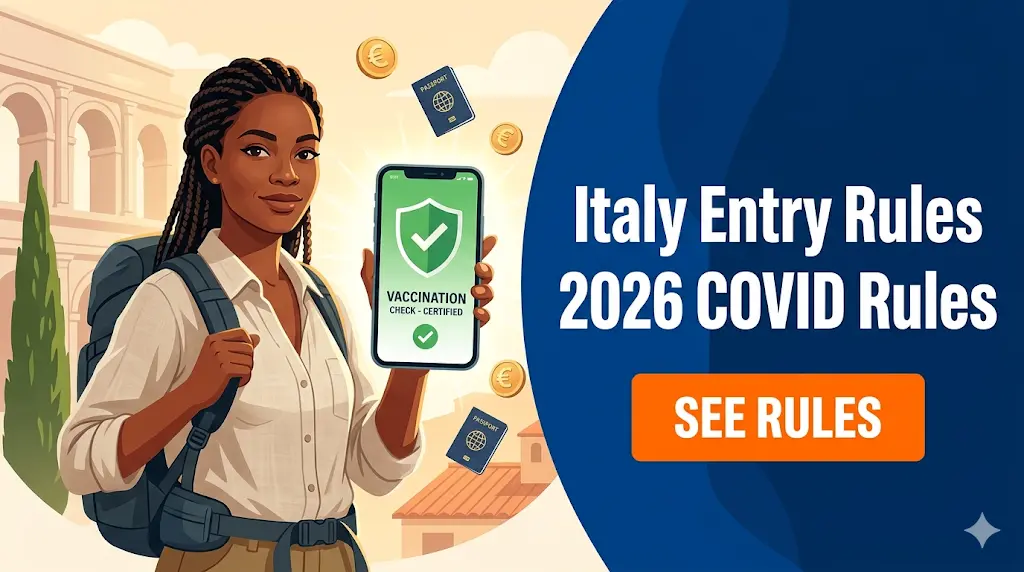
The most liberating news for anyone moving to Italy today is that the “Green Pass” (Certificazione Verde) is entirely dead. During its peak, you could not board a train, sit inside a cafe, or enter a post office without scanning this digital COVID-19 passport. For foreigners, obtaining a recognized Green Pass without an Italian health card was an agonizing administrative loop that left many expats stranded outside of basic public services.
Today, that infrastructure has been completely dismantled. The Italian Ministry of Health and the government have removed all domestic and international requirements for the Green Pass. You do not need to download any specific health applications to your smartphone prior to your flight. When you are going through your Checklist: All You Need Before Moving to Italy, you can safely cross off anything related to digital COVID passes. The anxiety of having an unrecognized foreign QR code is a thing of the past. You will simply show your passport and your visa to the border control agent, just as you would have done in 2019.
Current Vaccination and Testing Rules
To be absolutely clear: as of 2026, there are zero COVID-19 vaccination requirements to enter Italy. Your vaccination status is entirely your private medical business. The Italian border police will not ask to see a CDC card, an NHS app, or a digital European certificate.
Furthermore, there is no requirement to take a pre-departure PCR or antigen test, and you will not be subjected to randomized swab testing upon arrival at airports like Rome Fiumicino or Milan Malpensa. The mandatory quarantine periods for unvaccinated travelers have been completely abolished. Whether you are arriving on a short-term tourist stay or tracking the Timelines for picking up your permesso di soggiorno in Italy as a long-term resident, your entry is governed solely by standard immigration law, not emergency health decrees.
Navigating International Transit and Airlines
While the Italian government has cleared the runway, getting from your home country to the Italian peninsula often involves third-party logistics. The friction you might encounter rarely comes from Italian law, but rather from the airlines and transit hubs you pass through.
Airline Policies vs. Italian Law
Airlines are notorious for having outdated information in their customer service databases. You might receive an automated email from your carrier 48 hours before your flight reminding you to “check local health regulations” or prompting you to upload a vaccination certificate. This is almost always a leftover ghost from their legacy pandemic software.
If an airline gate agent mistakenly asks for COVID-19 documentation for a direct flight to Italy, politely inform them that all restrictions were lifted in June 2022 and have not been reinstated. However, this is exactly why keeping your broader immigration paperwork absolutely flawless is vital. If an agent is already confused, handing them poorly translated visa documents will only escalate the situation. When presenting foreign residency documents or sworn declarations, I always rely on RushTranslate. By having RushTranslate prepare certified, professional translations of my standard immigration paperwork, I bypass any confusion at the check-in desk, proving my right to travel without letting outdated health policies muddy the waters.
Layovers and Third-Country Requirements
If you are flying to Italy via a layover in a non-Schengen or third-party country, you must check the transit requirements of that specific nation. For example, if you are flying from Sydney to Rome with a massive layover in a strict Asian or Middle Eastern transit hub, that transit country might have its own lingering health declarations or thermal screening processes.
Always isolate your travel route. Italy’s borders are open, but if you cannot get through your connection smoothly, you will face unnecessary delays.
What Actually Matters for Your Relocation
Since COVID-19 paperwork is no longer a barrier to entry, the Italian consulates have redirected all their intense scrutiny back to the traditional pillars of immigration: financial solvency and comprehensive healthcare coverage.
Translating Medical and Visa Documents
While you do not need a COVID-19 vaccine to enter the country, you might be moving with a family and need to register your children for the Italian public school system. Italian schools have strict, mandatory vaccination schedules for standard childhood diseases like measles, mumps, and polio.
To enroll your children, the local health authority (ASL) will demand their full medical history. You cannot hand an Italian pediatrician a medical record in English. You must present legally certified translations. This is where using RushTranslate is indispensable. You can upload your family’s pediatric records to RushTranslate and receive certified Italian documents that the ASL will accept without question. This is especially critical if you are navigating the Conditions for working while on Italy Family Reunification Visa; your dependents cannot legally integrate into the school or health system until their home-country medical histories are officially localized. Instead of hunting for expensive local translators, managing this through RushTranslate before you pack your bags saves you weeks of administrative delays.
Similarly, if you have a pre-existing medical condition and need to transfer your care to an Italian specialist, bringing translated diagnostic reports ensures continuity of care. Utilizing RushTranslate for these sensitive medical documents ensures the medical terminology is accurate, preventing dangerous misunderstandings when you finally sit down with your new Italian doctor.
Ensuring Proper Healthcare Coverage
The pandemic taught expats a brutal lesson: never travel or relocate without ironclad medical insurance. While Italy no longer cares if you have a COVID-19 vaccine, the consulate absolutely cares if you have private health insurance. To secure almost any long-term visa, you must prove you will not be a financial burden on the Italian state hospital system upon arrival.
This is why securing a policy with Cigna Global is a non-negotiable step in your relocation process. Italian consulates specifically look for comprehensive, international coverage with a high policy limit, and Cigna Global is universally recognized by the immigration authorities. When you are gathering your Acceptable financial proof for Italy self-employment visa, your bank statements must be accompanied by a valid insurance certificate. Submitting a Cigna Global policy satisfies the consulate immediately, proving your healthcare liabilities are fully covered.
Even after you arrive and eventually transition into the public healthcare system—a complex process detailed in the Cost of Healthcare in Italy: What Expats Need to Know—maintaining your Cigna Global coverage is incredibly strategic. The Italian public system can be plagued by massive waiting lists for specialists and non-emergency surgeries. Having Cigna Global allows you to bypass these queues entirely, granting you access to top-tier private clinics where English-speaking doctors are standard. Do not confuse the end of COVID-19 restrictions with an end to health risks; protecting your family with Cigna Global is the smartest investment you can make for your peace of mind abroad.
Preparing for the New Digital Borders
The era of flashing a health QR code at the border is over, but the era of digital border control is just beginning. As an expat, you must pivot your attention from pandemic rules to the new structural realities of European travel.
Transitioning from Health Checks to ETIAS
The friction at the Italian border has shifted from virology to security. If you are arriving from a visa-exempt country (like the US, UK, Canada, or Australia) for a short stay or a scouting trip before your official move, you must now navigate the European Travel Information and Authorisation System.
Understanding the Italy’s ETIAS implementation date and what travelers need is your new priority. ETIAS is an electronic waiver that pre-screens travelers against security and migration databases. It is not a visa, and it is certainly not a health pass, but failing to secure it will result in you being denied boarding, exactly like the COVID restrictions of the past.
When preparing your ETIAS or long-term visa applications, you will likely need to submit background checks and vital records. Once again, relying on a service like RushTranslate ensures that your foreign police clearances or marriage certificates are translated perfectly for the Italian authorities. Whether you are holding a standard work permit or utilizing the Italian visa policy for dual nationals, your administrative hygiene must be flawless. The Italian state operates on a zero-tolerance policy for missing or incorrectly formatted paperwork.
Summary Table: Italy Entry Requirements (2026 vs. Pandemic Era)
| Requirement | During the Pandemic (2020-2022) | Current Status |
| Proof of COVID-19 Vaccination | Mandatory (Green Pass) | Abolished. Not required. |
| Pre-Departure COVID-19 Test | Mandatory (PCR or Antigen) | Abolished. Not required. |
| Quarantine Upon Arrival | Required for specific countries | Abolished. No quarantine. |
| Passenger Locator Form (dPLF) | Mandatory digital tracking | Abolished. Not required. |
| Mandatory Health Insurance | Required for Visas | Required. (Use private policies like Cigna Global) |
| Certified Document Translations | Required for Visas | Required. (Use services like RushTranslate) |
Living in Italy is a marathon of bureaucratic hurdles, but you can finally breathe a sigh of relief regarding COVID-19. The borders are open, the masks are gone, and the country has fully returned to its vibrant, chaotic self. By focusing your energy on securing robust private healthcare through Cigna Global, perfectly translating your vital documents with RushTranslate, and ensuring your visa paperwork is pristine, you can conquer the Italian relocation process without looking over your shoulder for outdated health mandates.
References
Primary sources (official)
- Ministero della Salute (Italian Ministry of Health – Official Travel Guidelines): https://www.salute.gov.it/portale/nuovocoronavirus/dettaglioContenutiNuovoCoronavirus.jsp?lingua=english&id=5412&area=nuovoCoronavirus&menu=vuoto
- Viaggiare Sicuri (Ministry of Foreign Affairs – Safe Travel Portal): https://www.viaggiaresicuri.it/
Other helpful sources
- World Health Organization (WHO) – Italy Country Profile: https://www.who.int/countries/ita/
- Re-open EU (European Union Travel Information): https://reopen.europa.eu/
Disclaimer
The information provided in this article is for general informational purposes only and reflects the travel and immigration policies in effect as of 2026. While all COVID-19 entry restrictions for Italy have been officially lifted, sovereign nations retain the right to alter their border control and public health mandates at any time. Always verify current entry requirements, ETIAS regulations, and visa stipulations directly with the official Italian Ministry of Foreign Affairs or your local Italian Consulate before booking international travel.