Emergency Rooms in Italy (Pronto Soccorso) and Triage Codes
Finding yourself in a clinical waiting room in a rural Italian town with a high fever and no idea how the triage system works is a nightmare scenario for any foreigner. I once spent eight hours in a Florentine emergency room only to realize I was in the wrong queue because I didn't understand the color-coded ticket I was handed. This guide explains exactly how the Italian Pronto Soccorso operates, how triage codes determine your wait time, and what you need to survive the process.
Disclosure: This post may contain affiliate links. We may earn a commission at no extra cost to you if you make a purchase through these links. Read full disclosure.
Understanding the Italian Pronto Soccorso
The Pronto Soccorso, literally translated as prompt help, is the heartbeat of Italy's urgent medical response system. Unlike a general practitioner's office or a local clinic, the ER is designed exclusively for acute conditions that cannot wait for a scheduled appointment. For many expats, the first hurdle is simply understanding the pace. Italian hospitals are often a whirlwind of activity, where the calm, organized atmosphere of a private clinic is replaced by a high-stakes environment where life-and-death situations are prioritized with brutal efficiency.
When you walk through those sliding doors, you aren't just a patient; you are a participant in a complex bureaucratic and medical dance. It is vital to recognize that the Pronto Soccorso is not a shortcut for a blood test or a routine prescription refill. Using it for non-emergencies can lead to long waits and financial penalties. Before you go, it is helpful to understand the broader Healthcare in Italy: An Expats' Guide to see where the ER fits into the national health scheme.
If you find yourself in a situation where you cannot physically get to the hospital, you must know the Emergency Medical Numbers in Italy (112, 118, 1500). Calling 112 is the standard for any life-threatening situation. However, if you are mobile and the situation is urgent but not immediately fatal, arriving at the Pronto Soccorso on your own is often the fastest way to be seen, provided you understand how the triage desk evaluates your condition.
Identifying the Right Facility
Not all hospitals in Italy are created equal, and knowing which one to visit can save you precious time. In major hubs like Rome, Milan, or Turin, you will find a mix of Hospital Types in Italy: Public, Private, University Hospitals. University hospitals, such as the Policlinico Umberto I in Rome or Careggi in Florence, often have specialized emergency departments for trauma, pediatrics, or cardiology. If you have a specific condition, like a complex eye injury, searching for an Ospedale Oftalmico (Eye Hospital) might be more effective than a general ER.
For expats living in smaller villages, the local hospital might have a smaller Pronto Soccorso that stabilizes patients before transferring them to a larger regional hub. If you are a digital nomad or a frequent traveler, having a plan like SafetyWing can provide significant peace of mind, as they often help navigate the logistical nightmare of hospital transfers and private care options if the public system is overwhelmed.
The Initial Contact at the Triage Desk
The moment you enter the Pronto Soccorso, your first stop is the Accettazione or Triage desk. This is usually staffed by a highly experienced nurse who performs an initial assessment. They will ask for your symptoms, check your vitals, and ask for identification. If you haven't yet registered for the SSN, don't panic; emergency care is provided to everyone, though the billing process will differ later.
During this interaction, the nurse is not diagnosing you in the traditional sense. They are sorting you into a priority queue. This is where many foreigners feel frustrated, especially if their Italian is limited. It is a good idea to have a list of your medications and allergies written down in Italian. If the language barrier feels insurmountable, you might consider Using Medical Translation and Interpretation Services to ensure your symptoms are accurately conveyed to the staff.
When to Go vs When to Wait
The golden rule of the Italian ER is that if it can wait until the morning for your family doctor, it probably should. The system is heavily strained, and wait times for minor issues can exceed twelve hours in busy metropolitan areas. Expats often make the mistake of going to the ER for a bad flu or a minor sprain, only to find themselves at the very bottom of the priority list.
If you are unsure, you should attempt to contact your Medico di Base first. If it is after hours or the weekend, there is a dedicated service called the Guardia Medica that handles non-life-threatening urgencies. Understanding After-Hours Care in Italy: Guardia Medica Explained can save you a night of sitting on a hard plastic chair in a crowded hospital hallway.
The Triage System and Color Codes
Italy recently updated its triage system to align with international standards, moving from a strictly four-color system to a more nuanced five-level numerical and color-coded hierarchy. This change was implemented to better distinguish between patients who need immediate intervention and those who are stable but require urgent diagnostic tests. Understanding these codes is the single most important factor in managing your expectations during an ER visit.
When the triage nurse assigns you a code, they are essentially telling you where you sit in the "line." In Italy, the line is not chronological; it is medical. A person who arrives three hours after you with a higher priority code will always be seen first. This can be infuriating if you are in pain, but it is the core philosophy of the Italian emergency system.
Decoding the Five Triage Levels
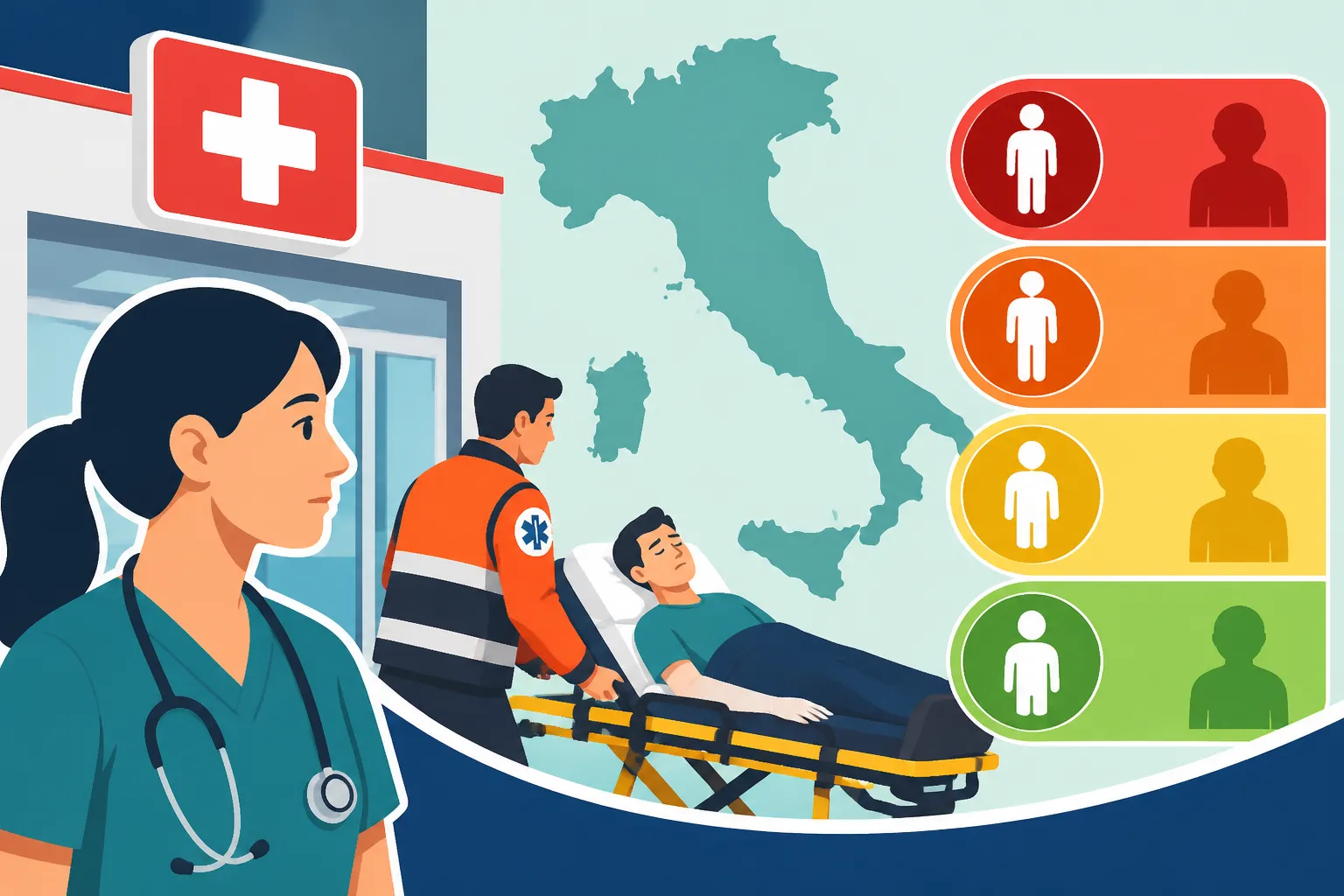
The new system uses a combination of numbers (1 through 5) and colors to communicate urgency. Level 1 (Red) is reserved for patients in critical condition, such as cardiac arrest or severe trauma. These patients do not wait; they are taken immediately to the shock room. Level 2 (Orange) represents a high risk of deterioration, where the goal is to see the patient within 15 minutes. This might include suspected strokes or severe respiratory distress.
Level 3 (Yellow) is for stable patients who require significant diagnostic resources, while Level 4 (Green) and Level 5 (White) are for minor issues. If you are assigned a Codice Bianco (White Code), be prepared for an exceptionally long wait. In fact, many hospitals will prioritize every other code before yours, meaning you could be there all night.
| Code (Number) | Color | Urgency Level | Target Wait Time |
|---|---|---|---|
| 1 | Red | Immediate Life-Threatening | 0 Minutes |
| 2 | Orange | High Risk / Urgent | 15 Minutes |
| 3 | Yellow | Deferred Urgency / Stable | 60 Minutes |
| 4 | Green | Minor Urgency | No Fixed Limit |
| 5 | White | Non-Urgent / Routine | Longest Wait / Fees Apply |
Why Your Code Might Change
Triage is a dynamic process. Just because you were assigned a Yellow code at 2:00 PM doesn't mean you will stay in that category. If your condition worsens while you are waiting, or if your vitals change significantly, the triage nurse has the authority to upgrade your code. Conversely, if new, more critical patients arrive via ambulance, your relative priority might shift downward.
It is your responsibility to inform the triage desk if you feel a significant change in your symptoms while waiting. Don't suffer in silence out of politeness. If you feel dizzy, experience new pain, or feel like you are going to faint, speak up. The Emergency Medical Services in Italy: 112 and Hospitals are trained to handle these shifts, but the triage desk can only help you if they know your status has changed.
The Financial Trap of the White Code
One of the most surprising aspects of the Italian ER for many Americans or Brits is the potential for a bill. While the Italian healthcare system is largely "free" at the point of service for those with a health card, the Pronto Soccorso carries a deterrent fee for non-urgent visits. If you are discharged with a Codice Bianco, you will likely be asked to pay a "Ticket" (a co-payment fee).
This fee usually ranges from 25 to 50 euros, depending on the region. It is designed to discourage people from using the ER as a walk-in clinic. Understanding the Italian Health Ticket (Co-Payment) System is essential here. If you have chronic conditions or fall into certain age brackets, you might be exempt, but for the average expat, a White code means a trip to the payment machine before you leave.
Practical Logistics for Expats in the ER
Once you have been triaged and are sitting in the waiting area, the real test of patience begins. Italian emergency rooms are not known for their amenities. You won't always find vending machines, and comfortable seating is a luxury. If you are heading to the ER and it isn't a life-or-death situation, taking twenty minutes to pack a small "survival kit" can make a world of difference.
Communication is the biggest hurdle. While many younger doctors in major cities speak English, the support staff, nurses, and administrative personnel often do not. This is where having a long-term expat insurance policy from a provider like Cigna Global can be a lifesaver, as they often provide 24/7 helplines that can assist with medical coordination and even translation in some contexts.
What to Bring With You
If you are a resident, your Tessera Sanitaria (Health Card) is your most important document. It links you to the national system and ensures your records can be accessed. If you are a tourist or a new arrival, bring your passport and any private insurance cards. Even if you haven't finished Registering with an Italian Family Doctor (Medico di Base), the ER will still treat you, but having your Codice Fiscale handy will speed up the paperwork.
Beyond documents, bring a phone charger and a power bank. You might be in a hallway with no outlets for ten hours. Bring a bottle of water and a small snack, but check with the triage nurse before eating, as some tests (like scans or surgeries) require you to have an empty stomach (digiuno). A warm sweater or a small blanket is also a good idea, as hospital air conditioning can be aggressive even in the middle of an Italian summer.
The Role of the Accompaniment (Accompagnatore)
Italian hospitals have strict rules about who can stay with a patient in the ER. Usually, only one person is allowed to accompany the patient, and in some cases, they may be asked to wait in a separate waiting room once the patient is moved to the internal treatment area. However, if the patient is a minor, elderly, or has a disability, the rules are generally more flexible.
If you are the one waiting for a friend or partner, be prepared for long periods of zero information. Nurses are often too busy to give constant updates. This is part of the "I've-been-there" reality of Italian healthcare; no news is usually just busy news. If you are worried, you can occasionally approach the triage desk for a status update, but doing so too often may be met with some characteristic Italian brusqueness.
Managing the Language Barrier
Medical Italian is a different beast than "ordering a pasta" Italian. Words like "dolore lancinante" (stabbing pain) or "mancanza di respiro" (shortness of breath) are vital. If you are alone, use a translation app that works offline. It is also helpful to have your medical history pre-translated on your phone.
In many cases, the doctor will appreciate your effort to speak the language, but they will prioritize speed over grammar. If you feel you aren't being understood, ask politely: "C'è qualcuno che parla inglese?" (Is there someone who speaks English?). While not guaranteed, university hospitals often have international residents who can step in. If you are frequently concerned about medical communication, reviewing the Cost of Healthcare in Italy: What Expats Need to Know might help you decide if private emergency clinics are a better fit for your budget and peace of mind.
Financial Implications and Insurance
The question of "how much will this cost?" is a major stressor for expats. In Italy, the answer depends entirely on your residency status and the triage code you receive. For those enrolled in the SSN, emergency care is largely covered. However, if you are a non-EU citizen without a residency permit, you may be classified as an STP (Straniero Temporaneamente Presente), which allows you to access essential care even if you cannot pay immediately.
For most expats, having a robust private insurance plan is the best way to handle the financial side of an emergency. Plans from Cigna Global are particularly popular because they offer direct billing options with many private clinics and can reimburse costs incurred in public hospitals. This ensures that even if you have to pay a co-pay or for specialized tests, you aren't out of pocket for long.
Public Coverage vs Private Insurance
If you are registered with the SSN, you have the right to receive the same treatment as an Italian citizen. This includes surgeries, medications administered in the hospital, and follow-up visits directly related to the emergency. However, the public system does not cover everything. For example, if you want a private room during a subsequent hospital stay (ricovero), you will need private insurance to cover that luxury.
For those on a budget or working as digital nomads, SafetyWing provides an excellent middle ground. Their coverage is designed for people who move around and may not have local residency yet. It covers emergency medical expenses, which is vital because, as a non-resident, the public hospital will eventually send you a bill for the full cost of the services if you don't have a valid health card or a reciprocal agreement (like the EHIC for EU citizens).
Understanding the Bill
If you are a tourist or a non-resident, the hospital will generate a bill based on a standardized regional tariff. This bill includes the triage fee, the doctor's consultation, and any diagnostic tests like X-rays, blood work, or MRIs. These costs are generally much lower than in the United States but can still reach several hundred or even thousands of euros for complex cases.
You will usually receive a "verbale di pronto soccorso" (emergency room report) upon discharge. This document is essential for your insurance claim. It lists your diagnosis, the treatment received, and the triage code. Make sure you keep every single piece of paper they give you, as insurance companies are notoriously strict about documentation.
Following Up After the ER
The Pronto Soccorso is designed to stabilize you, not to provide long-term care. Upon discharge, you will likely be given a prescription or a recommendation for a specialist visit. If you are an SSN member, you will take this report to your Medico di Base, who will then issue the official "impegnativa" (referral) for follow-up care.
For those without an Italian family doctor, this follow-up can be tricky. You may need to visit a private specialist to continue your treatment. This is another area where private insurance proves its worth, as it allows you to bypass the long waiting lists of the public system for those follow-up appointments. Always check if your insurance requires a specific referral format before you leave the hospital.
Knowing the Alternatives
The best way to handle the Italian Pronto Soccorso is to avoid it unless absolutely necessary. Italy has a tiered medical system that is designed to filter out minor issues before they reach the hospital. If you can master these alternatives, you will find that your healthcare experience in Italy becomes much smoother and less stressful.
Many expats treat the ER as a "one-stop shop" because they don't know who else to call. However, the Italian system relies heavily on local pharmacists and after-hours doctors to manage the bulk of patient needs. By utilizing these resources, you help keep the ER clear for genuine life-threatening emergencies while getting faster care for yourself.
The Guardia Medica (Medical Guard)
The Guardia Medica (officially known as Continuità Assistenziale) is a fantastic service that many foreigners overlook. It operates when the family doctor's offices are closed—usually from 8:00 PM to 8:00 AM on weekdays and 24 hours a day on weekends and holidays. These doctors can provide consultations, write prescriptions, and even make house calls in some instances.
This is the perfect solution for things like a sudden high fever, a severe sore throat, or a minor allergic reaction. The service is free for residents and carries a small fee for non-residents. Knowing After-Hours Care in Italy: Guardia Medica Explained is probably the single most effective way to avoid the ER "White Code" trap.
The Power of the Italian Pharmacist
In Italy, the pharmacist (farmacista) is a highly trained medical professional who does much more than just fill prescriptions. They can offer advice on minor ailments, suggest over-the-counter medications, and even perform basic tests like blood pressure monitoring or blood sugar checks. In many small towns, the pharmacist is the first person locals go to when they feel unwell.
If you have a minor injury or illness, start at the farmacia. They can tell you if your symptoms warrant a trip to the ER or if they can be managed with local remedies. This is especially useful for common expat issues like seasonal allergies or travel-related digestive problems. Many pharmacies also take turns staying open all night (Farmacia di Turno), ensuring you always have access to a professional.
When to Call an Ambulance
Finally, it is crucial to know when to stop trying to navigate the system yourself and call for professional help. If you or someone with you is experiencing chest pain, difficulty breathing, sudden paralysis, or heavy bleeding, do not try to drive to the hospital. The Italian ambulance system is highly efficient and staffed by trained paramedics or doctors.
When you call 112, the operator will triage you over the phone. If an ambulance is dispatched, the paramedics will begin treatment immediately and communicate with the hospital before you even arrive. This often results in a "Red" or "Orange" code, ensuring you are seen the moment the ambulance doors open. For a deeper dive into how this coordination works, see Emergency Medical Services in Italy: 112 and Hospitals.
Disclaimer
The information provided in this guide is for informational purposes only and does not constitute professional medical or legal advice. Italian healthcare regulations, triage systems, and fees are subject to change by regional and national authorities. Always consult with a qualified medical professional or your insurance provider regarding your specific health situation and coverage. The author and publisher are not responsible for any actions taken based on the content of this article.