Maternity and Pregnancy Care in Italy: The Consultorio System
Finding out you are pregnant in a foreign country is a whirlwind of joy mixed with a very specific, cold dread regarding bureaucracy. I remember standing in my kitchen in Florence, staring at a positive test and realizing I didn't even know the Italian word for "obstetrician," let alone how to navigate a hospital system notorious for its paperwork. This guide is designed to demystify the Consultorio system and ensure you get the high-quality care you and your baby deserve without the administrative migraine.
Disclosure: This post may contain affiliate links. We may earn a commission at no extra cost to you if you make a purchase through these links. Read full disclosure.
Understanding the Consultorio Familiare
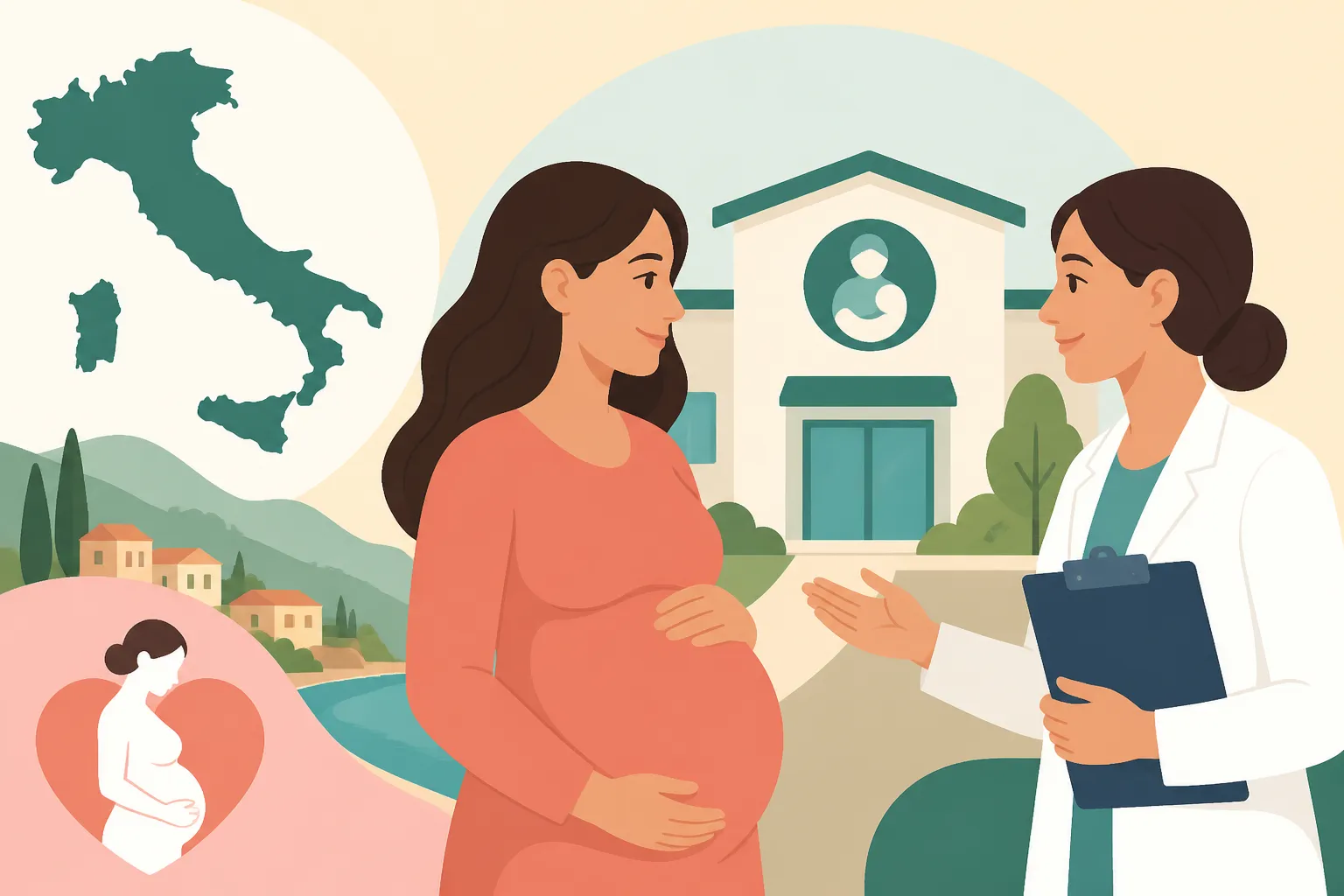
The Consultorio Familiare is the heartbeat of the Italian community health system, specifically designed to support women, children, and families. It is a public clinic, often tucked away in non-descript buildings in your neighborhood, that provides a wide range of services for free or at a very low cost. For many expats, the first hurdle is simply finding it, as they aren't always prominently advertised on major thoroughfares.
What Exactly Is a Consultorio
A Consultorio is not a hospital; think of it as a specialized community center for reproductive health. It is staffed by a multidisciplinary team including gynecologists, midwives (ostetriche), psychologists, and social workers. When you first walk in, you might be surprised by the lack of "medical" gloss—the waiting rooms are often filled with posters about breastfeeding and local community events. However, don't let the modest surroundings fool you. The medical expertise here is top-tier, and the focus is on holistic, preventative care rather than just clinical intervention.
In my experience, the Consultorio serves as your primary point of entry into the maternity world. They handle everything from initial pregnancy confirmation to prenatal screenings, and even psychological support if you’re feeling overwhelmed by the transition to motherhood in a foreign land. Because it is part of the Servizio Sanitario Nazionale (SSN), much of the care is covered by the state, provided you have your The Italian Health Card (Tessera Sanitaria): Uses and How to Get One.
Why Expats Should Start Here
For a foreigner, the Consultorio is a lifesaver because it acts as a gatekeeper to the broader hospital system. In Italy, maternity care is highly decentralized. You don't just pick a hospital and show up for every appointment. Instead, you follow a "pathway" (percorso nascita). If you start at a Consultorio, the staff will help you map out this pathway, telling you exactly which weeks you need blood tests and where the best local hospitals are for delivery.
Moreover, the Consultorio is often more "human-scale" than the large hospitals. You are likely to see the same midwife throughout your pregnancy, which provides a sense of continuity that is incredibly comforting when you are trying to explain your medical history in a second language. They are also accustomed to dealing with diverse populations, making them a bit more patient with the unique hurdles expats face, such as How to Register for Italian Healthcare (SSN) as a Foreigner.
The Role of the Ostetrica
In Italy, the midwife, or ostetrica, is the central figure in a low-risk pregnancy. While in some countries you might expect to see a doctor at every visit, the Italian system empowers midwives to lead the care process. The ostetrica at the Consultorio will be the one who listens to the heartbeat, measures your bump, and, perhaps most importantly, listens to your concerns.
I found that the midwives are the best source of "real-world" advice. They know which pharmacies have the best stock of prenatal vitamins and can explain the nuances of Finding and Using Pharmacies in Italy. If your pregnancy is deemed high-risk, they will seamlessly refer you to a specialized gynecologist within the public system, but for the majority of the journey, the ostetrica is your best friend and primary advocate.
Navigating the Public System for Prenatal Care
Once you’ve made contact with your local Consultorio, the real journey begins. Italy has a very structured approach to prenatal care that involves a specific set of milestones, tests, and a very important piece of paper that you will carry everywhere like a sacred relic.
Obtaining the Libretto della Gravidanza
The "Libretto della Gravidanza" is a pregnancy booklet or folder issued by the region. It contains all the prescriptions (impegnative) you need for the entire nine months. In regions like Tuscany or Emilia-Romagna, these prescriptions are often "zero-rated," meaning you don't pay a "ticket" (co-payment) for the essential exams. When I received mine, it felt like a weight had been lifted; I no longer had to visit my GP every time I needed a blood test.
The libretto also acts as your medical record. Every ultrasound, every blood pressure reading, and every lab result is tucked into this folder. It is vital that you bring this to every appointment, especially if you end up in the Emergency Medical Services in Italy: 112 and Hospitals for any reason. The doctors at the hospital will expect to see your libretto to understand your pregnancy history instantly.
Scheduled Exams and Exemptions
Italy provides a comprehensive schedule of free exams for pregnant women. This usually includes three main ultrasounds (ecografie): one in the first trimester for dating, the "morfologica" in the second trimester to check the baby’s development, and a growth scan in the third trimester. There are also monthly blood and urine tests. The system is particularly vigilant about "toxoplasmosi"—if you are not immune, you will be tested every month, and your midwife will give you a strict lecture on washing salad and avoiding raw prosciutto.
To access these free services, your doctor or midwife must use specific exemption codes (like M00 or M + the week of pregnancy) on your prescriptions. It is worth double-checking these codes when you receive a prescription. If the code is missing, you might find yourself paying full price at the "CUP" (the centralized booking office). Understanding the Cost of Healthcare in Italy: What Expats Need to Know can help you spot when a mistake has been made in the billing.
Choosing Between a Public Hospital and a Private Clinic
Even if you use the Consultorio for your prenatal check-ups, you have a choice to make regarding the delivery. Most Italians and many expats choose to give birth in public hospitals because they are generally better equipped for emergencies and neonatal care. However, the public system can sometimes feel a bit like a "conveyor belt"—you don't necessarily get a private room, and the decor might be from the 1970s.
Private clinics (cliniche private) offer more boutique services, including private rooms and the ability to choose your specific doctor to be present at the birth. This, however, comes at a significant cost unless you have high-end insurance. Some expats choose a "hybrid" approach: using the public Consultorio for routine care but opting for a private room in a hospital that allows for it. Regardless of your choice, make sure you look into Prenatal and Maternity Care for Expats in Italy to compare the standards of care in your specific city.
Essential Paperwork and Residency Requirements
Italy runs on "documentazione." To access the Consultorio and the free maternity benefits, you need to have your legal house in order. This can be the most frustrating part of being pregnant in Italy, but getting it done early will save you from being denied care later on.
Enrolling in the National Health System
Your first priority should be ensuring you are properly enrolled in the SSN. This requires a valid residency (residenza) or at least a "permesso di soggiorno" if you are a non-EU citizen. If you are an EU citizen, you may need to show proof of employment or a "S1" form from your home country. Without this enrollment, you won't have a Tessera Sanitaria, and the Consultorio will have to charge you for every visit.
For those waiting on residency or who are in Italy on more flexible terms, such as digital nomads, private options like Cigna Global can provide comprehensive maternity coverage that mirrors or even exceeds the public system. If you are early in your move and don't yet qualify for the SSN, brands like SafetyWing can offer essential gap coverage, though it is crucial to check if maternity is included in their specific travel-health hybrid plans. Having Cigna Global can be a major relief if you prefer to skip the long queues at the public booking offices.
The Importance of the Codice Fiscale
You cannot do anything in Italy without a Codice Fiscale (tax code). It is the key to opening a bank account, renting an apartment, and, most importantly, registering with the health system. When you go to the Consultorio for your first appointment, the very first thing the administrative clerk will ask for is your Codice Fiscale.
If you don't have one yet, you need to go to the "Agenzia delle Entrate" immediately. It is a simple process, but the queues can be long. For expats who are here on a more temporary basis or who are moving around, companies like SafetyWing often advise on the necessity of local identifiers for long-term stays. Once you have that plastic card with your alphanumeric code, the doors to the Italian health system start to swing open.
Private Insurance for Extra Peace of Mind
Even with the excellent care at the Consultorio, many expats opt for private insurance like Cigna Global to ensure they have access to English-speaking doctors or to avoid the "CUP" booking system, which can sometimes have months-long wait times for non-urgent specialists. Private insurance allows you to bypass the public waiting lists and choose specialized clinics that might offer more "expat-friendly" amenities.
Many expats use Cigna Global to cover the costs of extra 3D ultrasounds or private postnatal consultations that aren't strictly covered by the SSN. While the Consultorio is fantastic for the basics, having that private backup means you never have to worry if a public strike (sciopero) cancels your much-needed appointment at the last minute.
| Feature | Public (Consultorio/SSN) | Private Clinic |
|---|---|---|
| Cost | Free or very low (with Tessera Sanitaria) | High (€2,000 – €10,000+) |
| Continuity of Care | Midwife-led, doctor varies | Your chosen OB-GYN |
| Waiting Times | Can be long for non-exempt tests | Very short |
| Language | Primarily Italian | Higher chance of English-speaking staff |
| Facilities | Functional, sometimes dated | Modern, hotel-like amenities |
| Emergency Care | Usually attached to major trauma centers | May require transfer to public hospital |
Prenatal Classes and Emotional Support
Pregnancy isn't just about blood tests and measurements; it's a massive emotional transition. The Consultorio system excels here, offering community-based support that helps you feel less like a "straniera" and more like a mother-to-be.
The Corso Preparto Experience
The "Corso Preparto" (prenatal class) is a rite of passage in Italy. Usually starting around the 28th to 30th week, these classes are held at the Consultorio or the local hospital. They are typically free and are a wonderful way to meet other parents in your neighborhood. You will learn about the stages of labor, pain management (including the "epidurale" process), and how to care for a newborn.
For an expat, the Corso Preparto is an invaluable cultural immersion. You learn the Italian medical terms for everything, but you also learn the local "vibe" of parenting. You’ll hear other moms-to-be debating which stroller is best for cobblestone streets or where to buy the best "fiocco nascita" (the ribbon you hang on your door to announce the birth). If you are feeling isolated, these classes provide a built-in social network.
Language Barriers and English-Speaking Resources
Let’s be honest: doing a breathing exercise while someone shouts instructions at you in Italian can be stressful. If your Italian isn't quite there yet, you might want to look for Where to Find English-Speaking Doctors and Clinics. Some Consultori in major cities like Milan, Rome, or Florence may have staff who speak basic English, but it is never guaranteed.
It is often recommended that expats bring a bilingual friend to the first few Consultorio appointments to ensure nothing is lost in translation. Alternatively, you can look for private doulas or midwives who offer services in English. They can attend the public appointments with you and act as a translator and advocate. Emotional health is just as important as physical health, so don't hesitate to seek out Mental Health Support and Services in Italy if the language barrier starts to feel like an insurmountable wall.
Postnatal Care and Breastfeeding Support
The support doesn't stop once the baby is born. The Consultorio offers postnatal check-ups for both the mother and the baby. You can take your newborn there to be weighed and to have their first few health checks before you have fully settled in with your permanent Choosing a Pediatrician in Italy (Pediatra di Libera Scelta).
Breastfeeding support is a major pillar of the Consultorio mission. Most have "Spazio Allattamento" (breastfeeding spaces) where you can drop in without an appointment to get help with latching or just to talk to a midwife about the challenges of those first few weeks. This "open door" policy is incredibly helpful during the "baby blues" period. They can also guide you on the paperwork for Registering Your Newborn and Health Care for Babies, which must be done within ten days of the birth.
Employment Rights and Maternity Leave
Italy has some of the most robust maternity leave laws in the world. Even as an expat, if you are legally employed in Italy, you are entitled to significant protections. Understanding these can help you plan your finances and your career transition.
Mandatory Leave for Employees
In Italy, maternity leave (congedo di maternità) is mandatory. Usually, this consists of five months of leave: two months before the expected birth date and three months after. During this time, you are entitled to 80% of your salary, paid by INPS (the social security office), though many employers top this up to 100%. You cannot be fired during your pregnancy or for the first year of your child's life.
To claim this, you must obtain a certificate of pregnancy from a doctor in the public system (another reason why the Consultorio is so important). This certificate is then sent electronically to INPS. Navigating the INPS website is a challenge that even Italians fear, so it may be worth visiting a "Patronato"—a free office that helps citizens and residents with social security paperwork.
Support for Freelancers and the Partita IVA
If you are working as a freelancer with a Partita IVA, you are still entitled to maternity benefits, provided you have been paying your "gestione separata" contributions to INPS. Unlike employees, you don't necessarily have to stop working, but you can still receive a lump sum payment based on your previous year's earnings.
This was a lifesaver for me when I was freelancing. The process is slightly different, and the amount varies, but it provides a necessary cushion while you take time off to bond with your baby. If you are here on an Healthcare for International Students in Italy: SSN vs Private or a similar temporary permit, your rights may vary, so always check your specific visa conditions.
Returning to Work and Childcare Options
After the mandatory five months, you can opt for "congedo parentale" (parental leave), which offers additional months of leave at a reduced salary (usually 30%). This can be shared between the mother and the father. Italy also offers "allattamento" (breastfeeding) hours—if you return to work before the baby is a year old, you are entitled to two hours of rest per day (or one hour if you work part-time) to breastfeed or simply to go home early.
Childcare in Italy ranges from "Nido" (nursery for ages 0-3) to "Scuola dell'Infanzia" (preschool for ages 3-6). Public Nidi are subsidized based on your "ISEE" (a calculation of your family's economic situation), but spots are limited and usually based on a points system. Many expats opt for private nurseries or hire a "tata" (nanny). Be sure to research Women's Health: Prenatal Classes and Support to find local groups where you can get recommendations for reliable childcare.
Practical Tips for a Stress-Free Pregnancy in Italy
The Italian healthcare system is a masterpiece of clinical care wrapped in a confusing layer of bureaucratic plastic. To navigate it successfully, you need patience, a sense of humor, and a very sturdy folder for your papers.
Building Your Support Network
Don't try to do this alone. Italy is a country where "who you know" matters. Join local expat groups on social media and ask for recommendations for your specific neighborhood's Consultorio. These groups are also great for finding out which hospitals have the best reputations for natural birth or which ones are more likely to offer an epidural upon request (some hospitals in the South can be more conservative in this regard).
I found that building a relationship with the clerk at the local pharmacy was also incredibly helpful. They see hundreds of pregnant women and know exactly which supplements are currently in high demand and which brands of "pannolini" (diapers) are frequently on sale. This community-level support is what makes living in Italy so special.
Navigating the Italian Burocrazia
Expect to spend a few mornings standing in line at various offices. Whether it's the ASL (local health authority), the Questura (police headquarters), or the Comune (town hall), the "burocrazia" is an unavoidable part of the process. My best tip? Always bring two copies of every document you own. If they ask for your passport, give them the copy first. If they ask for your marriage certificate, have the original and a translated copy ready.
Remember that while the paperwork is exhausting, the medical care itself is highly regulated and generally excellent. Italy has one of the lowest infant mortality rates in the world, largely due to the meticulous (if paperwork-heavy) prenatal care provided by the SSN. When you are finally holding your baby, the hours spent at the CUP office will feel like a distant, slightly blurry memory.
Disclaimer
The information provided in this guide is for educational and informational purposes only and does not constitute legal or medical advice. Healthcare regulations, visa requirements, and social security benefits in Italy are subject to frequent change. Always consult with the official Italian Ministry of Health, your local ASL, or a qualified legal professional to confirm current procedures and your specific eligibility. If you are experiencing a medical emergency, dial 112 immediately.