Vaccination Requirements and Schedules in Italy
Navigating vaccination requirements in Italy is crucial for expatriates, especially those with children. This comprehensive guide covers the ten mandatory childhood vaccines, the national immunization schedule, school enrollment rules, translating foreign medical records, and adult vaccination recommendations for expats.
Disclosure: This post may contain affiliate links. We may earn a commission at no extra cost to you if you make a purchase through these links. Read full disclosure.
Introduction to Vaccination Requirements and Schedules in Italy
Italy boasts a world-class public healthcare system designed to offer universal coverage and robust preventative care to all legal residents. A cornerstone of this preventative approach is the national vaccination program. In recent years, the Italian government has significantly tightened its immunization mandates in response to declining vaccination rates and localized outbreaks of preventable diseases. For newly arrived expatriates, these strict regulations often come as a surprise, presenting an immediate bureaucratic challenge during the relocation process.
Understanding the legal framework governing immunizations is not merely a matter of personal health; it is deeply intertwined with your ability to integrate into Italian society. Compliance with the national vaccination schedule is a strict prerequisite for enrolling your children in the Italian educational system, from local daycares up to secondary schools. Furthermore, navigating the local health authority offices to have your foreign medical records officially recognized requires a strategic approach, a solid understanding of local terminology, and a bit of patience.
This extensive guide is designed to completely demystify vaccination requirements and schedules in Italy. We will explore the landmark legislation that made several vaccines mandatory, provide a detailed breakdown of the national childhood immunization schedule, and offer actionable advice on how to translate and transfer your foreign medical records. We will also cover the rules regarding school enrollment, medical exemptions, and the recommended vaccinations for adults and seniors living in the country. By mastering this information early in your relocation journey, you can ensure a smooth transition and secure peace of mind for your family’s health and well-being.
The Legal Framework and the Lorenzin Decree
To fully grasp the current state of vaccination requirements in Italy, one must look back at a pivotal moment in the country’s recent public health history. Prior to 2017, Italy required only four mandatory vaccines for children, while several others were merely recommended. However, a wave of vaccine hesitancy led to a significant drop in national immunization coverage, bringing the rate for critical diseases like measles well below the World Health Organization’s recommended safe threshold of ninety-five percent. This decline culminated in a severe measles outbreak across several Italian regions.
In response to this public health crisis, the Italian government, led by then-Minister of Health Beatrice Lorenzin, passed emergency legislation in 2017 that permanently altered the landscape of pediatric healthcare in the country. This legislation, widely known as the Lorenzin Decree, drastically expanded the list of mandatory vaccinations required for all children residing in Italy, regardless of their nationality or residency status.
The core philosophy behind the Lorenzin Decree is the protection of community health and the safeguarding of vulnerable individuals—such as immunocompromised children—who cannot receive vaccines themselves. The law shifted the responsibility of herd immunity from an optional civic duty to a strict legal obligation. For expatriate families moving to Italy, this means that your personal beliefs or the standard vaccination schedules of your home country are superseded by Italian law. Complying with the Lorenzin Decree is non-negotiable if you intend to utilize public educational facilities and integrate smoothly into the community.
The Ten Mandatory Vaccinations for Children
Under the current Italian law, there are ten specific vaccinations that are absolutely mandatory for all children and adolescents from birth up to the age of sixteen. These vaccines are provided completely free of charge through the public healthcare system. Understanding which diseases are covered by this mandate is the first step in ensuring your children are fully compliant.
The ten mandatory vaccinations are grouped into specific delivery methods to minimize the number of injections a child must receive. They include protection against the following diseases:
The Hexavalent Vaccine Diseases
The first six mandatory vaccines are typically administered together in a single, combined injection known as the hexavalent vaccine. This is usually given during the infant’s first year of life.
- Poliomyelitis: A highly infectious viral disease that can cause irreversible paralysis.
- Diphtheria: A serious bacterial infection that affects the mucous membranes of the nose and throat.
- Tetanus: A bacterial disease that affects the nervous system, leading to painful muscle contractions.
- Hepatitis B: A severe liver infection caused by the hepatitis B virus.
- Pertussis: Commonly known as whooping cough, a highly contagious respiratory tract infection that is particularly dangerous for infants.
- Haemophilus influenzae type b: A bacterium that can cause severe illnesses, including meningitis and pneumonia, in young children.
The Quadrivalent Vaccine Diseases
The remaining four mandatory vaccines are typically administered as a combined quadrivalent injection, usually given just after the child turns one year old.
- Measles: A highly contagious viral illness that can lead to severe respiratory and neurological complications.
- Rubella: Also known as German measles, a viral infection that is generally mild in children but can cause devastating birth defects if contracted by a pregnant woman.
- Mumps: A viral infection that primarily affects the salivary glands and can lead to complications such as deafness or meningitis.
- Varicella: Commonly known as chickenpox, a highly contagious viral infection causing an itchy, blister-like rash. The mandate for the varicella vaccine applies specifically to children born in 2017 and later.
Highly Recommended but Optional Vaccinations
In addition to the ten mandatory vaccines, the Italian Ministry of Health provides a list of highly recommended vaccinations. While you will not face legal penalties or school exclusion for declining these shots, public health officials strongly advise parents to administer them. Like the mandatory vaccines, these recommended shots are generally offered free of charge to specific age groups under the national health system.
The primary recommended vaccinations include:
- Pneumococcal Disease: Protects against bacteria that cause pneumonia, meningitis, and severe ear infections. It is usually offered alongside the hexavalent vaccine during infancy.
- Meningococcal B and C: Protects against specific strains of bacteria that cause meningococcal meningitis, a rapid and potentially fatal infection of the brain and spinal cord lining.
- Rotavirus: An oral vaccine given to infants to prevent severe, dehydrating diarrhea.
- Human Papillomavirus: The HPV vaccine is strongly recommended for both boys and girls starting around the age of eleven or twelve to prevent various forms of cancer later in life.
The National Childhood Immunization Schedule
The Italian Ministry of Health publishes a national immunization plan that dictates the precise ages at which each dose of the mandatory and recommended vaccines should be administered. For expats arriving from countries like the United States, the United Kingdom, or Australia, you may notice slight variations in the timing of booster shots compared to your home country’s schedule.
Below is a comprehensive table outlining the standard Italian childhood vaccination schedule.
| Age of Child | Mandatory Vaccinations Administered | Recommended Vaccinations Administered |
| Birth to 2 Months | None routinely required. | Hepatitis B (Only if the mother is HBsAg positive). |
| 3 Months | First dose of Hexavalent (Polio, Diphtheria, Tetanus, Hep B, Pertussis, Haemophilus influenzae b). | First dose of Pneumococcal; First dose of Rotavirus; First dose of Meningococcal B. |
| 5 to 6 Months | Second dose of Hexavalent. | Second dose of Pneumococcal; Second dose of Rotavirus; Second dose of Meningococcal B. |
| 11 to 13 Months | Third dose of Hexavalent. | Third dose of Pneumococcal; Third dose of Meningococcal B; First dose of Meningococcal C. |
| 13 to 15 Months | First dose of Quadrivalent (Measles, Mumps, Rubella, Varicella). | None routinely scheduled at this exact month. |
| 5 to 6 Years | Booster dose of Quadrivalent; Booster dose of Polio, Diphtheria, Tetanus, and Pertussis. | None routinely scheduled. |
| 11 to 12 Years | None routinely scheduled. | Human Papillomavirus (HPV) for boys and girls. |
| 12 to 18 Years | Booster dose of Polio, Diphtheria, Tetanus, and Pertussis. | Booster dose of Meningococcal ACWY. |
If you are planning to have a baby while living abroad, familiarizing yourself with this schedule early on is crucial. You can find more detailed information regarding pediatric care by consulting our guide on Registering Your Newborn and Health Care for Babies.
Navigating School Enrollment and Vaccination Rules
The most immediate and tangible impact of the Lorenzin Decree for expatriate families is its strict integration with the Italian educational system. The law uses access to schooling as the primary enforcement mechanism for the vaccination mandate. However, the penalties for non-compliance vary significantly depending on the age of the child and the type of educational institution they are attending.
Daycares and Preschools
For children between the ages of zero and six, attending educational facilities is entirely optional in Italy. This category includes the asilo nido (daycare or nursery) and the scuola dell’infanzia or scuola materna (preschool or kindergarten). Because attendance is not legally required, the government enforces the strictest possible penalty for unvaccinated children in this age bracket: absolute exclusion.
If you cannot provide official proof that your young child has received all the mandatory vaccinations corresponding to their age, or proof that they are on an approved catch-up schedule, the school administration is legally required to reject their enrollment. Your child will not be allowed to attend any public or private daycare or preschool in Italy until their vaccination records are brought into compliance.
Primary and Secondary Schools
The rules shift once a child reaches the age of six, which marks the beginning of scuola dell’obbligo (mandatory schooling). Under the Italian constitution, the government cannot deny a child their fundamental right to a basic education. Therefore, children aged six to sixteen who are not fully vaccinated cannot be expelled or excluded from attending primary school (scuola primaria), middle school (scuola secondaria di primo grado), or the initial years of high school (scuola secondaria di secondo grado).
However, this does not mean parents can simply ignore the mandate. If you enroll an unvaccinated child in mandatory schooling, the school administration is legally obligated to report your family to the local health authority. The health authority will then summon the parents for an educational consultation to discuss the importance of vaccines. If the parents continue to refuse vaccination after this consultation, they will be subjected to significant financial penalties. Administrative fines for non-compliance typically range from one hundred to five hundred euros, and repeated refusals can invite further scrutiny from social services. For a broader look at integrating your children into the local system, read about Education Options: Schools and Daycare for Expat Children.
Medical Exemptions and Deferrals
The Italian law does provide specific provisions for children who cannot safely receive vaccinations. However, securing a medical exemption is a rigorous, highly scrutinized process designed to prevent abuse of the system.
Personal, philosophical, or religious exemptions do not exist under Italian law. You cannot simply sign a waiver stating that your family chooses not to vaccinate due to personal beliefs. The only acceptable reason for an exemption or a deferral is a documented, severe clinical risk to the child’s health.
To obtain a medical exemption, you must acquire a formal certificate issued exclusively by a pediatrician or a general practitioner who is officially affiliated with the Italian national health system. The certificate must explicitly detail the specific medical condition—such as a severe compromised immune system, ongoing chemotherapy treatment, or a documented history of severe anaphylactic reactions to previous vaccines—that contraindicates immunization. Certificates written by foreign doctors or private holistic practitioners are generally not accepted by school administrations; the exemption must be validated through the proper local bureaucratic channels.
Translating and Transferring Foreign Medical Records
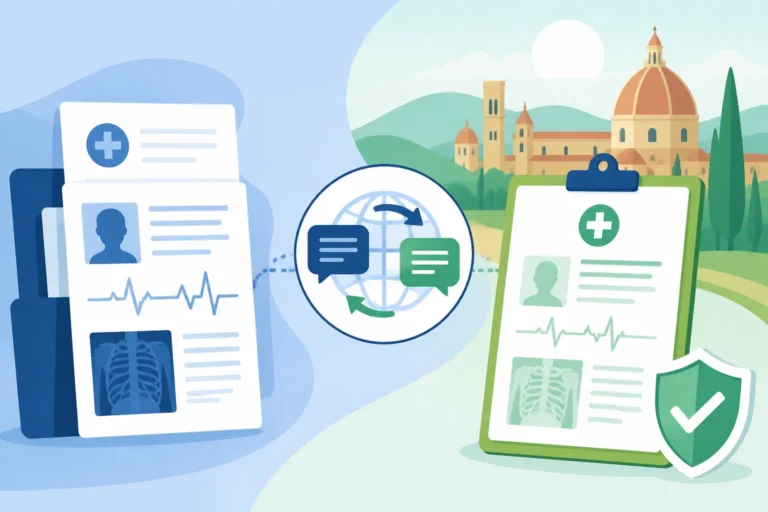
For expatriates arriving in Italy with older children, the most daunting task is often proving that your child is already compliant with the Italian mandate. You cannot simply hand an English-language printout from your hometown clinic to the Italian school principal and expect it to be accepted. You must have your foreign medical records officially recognized and transcribed by the Italian health authorities.
Step 1: Gather and Authenticate Your Documents
Before you leave your home country, request an official, comprehensive printout of your child’s complete vaccination history from your pediatrician. Ensure that the document clearly lists the specific names of the vaccines administered, the exact dates (day, month, and year) each dose was given, and the official stamp or signature of the medical clinic.
Step 2: Translate the Records
Unless your records are already in Italian, you will need to have them translated. While some local health offices may informally accept clear records in English, it is highly risky to rely on this. To guarantee acceptance, you should obtain a certified translation of your child’s medical records into Italian. You can utilize an official sworn translator recognized by the Italian courts to ensure the medical terminology is translated perfectly.
Step 3: Visit the Local Health Authority
Once you are registered as a resident in Italy, you must take your translated documents to the vaccination office of your local health authority, known as the Azienda Sanitaria Locale or ASL. You will need to book an appointment with the specific department that handles pediatric immunizations.
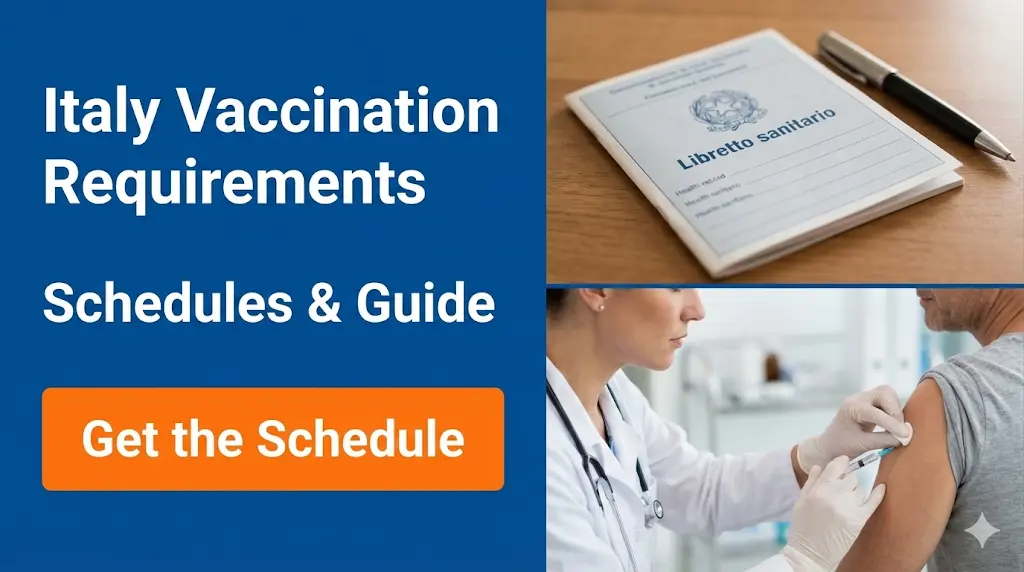
During this appointment, the ASL health official will meticulously compare your child’s foreign records against the Italian national schedule. They will identify which mandatory vaccines your child has already received and verify if any specific Italian booster doses are missing. Once the review is complete, the ASL will issue an official Italian vaccination booklet, known as the Libretto delle Vaccinazioni, or provide a digitally signed certificate of compliance. This officially stamped Italian document is what you must present to the school administration during the enrollment process.
Managing a Catch-Up Schedule
If the ASL determines that your child is missing a mandatory vaccine required by Italian law, they will not penalize you immediately. Instead, the health official will design a personalized catch-up schedule for your child. They will book the necessary appointments for the missing doses right there in the office. As long as you agree to this schedule and begin the process of catching up, the ASL will issue a temporary certificate of compliance, allowing your child to enroll in daycare or school without delay.
Adult Vaccinations and Travel Recommendations
While the stringent legal mandates and school exclusions apply exclusively to children, the Italian healthcare system also places a strong emphasis on adult immunization and preventative care. Adults are highly encouraged to maintain their own vaccination schedules to protect personal and public health. To gain a broader perspective on maintaining your adult health abroad, review our guide on Healthcare in Italy: An Expats Guide.
Routine Adult Boosters
The most critical routine vaccination for adults in Italy is the Tetanus, Diphtheria, and Pertussis booster. The Ministry of Health recommends that all adults receive a booster shot every ten years. If you suffer a severe cut, a puncture wound from a rusty object, or an animal bite, the emergency room doctors will immediately ask for the date of your last tetanus shot; if it was more than ten years ago, they will administer a booster on the spot.
Preventative Care for Seniors
For expatriates retiring to Italy or residents over the age of sixty-five, the national health system offers several vital vaccines entirely free of charge to prevent severe complications from common illnesses.
- Influenza Vaccine: The flu shot is strongly recommended and provided free annually for all adults over sixty-five, pregnant women, and individuals of any age with chronic medical conditions.
- Pneumococcal Vaccine: Recommended for seniors to prevent bacterial pneumonia.
- Herpes Zoster (Shingles) Vaccine: Offered to older adults to prevent the painful viral rash and its long-term nerve complications.
Travel Vaccinations
If you are using Italy as a base to travel extensively throughout Europe, Africa, or Asia, you may require specialized travel vaccines. Unlike the mandatory childhood vaccines, travel immunizations for diseases such as Yellow Fever, Typhoid, or Hepatitis A are generally not free. You must book an appointment at a specialized ASL travel clinic or a private travel medicine center, where you will pay out-of-pocket for the consultation and the specific vaccines required for your destination.
The Role of the Public Pediatrician
To successfully navigate the vaccination landscape for your children, building a relationship with a public pediatrician is absolutely essential. In Italy, children under the age of fourteen do not see a general practitioner; instead, they are assigned a dedicated public pediatrician, known as a pediatra di libera scelta.
Once you register your child with the SSN, you will select a pediatrician operating in your local postal code. This doctor will become your primary ally in managing your child’s health. The pediatrician conducts routine wellness checks, monitors developmental milestones, and advises you on the upcoming vaccination schedule. While the actual vaccinations are typically administered by specialized nurses at the centralized ASL vaccination clinic rather than in the pediatrician’s private office, your pediatrician is responsible for answering your medical questions, issuing any necessary medical deferrals, and guiding you through the bureaucratic web of school health requirements.
Conclusion
Adapting to the vaccination requirements in Italy is a vital component of a successful expatriate relocation. The Italian government’s firm commitment to preventative medicine and herd immunity through the Lorenzin Decree means that immunization is not treated as a casual suggestion, but as a rigid legal and social obligation. While the initial process of translating foreign medical records, navigating the local health authority offices, and understanding the nuances of school enrollment can feel daunting, the system is fundamentally designed to protect the most vulnerable members of society.
By proactively gathering your family’s comprehensive medical histories before moving, familiarizing yourself with the ten mandatory pediatric vaccines, and engaging early with your local ASL and public pediatrician, you can completely eliminate the stress of administrative compliance. Ensuring that your vaccination records are up-to-date and officially recognized allows you to seamlessly integrate your children into the vibrant Italian educational system. With the bureaucratic health hurdles cleared, you can focus your energy on what truly matters: embracing your new community, enjoying the unparalleled Mediterranean lifestyle, and thriving in your magnificent new Italian home.
References
Primary sources (official)
- Ministero della Salute: The Italian Ministry of Health’s official portal outlining the national vaccination plan, the specifics of the Lorenzin Decree, and the list of ten mandatory vaccines. https://www.salute.gov.it
- Agenzia Italiana del Farmaco (AIFA): The Italian Medicines Agency provides official guidelines on vaccine safety, administration schedules, and pediatric health protocols. https://www.aifa.gov.it
Other helpful sources
- Expatica Italy: A comprehensive resource for expatriates offering detailed guides on navigating the Italian healthcare system, pediatric care, and school enrollment requirements. https://www.expatica.com/it
- The Local Italy: An English-language news network providing ongoing coverage and practical advice regarding Italian vaccination laws, public health updates, and expat community experiences. https://www.thelocal.it
Disclaimer
The information provided in this article is for general educational and informational purposes only and does not constitute official medical, legal, or administrative advice. Italian vaccination laws, mandatory requirements for school enrollment, and public health guidelines are subject to frequent changes by the national government and regional health authorities. Always consult directly with a licensed Italian medical professional, your assigned public pediatrician, or your local Azienda Sanitaria Locale (ASL) to verify your specific medical needs and to ensure full compliance with current legal regulations.