Getting to and Around Sicily and Sardinia by Ferry
Ah, the islands! Sicily and Sardinia, two of Italy's most captivating gems, often feel like a world away, don't they? While flying might seem like the quickest way to reach these Mediterranean paradises, it often means sacrificing the convenience of bringing your own car, or missing out on the unique, scenic journey across the water. This guide is all about embracing the journey by ferry, unraveling the sometimes-confusing world of Italian maritime travel to help you seamlessly connect with these magnificent islands, whether you're traveling from the mainland, from abroad, or hopping between their smaller archipelagos.
Disclosure: This post may contain affiliate links. We may earn a commission at no extra cost to you if you make a purchase through these links. Read full disclosure.
Why Choose Ferries for Sicily and Sardinia?
When you're planning an island escape to Sicily or Sardinia, the thought of flying might immediately spring to mind. After all, it's fast, right? But for many of us expats, and even savvy tourists, the ferry option isn't just a backup; it's often the best way to go. There’s a certain magic to it, a transition from land to sea that truly marks the start of an island adventure.
The Romance of Sea Travel
Let's be honest, there's a unique allure to traveling by sea that a cramped airplane cabin simply can't replicate. Imagine stepping onto the deck, the salty air filling your lungs, watching the coastline slowly disappear into the horizon. It's a journey, not just a transit. You get to witness breathtaking sunsets over the Mediterranean, perhaps even spot dolphins playfully leaping through the waves. It's a slower pace, a chance to decompress and truly immerse yourself in the anticipation of your destination. This isn't just about getting from A to B; it's about making the travel itself part of the experience, a gentle nod to the grand voyages of yesteryear. You can stroll around, enjoy a meal, and actually see Italy from a different perspective, rather than just gazing at clouds.
Practicalities and Benefits
Beyond the romance, choosing a ferry offers some incredibly practical advantages, especially if you're planning an extended stay or exploring different parts of the islands. The most significant benefit, hands down, is the ability to bring your vehicle. If you're envisioning a road trip through the ancient ruins of Sicily or along Sardinia's wild coastal roads, having your own car is invaluable. Renting a car on the islands can sometimes be pricier, and the convenience of having your familiar vehicle, packed with all your essentials, is truly liberating. Furthermore, ferries typically have far more generous luggage allowances than airlines. No more agonizing over suitcase weight limits or paying exorbitant fees for an extra bag. You can bring your entire life, or at least a good chunk of it, without a second thought. For families, this means less stress about strollers, car seats, and all the paraphernalia that comes with traveling with kids. And for those moving to Italy, this often makes moving possessions much easier than flying.
Getting to Sicily by Ferry
Sicily, the largest island in the Mediterranean, is incredibly well-connected by ferry, both from mainland Italy and even some international ports. The journey itself can be part of the adventure, giving you a proper sense of arrival on this culturally rich and historically significant land.
Mainland Italy to Sicily Routes
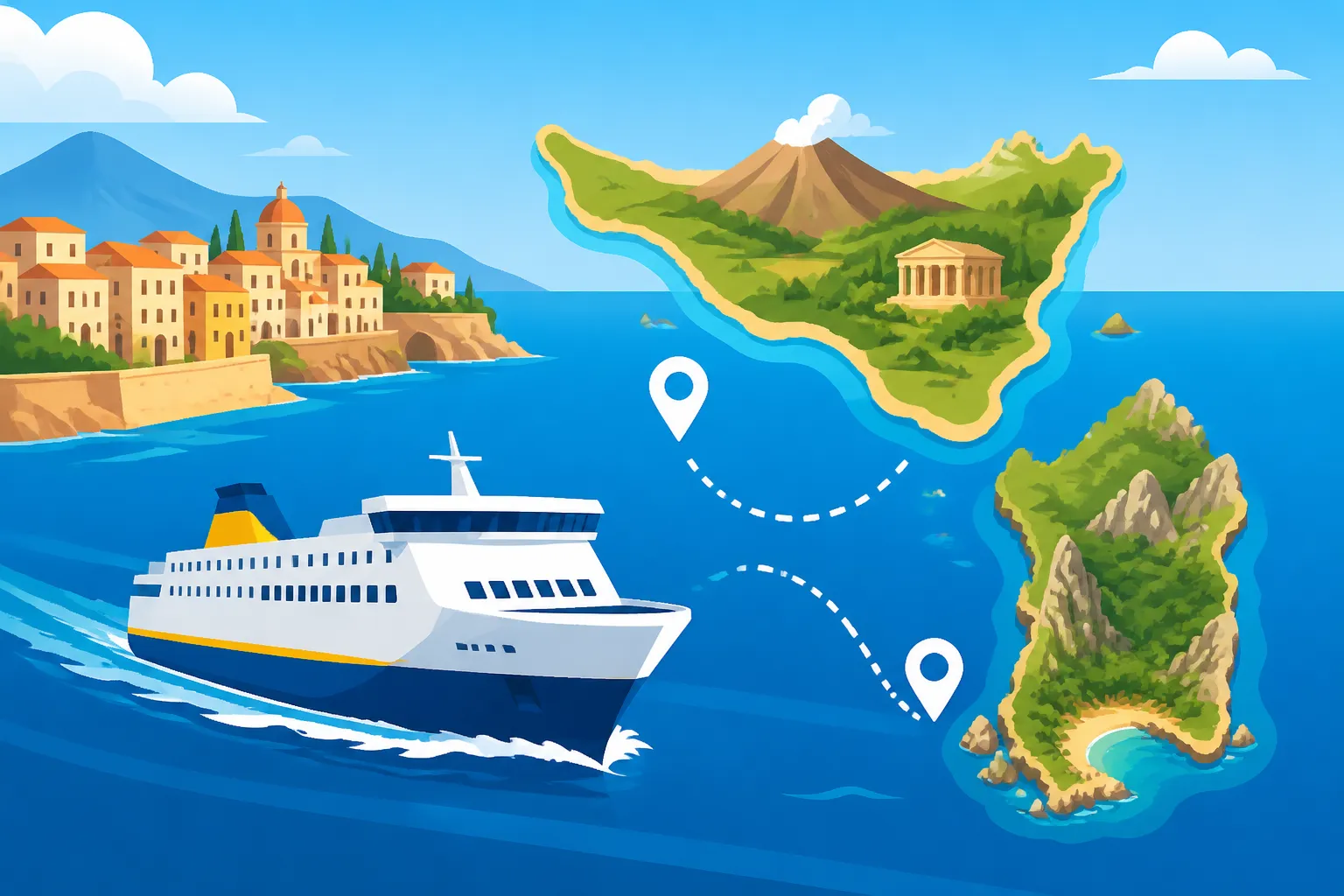
Connecting from mainland Italy to Sicily is a breeze, with several key ports offering routes that range from short hops to overnight voyages. The shortest and most frequent crossings are from Villa San Giovanni in Calabria to Messina, Sicily, which is essentially a continuous shuttle for cars and trains. These are quick, no-frills trips. For longer, more comfortable journeys, Naples is a major hub. From Naples, you can catch ferries to Palermo, Sicily's vibrant capital, or to Catania, on the eastern coast. These are typically overnight routes, allowing you to get a good night's sleep in a cabin and wake up refreshed, ready to explore. The crossing to Palermo usually takes around 10-11 hours, while Catania is a bit longer. From Salerno, another southern Italian port, you can also find services to Catania and Messina. For those starting further north, Genoa offers longer, approximately 20-hour crossings to Palermo, which can be a great option if you're coming from northern Italy or other parts of Europe and want to avoid driving the entire length of the peninsula. There are also connections from Civitavecchia, Rome's port, to Palermo and Termini Imerese. The variety of departure points means you can choose a route that best fits your travel plans and origin, whether you're bringing a car or simply traveling as a foot passenger.
International Connections to Sicily
Sicily's strategic location in the heart of the Mediterranean also means it boasts direct ferry links to a few international destinations, adding another layer of accessibility for travelers. Perhaps the most popular international route is from Malta to Catania or Pozzallo. This is a relatively short, fast ferry connection that's perfect for combining a trip to the Maltese islands with a Sicilian adventure. For those coming from North Africa, there are also ferry services connecting Tunis, Tunisia, to Palermo. These routes offer a fascinating cultural bridge, reflecting Sicily's long history of connections with North Africa. While less frequent than the mainland Italian routes, these international ferries open up exciting possibilities for multi-country itineraries. Keep in mind that international routes might have different visa and immigration requirements, so always double-check these details well in advance, especially if you are a non-EU resident.
Booking Your Sicily Ferry
When it comes to booking your ferry to Sicily, planning ahead, especially during peak season, is always a smart move. There are several reliable platforms you can use. Websites like Omio allow you to compare different operators and routes, which is super handy for finding the best deal or schedule. You'll typically enter your departure and arrival ports, dates, and whether you're bringing a vehicle. Speaking of vehicles, remember to specify the exact dimensions of your car when booking, as this affects the price and space allocation on the ferry. For example, a campervan will naturally cost more than a small Fiat 500. You might also want to check the individual ferry operator websites directly, such as Grandi Navi Veloci (GNV) or Tirrenia, to compare prices or look for special promotions. Some people even use online travel agencies like Booking.com, which sometimes list ferry options as part of broader travel packages, although dedicated ferry booking sites are usually more comprehensive. Don't forget to consider booking a cabin for overnight journeys; it makes a world of difference to arrive well-rested.
Getting to Sardinia by Ferry
Sardinia, with its rugged coastline, pristine beaches, and ancient Nuragic culture, is another island gem best approached by sea if you want the flexibility of your own transport. Like Sicily, it's very well-connected to mainland Italy, making it a popular choice for both short getaways and longer vacations.
Mainland Italy to Sardinia Routes
Sardinia offers a multitude of ferry connections from various ports along mainland Italy, catering to different travel preferences and origins. Civitavecchia, located just north of Rome, is arguably the most popular departure point, offering frequent services to Cagliari (Sardinia's capital in the south), Olbia (a major port in the northeast), and Arbatax (on the eastern coast). These crossings are generally overnight, ranging from 6-10 hours depending on the destination and ferry type. Genoa, further north, provides longer routes to Olbia, Porto Torres (northwest), and Arbatax, ideal for those coming from northern Italy or nearby European countries. Livorno, in Tuscany, is another key departure port, with crossings to Olbia and Golfo Aranci. Naples offers connections to Cagliari and Olbia, though these tend to be less frequent than those from Civitavecchia or Genoa. Piombino is a smaller port but can offer seasonal connections, often faster, to Olbia, especially useful during the summer months when capacity is needed. Choosing your departure port wisely can significantly impact your driving time on the mainland and the duration of your sea journey. Consider checking out Getting Around Italy: Trains, Buses, Flights, and Car Hire for more details on connecting to these mainland ports.
International Connections to Sardinia
While Sardinia's international ferry connections aren't as extensive as Sicily's, there are still some fantastic options, particularly from neighboring European countries. From France, you can catch ferries from Nice and Toulon to Porto Torres or Ajaccio, Corsica, with connections to Sardinia. These routes are perfect for those combining a trip to the French Riviera or Corsica with a Sardinian adventure. From Spain, there are occasional services from Barcelona to Porto Torres, though these can vary seasonally. These international links are a godsend for travelers looking to explore multiple Mediterranean destinations without the hassle of flying. As with international travel to Sicily, always double-check the specific entry requirements for both foot passengers and vehicles when traveling from outside Italy, ensuring all your documents are in order, particularly your passport and any necessary visas.
Booking Your Sardinia Ferry
Booking a ferry to Sardinia follows a similar process to Sicily, but with its own set of considerations. Given Sardinia's immense popularity, especially during the summer months (June to September), advance booking is not just recommended, it's often essential. Ferry tickets, especially for cabins and car spaces, can sell out quickly or see significant price hikes closer to the departure date. Using platforms like Omio is a great way to compare options from major operators like Tirrenia, Grimaldi Lines, Moby Lines, and Sardinia Ferries. You'll want to specify if you need a cabin (highly recommended for overnight journeys), and accurately input your vehicle's make and model to ensure proper pricing and allocation. If you're traveling during a national holiday or peak summer week, consider booking several months in advance. Some travelers also find deals through GetYourGuide, especially if they're combining a ferry ticket with other activities or tours on the island. Always print your booking confirmation and have all necessary documents ready when you arrive at the port, as Italian bureaucracy, even at the ferry terminal, can sometimes require physical proof alongside digital.
Getting Around Sicily and Sardinia by Inter-Island Ferries
Once you've made it to the main islands, the adventure doesn't stop there! Both Sicily and Sardinia are surrounded by smaller, equally enchanting satellite islands, easily accessible by a network of inter-island ferries. This offers a fantastic way to deepen your exploration and discover hidden coves, charming fishing villages, and unique island cultures.
Exploring Sicily's Satellite Islands
Sicily's surrounding archipelagos are diverse and truly magical, each with its own character. The Aeolian Islands (Isole Eolie) are probably the most famous, a UNESCO World Heritage site known for their volcanic landscapes, thermal springs, and chic ambiance. From Milazzo on Sicily's northeast coast, you can catch ferries or hydrofoils to Lipari, Vulcano, Salina, Stromboli (with its active volcano!), Panarea, Filicudi, and Alicudi. Hydrofoils are faster and ideal for day trips, while ferries are better if you're bringing a vehicle or plan to stay longer. The Egadi Islands (Isole Egadi), located off Sicily's western coast near Trapani, offer crystal-clear waters, perfect for swimming and snorkeling. Favignana, Levanzo, and Marettimo are the main islands here, easily reached by ferry or hydrofoil from Trapani and Marsala. These are great for a more relaxed, beach-focused escape. Further south, the remote Pelagie Islands, including Lampedusa and Linosa, are closer to Africa than Italy and boast incredible marine life and stunning beaches. Ferries to these islands depart from Porto Empedocle, near Agrigento. Exploring these smaller islands often provides a more intimate and authentic Sicilian experience. For practical advice on broader Italian travel, you might find our guide to Seasonal Italy: When to Visit and What's On helpful in planning your inter-island adventures.
Sardinia's Smaller Archipelagos
Sardinia also has its fair share of captivating smaller islands, each offering a distinct flavor of the Sardinian lifestyle. The La Maddalena Archipelago, off Sardinia's northeastern coast, is a National Park renowned for its breathtaking turquoise waters, granite formations, and unspoiled beaches. La Maddalena and Caprera are the two main islands, easily reached by frequent ferries from Palau. You can even take your car on these ferries to explore the islands' hidden gems. Further south, off Sardinia's southwestern coast, lie the islands of San Pietro and Sant'Antioco. Carloforte, on San Pietro, is unique with its Ligurian dialect and tuna fishing traditions, accessible by ferry from Portovesme (mainland Sardinia) or Calasetta (Sant'Antioco). Sant'Antioco itself is connected to the mainland by a causeway, making it easily reachable by car. These islands provide a fantastic contrast to mainland Sardinia, offering quieter, more traditional experiences. Whether you're seeking remote beauty or vibrant local culture, Sardinia's smaller islands are well worth the ferry trip.
Regional Ferry Companies and Routes
Navigating the smaller inter-island routes involves a mix of different regional ferry companies. For the Aeolian Islands, companies like Liberty Lines and Siremar are prominent, offering both fast hydrofoils and slower ferries. For the Egadi Islands, Liberty Lines is also a key player. To the Pelagie Islands, Siremar typically handles the longer crossings. For La Maddalena, Maddalena Lines and Delcomar are the main operators. Each company has its own schedule and pricing, so it's always a good idea to check their specific websites or use a comprehensive booking portal to compare. These smaller routes usually operate more frequently during the high season (summer) and less so in the off-season. Be mindful that weather conditions, especially strong winds, can occasionally cause delays or cancellations for these smaller ferries, so it's wise to build a little flexibility into your itinerary if you're hopping between islands.
Essential Tips for Ferry Travel in Italy
Ferry travel in Italy is generally a smooth experience, but a little insider knowledge can go a long way in ensuring your journey to or around Sicily and Sardinia is as comfortable and stress-free as possible.
When to Book and Peak Season Considerations
Timing is everything, especially when traveling to popular islands like Sicily and Sardinia. If you're planning a trip during the high season, which typically runs from June through September, and particularly around Italian national holidays like Ferragosto (August 15th), booking your ferry tickets well in advance is absolutely crucial. I'm talking months in advance, if possible, especially if you plan to bring a car or require a cabin. During these times, ferries can sell out, and prices can skyrocket. Traveling in the shoulder seasons (April-May or October-November) often means fewer crowds, more agreeable weather, and significantly cheaper ferry tickets. You'll also find that many routes have reduced schedules during the low season, so always check the latest timetables.
Understanding Different Cabin and Seating Options
Ferry operators typically offer a range of seating and accommodation options to suit different budgets and comfort levels. For shorter day crossings, a simple deck passage (passaggio ponte) or a pullman seat (poltrona) might suffice. Deck passage means you're free to sit anywhere in the public areas, often a good option if the weather is nice and you want to spend time on the outdoor decks. Pullman seats are similar to airplane seats, usually in a dedicated lounge, offering a more comfortable, reserved spot. For overnight journeys, investing in a private cabin (cabina) is highly recommended. Cabins come in various configurations, from basic inside cabins without a window to more luxurious outside cabins with sea views and private bathrooms. Some even offer pet-friendly options. A good night's sleep will make all the difference, allowing you to arrive at your destination refreshed and ready to explore. Always check what amenities are included with your chosen option.
Preparing for Your Journey
A little preparation goes a long way. If you're bringing a vehicle, arrive at the port well in advance of the scheduled departure time – usually 60-90 minutes, though check your ticket for specific instructions. There will be signage directing vehicles to the correct loading lanes. Have all your documentation (tickets, vehicle registration, driver's license, passport/ID) readily accessible. Once on board, pay attention to the announcements and safety procedures. For foot passengers, ensure you know which terminal to go to and allow ample time for boarding. If you're prone to seasickness, pack some medication, even if the Mediterranean is usually calm, it can get choppy. A small bag with essentials (water, snacks, entertainment, a book about Italian Food Culture: Eating Well as a Visitor or Italian Wine, Coffee, and Aperitivo Culture) is always a good idea, especially for longer journeys. Remember that connectivity might be spotty at sea, so download any entertainment beforehand. And don't forget to charge your devices!
Major Ferry Operators Serving Sicily and Sardinia
Italy's ferry network is extensive, with several major companies connecting the mainland to Sicily and Sardinia, as well as serving inter-island routes. While specific routes might be monopolized by one or two operators, for many popular crossings, you'll have a choice, which can lead to competitive pricing.
| Ferry Operator | Primary Routes Served | Key Features | Booking Platforms (Examples) |
|---|---|---|---|
| Grimaldi Lines | Mainland Italy (Civitavecchia, Livorno, Naples) to Sardinia (Olbia, Porto Torres, Cagliari) and Sicily (Palermo) | Modern fleet, often competitive prices, focus on passenger comfort. | Omio, Direct Website, Booking.com |
| Tirrenia | Mainland Italy (Naples, Civitavecchia, Genoa) to Sicily (Palermo) and Sardinia (Cagliari, Olbia, Porto Torres, Arbatax) | Part of the Onorato Armatori Group, extensive network, often state-subsidized routes. | Omio, Direct Website |
| Moby Lines | Mainland Italy (Genoa, Livorno, Piombino) to Sardinia (Olbia, Porto Torres) and Corsica | Known for their distinctive cartoon-character painted ships, good for families. | Omio, Direct Website, GetYourGuide |
| GNV (Grandi Navi Veloci) | Mainland Italy (Genoa, Civitavecchia, Naples) to Sicily (Palermo, Termini Imerese) and Sardinia (Olbia, Porto Torres) | Large vessels, wide range of onboard services, connections to Tunisia. | Omio, Direct Website |
| Liberty Lines | Sicily (Trapani, Milazzo) to Egadi and Aeolian Islands; Malta to Sicily | Primarily fast hydrofoils, excellent for inter-island hops and quick connections. | Direct Website, Local Agencies |
| Siremar | Sicily to Aeolian, Egadi, Pelagie Islands; Mainland Italy to Sicily | Offers both ferries (with car transport) and hydrofoils to smaller islands. | Direct Website, Local Agencies |
| Corsica Sardinia Ferries | Mainland Italy (Livorno, Savona) to Sardinia (Golfo Aranci) and Corsica (various ports) | Focus on Corsica and Sardinia, often good value, flexible ticket options. | Direct Website |
These operators are the backbone of ferry travel in Italy, each with its own strengths. It's always worth checking a few different ones, especially through a comparison site like Omio, to ensure you're getting the best deal for your specific route and travel needs.
Disclaimer
Please note that ferry schedules, routes, and prices can change due to seasonality, weather conditions, and operational decisions by the ferry companies. While we strive to provide the most accurate and up-to-date information, it is always advisable to check the official websites of the ferry operators or reputable booking platforms for the latest details before making your travel arrangements. This guide is for informational purposes only and does not constitute professional advice.