What Is an Aperitivo and How Do You Order One?
Walking into a crowded Italian piazza at 6:30 PM can be intimidating when you see locals clinking glasses filled with bright orange liquids and snacking on seemingly endless trays of food. You might wonder if you need a reservation, if the food is free, or if you’re accidentally crashing a private party. This guide solves the mystery of the Italian aperitivo, explaining exactly how to participate in this cultural cornerstone without feeling like an outsider.
Disclosure: This post may contain affiliate links. We may earn a commission at no extra cost to you if you make a purchase through these links. Read full disclosure.
The Cultural Philosophy of the Italian Aperitivo
To understand the aperitivo, you first have to unlearn everything you know about a standard "Happy Hour." In many English-speaking countries, Happy Hour is often about drinking as much as possible for as little as possible, usually right after work. In Italy, the philosophy is diametrically opposed to that. The word itself comes from the Latin aperire, which means "to open." The entire purpose of the drink is to "open" your stomach and stimulate your appetite in preparation for dinner. It is a social bridge between the working day and the evening meal, a time to decompress with friends, colleagues, or even just a good book while the sun begins to set.
When I first moved to Milan, I made the mistake of thinking of it as a cheap dinner. I’d pile my plate high at the buffet, only to realize that the locals were looking at me with a mix of pity and amusement. The aperitivo is not a meal; it is a ritual of transition. You aren’t there to get drunk, and you aren’t there to get full. You are there to enjoy the transition of the day. This nuance is vital because it dictates your behavior, your pace of drinking, and how you interact with the food provided. For more on how this fits into the broader daily rhythm, you might find Italian Wine, Coffee, and Aperitivo Culture helpful in mapping out your day.
The social aspect cannot be overstated. In Italy, life happens in the piazza. The aperitivo is the moment when the community gathers. You’ll see toddlers running around while their parents sip Prosecco, and elderly men discussing politics over a bitter red drink. It is an inclusive, multi-generational experience that defines the Italian lifestyle. If you are traveling through multiple cities, perhaps using Omio to navigate the rail network from the canals of Venice to the bustling streets of Milan, you will notice that while the drinks might stay similar, the social "vibe" shifts according to the local tempo.
The Evolution from Medicine to Social Staple
Historically, the aperitivo began as a medicinal endeavor. In the late 18th century, Antonio Benedetto Carpano created vermouth in Turin, claiming that the combination of white wine and over 30 herbs and spices stimulated the appetite. Later, Gaspare Campari developed his famous red bitter in Milan, and the ritual moved from the pharmacy to the cafe. Today, it is less about health and more about Aperitivo in Italy: The Pre-Dinner Ritual Explained.
The tradition has evolved differently across the peninsula. In the north, it remains quite structured and sophisticated, often featuring elaborate cocktails. In the south, it might be a simpler affair—a glass of cold white wine served with a bowl of exceptionally high-quality olives or lupini beans. Regardless of where you are, the core remains the same: a bitter drink to wake up the palate and a few salty snacks to keep the alcohol in check.
Timing and the Italian Internal Clock
One of the most common frustrations for expats and tourists is getting the timing wrong. If you show up for an aperitivo at 5:00 PM, you might find the bar staff still setting up or the place entirely empty. Conversely, if you wait until 8:30 PM, the snacks might be gone, and the crowd will have thinned out as people head to dinner. The "sweet spot" is generally between 6:30 PM and 8:30 PM.
Italians eat dinner much later than North Americans or Northern Europeans. Knowing What Time Do Italians Eat Lunch and Dinner is crucial because the aperitivo is designed to fill that long gap between a 1:30 PM lunch and a 9:00 PM dinner. If you try to eat dinner at 6:30 PM, you'll likely find most kitchens closed, making the aperitivo your only option for a snack and a drink anyway.
How to Order and Navigate the Experience
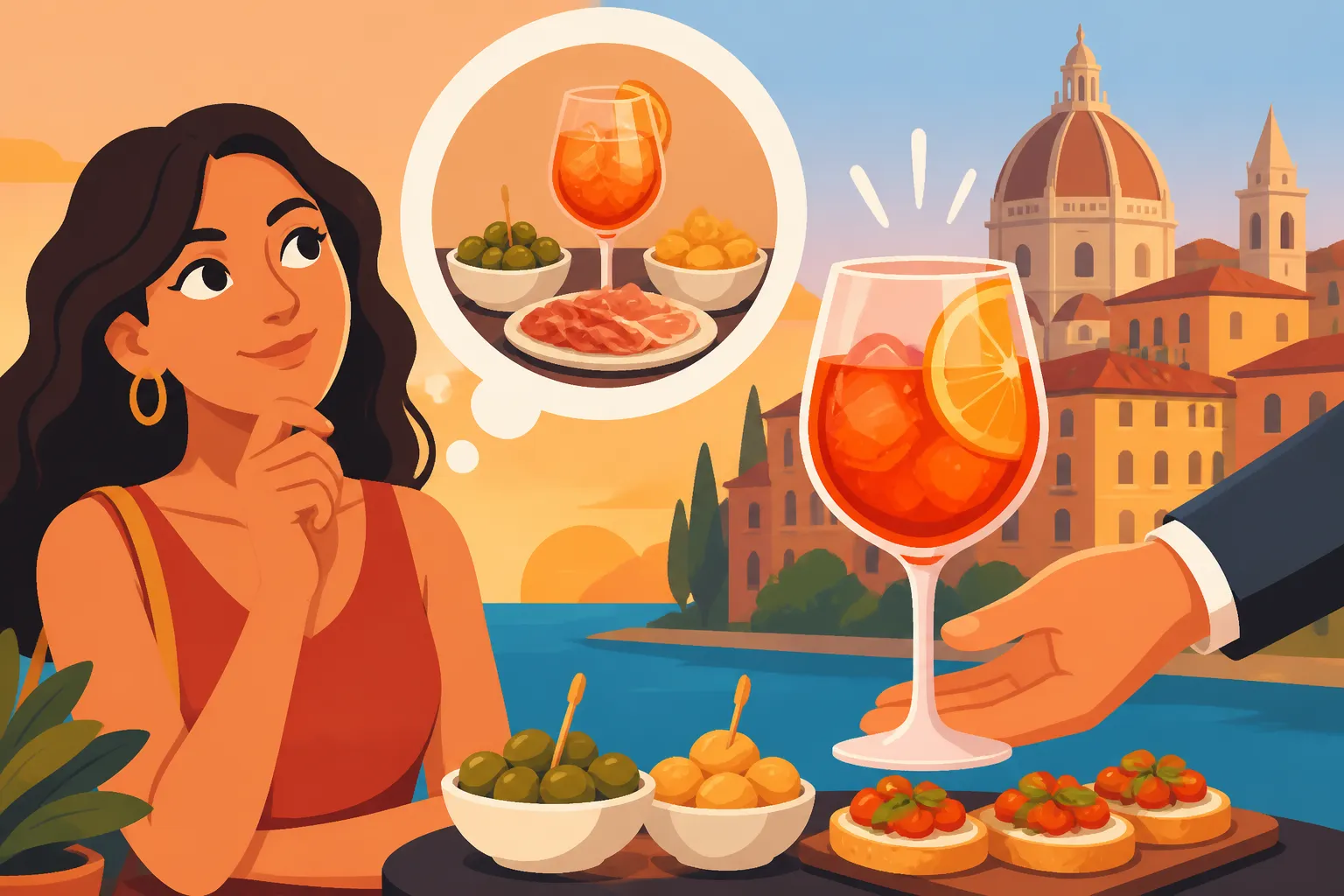
Ordering an aperitivo isn't just about naming a drink; it's about understanding the "package deal" that comes with it. In most Italian bars, when you order an "aperitivo," the price of your drink includes access to the food. This could be a small plate brought to your table, or it could be a buffet. Since the pandemic, the massive self-service buffets have largely disappeared in favor of curated "taglieri" (platters) brought directly to you. This is actually a win for quality, as the food is often fresher and more regional.
When you enter a bar, you have a choice: the banco (counter) or the tavolo (table). Sitting at a table usually incurs a higher price for the drink—sometimes double what you’d pay standing up—but it allows you to relax and enjoy the snacks comfortably. If you’re looking for a specific type of experience, like a high-end rooftop view, you might check Booking.com for hotels that offer public access to their lounge bars, as these often provide the most scenic aperitivo spots in cities like Rome or Florence.
Finding the Right Venue
Not every bar in Italy is an "aperitivo bar." You want to look for places that start setting out food around 6:00 PM. A good sign is a counter filled with focaccia, olives, potato chips, and perhaps some pasta salads or small sandwiches called tramezzini. In larger cities, you can find themed aperitivo spots—some focused on craft beer, others on organic wines, and some on classic mixology. If you're feeling overwhelmed by the choices, using a service like GetYourGuide to find a local-led food and wine tour can be a great way to discover the hidden gems that aren't on the main tourist drags.
Pay attention to the crowd. If a place is packed with locals, it’s usually because the food-to-price ratio is excellent. Avoid the bars directly facing major monuments like the Pantheon or the Duomo if you want an authentic experience; these often charge exorbitant prices and provide stale chips instead of the high-quality snacks you'd find just two streets away.
The Step-by-Step Ordering Process
Once you’ve found your spot and secured a table, a waiter will usually come to take your order. Unlike a standard bar where you might just say "a beer," for an aperitivo, you should be specific about your cocktail or wine choice. If you are unsure what to get, asking for a "Spritz" is the safest and most common bet.
- State your drink clearly: "Un Aperol Spritz, per favore" or "Un Negroni, per favore."
- Ask about the food: Usually, the snacks come automatically. However, if they don't appear within five minutes of your drink, you can politely ask, "È previsto qualcosa da mangiare?" (Is there something to eat provided?).
- Manage the snacks: If it's a buffet, take a small plate and don't overload it. It is considered rude to treat a buffet like an all-you-can-eat dinner. Take a few items, enjoy them with your drink, and if you’re still hungry after twenty minutes, you can go back for a small second helping.
- The second drink: Most Italians only have one drink during aperitivo. If you order a second, you are generally not expected to get a whole new round of snacks, though some generous bars might bring a fresh small plate.
For those who find themselves wanting more than just snacks, you should look for the term "Apericena." This is a modern hybrid word (Aperitivo + Cena/Dinner). You can learn more about this in our guide on What Is Apericena and Where to Find It. It generally costs a few euros more but includes a much more substantial food offering, often enough to replace dinner entirely.
Understanding the Bill and Tipping
When it’s time to leave, you don’t usually wait for the bill to be brought to the table unless it’s a very high-end establishment. Instead, you go to the cassa (cashier) and tell them your table number or what you had. In Italy, the price of the aperitivo is usually a fixed "formula." For example, the menu might say "Aperitivo: 10 Euro." This covers whatever drink you choose and the accompanying food.
Regarding the "coperto," this is a small cover charge for the bread and table service. It’s standard practice in Italy, so don’t be surprised to see an extra 2 or 3 euros on the bill. If you're confused about these extra charges, check out our explanation of What Is the Coperto on an Italian Restaurant Bill? to avoid any awkwardness at the register. Also, remember that Tipping in Italy: When, Where, and How Much is quite different from the US; a couple of euros is plenty, and often no tip is expected at all for a casual drink.
Common Drinks to Order
The heart of the aperitivo is the drink itself. The common thread among almost all traditional Italian pre-dinner drinks is a certain level of bitterness. Bitter flavors are believed to trigger the release of digestive enzymes. If you aren't used to bitter drinks, don't worry—there are plenty of entry-level options that are sweeter and more refreshing.
The Spritz Family
The Spritz is the undisputed king of the Italian aperitivo. Originating in the Veneto region, it was originally just white wine with a "spritz" of sparkling water (a tradition started by Austrian soldiers who found Italian wine too strong). Today, it almost always includes a bitter liqueur and Prosecco.
- Aperol Spritz: The most popular and photogenic. It’s bright orange, relatively low in alcohol, and has a sweet-bitter orange flavor.
- Campari Spritz: A darker red, much more bitter, and slightly higher in alcohol. This is the "grown-up" version of the Spritz.
- Select Spritz: The Venetian choice. It’s a middle ground between Aperol and Campari, with a distinct botanical profile.
- Hugo Spritz: A refreshing, non-bitter alternative made with elderflower syrup, mint, lime, and Prosecco. Perfect for hot summer days.
If you’re interested in learning the specific etiquette for these and other drinks, our guide on How to Drink Like a Local in Italy: Spritz, Negroni, and More goes into much greater detail.
The Classics: Negroni and Americano
If you want something stronger, the Negroni is the quintessential Italian cocktail. It is equal parts gin, sweet vermouth, and Campari. It is strong, bitter, and complex. For a slightly lighter version, you can order a Negroni Sbagliato (meaning "mismatched" or "wrong" Negroni), which replaces the gin with Prosecco. This drink was famously created by accident in Milan and has since become a global favorite.
The Americano is the precursor to the Negroni and is made with Campari, sweet vermouth, and club soda. It’s a fantastic choice if you want the complexity of a Negroni but need to stay functional for a late dinner. Many people find that How to Order Coffee in Italy Like a Local helps them understand the social nuances of Italian bars, but ordering a cocktail requires a different set of vocabulary and confidence.
Alcohol-Free Options
You do not have to drink alcohol to enjoy the aperitivo. Italy has a massive culture of "analcolico" (non-alcoholic) bitters. The most famous is the Crodino, a small bottle of bright orange, herbal, sparkling liquid that tastes remarkably like an Aperol Spritz but without the booze. Another popular choice is the Sanbittèr, which is the non-alcoholic version of Campari. These are always served in a glass with plenty of ice and a slice of orange, so you won’t feel left out of the aesthetic.
| Drink Name | Primary Flavors | Alcohol Level | Best For… |
|---|---|---|---|
| Aperol Spritz | Sweet Orange, Herbal | Low | Beginners & Afternoon heat |
| Campari Spritz | Bitter Orange, Bark | Medium | Serious bitter lovers |
| Negroni | Gin, Bitter, Sweet | High | A sophisticated evening kick |
| Hugo Spritz | Elderflower, Mint | Low | People who dislike bitter flavors |
| Crodino | Herbal, Spicy, Sweet | Zero | Non-drinkers & designated drivers |
| Americano | Club Soda, Bitter | Medium | Long conversations |
Regional Nuances and Etiquette
While the basics of the aperitivo are consistent, the experience changes as you move through Italy. In Milan, the "capital of aperitivo," the offerings are often very chic and sophisticated. In Venice, you’ll find "cicchetti"—small pieces of bread with various toppings—which you often eat standing up in small bars called bacari. If you're planning a trip to the lagoon city, knowing How to Avoid Crowds in Venice can help you find the quietest, most authentic bacari for your evening drink.
In Rome, the aperitivo is a bit more relaxed, often taking place in the winding streets of Trastevere. Here, you might find a mix of traditional platters and more modern, international finger foods. No matter where you are, it is important to observe Italian Social Customs: Greetings, Gestures, and Personal Space to ensure you are respecting the local environment.
The Unwritten Rules of the Buffet
If you do find yourself at a bar with a buffet, there are a few "unwritten rules" I've learned over the years that will keep you from looking like a typical tourist:
- Don't go for seconds immediately: Wait until you are at least halfway through your drink.
- Use the provided toothpicks or napkins: Do not use your hands to grab food from communal trays.
- Keep it light: The goal is to stimulate your appetite, not to kill it. If you’re full before your 9:00 PM dinner reservation, you’ve done it wrong.
- Don't "camp" on a single drink: If you finish your drink and the bar is getting busy, it’s polite to either order another or move on.
Interaction and Conversation
The aperitivo is a prime time for people-watching. You’ll notice Italians use a lot of hand gestures and have animated conversations. While it might seem loud, it’s rarely aggressive. If you are trying to meet people, the aperitivo is one of the best times to do so, though Italians often stick to their established social circles. A simple "Scusi" (Excuse me) when reaching for a snack or a "Buonasera" (Good evening) when sitting down near someone is always appreciated. For a deeper dive into how to behave in these settings, read Restaurant Etiquette in Italy: Coperto, Courses, and the Bill.
Disclaimer
The information provided in this guide is for informational purposes only. While every effort has been made to ensure the accuracy of the details regarding Italian customs, pricing, and regulations as of 2026, local practices can vary by region and individual establishment. Always check local menus and signs for current pricing and rules. Please drink responsibly and in accordance with Italian law.