Where to Stay in Tuscany: Choosing a Base for Wine Country or the Coast
Oh, la bella Toscana! The very name conjures images of rolling hills, cypress trees, and rows of grapevines stretching to the horizon. It’s a dream destination for so many of us, but then you start planning, and suddenly, the sheer number of charming towns, rustic farmhouses, and coastal retreats turns into a delightful, yet bewildering, puzzle: where on earth do you even begin to stay? This guide is here to untangle that beautiful mess, helping you pinpoint the perfect Tuscan base, whether your heart yearns for a glass of robust Chianti among the vineyards or the refreshing spray of the Tyrrhenian Sea. And trust me, navigating this beautiful region becomes infinitely easier with a reliable friend like Booking.com, your go-to for finding that just-right spot amidst the endless possibilities.
Disclosure: This post may contain affiliate links. We may earn a commission at no extra cost to you if you make a purchase through these links. Read full disclosure.
Understanding Tuscany's Diverse Regions
Tuscany isn't a monolith of rolling hills; it’s a vibrant tapestry woven from distinctly different landscapes and cultural nuances. Before you can even think about where to drop your luggage, it's vital to grasp the unique flavors each major area offers. This isn't just about pretty pictures; it's about matching your travel style to the region's soul.
The Iconic Chianti Wine Region
When most people picture Tuscany, they're probably imagining Chianti. This is the heart of Tuscany's wine production, nestled between the bustling cities of Florence and Siena. Here, the landscape is a symphony of vineyards, olive groves, and dense forests, punctuated by medieval villages perched atop hills.
Imagine driving along winding country roads, pulling over to capture a breathtaking vista, or spontaneously stopping at a family-run cantina for a wine tasting. Towns like Greve in Chianti, Castellina in Chianti, and Gaiole in Chianti are not just picturesque; they are living, breathing communities with vibrant markets, local eateries, and a slower pace of life that instantly melts away stress. Accommodation here often means charming agriturismi – working farms that offer guest rooms – or beautifully restored villas, giving you an authentic taste of rural Italian life. It’s an immersive experience for anyone truly passionate about Italian wine and postcard-perfect scenery.
Val d'Orcia: Postcard Perfect Landscapes and Hill Towns
South of Siena, you enter the Val d'Orcia, a UNESCO World Heritage site renowned for its almost surreal, perfectly sculpted rolling hills, golden wheat fields, and iconic cypress-lined roads. This region is truly a photographer's dream, a landscape that feels almost too perfect to be real, yet it is.
The Val d'Orcia offers a different kind of Tuscan charm. It’s more about expansive views, ancient thermal baths, and exquisite pecorino cheese. Here you'll find quintessential hilltop towns like Pienza, famous for its Renaissance architecture and incredible cheese; Montepulciano, a majestic town known for its Vino Nobile; and Montalcino, home to the revered Brunello wine. Stays in Val d'Orcia tend to lean towards elegant boutique hotels carved out of historic buildings, or luxurious restored farmhouses that offer tranquility and unparalleled views. If your vision of Tuscany involves long, scenic drives, leisurely meals, and soaking in natural beauty, Val d'Orcia might just be your spiritual home.
Coastal Tuscany: Maremma and Versilia
Many visitors overlook Tuscany’s stunning coastline, mistakenly thinking it’s all about the interior. But Tuscany actually boasts some fantastic seaside options, each with its own distinct personality. We're talking about two main coastal areas: the rugged Maremma and the more glamorous Versilia.
The Maremma, located in the southern part of Tuscany, offers a wilder, more untamed beauty. Think natural parks, pristine beaches, and ancient Etruscan ruins. Towns like Castiglione della Pescaia blend historic charm with a relaxed beach vibe, while Argentario offers dramatic cliffs and exclusive coves. This area is perfect for those seeking outdoor adventures, unspoiled nature, and a less polished, more authentic coastal experience.
Further north, near Pisa and Lucca, lies the Versilia coast. This stretch of coastline is known for its wide sandy beaches, bustling promenades, and more upscale resorts. Viareggio is famous for its Art Nouveau architecture and lively Carnival, while Forte dei Marmi caters to a more luxurious crowd with high-end boutiques and exclusive beach clubs. If your ideal vacation involves sunbathing, chic beach clubs, and vibrant nightlife, Versilia is calling your name. Don't forget, Booking.com has an incredible array of options for both the tranquil Maremma and the buzzing Versilia, making it easy to filter for beachfront properties or secluded escapes.
Choosing Your Tuscan Base: Wine Country vs. The Coast
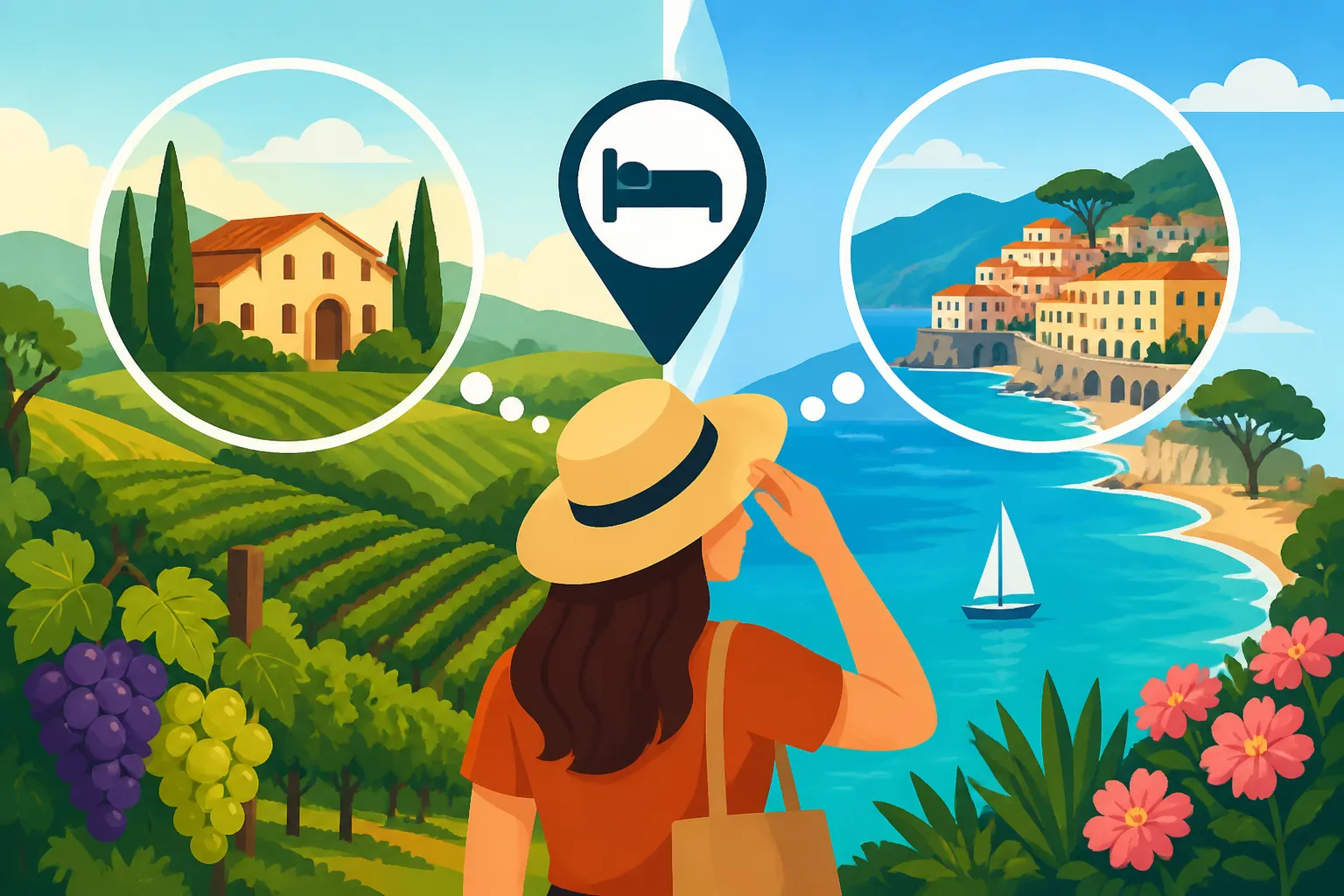
Now that you have a clearer picture of Tuscany’s diverse offerings, let’s tackle the big decision: do you anchor yourself in the heart of wine country or embrace the refreshing sea breeze of the coast? Or perhaps, you're looking for a clever way to experience a bit of both. This choice really comes down to your personal travel priorities and what kind of atmosphere truly recharges your soul.
For the Wine Aficionado: Deep Dive into Wine Country Stays
If the scent of Sangiovese grapes, the sight of undulating vineyards, and the promise of a perfectly paired meal ignite your passion, then Tuscany's wine country is unequivocally your playground. Staying directly amidst the vineyards offers an unparalleled immersion into the region’s most famous export.
Pros of Wine Country Stays: The obvious benefit is immediate access to hundreds of wineries. You can spend your days touring cellars, learning about traditional winemaking techniques, and indulging in tastings without the hassle of long drives back to a city base. The scenery is, of course, breathtaking – those iconic rolling hills are everywhere. Many accommodations, especially agriturismi, offer farm-to-table dining experiences with ingredients grown right on the property, providing an authentic taste of local cuisine. Imagine savoring a Florentine steak under a canopy of stars, accompanied by a bottle of the estate's finest Chianti Classico. It's truly a dream for gastronomes and oenophiles alike. Booking.com offers an extensive selection, and you can easily filter for properties that specifically highlight wine tours or tasting experiences.
Cons of Wine Country Stays: While idyllic, wine country can be quite isolated. A car is not just recommended, it's pretty much a non-negotiable necessity to truly explore. Public transport is sparse, and taxis can be expensive and hard to find in rural areas. If you're planning on indulging in tastings, you'll need a designated driver or rely on guided tours with transport included. Furthermore, many rural properties are quite a drive from major towns, which means less spontaneous access to shops, extensive restaurant choices, or vibrant evening strolls.
What to Look For: When searching on Booking.com for wine country, focus on agriturismi, particularly those with their own vineyards. These often offer cooking classes, farm tours, and, of course, wine tastings. Look for villas or restored farmhouses if you're traveling with a group or desire more space and privacy. Boutique hotels in smaller towns like Greve in Chianti or Panzano in Chianti can offer a blend of town access and wine country charm. Pay close attention to amenities like a swimming pool, air conditioning (crucial in summer!), and on-site dining options, especially if you prefer not to drive every evening. Booking.com's detailed descriptions and guest reviews are your best friends here, as they give you a real sense of the property's remote-ness and services.
For the Beach Lover: Coastal Retreats and Seaside Charms
If your ideal vacation involves the soothing sound of waves, sun-kissed skin, and fresh seafood every evening, then Tuscany’s coast should definitely be on your radar. While perhaps not as globally famous as its inland counterpart, the Tuscan Riviera offers a delightful escape.
Pros of Coastal Retreats: The most obvious advantage is direct access to beautiful beaches, whether they're the wild, sandy stretches of Maremma or the organized lidos of Versilia. You can spend your days swimming, sunbathing, or engaging in various water sports. The coastal towns often have lively promenades, bustling with shops, gelato parlors, and seafood restaurants serving the freshest catches. Many towns offer vibrant nightlife, especially during the summer months, providing a stark contrast to the quiet evenings of the countryside. Plus, a coastal base can offer cooler temperatures due to sea breezes, a welcome relief in the hotter months.
Cons of Coastal Retreats: During peak summer season (July and August), Italian beaches, especially those in Versilia, can get incredibly crowded. Many beaches are privately managed by "lidos" where you pay for umbrellas and sun loungers, which can add up. The atmosphere can feel more "holiday resort" and less "authentic Tuscan village" compared to inland options. While you're by the sea, you'll still need a car to truly explore the inland Tuscan treasures, meaning daily drives if you want to mix beach time with cultural excursions.
What to Look For: On Booking.com, you’ll find a great selection of beachfront hotels or apartments with sea views. In areas like Versilia, look for hotels that offer agreements with nearby lidos, sometimes including beach service. In Maremma, consider more secluded resorts or farmhouses a short drive from natural beaches if you prefer a quieter vibe. Families might gravitate towards properties with kids' clubs or family-friendly amenities. Remember, location is key here – decide if you want to be right on the bustling promenade or slightly set back for more tranquility. Booking.com's map feature is invaluable for visualizing proximity to the beach and town centers.
The Best of Both Worlds: Strategic Mid-Points
Perhaps you're torn, wanting a taste of both the verdant vineyards and the sparkling sea. While Tuscany is large, it's certainly possible to position yourself strategically or even consider a split stay.
Strategic Bases: Cities like Siena or San Gimignano can serve as excellent mid-points. Siena, a magnificent medieval city, offers a vibrant urban experience while being surrounded by the rolling hills of Chianti and an easy drive to Val d'Orcia. From Siena, you can access many wine estates within 30-60 minutes. While the coast is a longer haul (around 1.5 to 2 hours to the nearest Maremma beaches), it's certainly doable for a day trip. San Gimignano, with its iconic towers, is a charming smaller base, providing that quintessential hilltop town experience and proximity to wine regions, but a similar distance from the coast. When searching on Booking.com, look for hotels or B&Bs within these city walls or just outside for a mix of convenience and classic Tuscan ambiance.
Split Stays: For those with more time, consider booking two separate accommodations. Spend three or four nights in an agriturismo in Chianti or Val d'Orcia, immersing yourself in the countryside. Then, move your base to a coastal town like Castiglione della Pescaia or Viareggio for another few nights, enjoying the sea and sun. This approach gives you the fullest experience of Tuscany’s incredible diversity without feeling rushed. It allows you to tailor each part of your trip to different activities and relaxation levels. Booking.com makes multi-destination planning a breeze, allowing you to easily book several distinct stays for different legs of your journey.
Types of Accommodation and What to Expect
Tuscany truly offers a kaleidoscope of accommodation options, each promising a unique slice of Italian life. From rustic charm to seaside luxury, the choice of where you lay your head each night can profoundly shape your entire experience. Let’s dive into what you can expect from the most popular types of stays.
Agriturismi: The Authentic Farm Stay Experience
If you’re dreaming of a quintessential Tuscan experience, an agriturismo is likely at the top of your list. These aren't just hotels; they are working farms that have opened their doors to guests, offering a unique blend of rural tranquility and authentic Italian hospitality. They can range from simple, rustic rooms to luxurious suites, often housed in beautifully restored stone farmhouses.
What to expect: Typically, an agriturismo will be set amidst vineyards, olive groves, or expansive fields, offering breathtaking views and a sense of profound peace. Many boast stunning swimming pools, perfect for cooling off after a day of exploring hilltop towns or vineyards. A major highlight is often the food: many agriturismi offer delicious, home-cooked meals (often breakfast and dinner, or just breakfast) prepared with ingredients grown right on the farm or sourced locally. This is your chance to savor truly authentic Tuscan cuisine, from freshly pressed olive oil to artisanal cheeses and, of course, the estate's own wine. While some are quite isolated, others are a short drive from charming villages. Finding these unique gems is incredibly easy on Booking.com, where you can filter specifically for "Farm stays" and read reviews from fellow travelers who've experienced their charm firsthand.
Villas and Farmhouses: Ideal for Groups and Longer Stays
For families, larger groups, or those planning a longer, more independent stay, renting an entire villa or farmhouse can be an absolute dream. This option offers unparalleled privacy, space, and the freedom to create your own schedule.
What to expect: Tuscan villas and farmhouses vary wildly in size, style, and amenities. You might find a sprawling estate with multiple bedrooms, a private pool, extensive gardens, and even a pizza oven, or a more modest, charming farmhouse perfect for a smaller group. Most are fully equipped with kitchens, allowing you to try your hand at cooking with fresh local produce. This is a fantastic option for truly settling into the rhythm of Tuscan life, perhaps hosting a barbecue, enjoying long al fresco meals, or simply relaxing by your private pool without a care in the world. It’s also incredibly cost-effective for groups, often making it more affordable per person than multiple hotel rooms. Booking.com has an impressive selection of these larger properties, and their detailed descriptions and photo galleries allow you to envision your perfect group getaway.
Boutique Hotels and B&Bs in Historic Towns
If you prefer to be right in the thick of things, with shops, restaurants, and historical sights just steps from your door, then a boutique hotel or a charming bed & breakfast in a historic Tuscan town is an excellent choice.
What to expect: These accommodations are often nestled within ancient buildings, offering rooms with unique character, period details, and sometimes stunning views over rooftops or piazzas. They typically provide a more personalized service than larger chain hotels, with hosts who are often passionate about their region and happy to share local tips. Staying in towns like San Gimignano, Montepulciano, or even the bustling city of Siena allows for easy evening strolls, late-night gelato runs, and quick access to cultural attractions without needing to drive. Many B&Bs include a delightful Italian breakfast, often featuring local pastries, fresh fruit, and strong coffee. It's an intimate way to experience the vibrancy of Tuscan urban life. You’ll find a wide range of these cozy and characterful stays listed on Booking.com, many with excellent ratings for their location and hospitality.
Coastal Hotels and Resorts: From Luxury to Family-Friendly
When your Tuscan dreams include a healthy dose of Vitamin Sea, the coastal areas offer a different array of lodging, from high-end luxury resorts to comfortable, family-focused hotels.
What to expect: In areas like Versilia, you’ll find more modern hotels, often with direct beach access or just a short walk away. Many come with amenities like swimming pools, spa services, and multiple dining options. Some of the more luxurious resorts even have private beach clubs. For families, there are plenty of options with larger rooms, kids' programs, and easy access to the sand. In the Maremma, accommodations might be slightly more spread out, ranging from elegant hotels in picturesque towns like Castiglione della Pescaia to charming, rustic guesthouses a stone's throw from secluded coves. Regardless of the style, coastal properties are designed to facilitate enjoyment of the sun and sea. Booking.com is an invaluable resource for comparing facilities and proximity to the water, allowing you to pinpoint the perfect seaside escape based on your specific needs and budget.
Navigating Logistics: Getting Around and Daily Life
Alright, you've got your heart set on a region and a type of stay. Fantastic! Now, let's talk brass tacks: how are you actually going to get around this glorious land, and what does daily life look like once you've settled in? This is where a little planning goes a long way, especially if you want to avoid feeling stranded or missing out on those hidden gems.
Car Rental: An Absolute Must for Exploration
Let me be blunt: if you plan to explore Tuscany beyond its major cities, a car is not a luxury; it's practically a necessity. Especially when you're venturing into the wine country or the more remote coastal areas, public transport options become limited, sporadic, or simply non-existent.
Why you need it: Imagine driving along those iconic cypress-lined roads, pulling over for an impromptu photo op, or discovering a tiny trattoria in a village not listed in any guidebook. That's the freedom a car provides. It allows you to visit multiple wineries in a day, explore charming hilltop towns like Volterra or Cortona at your own pace, or reach those secluded Maremma beaches. Trying to rely solely on trains and buses will severely restrict your itinerary and likely lead to frustration.
Driving nuances: Be prepared for narrow, winding roads, especially in the countryside. Also, familiarise yourself with Italy’s infamous ZTLs (Zona a Traffico Limitato – Limited Traffic Zones), which are areas in historic city centers where only authorized vehicles can enter. Violating a ZTL can lead to hefty fines, so always look for signs and park outside these zones. If you're renting, your car hire company will often have tips, but it's crucial to be aware. For more detailed advice, check out "What Is a ZTL in Italy and How to Avoid Fines".
Public Transport Limitations and Alternatives
While Italy has an excellent train network connecting its major cities, this efficiency often diminishes when you venture into the heart of Tuscany's rural areas or along certain parts of its coast. Buses serve some towns, but schedules can be infrequent, especially on weekends or during holidays, and they don't always reach the most picturesque, out-of-the-way spots.
What to expect: You can certainly use trains to travel between larger cities like Florence, Siena, Pisa, or Livorno. For day trips from these cities, buses can sometimes work, but expect longer travel times and less flexibility. For instance, getting from Florence to a remote agriturismo in Chianti by public transport could involve a train, then a bus, then perhaps a long walk or an expensive taxi.
Alternatives: If driving isn't an option for you (or if you want to enjoy wine tastings without worry), consider hiring private drivers for specific excursions or joining organized tours. Many tour operators offer day trips from Florence or Siena to the Chianti region or Val d'Orcia, including transport and guided tastings. While more expensive than self-driving, they offer convenience and expertise.
Booking and Planning Your Stay
Once you've decided on your location and transportation, it's time to solidify your accommodation. This is where Booking.com shines as an indispensable tool. Its robust platform is designed to handle the complexity of travel planning, especially for a region as diverse as Tuscany.
Leveraging Booking.com: Start by using their powerful filters. Do you absolutely need a pool for those hot Tuscan afternoons? Filter for it. Traveling with your furry friend? Select "pet-friendly" options, which are surprisingly common in Italy – just make sure to confirm specific pet policies. Need a kitchen in your villa for those market-fresh meals? There's a filter for that too. Location filters, allowing you to search by specific towns like Pienza or Castiglione della Pescaia, are incredibly useful. The sheer volume of detailed listings, coupled with comprehensive guest reviews, means you can get a true feel for a place before you commit. You can even find specific property types like "farm stays" (agriturismi) or "villas." Booking.com helps you compare prices, amenities, and guest feedback across a vast range of properties, simplifying the process of securing your ideal Tuscan home away from home.
For more general advice on planning your itinerary, consider looking at resources like "How to Plan an Italy Itinerary by Train" if you plan to mix cities with countryside exploration, or even "How to Plan a Road Trip Through Tuscany and Umbria" if you're going all in on the car rental adventure.
Practical Tips for Booking Your Tuscan Getaway
So, you’ve dreamt, you’ve decided, and you’re almost ready to click that "book now" button. Before you do, let’s go over a few practical tips that can make your Tuscan accommodation experience even smoother. Booking your stay in Italy, especially in a popular region like Tuscany, can be different from what you're used to, and a little forethought can prevent headaches down the road.
When to Book and Why Early is Better
Tuscany is popular for a reason, and that means the best spots—especially those charming agriturismi with pools or villas for groups—get snapped up quickly.
Seasonality and availability: If you’re planning to travel during peak season (June to September, and especially July/August), you absolutely need to book well in advance. Six months to a year out isn’t overkill for prime villas or highly sought-after agriturismi. Even shoulder seasons (April-May, late September-October) are becoming increasingly popular, so booking 3-4 months ahead is advisable. Prices also tend to be higher during peak times, and last-minute deals are rare for quality properties. If you have specific dates or a particular dream property in mind, don't procrastinate. Booking.com's interface allows you to book far in advance, giving you peace of mind that your ideal spot is secured.
Reading Reviews and Understanding Amenities
This might seem obvious, but delve deep into those guest reviews on Booking.com. They are goldmines of information that official descriptions might miss.
Beyond the photos: Photos are beautiful, but reviews tell you the real story. Look for comments on specific issues: Is the Wi-Fi reliable? Is the road leading to the agriturismo paved or a bumpy track? Are the hosts genuinely helpful? Do they speak English? Do past guests mention noise issues, or is it truly as peaceful as advertised? Also, meticulously check the listed amenities. If a pool is crucial, ensure it's explicitly stated and review any comments about its cleanliness or operating hours. Confirm if breakfast is included or if there are any hidden fees like a tassa di soggiorno (city tourist tax) that might be paid upon arrival. These small details, gleaned from reviews and comprehensive listings on Booking.com, can make a huge difference to your overall satisfaction.
Budgeting for Your Tuscan Accommodation
Tuscany can cater to a range of budgets, but knowing what to expect can help you plan realistically. It's not always about finding the cheapest option, but the best value for your money and your desired experience.
Cost variations: Generally, coastal areas like Versilia can be pricier, especially for beachfront properties during summer. Iconic areas like Val d'Orcia, with its luxurious farmhouses, also command higher prices. Chianti offers a broader range, from rustic budget-friendly agriturismi to upscale wine estates. Hostels and simple B&Bs in major cities (Florence, Siena) will be your most economical choice, while a private villa with a pool will be at the top end. Remember that "value" isn't just about the nightly rate; it’s also about what's included (breakfast, pool access, parking, cooking facilities). Comparing various options on Booking.com allows you to see what you get for your money across different regions and accommodation types, helping you tailor your "Cost of Living in Italy 2026: Budgeting for Expats" for the trip.
Flexibility and Cancellation Policies
Life happens, and sometimes plans change. Understanding cancellation policies before you book is incredibly important, especially for international travel.
Booking.com's flexible options: One of the great advantages of using Booking.com is the clear display of cancellation policies. Many properties offer free cancellation up to a certain date, which is fantastic for giving you peace of mind if your travel plans are still a little fluid. If you're booking far in advance, choosing a flexible option can be invaluable. However, if you find a fantastic non-refundable deal, weigh the savings against your certainty of travel. Always double-check the fine print, as some properties might have different policies for different room types or dates. This transparency is a huge benefit, ensuring there are no nasty surprises if you need to adjust your plans.
| Region Type | Ideal For | Accommodation Examples | Pros | Cons |
|---|---|---|---|---|
| Chianti Wine Country | Wine lovers, scenic drives, rural charm | Agriturismi, villas, restored farmhouses | Immersive wine culture, picturesque views, authentic food | Requires a car, can be isolated, limited public transport |
| Val d'Orcia | Photographers, serene escapes, spa lovers | Boutique hotels, luxury farmhouses | Stunning landscapes, thermal baths, gourmet experiences | Generally higher cost, isolated, car essential |
| Maremma Coast | Nature lovers, quiet beaches, outdoor activities | Agriturismi, seaside guesthouses | Untamed beauty, natural parks, less crowded beaches | More rustic, less traditional "Tuscan" feel, car needed |
| Versilia Coast | Beach resorts, lively atmosphere, luxury shoppers | Modern hotels, beach clubs, apartment rentals | Sandy beaches, vibrant nightlife, fashionable towns | Can be crowded and expensive in summer, less authentic |
| Historic City (e.g., Siena) | Culture seekers, walkers, mix of urban/rural | Boutique hotels, B&Bs, apartments | Central location, easy walking access, vibrant city life | Can be busy, ZTL restrictions for cars, further from coast |
Disclaimer
Please note that while I strive to provide accurate and up-to-date information based on my extensive experience and available data, travel regulations, accommodation availability, and prices in Italy can change rapidly. Always verify current visa requirements, health guidelines, and specific property details before making any definitive plans or bookings. This guide is for informational purposes only and should not be considered legal or financial advice.