How to Avoid Crowds in Venice
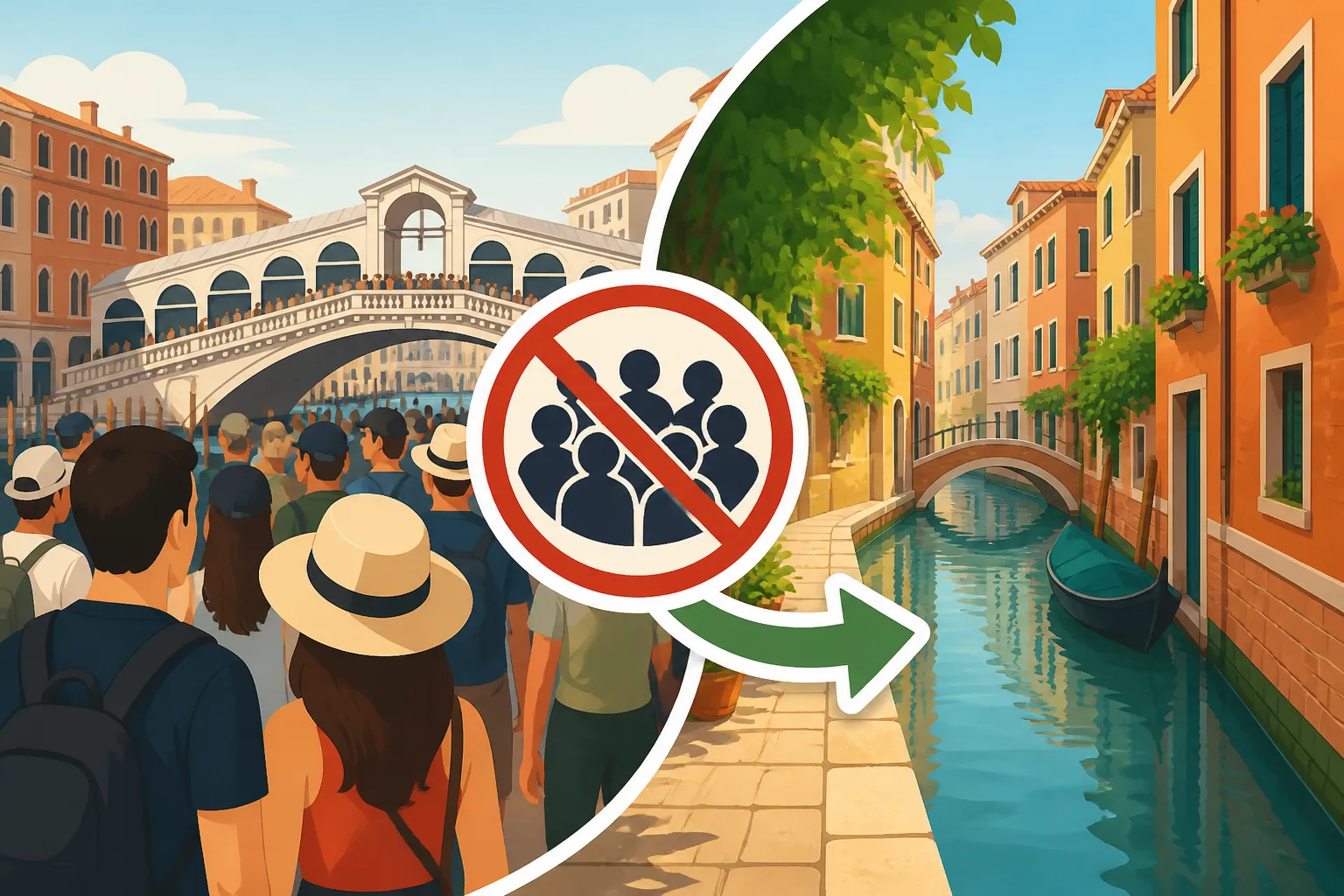
Stepping off the train at Santa Lucia and immediately hitting a literal wall of selfie sticks, rolling suitcases, and tour groups is enough to make any traveler want to turn right back around and head for the hills. Venice is a victim of its own ethereal beauty, often feeling more like an overcrowded theme park than a living, breathing city. This guide solves that specific claustrophobia by showing you exactly how to navigate the floating city like a seasoned local, ensuring you actually see the canals instead of just the backs of other people's heads.
Disclosure: This post may contain affiliate links. We may earn a commission at no extra cost to you if you make a purchase through these links. Read full disclosure.
The Art of Timing Your Venetian Escape
The first mistake most visitors make is assuming that Venice has an "off-season" in the traditional sense. While the dead of winter might see fewer people than the peak of July, the city is a magnet year-round. To truly escape the masses, you have to look at your calendar with a more surgical eye. February brings the Carnival, which is a spectacular nightmare for anyone who hates crowds. Similarly, the summer months of June through August are plagued by intense heat, stagnant canal water smells, and a surge of cruise ship passengers that can double the city’s population in a single morning.
If you have the flexibility, target the "grey" periods. Late November, January (after New Year’s), and early March often provide the breathing room you crave. Yes, you might deal with the acqua alta (high water), but there is something hauntingly beautiful about seeing a deserted, misty Piazza San Marco reflecting the streetlights in the puddles. It feels like a movie set where the actors haven't arrived yet. During these months, you can actually walk through the narrowest calli without having to turn sideways to let someone pass.
Beyond the months, you must master the daily rhythm. Venice is a city of day-trippers. Between 10:00 AM and 5:00 PM, the main arteries between the train station and San Marco become human conveyor belts. If you want to see the city at its most authentic, you need to be out by 6:30 AM. Watching the delivery barges unload fresh produce at the markets or seeing the Venetian grandmothers heading to early mass is a completely different experience. Conversely, staying out past 10:00 PM allows you to see the squares empty out, leaving you with the sound of lapping water and the echo of your own footsteps.
Strategic Neighborhood Selection: Living Beyond San Marco
Many tourists never make it out of the San Marco district, which is a tragedy of logistics. To find the real Venice, you have to understand the sestieri (neighborhoods). San Marco is the heart of the tourist machine, and while you have to see it once, you certainly shouldn't spend all your time there. When you are looking for accommodation on Booking.com, try to widen your search to the peripheral areas. Staying in a quieter neighborhood doesn't just mean fewer crowds; it means better prices, more authentic food, and a chance to actually sleep without the sound of a hundred rolling suitcases outside your window.
Cannaregio is a personal favorite for those looking for a balance of life and tranquility. This is where many locals still actually live. The northern part of Cannaregio, specifically around the Jewish Ghetto and the Fondamenta della Misericordia, offers wide walkways and a plethora of local bars known as bacari. In the evenings, you can join the locals for a spritz and a few cicchetti (small snacks) without feeling like you’re in a tourist trap. It’s a place where the laundry still hangs across the canals, and the pace of life feels noticeably slower.
Castello is another gem that is frequently ignored. It is the largest of the sestieri and stretches all the way to the Giardini and the Arsenale. The further east you walk toward Sant'Elena, the more the crowds thin out until they disappear entirely. You’ll find lush parks, kids playing football in the squares, and a distinct lack of souvenir shops selling plastic masks made in China. This is the Venice that reminds you why people fell in love with this place centuries ago. To get a feel for how these neighborhoods differ, you might want to look into Venice for First-Time Visitors: Beyond the Crowds for a more granular breakdown of each district's personality.
| Sestiere | Crowd Level | Vibe | Best For |
|---|---|---|---|
| San Marco | Extreme | Commercial/Historical | Sightseeing (6 AM only) |
| Cannaregio | Moderate | Local/Lively | Dinner and evening walks |
| Castello | Low | Residential/Green | Escaping the heat and noise |
| Dorsoduro | Moderate | Artistic/Student | Museums and sunset views |
| Santa Croce | Moderate | Functional/Quiet | Proximity to transport |
Navigating the Labyrinth Without Following the Herd
The signage in Venice is designed to funnel everyone through the same two or three routes. You’ll see the yellow signs on the corners of buildings pointing toward "San Marco" or "Rialto." My best advice is to ignore them whenever possible. If the sign says to turn right, try going straight or turning left. Because Venice is an island, you can’t get truly lost; you’ll eventually hit a canal or the open lagoon. Getting lost is actually the most rewarding way to experience the city. You’ll stumble upon tiny courtyards with ancient wells and bridges that lead to nowhere but a private doorway.
Transportation is another area where you can optimize for sanity. The vaporetti (water buses) are the lifeblood of the city, but during peak hours, they are more crowded than a rush-hour subway in London. Instead of squeezing onto the Route 1 that zig-zags down the Grand Canal, consider walking the backstreets. If you must use the water, the standing room at the back of the boat provides the best views and the freshest air, provided you can snag a spot. For those arriving from other parts of Italy, using a service like Omio to book your train tickets can help you time your arrival for late afternoon, after the heaviest wave of day-trippers has started to retreat toward the mainland.
If you are traveling with a group or have a bit of a budget, the traghetto is the city's best-kept secret. These are large gondolas used specifically to cross the Grand Canal at points where there are no bridges. It costs only a couple of euros for a two-minute ride, and it gives you that iconic gondola experience without the 80-euro price tag or the slow-moving traffic of the smaller canals. It’s a functional, local way to get around that feels significantly more "Venetian" than sitting on a packed water bus. For more logistics on getting into the country, check out How to Get From Rome Fiumicino Airport to the City Center if you are starting your journey further south.
Crafting a Crowd-Averse Itinerary
To see the big-ticket items like the Doge's Palace or the Basilica, you absolutely cannot just show up and wait in line. That is a recipe for a miserable three-hour wait in the sun. Using platforms like GetYourGuide to book skip-the-line tickets or after-hours tours is one of the few instances where I recommend spending a little extra money. An after-hours tour of St. Mark’s Basilica is a transformative experience; seeing the mosaics illuminated in the dark without thousands of people whispering and shuffling around you is worth every cent.
When you aren't doing the "must-sees," focus on the hidden institutions. The San Giorgio Maggiore island, located just across the water from San Marco, offers a bell tower view that is arguably better than the famous Campanile. Why? Because you can actually see the Palazzo Ducale and the San Marco square from across the water, and the line is usually non-existent. Another great escape is the Libreria Acqua Alta, a bookstore where books are kept in gondolas and bathtubs to protect them from flooding. While it has become more popular on social media lately, it still retains a quirky, chaotic charm that feels far removed from the polished tourist shops.
For those who need a break from the stone and water, the outer islands of the lagoon are a sanctuary. While Murano and Burano have their own crowds, particularly the "glass tours" on Murano, the island of Torcello is nearly empty. It was the first inhabited island in the lagoon and now houses a stunning cathedral with Byzantine mosaics and a handful of residents. Walking through the overgrown fields of Torcello feels like stepping back a thousand years. If you're planning to explore these areas, you might find Day Trips From Venice: Islands and Mainland incredibly useful for planning your boat routes.
Eating and Drinking Away from the Tourist Menu
Nothing screams "tourist trap" louder than a restaurant with a picture-heavy menu in five languages and a waiter standing outside beckoning you in. If you want to avoid crowds at mealtime, you have to change where and how you eat. In Venice, the culture of the bacaro is king. Instead of a sit-down three-course dinner, do a "bacaro crawl." You stand at the counter, order an ombra (a small glass of wine), and pick out a few cicchetti. It’s social, fast, and remarkably cheap.
The best places for this are found in the backstreets of San Polo and the northern reaches of Cannaregio. Look for places where people are spilling out onto the sidewalk with glasses in hand. If you see a group of men in work clothes or gondoliers (off-duty, of course), you’ve found the right spot. This is also a great way to respect Italian Coffee Culture: How to Order Like a Local—remember that in many of these small bars, the price is lower if you stand at the counter rather than sitting at a table.
When it comes to paying, remember that the "coperto" (cover charge) is standard in Italy, but you shouldn't be paying exorbitant amounts for the privilege of sitting near a landmark. To understand the nuances of local spending, read up on Tipping in Italy: When, Where, and How Much to avoid any awkward social blunders at the end of your meal. Venetians are generally reserved but incredibly appreciative of tourists who take the time to learn the local customs rather than demanding the "standard" international service.
Staying Safe and Respectful in a Fragile City
One of the reasons Venice feels so crowded is that the space is physically limited. As a visitor, your footprint matters. Avoiding crowds isn't just about your own comfort; it's about being a better guest. Don't stop to take photos in the middle of narrow bridges; these are the only way for locals to get to work, and blocking them is the fastest way to earn a stern Venetian glare. Always keep to the right when walking through narrow alleys to allow for the flow of "traffic."
Safety is generally not a major concern in Venice compared to other large cities, but pickpockets do thrive in the dense crowds around the Rialto and San Marco. By following the advice in this guide and staying in the quieter areas, you naturally reduce your risk. However, it's always wise to refresh your knowledge on Staying Safe in Italy: Common-Sense Tips for Travelers to ensure your trip remains stress-free.
Lastly, be mindful of the "Venice Entry Fee" and other local regulations designed to manage the surge of visitors. These rules change frequently as the city struggles to balance tourism with sustainability. By staying overnight—perhaps finding a charming spot on Booking.com in the Dorsoduro area—you contribute more to the local economy than the thousands of day-trippers who buy a cheap sandwich and leave their trash behind. For those moving between cities, remember that High-Speed Trains in Italy: Trenitalia, Italo, Routes, and Savings can get you to Florence or Milan in just a couple of hours, making it easy to spread your trip across Italy's Regions: A Traveler's Overview and avoid the burnout of staying in one high-pressure tourist zone for too long.
Common Sense and Patience: Your Best Travel Tools
At the end of the day, Venice is one of the most famous cities on the planet, and you will never have it entirely to yourself unless you are very lucky or very dedicated. The key is to manage your expectations. There will be moments of frustration—a blocked bridge, a missed vaporetto, or a noisy group of tourists. When that happens, take a deep breath and turn down the nearest side street. Venice has a way of rewarding the curious. Just two turns away from the main tourist trail, you will find a quiet canal where the only sound is the water hitting the stone.
The beauty of the city is resilient. Even with the crowds, the way the light hits the crumbling plaster of a 15th-century palazzo at sunset is something you will never forget. By using the tools at your disposal—checking train times on Omio, finding the right home base on Booking.com, and scheduling your "must-see" moments via GetYourGuide—you can strip away the commercial layer of the city and find the magic that lies beneath. You don't have to be a sardine in a can; you just have to know which way to swim. For more inspiration on how to fill your time once the crowds have thinned, take a look at How to Spend 48 Hours in Venice for a perfectly balanced itinerary.
Disclaimer
The information provided in this guide is based on personal experience and current travel trends in Italy. Travel regulations, including entry fees for Venice, local transportation schedules, and business hours, are subject to change by local authorities. Always verify the latest official requirements before your trip. This content is for informational purposes and does not constitute professional legal or travel advice.