How to Drink Like a Local in Italy: Spritz, Negroni, and More
Many tourists arrive in Italy and immediately stand out for all the wrong reasons, ordering heavy milk-based coffees after lunch or sipping neon-colored cocktails at times that make the locals cringe. It is a subtle but real social barrier that can make you feel like a permanent outsider. This guide solves that frustration by teaching you the unwritten rules of Italian drinking culture, from the sacred timing of the Aperitivo to the regional secrets of the perfect Negroni.
Disclosure: This post may contain affiliate links. We may earn a commission at no extra cost to you if you make a purchase through these links. Read full disclosure.
The Sacred Clock of Italian Drinking Culture
The most common mistake I see newcomers make is ignoring the chronological rhythm of the Italian day. Drinking in Italy isn't just about the liquid in the glass; it is about "la digestione"—the almost religious obsession with how everything you consume affects your stomach. If you order a cappuccino after a heavy lunch of carbonara, you aren't just breaking a "rule"; you are telling the barista that you don't care about your digestive well-being, which is a confusing concept to most Italians.
In the morning, the bar is a place of high-speed efficiency. You stand at the counter, knock back your espresso, and leave. As the day progresses, the pace slows down. By midday, the focus shifts to hydration and light stimulation. You will notice that Coffee Culture in Italy: How to Order Like a Local is a prerequisite for understanding the morning rush, but as the sun begins to dip toward the horizon, the entire social fabric of the country changes. This is when the hard-earned wisdom of the expat comes into play: knowing when to transition from bean to grape, and from grape to bitter.
The transition period between 6:00 PM and 8:00 PM is sacred. This is the time for the Aperitivo. It is not "happy hour" in the Anglo-American sense—there are no two-for-one buckets of beer here. Instead, it is a sophisticated bridge between the workday and dinner. Understanding this transition is vital if you want to blend in. If you are traveling between major hubs like Milan and Florence, using a service like Omio to time your arrival for the golden hour of Aperitivo is a pro-move that will save you from the "tourist trap" hunger that leads to bad decisions.
Decoding the Aperitivo: More Than Just a Drink
The word "Aperitivo" comes from the Latin aperire, meaning "to open." The entire goal of the drink is to open your appetite for the meal ahead. This is why the flavors are almost always bitter or herbal. Sweet drinks cloy the palate and ruin the upcoming dinner; bitter drinks stimulate gastric juices. When you sit down at a bar in a bustling piazza, you are participating in a ritual that dates back centuries.
Aperitivo in Italy: The Pre-Dinner Ritual Explained offers a deeper dive into the food side of this tradition, but from a drinking perspective, you need to know your options. Most bars will bring you a small selection of snacks—olives, chips, or even small focaccia bites—automatically with your drink. In cities like Milan or Turin, this can escalate into a full "Apericena," but as a local-minded drinker, you should focus on the quality of the cocktail rather than the quantity of the buffet.
If you are staying in a central area, perhaps booked through Booking.com to be near the historic heart of a city like Rome or Venice, you will have countless options. The trick is to look for the bars where people are standing near the entrance with a glass in hand, rather than the places with laminated menus featuring pictures of the drinks. High-quality bars take pride in their "house" bitters and their selection of vermouths.
The Spritz: Navigating the Orange Glow
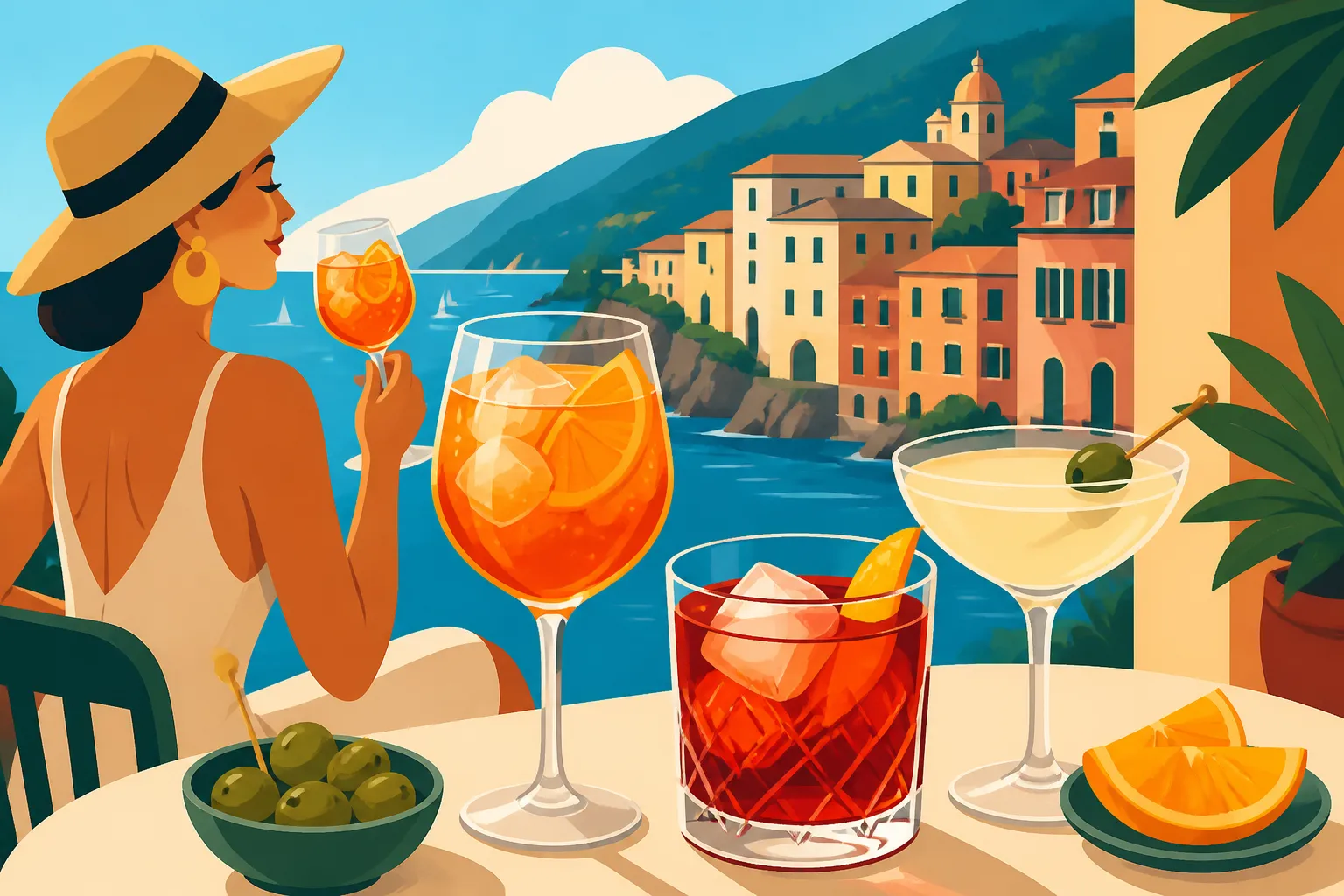
The Spritz is the undisputed king of the Italian afternoon, but it is also the drink that most easily identifies you as a tourist if ordered incorrectly. While the world has fallen in love with the Aperol Spritz, it is often seen by seasoned Italians as the "entry-level" version because of its high sugar content and lower alcohol volume. If you want to drink like someone who has lived here for a decade, you need to explore the bitter variants.
The Campari Spritz is the bolder, darker cousin. It uses Campari instead of Aperol, resulting in a drink that is significantly more bitter and sophisticated. It is the choice of the professional class in Milan. Then there is the Select Spritz, which is the true Venetian choice. Select is a ruby-red bitter that sits perfectly between Aperol and Campari in terms of intensity. If you are in Venice, ordering a Spritz with Select and a large green olive is the ultimate signal that you know exactly what you are doing.
| Drink Name | Primary Bitter | Flavor Profile | Local Vibe |
|---|---|---|---|
| Aperol Spritz | Aperol | Sweet, Orange, Easy-going | Casual, Tourist-friendly |
| Campari Spritz | Campari | Very Bitter, Herbal, Sharp | Professional, Bold |
| Select Spritz | Select | Balanced, Complex, Salty | Authentic Venetian |
| Cynar Spritz | Cynar | Earthy, Artichoke-based | The "Old School" Hipster |
Beyond the base bitter, a proper Spritz must follow the 3-2-1 rule: three parts Prosecco, two parts bitter, and one part soda water. If the drink looks too watery or lacks a garnish of an orange slice (or an olive for Select), you are in a tourist trap. When you find a bar that does this right, you’ll understand why Italian Wine, Coffee, and Aperitivo Culture is such a foundational part of the lifestyle.
The Negroni Family: Bittersweet Sophistication
If the Spritz is the afternoon refresher, the Negroni is the evening’s heavy hitter. Legend has it that Count Camillo Negroni asked his bartender in Florence in 1919 to strengthen his Americano by replacing the soda water with gin. The result is a drink that is equal parts gin, sweet vermouth, and Campari. It is a deceptively strong cocktail that demands respect.
Drinking a Negroni is an exercise in patience. It is meant to be sipped slowly as the ice slightly dilutes the intensity of the botanicals. For those who find the classic Negroni too intense, the Negroni Sbagliato (the "Mistaken" Negroni) is a fantastic alternative. Born in Milan's Bar Basso when a bartender accidentally grabbed a bottle of sparkling wine instead of gin, it is lighter, effervescent, and perfect for those warm Mediterranean evenings.
When you are exploring the nightlife, perhaps after a guided evening tour you found on GetYourGuide, you might want to ask the bartender for their "Negroni del Professore" or a version using a specific local vermouth. Italy is currently experiencing a massive resurgence in artisanal vermouth production, and engaging a bartender on this topic is a great way to bridge the cultural gap. You can learn more about the nuances of these interactions in our guide on How to Order at a Bar in Italian Without Stress.
Regional Specialties and The "Ombra" Tradition
One of the beauties of Italy is its intense regionalism. What people drink in the shadows of the Alps is vastly different from what is served on the sun-bleached coasts of Sicily. In Venice, for example, the locals don’t just "go for a drink"; they "go for an ombra." An ombra (meaning "shadow") is a tiny glass of local wine, usually priced at a euro or two, served at a bacaro (a traditional Venetian wine bar).
The name comes from the old practice of wine merchants in Piazza San Marco moving their stalls to stay in the shadow of the bell tower so the wine wouldn't get warm. To drink like a local in Venice, you stand at the wooden counter of a tiny bar, order an ombra de rosso (red) or bianco (white), and pair it with a cicchetto—a small snack like creamed cod on polenta. This is a far cry from the sit-down, overpriced tourist experience near the Rialto Bridge.
Further south, the drinks become punchier and more citrus-driven. In the Amalfi Coast and Sicily, the limoncello culture is pervasive, but locals rarely drink the mass-produced stuff you see in gift shops. They drink homemade infusions that are stored in the freezer until they are syrupy and ice-cold. Understanding these distinctions is part of the fun of Italian Wine Regions: A Beginner's Guide, which helps you navigate the overwhelming world of Italian viticulture.
Bar Etiquette: Standing vs. Sitting
One of the most jarring things for expats to learn is the "two-price" system. In almost every Italian bar, there is a banco (counter) price and a tavolo (table) price. If you stand at the bar to drink your espresso or your glass of wine, you pay the standard, regulated price. The moment you sit down and a waiter comes to your table, a "service charge" or a higher menu price is applied.
This isn't a scam; it is the cost of the real estate. In a beautiful piazza, you are paying for the view and the privilege of lingering for an hour. However, if you are just looking for a quick refreshment, always head to the bar. It is also the best place to strike up a conversation with the regulars. Being able to navigate this gracefully is key, and knowing How to Ask for the Bill in an Italian Restaurant or bar will ensure you don't spend twenty minutes trying to catch the waiter's eye.
Tipping is another area of confusion. Unlike in North America, tipping is not mandatory and is often not expected for simple bar service. If you are standing at the bar, leaving the small change (the 10 or 20 cent copper coins) is a nice gesture, but nothing more is required. For table service, a couple of euros is plenty for a large group. For a more detailed breakdown, check out Tipping in Italy: When, Where, and How Much.
The Final Act: Digestivi and the Art of the Amaro
The drinking day in Italy concludes with the digestivo. After a multi-course meal that has likely pushed your stomach to its limits, the waiter will often ask if you would like a "caffè o ammazzacaffè" (a coffee or a "coffee killer"). The coffee killer is the digestivo—a potent, herbal liqueur designed to aid digestion.
This is where the world of amaro (bitter) opens up. There are hundreds of varieties, often made with secret recipes involving roots, herbs, citrus peels, and spices. From the syrupy, mentholated kick of Fernet-Branca to the smoother, caramel notes of Amaro Averna or Montenegro, there is an amaro for every palate. To drink like a local, skip the "limoncello" (unless you are in the south) and ask the waiter for a "local amaro" or a "grappa barricata" (aged grappa).
This final drink is the punctuation mark on the Italian dining experience. It is a moment of reflection and "pennichella" (though that usually refers to a nap, the post-dinner digestive state is similar). It is a vital part of Italian Food Culture: Eating Well as a Visitor. Embracing the bitterness of an amaro is the final step in your transformation from a confused tourist to a seasoned observer of the Italian way of life.
Important Disclaimer
The information provided in this guide is for educational and cultural purposes only. Alcohol consumption in Italy is subject to local laws and regulations, including age restrictions. We encourage all readers to drink responsibly and be mindful of their health and safety, as well as the local customs and sensitivities of the communities they visit. Always ensure you have a safe way to return to your accommodation after consuming alcohol.