How to Try Italian Wine Without Knowing the Language
Walking into a traditional Italian wine shop or a busy neighborhood trattoria can feel like walking onto a film set where you have forgotten your lines. The labels are cryptic, the waiters are often in a rush, and the fear of accidentally ordering a 200-euro bottle when you wanted a simple glass is very real. This guide is designed to strip away that intimidation, providing you with the essential vocabulary and cultural shortcuts to navigate the world of Italian wine with confidence, even if your Italian begins and ends with "Ciao."
Disclosure: This post may contain affiliate links. We may earn a commission at no extra cost to you if you make a purchase through these links. Read full disclosure.
The Secret Language of Italian Wine Labels
When you first look at an Italian wine label, it often feels like a wall of text designed to confuse you. Unlike New World wines (from the US, Australia, or Chile) which usually list the grape variety front and center, Italian wines are traditionally named after the place they come from. This is rooted in the concept of terroir—the idea that the soil, climate, and tradition of a specific village make the wine what it is. Understanding this distinction is the first step to feeling at home in an Italian wine aisle or looking through a menu at one of the many How to Find Authentic Restaurants in Italy (Not Tourist Traps).
To navigate this, you need to look for the acronyms. You will see three main sets of letters: IGT, DOC, and DOCG. Think of these as a hierarchy of rules. IGT (Indicazione Geografica Tipica) is the most relaxed, often where winemakers experiment with non-traditional grapes. DOC (Denominazione di Origine Controllata) means the wine follows specific local traditions. DOCG (Denominazione di Origine Controllata e Garantita) is the highest tier, with the strictest rules and a literal paper seal on the neck of the bottle. If you see that seal, you are holding a bottle that has passed rigorous quality tests, which is a great safety net for a beginner.
Beyond the acronyms, you will want to recognize a few key words that describe the "style" of the wine rather than just the grape. If you see Classico, it means the wine comes from the original, historic center of that wine region—usually the best hills. Riserva indicates the wine has been aged longer than the standard version, often resulting in a smoother, more complex taste. Knowing these small markers allows you to communicate your preferences to a shopkeeper just by pointing and nodding. If you are planning a trip to see these regions yourself, you can use Omio to book high-speed trains that connect major cities like Florence and Verona to the smaller rural hubs.
Recognizing Rosso, Bianco, and Bollicine
The most basic distinction you will need to make is color. While it sounds simple, the Italian terms are what you will see on every chalkboard across the country. Rosso is red, Bianco is white, and Rosato is rosé. If you are looking for something sparkling to start your evening, the word you want is Bollicine (literally "bubbles") or the more formal Spumante. Italy has an incredible range of sparkling wines beyond just Prosecco, including Franciacorta from Lombardy and Trento DOC from the north.
When you are sitting in a sun-drenched piazza, the urge for a cold Bianco is strong. You don't need to know the specific acidity levels; just knowing a few common names like Pinot Grigio, Vermentino, or Soave will get you 90% of the way there. If you prefer a red that isn't too heavy, look for a Rosso from the Valpolicella region or a Barbera from Piedmont. These are approachable, food-friendly, and widely available. For those staying in rural areas, Booking.com offers a variety of vineyard stays where you can see these grapes growing right outside your bedroom window.
The "body" of the wine is also something you can gesture toward. If you want something "light," you can say leggero. If you want something "strong" or "full-bodied," the word is corposo. Even if you can't form a full sentence, saying "Bianco, leggero, per favore" with a smile will get you exactly what you need. This is a core part of Italian Customs, Etiquette, and Social Life, where a little effort in the local language goes a long way in building rapport with your server.
Decoding the Vintage and the Producer
The year on the bottle, or the annata, is another piece of the puzzle. In Italy, weather varies wildly between the north and south, and between years. However, as a visitor, you don't need to memorize a vintage chart. A good rule of thumb is that for white wines and rosés, younger is usually fresher and better. For the big reds like Barolo or Brunello, you want something with at least five or six years of age.
The producer's name is usually the largest text on the label. Many Italian wineries are family-owned and have been for centuries. You will often see the word Castello (castle), Tenuta (estate), or Cantina (winery) followed by a family name. If you find a producer you like, stick with them! Many of these estates have incredible histories that you can explore through guided tours. If you aren't comfortable driving through winding Italian backroads, GetYourGuide offers numerous wine-tasting excursions that include transportation, so you can taste without worry.
Where to Drink: Enoteca, Cantina, and Beyond
In Italy, the "where" is just as important as the "what." You will encounter several different types of establishments, each with its own unwritten rules. The Enoteca is your primary destination for serious wine tasting. These are essentially wine boutiques that also serve glasses and small plates. They are the perfect place to experiment because the staff are usually passionate experts who are used to helping people find something they like.
Then there is the Cantina. This is the winery itself. Visiting a cantina is a deeply personal experience in Italy. It’s often a small operation where the person pouring your wine might be the person who harvested the grapes. If you are staying in a city, you can use Omio to find regional train connections to wine hubs like Asti or Siena, then hire a local driver or book a tour via GetYourGuide to reach the actual vineyards. Staying overnight in these regions via Booking.com allows you to experience the quiet beauty of the Italian countryside after the day-trippers have left.
The most casual spot is the Bar. In Italy, a bar isn't just for cocktails; it’s the social heart of the neighborhood. This is where you go for your Aperitivo in Italy: The Pre-Dinner Ritual Explained. The wine selection might be smaller, but it will be local and affordable. You don't need a reservation or a fancy vocabulary here—just walk up to the counter and ask for a glass of the local specialty.
Mastering the Enoteca Experience
When you walk into an enoteca, don't feel pressured to buy a whole bottle immediately. Most will have a "wine by the glass" menu, often written on a chalkboard (alla mescita). This is your playground. If you see something you don't recognize, don't be afraid to point to it and ask "Assaggio?" (A-sah-jo), which means "A taste?" Many shopkeepers will happily give you a tiny splash to see if it suits your palate.
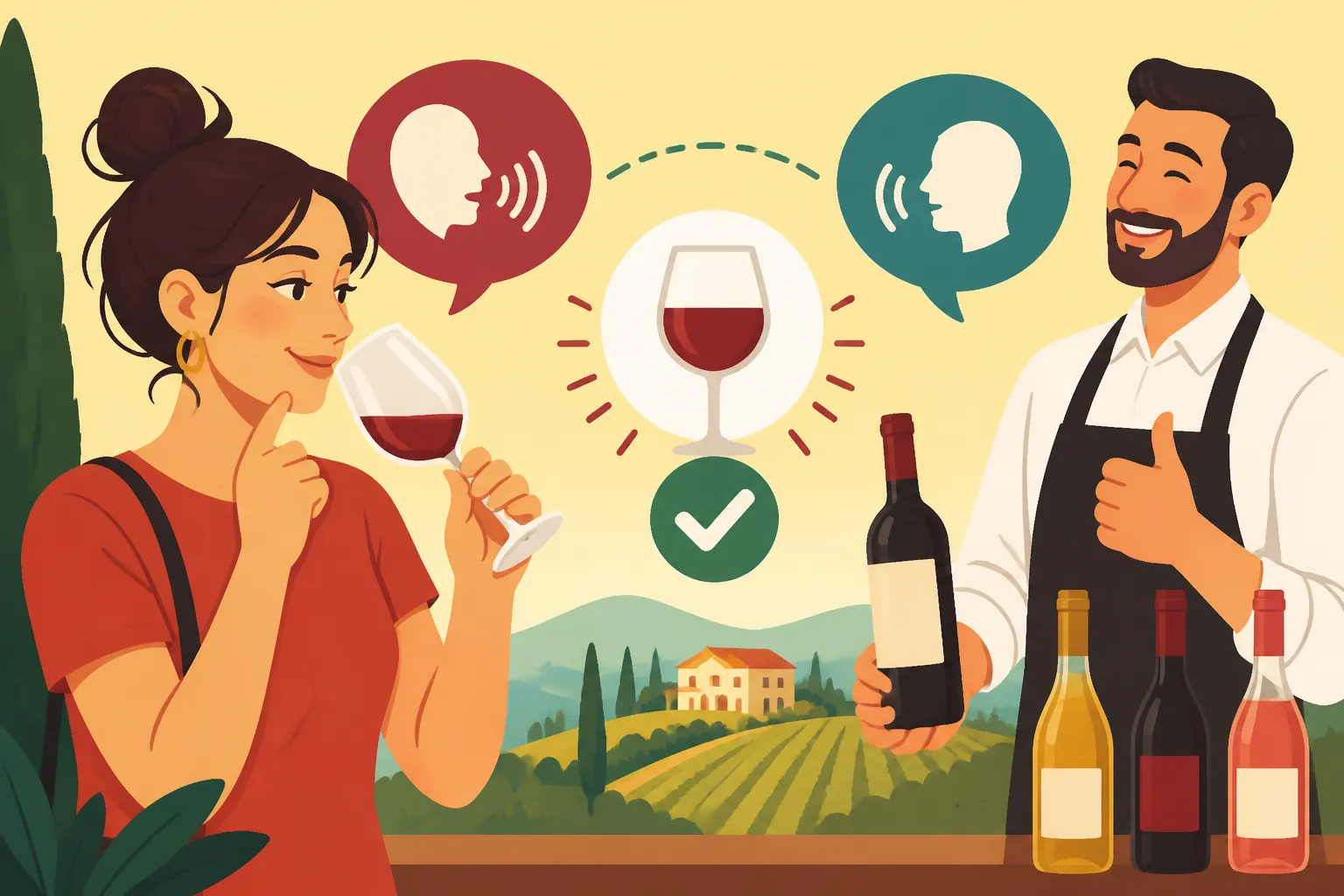
The ritual of Wine Tasting in Italy: Cantine and Enoteche is meant to be slow. You will likely be served a small bowl of olives or some taralli (savory crackers) with your glass. Take your time. The staff at an enoteca usually speak a bit of English in the major cities, but in smaller towns, they might not. However, the "language of wine" is universal. Swirling the glass, smelling it, and giving a thumbs up is a perfectly valid way to communicate your approval.
If you find a bottle you love, you can usually buy it to take home for a significantly lower price than the "at the table" price. Ask for the prezzo da asporto (takeaway price). If you are worried about packing bottles in your suitcase, many enoteche can arrange international shipping, or you can find specially designed wine suitcases at local luggage shops.
Visiting a Cantina Without a Translator
A trip to a cantina is one of the highlights of any Italian journey. However, it requires a bit more planning. Many wineries are not open for walk-ins; you need to book ahead. If your Italian is non-existent, look for wineries that specifically list "English tours" on their websites. This is another area where GetYourGuide is incredibly helpful, as they vet the tours to ensure the guide is fluent in English.
When you arrive at a winery, you will likely be shown the fermentazione (fermentation) room and the bottaia (the cellar with the big wooden barrels). Even if you don't understand every technical detail, the visual of thousands of liters of wine aging in oak is impressive. For more on the cultural importance of these visits, check out our guide on Italian Food Culture: Eating Well as a Visitor.
| Type of Venue | What to Expect | Best For |
|---|---|---|
| Enoteca | Expert staff, large selection by the glass, quiet atmosphere | Serious tasting and learning |
| Cantina | Tours of the production area, direct sales, vineyard views | Authentic, rural experience |
| Trattoria | Local house wine in carafes, food-focused | Casual lunch or dinner |
| Bar/Caffè | Quick service, local favorites, snacks included | Aperitivo and people-watching |
Ordering Wine Without Feeling Like a Tourist
The biggest hurdle for most expats and tourists is the actual act of ordering. In a busy restaurant, it feels easier to just point at the second-cheapest bottle and hope for the best. But there are better ways. The most "Italian" thing you can do is ask for the local wine. Wine in Italy is hyper-regional; people in Tuscany drink Tuscan wine, and people in Sicily drink Sicilian wine. Asking "Qual è il vino della zona?" (What is the wine of the area?) will immediately earn you respect from the waiter.
If you are on a budget, don't overlook the Vino della Casa (House Wine). Unlike in some other countries where house wine is the "bottom of the barrel," in Italy, it is often a very drinkable, local wine purchased in bulk by the restaurant. It is usually served in a quartino (quarter liter), mezzo litro (half liter), or litro (full liter) carafe. It’s the ultimate low-stress way to order because there is no label to decode and no brand to research.
When the waiter brings a bottle to the table, they will pour a small amount for you to taste. This isn't to see if you "like" the flavor—it’s to check if the wine is corked (smells like wet cardboard or a musty basement). Simply swirl it, take a quick sniff and sip, and nod "Va bene" (It’s good). If you are dining out, keep in mind the local charges; for instance, What Is the Coperto on an Italian Restaurant Bill? explains that small cover charge you'll see on the receipt.
The Magic of the Carafe
Ordering a carafe of wine is a quintessential Italian experience. It’s informal, communal, and often very high quality for the price. When you order "un mezzo litro di rosso della casa," you are participating in a tradition that spans centuries. The wine is meant to accompany the food, not distract from it. This fits perfectly into the broader Italian Wine Regions: A Beginner's Guide, which emphasizes that wine is a daily staple, not just a luxury.
Carafes are also a great way to manage your intake. If you aren't ready for a full bottle, a quartino is about two glasses—perfect for a solo traveler or a light lunch. You won't find these carafes in high-end Michelin-starred restaurants, but in the family-run osterie and trattorie that make Italy so famous, they are the standard.
One thing to watch out for is the temperature. Sometimes red house wine is served a bit too warm in the summer. Don't be afraid to ask for a bucket of ice (ghiaccio) to chill it down slightly, or simply ask for it fresco (cool). Italians are surprisingly flexible about these things when it comes to everyday drinking.
Decoding the Restaurant Wine List
If you decide to go for a bottle, the Carta dei Vini can be dozens of pages long. Don't panic. Most lists are organized by region. If you are in Rome, look for the section titled "Lazio." If you are in Milan, look for "Lombardia." Ordering from the region where you are currently sitting is almost always the best strategy for both price and quality.
If the waiter asks if you want your wine fermo or mosso, they are asking if you want it "still" or "frizzante/lightly sparkling." This is common with white wines in Northern Italy. If you prefer your wine without bubbles, always say fermo. If you're staying in a major city, you can use Booking.com to find hotels that have their own in-house wine cellars or bars, making it easy to practice your ordering skills in a comfortable environment before heading out into the wild.
For those who want a truly deep dive without the language barrier, using GetYourGuide to find a sommelier-led tasting in your city of residence is a fantastic investment. You’ll learn the specific names of grapes and regions in a setting where English is the primary language, giving you the tools to then go out and order in Italian with confidence.
Regional Must-Tries and Logistics
Italy has over 500 documented grape varieties, which is more than any other country in the world. While you can't learn them all, knowing the "Big Three" regions will help you navigate almost any wine list. Tuscany is the land of Sangiovese (the grape in Chianti); Piedmont is the home of Nebbiolo (Barolo and Barbaresco); and Veneto is famous for Corvina (Amarone) and Glera (Prosecco).
When you move between these regions, you will notice the landscape change, and the wine changes with it. The crisp, acidic whites of the mountainous Alto Adige are a world away from the sun-baked, high-alcohol reds of Puglia. Using Omio to navigate between these regions is highly recommended, as the Italian rail network is excellent and allows you to enjoy the views—and the wine—without worrying about driving.
Getting Around Italy’s Wine Regions
If you are planning to visit multiple vineyards, logistics are key. Driving in Italy can be stressful, especially after a couple of glasses of wine. The legal limit is very low, and the fines are high. Instead, consider staying in a central town like Siena, Alba, or Verona and using regional transport or pre-booked tours.
Omio is a lifesaver for planning these routes, especially when looking for buses that reach the smaller hill towns where trains don't go. Once you arrive in a town, many wineries are within walking distance or a short taxi ride away. If you prefer a more structured experience, GetYourGuide has options for e-bike tours through vineyards, which is a fantastic way to see the countryside while keeping a clear head.
Top Regional Varietals for Beginners
To keep things simple, here is a "cheat sheet" of wines that are generally crowd-pleasers and easy to find:
- Prosecco (Veneto): Light, bubbly, and festive. Great for any time of day.
- Chianti (Tuscany): The classic Italian red. Look for the "Black Rooster" seal on the neck.
- Pinot Grigio (Friuli/Trentino): The ultimate easy-drinking white wine.
- Nero d'Avola (Sicily): A bold, fruity red that offers incredible value.
- Montepulciano d'Abruzzo (Abruzzo): A reliable, medium-bodied red that goes with almost anything.
By focusing on these recognizable names, you can navigate a menu without needing a translation app. As you become more comfortable, you can start exploring more obscure varieties like Falanghina from Campania or Lagrein from the Dolomites. Italy's wine world is a rabbit hole that never ends, and that is exactly what makes it so much fun to explore.
Disclaimer
The information provided in this guide is for educational and informational purposes only. While every effort has been made to ensure the accuracy of the details regarding Italian wine regulations and terminology, traditions and local laws can change. Always drink responsibly and follow local Italian laws regarding alcohol consumption and driving. We are not responsible for any issues arising from the use of third-party booking platforms mentioned in this text.