Pilgrimage Routes in Italy: The Via Francigena and Cammini
Ciao, fellow adventurers! If you're anything like me, after a few trips ticking off the major sights – Rome, Florence, Venice, you know the drill – you start craving something deeper, something that connects you to the true heart of Italy. That's where the ancient pilgrimage routes, or cammini, come in. These aren't just hikes; they're journeys through history, spirituality, and breathtaking landscapes, offering a completely different perspective on this incredible country. This guide will walk you through Italy's most celebrated pilgrimage paths, especially the iconic Via Francigena, and arm you with the knowledge to embark on your own unforgettable Italian cammino.
Disclosure: This post may contain affiliate links. We may earn a commission at no extra cost to you if you make a purchase through these links. Read full disclosure.
What are Italy's Pilgrimage Routes (Cammini)?
When we talk about cammini in Italy, we're referring to a network of historical trails, many of which date back to medieval times, originally traversed by pilgrims heading to significant religious sites like Rome, Assisi, or even further afield to Jerusalem or Santiago de Compostela. These aren't pristine, manicured paths; they're often dusty, sometimes challenging, but always rewarding routes that cut through forgotten villages, past ancient churches, and across stunning natural terrain.
A Historical and Spiritual Journey
Imagine walking in the footsteps of saints, emperors, and countless ordinary people who, for centuries, undertook arduous journeys for penance, devotion, or simply a deep spiritual quest. These routes were the highways of their time, shaping trade, culture, and communication across the European continent. Each step you take today echoes with that profound history, connecting you not just to the land, but to the countless souls who have walked these very same paths before you. It's an incredibly humbling experience, stripping away the modern world's distractions and allowing for a kind of introspective travel that's increasingly rare.
Back then, a pilgrimage wasn't a leisurely stroll. It was a serious undertaking, fraught with dangers and hardships. Pilgrims relied on the charity of monasteries, hospitals, and local communities along the way. While today's journey is certainly safer and more comfortable, that spirit of reliance and simple living still permeates the experience. You'll find yourself appreciating the small things – a warm bed, a simple meal, a friendly face – in a way you might not in a bustling city. The historical records and countless stories embedded in the landscape speak volumes of faith, endurance, and human connection.
The Modern Appeal of the Cammini
Today, the cammini aren't exclusively for religious pilgrims, though many still undertake them for spiritual reasons. They've become increasingly popular with "slow travelers," hikers, and culture enthusiasts looking for an authentic, immersive experience. It's a chance to disconnect from the frantic pace of daily life and reconnect with nature, history, and yourself. You're not just seeing Italy; you're experiencing it at a human pace, absorbing the nuances of each region you pass through.
Many modern pilgrims seek a physical challenge, a mental reset, or simply a unique way to see Italy away from the tourist hordes. The beauty lies in its accessibility: you can walk for a few days, a week, or even months, depending on your time and stamina. The trails are generally well-marked, and there's a growing infrastructure of accommodations and services specifically catering to cammini walkers. Plus, it's a fantastic way to meet locals and other travelers from all walks of life, sharing stories and camaraderie along the dusty roads and through picturesque villages. It’s a complete departure from the usual "Italy trip" and offers a chance to dive deep into regional cultures and cuisines, one step at a time. If you're looking to slow down and truly absorb the atmosphere, this is definitely the way to go.
The Queen of Pilgrimage Routes: The Via Francigena
Without a doubt, the most famous and historically significant pilgrimage route in Italy is the Via Francigena. Often called the "Italian Camino," it's a journey that traces an ancient path from Canterbury, England, all the way to Rome. In Italy, the route spans roughly 1,000 kilometers, meandering from the Gran San Bernardo Pass on the Swiss border down through the rolling hills of Tuscany, the volcanic landscapes of Lazio, and finally into the Eternal City itself.
Tracing Sigeric's Ancient Steps
The Via Francigena's fame largely stems from the travel diary of Sigeric the Serious, Archbishop of Canterbury, who recorded his 80-day journey back from Rome in 990 AD after receiving his pallium (a symbol of his metropolitan jurisdiction) from the Pope. His meticulous account, listing 79 stages (or submansiones), provides the historical backbone for the modern route. Following Sigeric's itinerary gives today's pilgrims a tangible connection to over a thousand years of history. Imagine walking where kings, queens, and countless ordinary folks trudged for weeks, driven by faith or necessity!
The Italian section of the Via Francigena is incredibly diverse. You start high in the Alps, surrounded by breathtaking peaks, then descend into the Po Valley, crossing vast agricultural lands. As you head south, you'll enter the iconic landscapes of Tuscany – think cypress trees, vineyards, and medieval hilltop towns like San Gimignano and Siena. Finally, you reach Lazio, where the ancient Roman roads and ruins begin to appear, signaling your approach to Rome. Each region offers its own distinct culture, cuisine, and challenges, making the entire journey a microcosm of Italy itself. It's not just a walk; it's a living history lesson, unspooling before your very eyes.
Planning Your Via Francigena Adventure
Embarking on the Via Francigena requires careful planning, but it's an incredibly rewarding endeavor. First, you'll need to decide which section to walk. Most people don't do the entire Italian stretch in one go. Popular starting points for shorter trips often include Lucca or Siena in Tuscany, offering some of the most iconic landscapes and charming towns. For those seeking a deeper dive, starting further north in the Aosta Valley or Pavia can provide a more comprehensive experience of Italy's diverse terrain.
Once you have your section in mind, research the stages. Each stage is typically 20-30 kilometers long, designed to be walkable in a day. Guidebooks and online resources provide detailed maps, elevation profiles, and information on water sources and potential accommodation. Consider the time of year: spring and autumn offer the most pleasant walking temperatures, with vibrant wildflowers or golden foliage. Summer can be brutally hot, especially in central and southern Italy, while winter brings cold and potential snow in the northern sections. Think about how to get to your starting point and from your end point. You can often use local trains or buses, and companies like Omio can help you book tickets for your journey to and from the trailheads. Remember, this isn't a race; it's about the journey, so plan a pace that allows you to enjoy the scenery and local culture.
Accommodation and Logistics Along the Way
One of the great joys of walking a cammino is the sense of community you find along the way, often centered around the ospitali or case del pellegrino (pilgrim hostels). These are typically simple, affordable accommodations, often run by churches or local associations, where you can find a bed, a shower, and a shared meal with fellow pilgrims. They operate on a donation basis or a small fixed fee and are truly the heart of the pilgrimage experience. Of course, you can also opt for private B&Bs, agriturismi, or hotels if you prefer more comfort, and platforms like Booking.com are excellent for finding these options, especially in larger towns.
For those planning to stay in pilgrim hostels, having a credenziale (pilgrim passport) is essential. It proves you're a bona fide pilgrim and grants access to these special accommodations. You'll get it stamped at churches, hostels, and cafes along the route, creating a unique record of your journey. As for packing, remember that every gram counts. Focus on lightweight, breathable clothing, sturdy walking shoes, a good backpack, and essential first-aid supplies. Food and water are usually easy to find in villages, but always carry enough for the day's walk, especially on longer stretches. Some sections, particularly in more rural areas, might require a bit more planning to ensure you have supplies. Don't forget to charge your phone and bring a portable power bank, as navigation apps can be very helpful on the trail.
Beyond the Francigena: Other Significant Italian Cammini
While the Via Francigena is the most renowned, Italy is crisscrossed with numerous other captivating pilgrimage routes, each offering its own unique charm, historical significance, and breathtaking scenery. These cammini often focus on regional saints, specific religious sites, or simply offer a spiritual journey through particular landscapes. They might be less traversed than the Francigena, offering an even more solitary and reflective experience.
The Cammino di Santiago d'Assisi
This evocative route, whose name literally translates to "The Way of St. James of Assisi," connects the spiritual heart of Umbria, Assisi (home of St. Francis), with the Shrine of La Verna, where St. Francis received the stigmata. It’s a beautiful, less strenuous alternative to the Francigena, offering pilgrims a chance to immerse themselves in the gentle, rolling hills and verdant valleys of Umbria and Tuscany. This cammino is deeply connected to the Franciscan spiritual tradition, emphasizing simplicity, nature, and community.
The Cammino di Santiago d'Assisi is perfect for those seeking a more contemplative journey focused on Franciscan values. The route takes you through picturesque medieval towns like Gubbio and Città di Castello, past olive groves and vineyards, and into serene forests. It's typically divided into about 16 stages, totaling around 300 kilometers, making it a manageable option for a two-week trip. You'll encounter fewer crowds here, and the welcoming spirit of the locals, often tied to the Franciscan legacy, is palpable. Accommodations are a mix of pilgrim hostels, small B&Bs, and guesthouses. For a truly authentic experience, consider staying in a monastery along the way; many offer simple rooms for pilgrims.
The Cammino dei Briganti
For those who crave a bit more adventure and a unique historical twist, the "Bandits' Way" or Cammino dei Briganti is an intriguing option. This circular route, approximately 100 kilometers long, winds through the wild and rugged Abruzzo region, specifically the territories between Lazio and Abruzzo. It traces paths once used by brigands – outlaws who resisted the newly unified Italian state in the 19th century, seen by some as criminals and by others as folk heroes fighting for their land and traditions.
The Cammino dei Briganti offers a completely different landscape and atmosphere compared to the gentle hills of Tuscany or Umbria. Here, you'll traverse ancient sheep tracks, dense forests, and remote mountain villages, experiencing a wilder, more untamed side of Italy. The route emphasizes self-sufficiency and connecting with the hearty, independent spirit of the mountain people. While it's not a traditional religious pilgrimage, it offers a deep dive into local history and a profound connection to a landscape that feels unchanged by time. Accommodations are often in small, family-run guesthouses or even simple shelters, providing a truly rustic experience. It's a fantastic choice for experienced hikers looking for a challenging, off-the-beaten-path adventure.
Regional and Local Paths
Beyond these major routes, countless smaller, regional cammini dot the Italian landscape. These often focus on local saints, ancient monastic routes, or simply offer beautiful, well-marked hiking trails with a spiritual or historical flavor. Some notable examples include:
- The Cammino di San Benedetto: Following the life of St. Benedict from Norcia to Montecassino, passing through stunning landscapes in Umbria and Lazio.
- The Cammino Minerario di Santa Barbara: A unique route in Sardinia that explores the island's mining history and its connection to the patron saint of miners.
- The Via di Francesco: Not a single route, but a network of paths in Umbria that connect places significant to the life of St. Francis, ideal for shorter, multi-day walks.
- The Cammino dei Borghi Silenti: A relatively new route in Umbria that links a series of charming, often overlooked "silent villages," perfect for contemplative walking.
These regional cammini often offer a more intimate experience, allowing you to truly immerse yourself in the culture and natural beauty of a specific area. They are usually well-documented by local tourism boards and associations, and you can often find information online or through local visitor centers. Remember, Italy is a treasure trove of hidden paths, just waiting to be explored.
Practicalities for the Modern Pilgrim
While the spirit of pilgrimage remains timeless, the practicalities of undertaking a cammino in Italy today are very different from medieval times. Modern pilgrims have the advantage of better gear, clearer maps, and more accessible information. However, some fundamental aspects remain crucial for a successful and enjoyable journey.
Training and Preparation
Don't underestimate the physical demands of walking 20-30 kilometers day after day, often with a backpack, sometimes over challenging terrain. Proper physical preparation is key. Start training several months in advance:
- Walking: Gradually increase your daily walking distance, including some longer walks with your loaded backpack, to simulate the conditions of the cammino.
- Footwear: Break in your hiking boots or shoes before you leave. Blisters are the bane of any pilgrim, and well-worn, comfortable footwear is your best defense. Consider bringing a second pair of lighter shoes for evenings or shorter walks.
- Strength Training: Core and leg strength will help you maintain good posture and reduce fatigue, especially on ascents and descents.
- Hydration and Nutrition: Practice staying hydrated and eating appropriate snacks during your training walks. This will help you understand your body's needs on the trail.
Mental preparation is also vital. The cammino can be physically and mentally challenging. There will be days of beautiful scenery, but also days of pouring rain, aching feet, or simply monotonous stretches. Cultivating a resilient mindset and an appreciation for the journey, rather than just the destination, will serve you well.
Packing Essentials
When packing for an Italian cammino, remember the mantra: "less is more." You'll be carrying everything on your back, so every gram counts.
- Backpack: A comfortable, well-fitting backpack (30-45 liters is usually sufficient for multi-day trips) is crucial. Make sure it has good hip support.
- Clothing: Layers are your friend. Quick-drying, moisture-wicking fabrics are ideal. Include a good waterproof jacket and trousers, even if you're traveling in spring or autumn. Don't forget comfortable walking socks (merino wool is excellent).
- Footwear: Sturdy, broken-in hiking shoes or boots, plus comfortable sandals or flip-flops for evenings.
- First Aid Kit: Essential for blisters, cuts, muscle aches, and any personal medications. Don't skimp on blister plasters!
- Navigation: A physical guidebook and map are highly recommended, even if you plan to use a GPS app on your phone. Make sure to download offline maps, as cell service can be spotty in remote areas.
- Hydration: A reusable water bottle or hydration pack. Many villages have public fountains, but always carry enough water for the next several hours.
- Sun Protection: Hat, sunglasses, and high-SPF sunscreen are vital, especially during warmer months.
- Toiletries: Travel-sized essentials.
- Sleep Sack: Many pilgrim hostels require you to bring your own sleeping sheet/sack for hygiene.
- Personal Items: Phone, charger, portable power bank, headlamp, small towel, journal, pen.
- Credenziale: Your pilgrim passport, often available for purchase at your starting point or online.
Remember to pack light enough that your backpack doesn't become a burden, but heavy enough to cover all eventualities. It's a fine balance!
Navigating and Waymarking
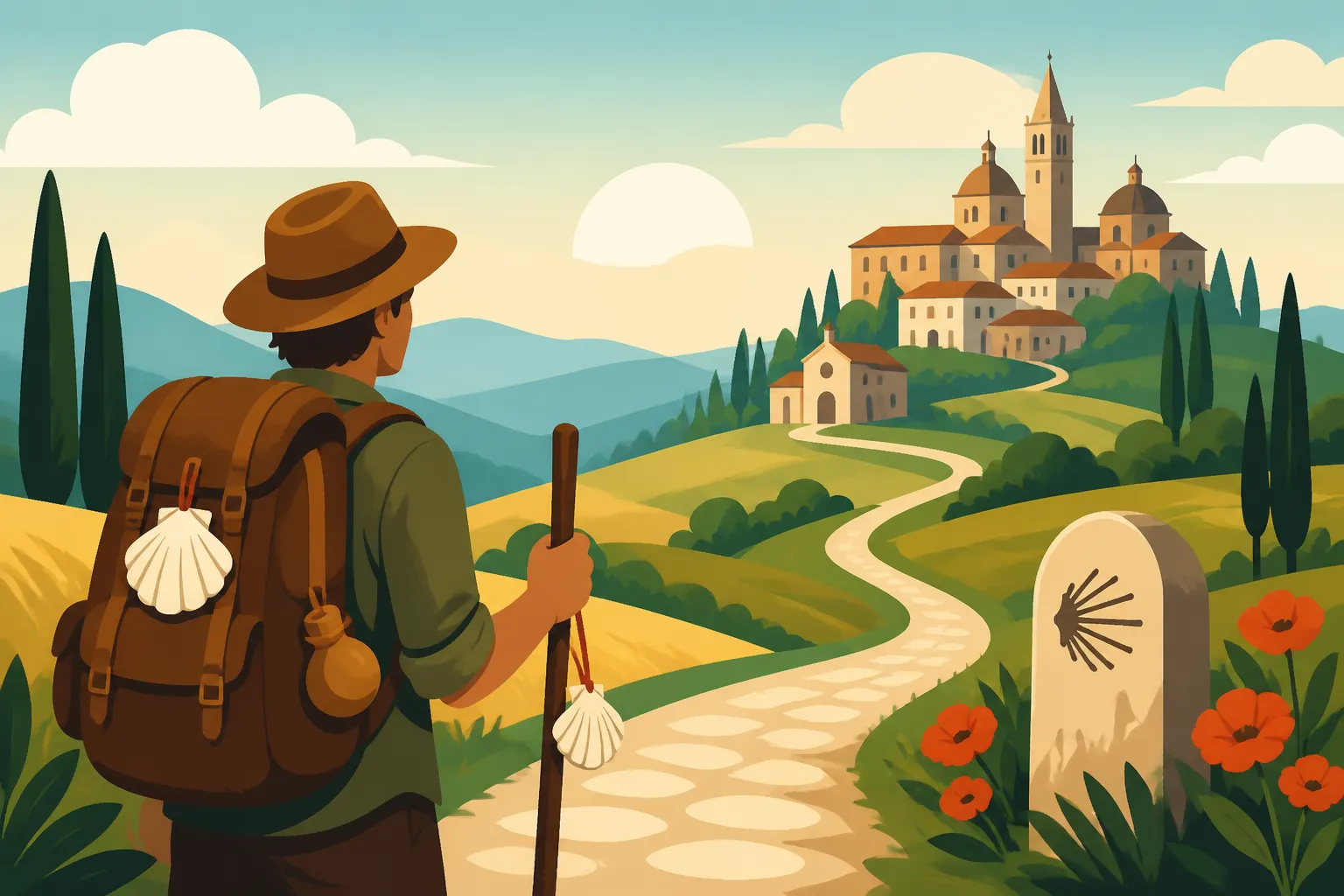
Fear not, most Italian cammini are surprisingly well-marked, especially the more popular ones like the Via Francigena. You'll typically follow standardized signage, often featuring the specific route's logo, an arrow indicating direction, and sometimes distance markers. The Via Francigena, for example, uses a distinct yellow pilgrim symbol with a stylized "VF."
While the signs are generally reliable, it's always a good idea to supplement them with a good guidebook and a GPS app on your smartphone. Apps like Google Maps, AllTrails, or dedicated cammino apps can be lifesavers when a marker is missing or ambiguous. Always download offline maps before you set out, as cell phone reception can be patchy in rural areas. Having a backup power source for your phone is also a smart move. Learning a few basic Italian phrases for asking directions, like "Dov'è il cammino?" (Where is the cammino?) or "È questa la strada per…?" (Is this the road to…?) can also be incredibly helpful and appreciated by locals. Don't be afraid to ask for help; Italians are generally very friendly and happy to assist pilgrims.
The Credenziale and Testimonium
These two documents are central to the pilgrimage experience in Italy.
The Credenziale, often called the pilgrim passport, is your official identification as a pilgrim. You can usually obtain it from pilgrim associations, churches at the start of your route, or even some Italian consulates abroad. It's designed to be stamped at churches, hostels, cafes, and comuni (municipal offices) along your journey. These stamps not only create a beautiful souvenir of your route but also grant you access to the special pilgrim accommodations (like ospitali and case del pellegrino) that offer reduced rates or donation-based stays. Without a credenziale, these accommodations are typically unavailable to you. Think of it as your golden ticket to the pilgrim community.
The Testimonium is the certificate you receive upon completing your pilgrimage to a major destination like Rome. To qualify for a Testimonium in Rome, you generally need to have walked at least the last 100 kilometers or cycled the last 200 kilometers into the city, with proof of your journey documented in your credenziale. This is collected at designated offices, often near St. Peter's Basilica. It serves as a beautiful, tangible testament to your accomplishment, a reminder of the miles you've walked and the inner journey you've undertaken. For many, it's a deeply meaningful culmination of their pilgrimage. Getting your Testimonium can be a bit of bureaucracy, but it's a rite of passage!
| Feature | Via Francigena (Italian Section) | Cammino di Santiago d'Assisi | Cammino dei Briganti |
|---|---|---|---|
| Length (approx.) | ~1000 km (Gran San Bernardo to Rome) | ~300 km (Assisi to La Verna) | ~100 km (circular route in Abruzzo) |
| Typical Duration | 40-50 days (full Italian section), or 1-2 weeks for popular segments | 10-16 days | 5-7 days |
| Key Regions | Aosta Valley, Piedmont, Lombardy, Emilia-Romagna, Tuscany, Lazio | Umbria, Tuscany | Abruzzo, Lazio |
| Terrain | Varied: Alpine passes, Po Valley plains, Tuscan hills, Lazio volcanic lands | Gentle hills, forests, valleys | Rugged mountains, forests, ancient sheep tracks |
| Main Focus | Historical pilgrimage to Rome, Sigeric's journey | Franciscan spirituality, nature, simplicity | Historical and cultural, exploring brigand history, wild landscapes |
| Accommodation | Pilgrim hostels, B&Bs, hotels | Pilgrim hostels, B&Bs, monasteries | Rural guesthouses, simple shelters |
| Crowds | Moderate, higher in Tuscany sections | Low to moderate | Low |
| Best Seasons | Spring (April-May), Autumn (Sept-Oct) | Spring (April-June), Autumn (Sept-Oct) | Spring (May-June), Early Autumn (Sept) |
| Difficulty | Moderate to challenging, depending on section | Easy to moderate | Moderate to challenging |
Challenges and Rewards of the Italian Cammini
Undertaking a cammino in Italy is not always easy. There will be moments of doubt, physical discomfort, and perhaps even frustration with the infamous Italian bureaucracy. But these challenges are precisely what make the rewards so profound and lasting. It’s an experience that truly gets under your skin, transforming your perception of travel, Italy, and even yourself.
Overcoming Physical and Mental Hurdles
Let’s be real: walking long distances day after day, often with a pack, can be tough. Your feet will ache, muscles will complain, and blisters might make an unwelcome appearance. Weather can be unpredictable – you might face scorching sun one day and torrential rain the next. And let’s not forget the occasional struggle with directions or finding an open shop when you desperately need water. These physical discomforts are part of the journey. Embrace them, prepare for them, and know that every step you take pushes your limits a little further.
Beyond the physical, there are mental hurdles. Solitude can be both a blessing and a challenge, particularly for those used to constant stimulation. You might grapple with self-doubt, homesickness, or the sheer monotony of certain stretches. However, it's in these moments of vulnerability that true growth happens. The cammino strips away the superficial, forcing you to confront your own thoughts and resilience. You learn to problem-solve, to adapt, and to appreciate the simple act of putting one foot in front of the other. Many pilgrims find a renewed sense of clarity and inner peace that they carry long after their journey ends.
Connecting with Culture and Community
One of the most enriching aspects of walking a cammino is the unparalleled opportunity to connect with local Italian culture on an intimate level. You’ll pass through tiny villages rarely seen by tourists, where life moves at a slower pace and traditions run deep. Sharing a coffee with an elderly nonna, being offered a piece of fruit by a farmer, or simply exchanging a "buongiorno" with a passerby – these small interactions become incredibly meaningful. You get to witness daily life unfold in a way that’s impossible from a tour bus. This deep cultural immersion can truly change your perspective on Italian Social Customs: Greetings, Gestures, and Personal Space.
The pilgrim community itself is another huge reward. Whether you're sharing a meal at an ostello, helping a fellow walker with a stubborn blister, or simply exchanging stories over a glass of local wine, there’s an immediate bond formed on the cammino. You meet people from all walks of life, from all corners of the globe, united by the shared experience of the path. This camaraderie, built on mutual support and understanding, often leads to lifelong friendships. It's a powerful reminder of our shared humanity.
The Unexpected Joys of Slow Travel
In our fast-paced world, the cammino offers the ultimate antidote: slow travel. It's about savoring every moment, noticing the subtle shifts in landscape, the scent of wild herbs, the sound of church bells echoing across a valley. You learn to appreciate the simple rhythm of walking, eating, and sleeping. The pressure to "see everything" melts away, replaced by a profound appreciation for the present moment. This approach is similar to what many embrace when considering Slow Travel in Italy: Staying Longer in One Place.
You might stumble upon a forgotten Roman bridge, a tiny frescoed chapel, or a breathtaking panoramic view that isn't in any guidebook. These unexpected discoveries become some of the most cherished memories. There's a profound sense of accomplishment with each day's end, and a deep satisfaction in arriving at your destination, knowing every step was your own. The Italian cammini offer not just a physical journey through beautiful Italy, but a journey inward, leaving you with a richer understanding of yourself and the world around you. For those considering staying longer in Italy, understanding Residency Requirements for Health Coverage in Italy or How to Get a Codice Fiscale in Italy (and Why You Need One) will be crucial. And if you're exploring different regions, don't miss our guide on Italian Regional Cuisine: How Food Changes Across Italy to truly appreciate the local flavors along your walk. You might even want to check out What Over-the-Counter Medicines Can You Buy in Italy? for those minor aches and pains you might encounter on the trail.
Disclaimer
Please remember that while this guide provides comprehensive information, travel regulations, accommodation availability, and trail conditions can change. Always check the latest official sources for route information, safety guidelines, and local rules before and during your pilgrimage. Personal preparation is key, and it's always advisable to consult with a medical professional before undertaking a physically demanding journey.