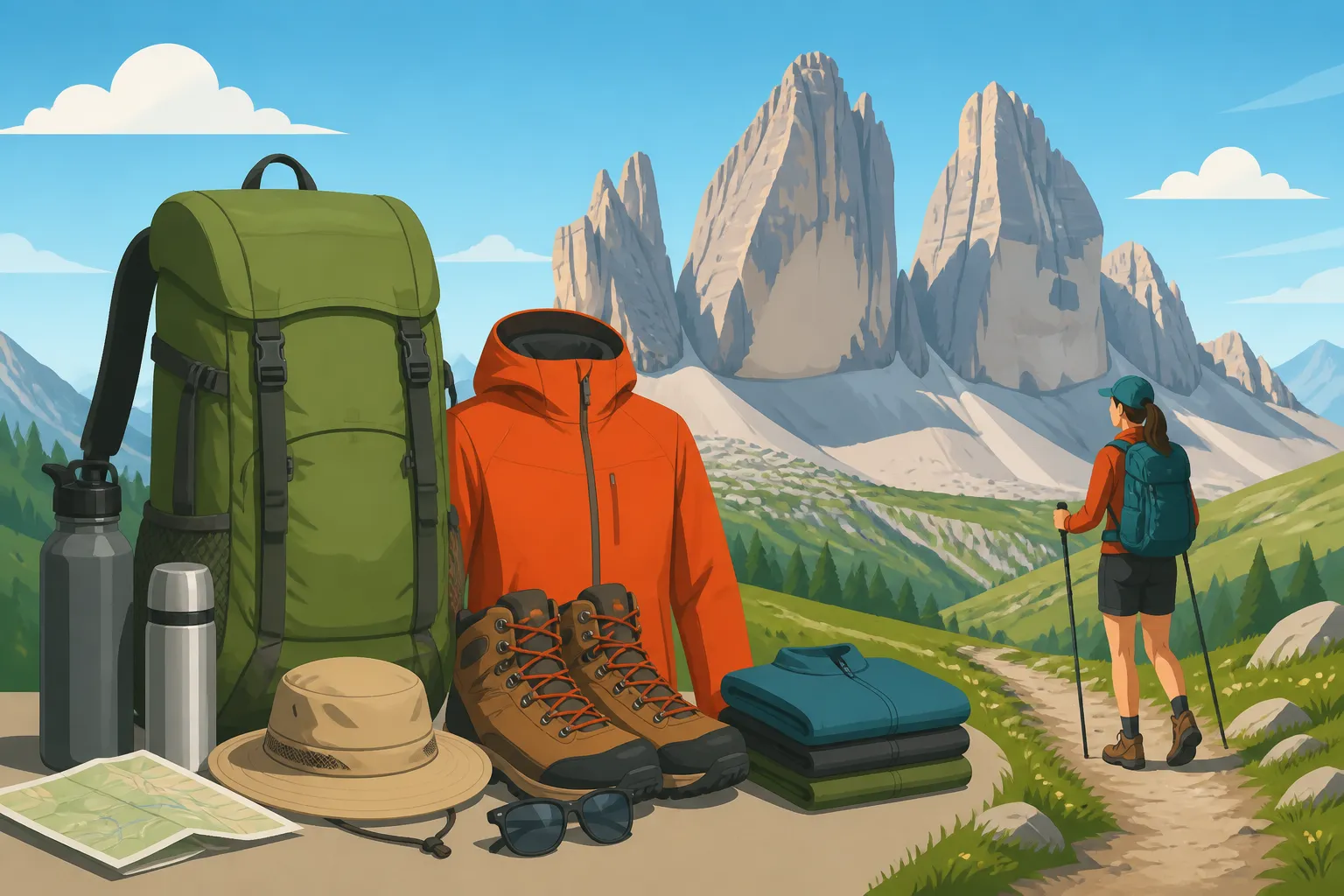
What to Pack for Hiking in the Dolomites
One of the most common mistakes travelers make when visiting northern Italy is treating the Dolomites like a standard hill walk or a casual stroll through a city park. I have seen far too many hikers shivering at 2,500 meters in cotton t-shirts or slipping on loose scree in basic sneakers. This guide solves the packing puzzle by providing a detailed, field-tested list of essentials to ensure you stay safe, dry, and comfortable in the unpredictable limestone peaks of the Italian Alps.
Disclosure: This post may contain affiliate links. We may earn a commission at no extra cost to you if you make a purchase through these links. Read full disclosure.
Mastering the Alpine Layering System
The most critical concept to understand before you set foot in the South Tyrol or Belluno provinces is the "onion" method, known locally as vestirsi a cipolla. Weather in the Dolomites is notoriously fickle. You can start a hike in glorious 25-degree sunshine in the Val Gardena and be caught in a sudden, freezing hailstorm an hour later near the Seceda ridgeline. Cotton is your absolute enemy here because once it gets wet from sweat or rain, it stays wet, chilling your core and increasing the risk of hypothermia.
Your base layer should be a high-quality moisture-wicking fabric. Merino wool is the gold standard among seasoned expats and locals because it regulates temperature beautifully and doesn’t hold odors—a major plus if you are spending several days hopping between mountain huts. Over this, you need a mid-layer, typically a fleece or a lightweight "puffy" down jacket. Even in mid-July, the wind at high altitudes can be biting. I always recommend carrying a mid-layer that packs down small so it doesn't hog space in your bag while you're climbing.
The outer layer is your shield. A high-quality GORE-TEX or similar waterproof and windproof shell is non-negotiable. It isn't just about the rain; the wind at the top of the Sass Pordoi can be intense enough to cut through standard sweatshirts. When planning your trip and booking your base camp through platforms like Booking.com, always check if your accommodation offers a "drying room," which is common in the region for hikers to hang their gear after a damp day on the trails. Understanding these nuances is part of Acclimatizing to Italian Climate: Heat, Humidity, and Health when transitioning from the sweltering plains of the south to the high-altitude north.
Technical Footwear and Essential Hiking Hardware
The terrain in the Dolomites is unique; the pale, jagged limestone is beautiful but incredibly abrasive and often unstable. If you are planning to tackle the classic routes like the Alta Via 1 or even day hikes around the Tre Cime di Lavaredo, your footwear needs to be up to the task. Many people ask if trail runners are sufficient. While experienced hikers use them, I strongly suggest mid-to-high-cut boots for most visitors. The extra ankle support is a lifesaver when you are navigating the "ghiaioni" (large scree slopes) that are characteristic of this range.
Beyond boots, you must consider your "hardware." Trekking poles are often dismissed by younger hikers as "gear for the elderly," but in the Dolomites, they are essential for everyone. The descents here are notoriously steep and punishing on the knees. Poles provide two extra points of contact on slippery limestone and help balance the weight of your pack. Speaking of packs, a 20 to 30-liter daypack with a proper waist belt is usually sufficient for day trips. Ensure it has a rain cover; if it doesn't come with one, buy a separate one before you leave.
If your itinerary includes a "via ferrata"—the famous "iron paths" consisting of cables and ladders—you will need specialized gear including a climbing harness, a via ferrata set with lanyards and carabiners, and a helmet. While you can rent these in towns like Cortina or Ortisei, many travelers prefer to book a guided experience via GetYourGuide to ensure they have the correct equipment and a professional to show them the ropes. Safety should always be your priority, especially since Outdoor Adventures and Nature in Italy can sometimes lead to unexpected challenges if you are unprepared for the verticality of the terrain.
| Item Category | Essential Equipment | Recommended Material |
|---|---|---|
| Footwear | Mid-cut hiking boots | Gore-Tex lining with Vibram soles |
| Socks | Synthetic or Wool blend | Seamless, medium cushioning |
| Outerwear | Hardshell Rain Jacket | 3-layer waterproof membrane |
| Insulation | Lightweight down or synthetic puffy | Packable, high warmth-to-weight ratio |
| Navigation | Physical Tabacco Map (1:25.000) | Paper or waterproof treated |
| Safety | First Aid Kit + Emergency Bivy | Compact, including blister care |
| Protection | High SPF Sunscreen & Lip Balm | Sweat-resistant formula |
Navigation Safety and the Rifugio Experience
In an era of smartphones, it is tempting to rely solely on GPS. However, the deep valleys and towering rock walls of the Dolomites can frequently interfere with satellite signals, and cold temperatures drain battery life faster than you’d expect. Always carry a physical map—the "Tabacco" brand maps are the local authority and are indispensable for identifying trail numbers, which are marked with red and white paint on rocks. If you find yourself in a situation where you are lost or injured, knowing how to communicate is vital. You should be familiar with Emergency Medical Numbers in Italy (112, 118, 1500) and keep a power bank in your pack at all times.
The "Rifugio" culture is one of the joys of hiking in Italy, but it requires specific packing considerations. These high-altitude huts provide beds and hot meals, but they are not hotels. If you are staying overnight, a "sacco lenzuolo" (sleeping bag liner) is mandatory for hygiene reasons. Most huts will not let you sleep in the bunks without one. Additionally, pack a pair of lightweight indoor shoes or slippers, as mountain boots are strictly forbidden inside the sleeping and dining areas. I also recommend a small, quick-dry travel towel and biodegradable soap, as water is a precious resource at 2,000 meters.
Don't forget personal health items. The air is very dry and the sun is significantly stronger at these altitudes. A high-SPF sunscreen and polarized sunglasses are mandatory to prevent snow blindness and severe burns, even on cloudy days. If you realize you’ve forgotten something critical, most mountain towns have excellent "farmacie" where you can find high-end sun protection and basic medical supplies. For more details on what to expect, you can read about Italian Pharmacies: Prescription, Over-the-Counter, and Supplies to understand how to navigate local health needs. Staying prepared is the hallmark of Staying Safe in Italy: Common-Sense Tips for Travelers who want to enjoy the mountains without a trip to the local hospital.
Logistics and Seasonal Transitions
Timing your trip is just as important as what you put in your suitcase. The "hiking season" typically runs from mid-June to late September. Before mid-June, many high-altitude trails are still covered in snow, requiring crampons and ice axes. By October, many of the mountain lifts (impianti) start to close, and the weather turns significantly colder. To get to the heart of the Dolomites, most travelers fly into Venice or Munich and then use a combination of trains and buses. Using a service like Omio can help you navigate the connections between High-Speed Trains in Italy: Trenitalia, Italo, Routes, and Savings and the regional buses that take you into the mountain valleys.
When packing, consider the "town" side of your trip as well. While the hiking is rugged, the evening culture in places like San Candido or Corvara is quite refined. You don’t need a tuxedo, but having a clean, presentable change of clothes for an "aperitivo" or a nice dinner of Casunziei (beetroot ravioli) will make you feel more at home. The Dolomites are a bilingual region—Italian and German—so having a few basic phrases in both can go a long way. Logistically, Getting Around Italy: Trains, Buses, Flights, and Car Hire is relatively straightforward, but the mountains require an extra level of planning due to seasonal road closures and limited bus frequencies in the shoulder seasons.
Finally, ensure you have a plan for medical emergencies. While we all hope for the best, the rugged nature of the Alps means that sprains or altitude sickness can happen. Familiarizing yourself with Emergency Medical Services in Italy: 112 and Hospitals before you head out into the wilderness is a smart move for any responsible hiker. The Dolomites are a bucket-list destination for a reason, and with the right gear in your pack, you can focus on the breathtaking views of the Enrosadira—the phenomenon where the peaks turn a fiery pink at sunset—rather than worrying about a blister or a cold breeze.
Disclaimer
The information provided in this guide is for educational and informational purposes only. Hiking in alpine environments like the Dolomites involves inherent risks, including but not limited to unpredictable weather changes, difficult terrain, and physical exertion. Always consult with local mountain guides, check updated weather forecasts from regional agencies (like MeteoAltoAdige), and ensure your travel insurance covers high-altitude hiking and mountain rescue. The author and publisher are not responsible for any injuries or losses incurred while following the advice in this article.