How to Get Tickets for an Opera at La Scala or the Arena di Verona
Oh, the dream of seeing opera in Italy! It's one of those quintessential experiences that newcomers and seasoned expats alike yearn for. But let me tell you, actually getting your hands on those coveted tickets, especially for world-renowned venues like Milan's La Scala or Verona's ancient Arena, can feel like navigating a labyrinth designed by a bureaucracy enthusiast. Don't worry, though; this guide is here to demystify the process, offering you the insider tips you need to secure your spot and soak in the glorious magic of Italian opera.
Disclosure: This post may contain affiliate links. We may earn a commission at no extra cost to you if you make a purchase through these links. Read full disclosure.
The Magic of Italian Opera: Why It's a Must-Do
There's something incredibly special about experiencing opera in Italy, its birthplace. It's not just about the music or the dramatic narratives; it's about connecting with a cultural legacy that has shaped the arts for centuries. The energy in the air, the anticipation, and the collective awe are palpable, making it an experience far grander than simply attending a performance.
More Than Just a Show: An Immersive Cultural Experience
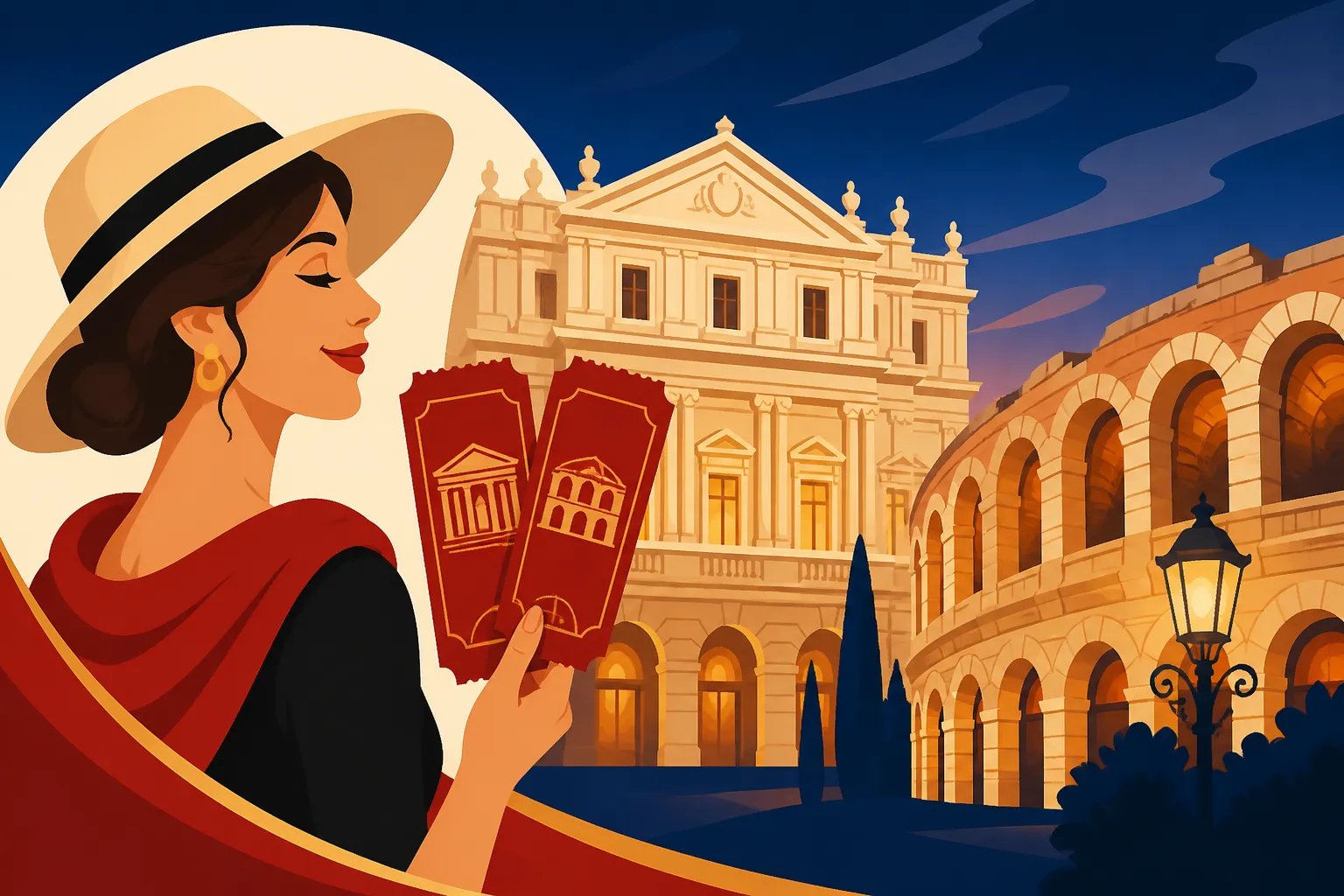
When you walk into a historic opera house in Italy, you're not just a spectator; you become part of a living tradition. Imagine sitting in the ornate velvet seats of Teatro alla Scala, looking up at the frescoed ceilings, and knowing that Verdi, Puccini, and countless legendary voices have graced that very stage. Or picture yourself under the vast, starlit sky in the Roman amphitheater of Verona, where gladiators once fought, now filled with the soaring arias of an opera. It's truly a full-body experience that transports you back in time and deep into the heart of Italian passion.
The sheer scale of the productions, particularly at the Arena di Verona, can be breathtaking. Massive sets, hundreds of performers, and often live animals bring the stories to life in a way that modern theaters rarely can. Even at La Scala, known for its refined elegance, the emotional intensity of the performances is undeniable. It's a spectacle, a concert, and a storytelling masterclass all rolled into one, allowing you to witness the profound connection Italians have to this art form. You'll quickly understand why these venues are considered temples of music, attracting opera lovers from every corner of the globe.
Choosing Your Venue: La Scala vs. Arena di Verona and Beyond
Deciding where to experience opera in Italy often comes down to two major titans: the sophisticated Teatro alla Scala in Milan and the monumental Arena di Verona. While both offer unforgettable experiences, they cater to very different tastes and seasons.
La Scala, located in the heart of fashion-forward Milan, is the epitome of classical opera. Its season typically runs from autumn through early summer, offering a diverse repertoire of traditional operas and ballets. The performances here are known for their exquisite productions, world-class singers, and refined atmosphere. If you dream of an elegant night out, perhaps even with a pre-show aperitivo in one of Milan's chic bars, then La Scala is your stage. It’s an intimate setting compared to Verona, where every detail of the set design and costume work is meticulously crafted for discerning eyes.
The Arena di Verona, on the other hand, comes alive during the summer months, usually from June to September. This ancient Roman amphitheater transforms into one of the world's largest open-air opera stages. The scale of the productions here is legendary, designed to fill the vast space and reach an audience of thousands under the stars. It's a more relaxed affair than La Scala, with audiences often bringing cushions and snacks, and the experience is truly unique – especially if you manage to attend a performance on a warm summer night. While these two are the most famous, don't forget Italy has numerous other beautiful opera houses, such as Teatro La Fenice in Venice, Teatro dell'Opera di Roma, or Teatro San Carlo in Naples, each offering their own charm and seasonal programs.
Navigating the Ticket Maze: Where and When to Buy
So, you're convinced. You have to see an opera. Now comes the trickier part: actually getting tickets. The process isn't always as straightforward as buying a movie ticket, especially for high-demand shows or specific seating. It requires a bit of planning and knowing where to look.
Official Channels: The Safest Bet
For both La Scala and the Arena di Verona, your absolute best and safest bet is always to purchase tickets directly from their official websites. This ensures you're getting legitimate tickets at face value and avoids any potential scams or inflated prices from unofficial resellers.
For La Scala, head to the Teatro alla Scala official website. Their booking system can be a bit… traditional. You might find yourself navigating through Italian-only pages at times, or the site might feel a little clunky compared to what you’re used to. Be patient. Performance schedules are usually released well in advance, and tickets for popular operas, especially opening nights (often in December), can sell out in minutes. It's crucial to register an account beforehand if required and be ready at the exact moment tickets go on sale. You’ll be able to see seating charts, choose your preferred spots, and pay directly. For those who are also thinking about the logistics of getting to Milan, when planning your broader travel, you might consider platforms like Omio to book your train tickets, coordinating with your opera night to make sure your transport is sorted well in advance.
For the Arena di Verona, their official ticketing platform is similarly the primary source. The Arena is a much larger venue, so while tickets can still sell out, especially for prime dates and specific operas, you often have a bit more flexibility than with La Scala. Their website generally has a good English option, making navigation smoother. You’ll find tickets for the various sectors of the amphitheater, from the numbered seats (poltronissime, poltrone, gradinata numerata) to the unnumbered stone steps (gradinata non numerata), which are the most budget-friendly. Don't forget that many people travel specifically for these performances, so if you plan on attending during peak summer, booking as early as possible is still highly recommended.
Reputable Third-Party Vendors and Tour Packages
Sometimes, buying directly isn't feasible, or you might prefer the convenience of a package. This is where reputable third-party vendors come into play. They often secure blocks of tickets and bundle them with other services, which can be a real time-saver, especially if you're not confident navigating foreign websites or if direct tickets are already gone.
Platforms like GetYourGuide can offer opera tickets as part of a larger cultural experience, sometimes including a pre-show dinner or a guided tour of the opera house itself. This can be fantastic for tourists who want a more curated experience and less administrative hassle. Similarly, if you're looking for an all-inclusive trip, you might find hotel packages that include opera tickets on sites like Booking.com, which can simplify your planning, especially for a special occasion. While these options might come with a slight markup compared to face value, the convenience and added services can be well worth it. Just make sure to read reviews and confirm what's included before purchasing. Be wary of any site that doesn't clearly state the original ticket price or adds exorbitant "service fees." Stick to well-known global platforms for reliability.
Understanding Ticket Tiers and Pricing
The cost of an opera ticket in Italy can vary wildly, from a few dozen euros to several hundred, depending on the venue, the specific performance, the seating location, and how early you book. It's not uncommon to experience a bit of sticker shock, but understanding the tiers helps manage expectations.
At La Scala, seats are typically divided into several categories:
- Platea (Stalls): These are the seats directly in front of the stage on the ground floor. They are among the most expensive, offering excellent views.
- Palchi (Boxes): The opera house is famous for its tiered boxes. While often very prestigious, some box seats, especially those far back or on the sides, can have restricted views. Be sure to check the seating chart carefully for "visibility ridotta" (reduced visibility) warnings. These range from moderately expensive to very pricey for the central front boxes.
- Gallerie (Galleries/Balconies): These are higher up and offer a more panoramic view of the stage. They are generally more affordable than platea or prime boxes. The very highest galleries (loggione) are historically where the most passionate and critical opera fans sit, sometimes for lower prices, but expect a potentially distant view.
For the Arena di Verona, the pricing structure is quite different due to its open-air, ancient amphitheater design:
- Poltronissime/Poltrone/Gradinata Numerata: These are numbered seats closer to the stage (a temporary stage is built in the center). Poltronissime are the most expensive, offering the best views. The "gradinata numerata" are still stadium-style steps but with assigned seating, generally offering a good balance of view and cost.
- Gradinata Non Numerata (Unnumbered Stone Steps): These are the cheapest tickets. You sit on the original stone steps of the amphitheater, first-come, first-served. It's a truly authentic experience, very popular with locals, but be prepared to arrive early to secure a good spot, and definitely bring a cushion – those ancient stones are hard!
Always compare prices and seating maps carefully before making a decision. Sometimes a slightly higher-priced ticket in a good non-numbered section at Verona can be a better experience than a cheap, restricted-view box seat at La Scala. The time of year and popularity of the opera also plays a huge role; a general rehearsal might be significantly cheaper than a premiere.
| Feature | Teatro alla Scala (Milan) | Arena di Verona (Verona) |
|---|---|---|
| Venue Type | Historic indoor opera house | Ancient Roman open-air amphitheater |
| Primary Season | Autumn to early summer (typically Dec-Jul) | Summer (typically June-September) |
| Typical Attire | Formal to smart casual (jacket for men often recommended) | Casual (comfortable, bring cushions for stone steps) |
| Capacity | Approx. 2,030 seats | Approx. 15,000 seats |
| Price Range | €50 (gallery, restricted view) – €400+ (prime stalls/box) | €25 (unnumbered steps) – €300+ (poltronissime) |
| Booking Window | Months in advance, especially for premieres | Weeks to months in advance for popular shows/better seats |
| Ambiance | Elegant, refined, intimate | Grand, spectacular, relaxed, communal |
| Weather Impact | None | Performances can be delayed or canceled due to rain |
| Accessibility | Good, but check specific box restrictions | Limited, especially for unnumbered steps |
Tips for a Seamless Opera Experience
You've got your tickets – fantastic! Now let's make sure your actual opera night is as magical and stress-free as possible. A little planning goes a long way, especially when navigating a new cultural experience in Italy.
When to Book: The Early Bird Catches the Best Seats
Seriously, this cannot be stressed enough: book your tickets as far in advance as humanly possible, especially if you have a specific opera, date, or seating preference in mind. For La Scala, tickets for high-demand performances, particularly those featuring famous singers or opening nights, can sell out the moment they go on sale, often months in advance. Keep an eye on the official website for release dates and be ready to click! Waiting until the last minute usually means you'll be left with very expensive, or very restricted-view, seats – or no seats at all.
The same principle applies to the Arena di Verona, although its larger capacity might offer a bit more leeway. If you're visiting Verona in the summer and want to see Aida or Carmen, which are perennial favorites, booking several weeks or even a couple of months ahead will secure you better seats at better prices. If you're flexible with the opera title or willing to brave the unnumbered stone steps, you might find tickets closer to the date. However, remember that summer in Italy is prime tourist season, and Verona draws massive crowds for its opera festival. You don’t want to be left out!
Dress Code and Etiquette: Blending In (or Not)
Ah, the age-old question for foreigners: what do I wear? Italian culture places a high value on "bella figura" (making a good impression), and this extends to how one dresses for the opera.
For La Scala, it's definitely a more formal affair. While you don't need a ball gown or a tuxedo, smart casual is the absolute minimum. Think a nice dress or a skirt and blouse for women, and trousers with a collared shirt (and perhaps a jacket) for men. Jeans, shorts, sneakers, and t-shirts are generally frowned upon and might even get you denied entry in some stricter scenarios. It’s an evening out in one of the world’s most prestigious opera houses, so dress to respect the occasion. Considering the emphasis on appearance, you might find it helpful to read up on Dress Codes and Bella Figura in Italy for broader cultural context.
The Arena di Verona is a completely different story. Given its outdoor, ancient setting and summer season, the dress code is much more relaxed. Many people come in comfortable summer clothes – sundresses, smart shorts, and sandals are perfectly acceptable. However, avoid beachwear or overly revealing clothing. The most important thing here is comfort, especially if you're sitting on the stone steps for several hours. Bringing a cushion or renting one on-site is a must, and a light shawl or jacket for the evening chill is always a good idea. Even though it's relaxed, it's still a special event, so try to look neat.
Beyond attire, general opera etiquette applies: arrive on time, silence your phone, and avoid talking during the performance. At La Scala, applause is usually reserved for the end of arias and scenes, and a big ovation at the final curtain. At Verona, the atmosphere is more celebratory, and applause can be more frequent.
Understanding the Performance: Surtitles and Pre-Show Info
Unless you're fluent in Italian, you'll be relieved to know that most major opera venues in Italy, including La Scala and the Arena di Verona, provide surtitles. These are electronic captions, usually displayed on small screens above the stage (La Scala) or on individual seat-back screens (some newer venues), that translate the libretto (the text of the opera) into English and often other languages. This allows you to follow the storyline, character dialogue, and emotional nuances in real-time. Don't worry about understanding every single word of Italian – the music and the surtitles will guide you through the drama.
Before the performance, take a moment to read the synopsis in the program guide, which you can usually purchase at the venue or sometimes find online beforehand. This will give you an overview of the plot, characters, and acts, helping you to better appreciate the unfolding narrative. Sometimes, knowing the tragic fate of a character beforehand actually enhances the emotional impact, rather than spoils it. If you're keen on picking up some essential phrases for your overall trip, our guide on Italian Language and Everyday Communication for Visitors might be a good starting point to boost your confidence.
Finally, just immerse yourself in the experience. Let the music wash over you, feel the drama, and appreciate the incredible talent on stage. It's a truly unforgettable aspect of Italian culture, and you're about to be a part of it!
Disclaimer
Please note that while I strive to provide accurate and up-to-date information, rules and regulations in Italy, especially concerning event ticketing and scheduling, can change. Always verify details with official sources such as the venue's direct website before making any bookings or travel plans. This guide is for informational purposes only and does not constitute official advice.