How to Plan a Religious Heritage Trip in Italy
If you're anything like me, you've felt a pull towards Italy that goes beyond just the pasta and picturesque piazzas. For many, this beautiful country represents a profound spiritual journey, a chance to walk in the footsteps of saints, witness ancient devotion, and connect with centuries of religious heritage. Planning such a trip can feel overwhelming, especially with the sheer volume of sacred sites, but trust me, with a bit of guidance, you can craft an incredibly meaningful and transformative experience. This guide is here to help you navigate the spiritual heart of Italy, offering practical advice and insights from someone who's lived among its echoes of faith.
Disclosure: This post may contain affiliate links. We may earn a commission at no extra cost to you if you make a purchase through these links. Read full disclosure.
Why Italy is a Mecca for Religious Travelers
Italy isn't just a country; it's a living, breathing museum of faith, where every corner seems to whisper tales of devotion, miracles, and profound spirituality. For centuries, pilgrims have flocked here, drawn by its unparalleled religious significance. It's a journey that touches not just the heart of Catholicism, but also the enduring legacy of early Christianity and other faiths that have woven themselves into the fabric of Italian history.
The Rich Tapestry of Faiths and History
When you think of Italy and religion, naturally, the Vatican and Catholicism spring to mind. And rightly so! Rome itself is the seat of the Catholic Church, a central pillar of Western Christianity, and home to some of the most awe-inspiring basilicas and holy sites on earth. But Italy's religious tapestry is far richer than just the dominant faith. Imagine descending into the ancient Roman catacombs, walking in the same subterranean passages where early Christians secretly buried their dead and worshipped, fearing persecution. These sites, like the Catacombs of Callixtus or Priscilla, offer a chillingly intimate glimpse into the foundational years of Christianity, revealing crude frescoes and inscriptions that speak volumes about early believers' hopes and struggles.
Then there are the grand early Christian basilicas, like Santa Maria Maggiore or San Paolo fuori le Mura, which predated the Renaissance masterpieces. These weren't just buildings; they were statements of faith, built on the resting places of martyrs, evolving over centuries to become beacons of light and centers of community. They represent an unbroken chain of spiritual practice, a tangible link to millennia of human devotion. Even beyond Christianity, Italy holds important historical sites for Jewish communities, particularly in cities like Rome and Venice, with their ancient synagogues and vibrant cultural heritage. It’s a place where history and faith are so intertwined, you can’t fully appreciate one without understanding the other.
Beyond Rome: Discovering Regional Spiritual Treasures
While Rome is undeniably the epicenter for many religious pilgrimages, limiting your trip to the Eternal City would mean missing out on an incredible array of regional spiritual treasures. Italy is a country of diverse landscapes and equally diverse spiritual focal points, each with its own unique stories and profound significance. The bureaucratic hurdles of daily life here can often make you want to pull your hair out, but the sheer beauty and spiritual depth awaiting you in unexpected corners make it all worthwhile.
Take Assisi, for example, nestled in the green heart of Umbria. This medieval hilltop town is famous as the birthplace of St. Francis, one of Christianity's most beloved saints, and St. Clare. The serene beauty of its basilicas, the quiet reverence of the Eremo delle Carceri (the hermitage where St. Francis retreated), and the palpable sense of peace that permeates the cobbled streets are truly unforgettable. It’s a place that transcends religious affiliation, inviting all to reflect on simplicity and compassion. For those interested in the life of St. Francis, a visit to Assisi and Italy's Sacred Towns is a must.
Further south, in Puglia, lies San Giovanni Rotondo, a town that might not be on every tourist map but is deeply significant for devotees of Padre Pio. This 20th-century stigmatist saint drew millions with his spiritual guidance and miracles. His sanctuary here, including the new church designed by Renzo Piano, is a powerful testament to modern faith and draws pilgrims from across the globe. Trust me, the sheer volume of visitors here speaks volumes about his enduring legacy, a constant stream of humanity seeking solace and blessing. If you're planning to go, you might find specific details on How to See Padre Pio's Sanctuary in San Giovanni Rotondo helpful. These regional sites offer a different, often more intimate, experience than the grand scale of Rome, allowing for a deeper personal connection.
Crafting Your Itinerary: Themes and Destinations
Planning a religious heritage trip means deciding what kind of spiritual journey you want to embark on. Italy offers a vast spectrum, from the grand papal majesty of Rome to the quiet contemplative sites of beloved saints, and even places tied to ancient relics and mystical events. It’s not just about ticking off famous landmarks; it’s about choosing a path that resonates most deeply with your personal faith or curiosity.
The Papal and Roman Catholic Journey
For many, a religious trip to Italy begins and centers around Vatican City and Rome. It's an experience that really puts into perspective the long and complicated history of the Catholic Church. Your visit here is likely to include:
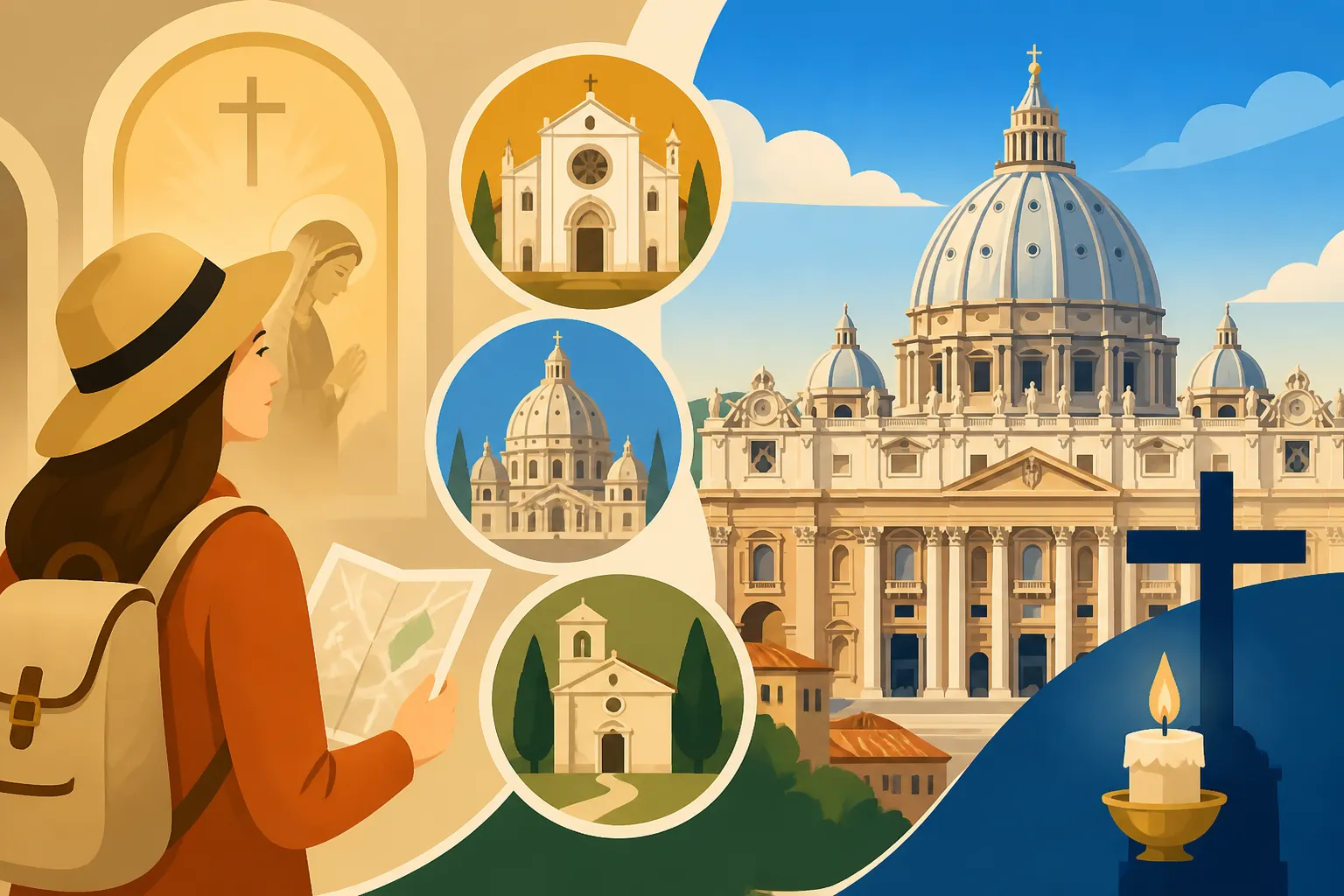
- Vatican City: The smallest independent state in the world, the Vatican is, of course, the heart of the Roman Catholic Church. Here you’ll spend time at St. Peter's Basilica, an architectural marvel and the burial site of St. Peter. The sheer scale and artistry, from Michelangelo's Pietà to Bernini's baldacchino, are overwhelming in the best possible way. A visit to the Vatican Museums and the Sistine Chapel, while not strictly devotional, offers unparalleled artistic and historical context to the Church's vast cultural patronage. And if your timing is right, attending a Papal Audience or the Sunday Angelus in St. Peter's Square can be an incredibly moving experience, connecting you directly with the current Pope. You'll find a wealth of practical advice in our guide, Visiting the Vatican: St. Peter's and the Museums.
- The Major Papal Basilicas: Beyond St. Peter’s, Rome boasts three other papal basilicas that are integral to a Roman Catholic pilgrimage. These include St. John Lateran (San Giovanni in Laterano), the cathedral of Rome and the official ecclesiastical seat of the Pope; St. Paul Outside the Walls (San Paolo fuori le Mura), built over the tomb of St. Paul; and St. Mary Major (Santa Maria Maggiore), Rome's largest Marian church, renowned for its stunning mosaics and connection to a miraculous snowfall. Each of these offers unique artistic treasures and profound spiritual significance.
- Catacombs and Early Christian Sites: To truly grasp the origins of Christianity in Rome, you absolutely must visit the ancient catacombs. These underground burial tunnels, like the Catacombs of San Callisto or Domitilla, served as hidden cemeteries and places of worship for early Christians in pagan Rome. Walking through these cool, dimly lit passages, seeing the simple frescoes and loculi (burial niches), is a powerful reminder of faith's resilience under adversity. It’s a sobering and inspiring experience that offers a direct link to the Church’s earliest days, long before gilded altars and soaring domes.
Following in the Footsteps of Saints: Francis, Padre Pio, and More
Beyond the grandeur of Rome, Italy invites you to embark on a more personal journey, tracing the lives and legacies of some of Christianity’s most revered saints. These destinations often offer a different atmosphere—one of quiet contemplation, profound humility, and deep spiritual solace.
- Assisi: St. Francis and St. Clare: This stunning Umbrian hillside town is synonymous with St. Francis, the patron saint of animals and the environment, and St. Clare, founder of the Poor Clares. The Basilica di San Francesco d'Assisi is a UNESCO World Heritage site, comprising two churches, one built atop the other, adorned with breathtaking frescoes by Giotto and Cimabue depicting scenes from Francis's life. It's not just an artistic masterpiece; it's a profound spiritual space. Don't miss the Basilica di Santa Chiara, where St. Clare rests, or the serene Eremo delle Carceri, a hermitage nestled in the woods where St. Francis and his followers retreated for prayer. The whole town radiates a sense of peace and simplicity that is truly restorative. Our specific guide, How to Visit Assisi and the Basilica of St. Francis, offers an in-depth look at planning your time there.
- San Giovanni Rotondo: Padre Pio: For those drawn to modern saints and miraculous intercession, San Giovanni Rotondo in Puglia is a pilgrimage site of immense importance. It’s where Saint Pio of Pietrelcina (Padre Pio) lived, ministered, and died. His shrine here, anchored by the Old Church of Santa Maria delle Grazie and the more contemporary Pilgrimage Church of Padre Pio (designed by Renzo Piano), draws millions seeking healing and spiritual guidance. You can visit his tomb, see his cell, and reflect on his life of profound suffering and holiness. The atmosphere is one of fervent devotion, a testament to the saint's powerful impact even decades after his death.
- Loreto: The Holy House: In the Marche region, the town of Loreto holds one of Catholicism's most intriguing relics: the Holy House. Tradition holds that this small dwelling is the actual house from Nazareth where the Virgin Mary was born and where the Annunciation took place. It is believed to have been miraculously transported by angels from the Holy Land to Loreto in the 13th century. The house is now encased within the grand Basilica della Santa Casa, a magnificent structure that has been a major pilgrimage destination for centuries. It's a place where faith and legend converge, offering a unique spiritual experience, and you'll often find pilgrims traversing the final approach to the basilica on their knees.
Unique Spiritual Paths: Shrouds, Miracles, and Marian Shrines
Beyond the well-trodden paths, Italy offers a host of unique spiritual sites that cater to specific devotions or historical curiosities, enriching the fabric of its religious heritage.
- Turin: The Shroud of Turin: The city of Turin in Piedmont is famously (and controversially) home to the Shroud of Turin, a linen cloth bearing the faint image of a crucified man, believed by many to be Jesus Christ. While the Shroud itself is rarely on public display (viewings, called "ostensioni," are infrequent and announced years in advance), you can visit the Cathedral of Saint John the Baptist where it is housed. There's a fascinating museum dedicated to the Shroud, offering scientific and historical insights into this captivating relic. Even without a direct viewing, the presence of such a profound object imbues the cathedral with a powerful aura. It's a place where faith, science, and mystery intertwine, sparking reflection and debate.
- Lanciano: The Eucharistic Miracle: In the small Abruzzo town of Lanciano, you can witness one of the most remarkable and well-documented Eucharistic miracles of the Catholic Church. In the 8th century, during Mass, a monk who doubted the real presence of Christ in the Eucharist saw the consecrated host transform into flesh and the wine into blood. These miraculous elements are preserved to this day in the Church of San Francesco, undergoing scientific examination over the centuries, which has only added to their mystery. It's a profound destination for those who seek tangible proof of divine intervention and a deeper understanding of the Eucharist.
- Other Marian Shrines: Italy is dotted with countless Marian shrines, each with its own local lore and traditions, offering serene places of prayer dedicated to the Virgin Mary. From the Sanctuary of Madonna della Guardia high above Genoa, offering panoramic views and solace, to the Sanctuary of Oropa in the Piedmontese Alps, one of Europe's oldest Marian sanctuaries, these sites are often nestled in breathtaking natural settings, combining spiritual reflection with natural beauty. Discovering these smaller, more local shrines can be a truly rewarding part of your journey, showing you the diverse expressions of faith across Italy.
Logistics and Practicalities for a Meaningful Journey
Embarking on a religious heritage trip in Italy is an incredible experience, but like any journey here, it comes with its own set of logistical quirks. As an expat who’s navigated the system, let me tell you, Italy is a country that thrives on beautiful chaos. But with a bit of foresight, you can ensure your pilgrimage is as smooth and meaningful as possible.
Transportation: Getting Between Sacred Sites
Getting around Italy can be both delightful and a tad bewildering, depending on where you're going. The beautiful thing about the country is that even smaller, significant sites are often accessible, though sometimes it takes a little more planning.
- Trains: The Backbone of Italian Travel: For major cities and well-connected towns, Italy’s rail network is your best friend. High-speed trains run by Trenitalia and Italo connect big hubs like Rome, Florence, Naples, and Turin with impressive efficiency and comfort. This is usually the quickest and most comfortable way to cover longer distances. For example, if you're traveling from Rome to Assisi, you'll take a regional train to the Assisi station and then a short bus ride up to the hill town. Platforms like Omio can be a real lifesaver, allowing you to compare Trenitalia and Italo options easily and book tickets in advance, which I highly recommend, especially for popular routes. You'll find more details on planning your rail journeys in How to Buy Trenitalia and Italo Tickets and Save Money and a broader overview in Getting Around Italy: Trains, Buses, Flights, and Car Hire.
- Buses: Reaching the Remote Gems: For smaller, more remote shrines and towns not directly on a train line, regional buses become indispensable. They might not be as glamorous as the high-speed trains, but they are often the only way to reach those tucked-away spiritual havens. Check local bus company websites (like COTRAL for Lazio, Busitalia for Umbria, or regional operators in Puglia) for schedules. Be prepared for less frequent services, especially on weekends and holidays, and remember that often you’ll buy tickets at a tabaccheria or newsstand before boarding.
- Rental Cars: Freedom and Flexibility: If your itinerary includes multiple rural shrines or sites that are poorly served by public transport, renting a car offers unmatched flexibility. This is particularly true for exploring areas like Puglia, Umbria, or the Abruzzo region. However, be acutely aware of Italy's infamous ZTLs (Limited Traffic Zones) in city centers—these are camera-enforced areas where only residents or permitted vehicles can enter, and fines are hefty. Always park outside the ZTL and walk or use local transport. Also, driving in some Italian cities can be an… experience. Expect narrow streets, passionate drivers, and the need for a good GPS.
Accommodation: Finding Peace and Proximity
Where you lay your head can significantly impact the spiritual atmosphere of your trip. Italy offers a range of options, from bustling city hotels to tranquil religious guesthouses.
- Traditional Hotels and B&Bs: In major cities and towns, you'll find a wide selection of hotels and charming bed & breakfasts. Booking.com is an excellent resource for finding suitable options, allowing you to filter by proximity to specific religious sites and read reviews. Look for places with good transport links if you're relying on public transportation. For example, in Rome, staying near a metro line that easily takes you to the Vatican or major basilicas can save you a lot of foot soreness.
- Monasteries and Religious Guesthouses: For a truly immersive and often more affordable experience, consider staying in a casa per ferie (guesthouse) or foresteria (hostelry) run by religious orders. Many monasteries, convents, and Catholic institutions open their doors to pilgrims and travelers. These places often offer simple, clean accommodation, a peaceful environment, and sometimes even the opportunity to participate in daily prayers or meals with the community. It's a wonderful way to deepen your spiritual connection to the place. You can often find these listed on specialized pilgrimage websites or directly through the individual shrines. Accommodation in Italy: Hotels, B&Bs, and Agriturismi offers a broader perspective on Italian lodging options.
Cultural Sensitivity and Respectful Travel
Visiting sacred sites in Italy requires a certain level of cultural awareness and respect. This isn't just about being polite; it's about honoring centuries of tradition and the deep faith of the people around you.
- Dress Codes: Cover Up: This is probably the most important rule. When entering churches, basilicas, or other religious sites, both men and women should have their shoulders and knees covered. This means no tank tops, shorts, or mini-skirts. I’ve seen countless tourists turned away at the doors of St. Peter's or the Duomo in Florence because of inappropriate attire. It’s not about judgment; it’s about respect for a sacred space. Carry a light scarf or shawl with you if you're planning to visit churches on a warm day. Our article on Visiting Italian Churches Respectfully as a Traveler delves into this in more detail, alongside other etiquette tips.
- Silence and Reverence: These are places of worship, not just tourist attractions. Keep your voice low, silence your phone, and be mindful of ongoing services. Avoid loud conversations or boisterous behavior. Photography is often permitted, but usually without flash, and never during Mass. Always be respectful of those who are there to pray.
- Understanding Mass Times and Local Customs: If you wish to attend Mass or other services, check the schedules in advance. In smaller towns, Mass times might be less frequent or only in Italian. Observing local customs, like making the sign of the cross upon entering a church or genuflecting before the altar, is a thoughtful gesture, even if it's not part of your personal tradition. Remember, "bella figura" (making a good impression) is important in Italy, and showing respect for their traditions definitely helps you achieve that. For more on general Italian etiquette, check out Dress Codes and Bella Figura in Italy.
Enhancing Your Religious Heritage Trip
A religious heritage trip to Italy is already profound, but with a few thoughtful additions, you can transform it into an even richer, more deeply personal experience. It's about opening yourself to the stories, the local wisdom, and the quiet moments of reflection that truly make such a journey memorable.
Guided Tours and Local Insights
While I'm a big believer in exploring at your own pace, especially for a spiritual journey, there are undeniable benefits to incorporating guided tours into your itinerary, particularly at complex historical or religious sites.
- Benefits of Expert Guidance: Imagine standing in the Roman Forum, trying to piece together millennia of history from scattered ruins. Now imagine doing it with a passionate, knowledgeable guide who can bring the stones to life, explaining the early Christian communities, the pagan temples, and the emperors who shaped it all. Guides provide invaluable historical context, point out details you would certainly miss, and can share anecdotes that truly deepen your understanding of a site's spiritual significance. They bridge the gap between ancient stones and living history.
- Booking Specialized Religious Tours: For sites like the Vatican, the Roman Catacombs, or even the Basilicas of Assisi, specialized religious tours are available. These tours often focus specifically on the faith-based narrative, highlighting miracles, martyrdoms, and artistic depictions of religious stories. Platforms like GetYourGuide are excellent for finding and booking these types of tours in advance, allowing you to secure your spot and choose a tour that aligns with your interests and language preferences. They often offer "skip-the-line" access, which can be a godsend at popular destinations, letting you save precious spiritual energy instead of spending it waiting in queues.
- Local Guides for Deeper Experiences: In smaller towns or for niche interests, consider hiring a local guide. They often have an intimate knowledge of the area, its specific saints, local traditions, and even hidden chapels or lesser-known relics. A local guide can offer a truly personalized experience, sharing insights that you won't find in any guidebook and helping you connect with the spiritual pulse of the community. They can also help you navigate local transport or customs, which can be a relief in unfamiliar territory.
Language and Communication for Pilgrims
While many tourist-heavy areas will have English speakers, especially in Rome and Florence, venturing off the beaten path to smaller shrines means embracing a bit of Italian. It's not just practical; it's a sign of respect and can unlock warmer interactions.
- Basic Italian Phrases for Reverence: Learning a few key Italian phrases goes a long way. Simple greetings like Buongiorno (Good morning), Buonasera (Good evening), Grazie (Thank you), and Prego (You're welcome/Please) are essential. When visiting a church, phrases like Dov'è la chiesa? (Where is the church?), Posso entrare? (May I enter?), or Posso fotografare? (May I take photos?) can be very helpful. Knowing scusa (excuse me) or permesso (permission/excuse me when passing) is crucial in crowded spaces. These small efforts show you're trying to engage with the culture, and Italians truly appreciate it. Our guide, Survival Italian for Travelers: Key Phrases to Learn First, can get you started.
- Asking for Blessings or Information: If you wish to seek a blessing or ask for specific information about a relic or service, approaching a priest or sacristan with a polite Mi scusi, Padre/Signore… (Excuse me, Father/Sir…) can open doors. Even if your Italian is limited, the effort will be respected, and you might find that many religious figures have at least some basic English, or they’ll find someone who does. I've found that gestures and a humble attitude often communicate more than words.
- Embrace the Experience: Don't be afraid to stumble over words. Italians are generally very gracious with language learners. The act of trying to communicate in their language creates a connection, even if it's just a brief one, and adds another layer of authenticity to your spiritual journey. It’s part of the charming, sometimes frustrating, reality of life here, but ultimately it’s incredibly rewarding.
Documentation and Personal Reflection
Beyond the practicalities of travel, consider how you can document and deepen your personal spiritual experience. This journey is as much internal as external.
- Keeping a Spiritual Journal: A religious heritage trip offers countless moments for reflection, inspiration, and personal growth. Keeping a small journal to jot down your thoughts, prayers, observations, and feelings at each sacred site can be incredibly enriching. It creates a record of your journey, allowing you to revisit those insights long after you've returned home. What touched you most? What questions arose? How did walking in these ancient places affect your spirit?
- Collecting Meaningful Mementos: Instead of generic souvenirs, seek out meaningful religious articles. A rosary blessed at the Vatican, a small medal from Assisi, a holy card with a prayer to Padre Pio, or a bottle of holy water from a significant shrine can serve as powerful personal reminders of your pilgrimage. These aren't just trinkets; they are tangible connections to the places and spiritual energies you've encountered.
- Ensuring Valid Travel Documents: Of course, none of this is possible without sound logistics. Always keep your passport, visa (if applicable), and any necessary travel insurance documents organized and secure. Make copies or store digital versions on your phone or in the cloud. It's a small but essential detail that ensures you can focus on the spiritual aspects of your trip without unnecessary stress. For broader travel peace of mind, consider looking into Travel Insurance for Trips to and Within Italy and general safety guidelines in Staying Safe in Italy: Common-Sense Tips for Travelers.
Remember, this is your journey. Italy provides the backdrop, the history, and the sacred spaces, but the true pilgrimage happens within you. May your travels be blessed and deeply meaningful.
| Religious Site / City | Primary Spiritual Focus | Best Transport Method(s) | Key Tip for Pilgrims |
|---|---|---|---|
| Vatican City / Rome | Papal Seat, St. Peter, Early Christian Martyrs | Train, Metro, Local Bus | Dress code strictly enforced; book Vatican tours in advance. |
| Assisi | St. Francis, St. Clare, Franciscan Spirituality | Train (to Assisi station, then bus) | Embrace the peaceful atmosphere, visit Eremo delle Carceri. |
| San Giovanni Rotondo | Padre Pio, Modern Miracles, Healing | Bus (from Foggia train station) | Be prepared for crowds of devout pilgrims; respect solemnity. |
| Loreto | Holy House of Mary, Marian Devotion | Train (to Loreto station, then bus) | Consider approaching the Holy House on foot for tradition. |
| Turin | Shroud of Turin, Eucharistic Miracles | Train, City Public Transport | Check for Shroud exhibitions (ostensioni) if interested. |
| Lanciano | Eucharistic Miracle | Train (to Lanciano, then walk) | Visit the Church of San Francesco for the preserved miracle. |
| Siena | St. Catherine of Siena | Train or Bus | Visit her Sanctuary and the Duomo for incredible art. |
Disclaimer
Please remember that travel information and regulations, especially concerning public health, can change rapidly. While I strive to provide the most current and accurate advice, it is always wise to double-check official government sources and local advisories before and during your trip. This guide offers general advice and personal insights, but individual circumstances may vary.