Visiting Italian Churches Respectfully as a Traveler
Visiting Italy, you're bound to be awestruck by the sheer beauty and history of its churches, from the grand cathedrals to the quaint village chapels. However, these aren't just architectural marvels or tourist attractions; they are active places of worship, central to the fabric of Italian life, and navigating them respectfully is key to a meaningful experience. This guide will walk you through the unspoken rules and essential etiquette, ensuring your visits are both enriching and appropriate for these sacred spaces.
Disclosure: This post may contain affiliate links. We may earn a commission at no extra cost to you if you make a purchase through these links. Read full disclosure.
Dressing the Part: The Unspoken Italian Dress Code for Churches
One of the most common pitfalls for travelers in Italy is unknowingly violating the dress code for churches. It's not about being fashion-forward, but about showing respect for a sacred space. This isn't just a Vatican thing; it applies to virtually every church, basilica, and even smaller chapels across the country.
Covering Shoulders and Knees: The Golden Rule
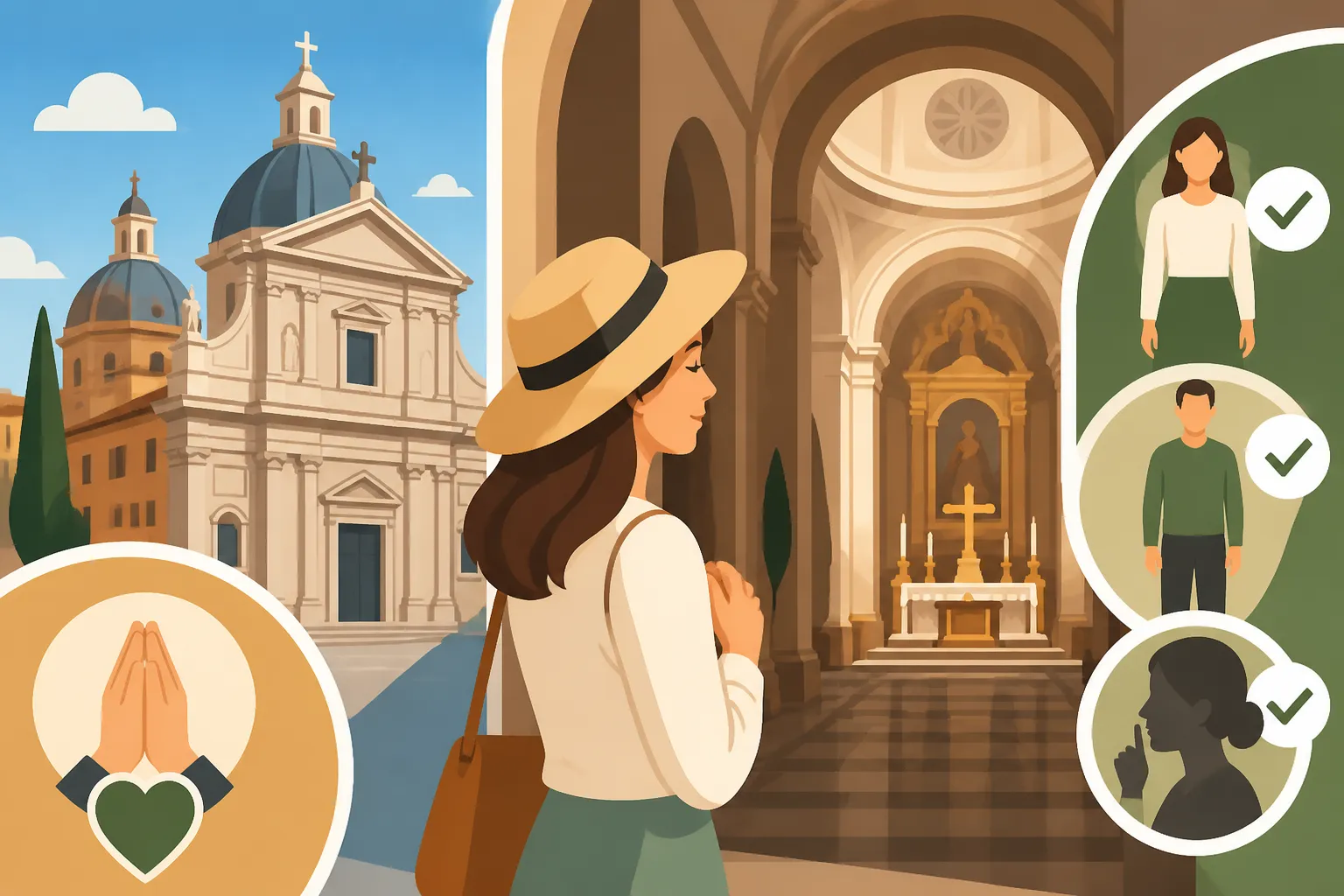
The fundamental rule is simple: shoulders and knees must be covered. This applies to everyone, men and women alike, though women's attire tends to draw more scrutiny. Imagine entering someone's home – you wouldn't track mud inside, right? The same principle applies here, but it's about modesty and deference.
For women, this means no sleeveless tops, spaghetti straps, or anything that exposes the shoulders. Think t-shirts, blouses, or light sweaters. Skirts, shorts, or dresses need to fall at or below the knee. It's not about being dowdy; a chic midi-skirt and a classic tee are perfectly acceptable and stylish. I've seen countless tourists, especially during the sweltering Italian summers, turned away from iconic sites like St. Peter's Basilica or the Duomo in Florence because their sun dresses or shorts were deemed inappropriate. It's an awkward moment for everyone involved, often leaving visitors frustrated and missing out.
Men, don't think you're exempt! While typically less restrictive, sleeveless shirts (like tank tops or muscle shirts) are a definite no-go. Shorts should also reach the knee. I remember one scorching August day in Palermo, witnessing a young man in a cut-off tank top and very short shorts being politely but firmly asked to leave the Capella Palatina. He was genuinely surprised, thinking it only applied to women or the Vatican. It's a clear reminder that these rules are universal across Italy's religious sites.
Practical Solutions for Unexpected Church Visits
Let's face it, when you're exploring a charming borgo or stumble upon a beautiful church unexpectedly, you might not be dressed for the occasion. This is where a bit of foresight comes in handy, and believe me, it’s a lesson most expats learn quickly.
A light scarf or shawl is your absolute best friend. Seriously, I cannot stress this enough. It’s compact, easy to carry in your day bag, and can be quickly draped over bare shoulders when entering a church. For legs, if you're wearing shorts or a skirt that's too short, some resourceful travelers carry a pair of lightweight, breathable palazzo pants or a sarong to tie around their waist. Some churches in major tourist areas, like the Duomo di Milano, might even sell disposable paper cover-ups, but relying on these is risky and often means a long wait in line and an unnecessary expense. Always have your own! It’s also a good idea to wear comfortable, closed-toe shoes. While not strictly a modesty rule, many churches have ancient, uneven floors or steps, and practical footwear is just smart. Plus, flip-flops or overly casual sandals can sometimes be seen as disrespectful in formal settings, even if they don't violate a specific dress code.
Decorum Within the Divine: Behavior Inside Italian Churches
Once you’ve successfully navigated the dress code, the next crucial step is understanding how to behave once you’re inside. Italian churches are not museums or concert halls; they are active places of worship, and your actions directly impact those who are there for prayer, reflection, or Mass.
Silence and Reverence: Respecting the Sacred Atmosphere
The moment you step through the heavy wooden doors of an Italian church, a palpable shift in atmosphere should be your first clue. The hushed tones, the echoing footsteps, and the solemn expressions of local worshippers are all indicators of the reverence expected. Your voice should drop to a whisper, if spoken at all. This isn’t a place for loud conversations, excited exclamations, or boisterous laughter.
I've been in countless churches where a sudden burst of conversation or a shrill laugh from a tourist group shattered the peace, drawing glares from locals trying to pray. It’s jarring and deeply disrespectful. If you’re traveling with children, ensure they understand the need for quiet behavior. Encourage them to observe quietly, perhaps by pointing out details in the art or architecture in a hushed voice. Think of it as a library, but with an even greater emphasis on quiet respect. If you need to have a longer conversation or take a phone call, please step outside. The same goes for eating or drinking; absolutely no food or beverages are allowed inside.
Attending Mass and Religious Services
Many churches, particularly the larger cathedrals, hold daily Masses and other religious services. These are not performances for tourists to observe casually. If you choose to attend a Mass, do so with genuine respect for the service. That means no wandering around, no taking photos, and no talking.
If you are not Catholic, you are still welcome to sit quietly and observe, but refrain from participating in communion or other rituals unless you are familiar with the practices and believe in them. I often see tourists treat Mass like a convenient break from sightseeing, sometimes even walking right through the middle of a service to get to a specific artwork. This is a massive faux pas. If a service is underway, find an unobtrusive spot at the back or side, sit down, and remain still. Better yet, if your primary purpose is sightseeing, wait until the service concludes or come back at a different time. You can often find service schedules posted outside the church or on its website.
Capturing Memories: Photography Etiquette
In our age of smartphones and social media, it's natural to want to capture the breathtaking beauty of Italian churches. However, photography within these sacred spaces comes with its own set of rules and considerations that go beyond just getting a good shot.
Flash Photography and Tripods: Generally Forbidden
The vast majority of Italian churches strictly prohibit flash photography. There are several good reasons for this. Firstly, the sudden bursts of light can be incredibly distracting and disruptive to worshippers and others quietly contemplating the space. Imagine trying to pray or meditate with flashes going off around you – it's impossible. Secondly, and perhaps more importantly, repeated flash exposure can be damaging to ancient frescoes, paintings, and tapestries. Many of these artworks are centuries old and incredibly delicate, and UV light from flashes can accelerate their degradation.
Tripods are also almost universally forbidden, primarily due to safety and space concerns. Churches, especially popular ones, can get crowded, and a tripod can be a tripping hazard. Moreover, using a tripod often implies a more professional setup, which is typically reserved for official photographers with special permits. For the casual traveler, it's best to leave the tripod in your bag or at your accommodation. If you’re a serious photographer hoping to capture the interiors, research specific churches beforehand; some might offer designated photography times or require advance permission.
When and Where to Take Photos
Even without a flash or tripod, there are still nuances to respectful photography. Always look for "No Photography" signs (often a camera icon with a line through it). If you don't see one, it's generally acceptable to take photos without flash for personal use. However, always exercise discretion.
Avoid taking pictures during religious services or when someone is actively praying. It’s an intrusion and can make people feel like they’re being watched or put on display. Focus on capturing the architecture, the overall ambiance, or specific artworks without people directly in your frame, if possible. If you must photograph people, ensure you do so discreetly and respectfully. Consider turning off your shutter sound on your phone to minimize disruption. Sometimes, simply putting your camera down and truly experiencing the moment, letting the beauty sink in without the lens as a filter, is the most profound way to remember your visit. GetYourGuide offers some fantastic walking tours that include churches, and their guides are usually excellent at pointing out the best times and places for respectful photography.
Timing is Everything: Planning Your Church Visits
Just like any other popular attraction, timing your visit to an Italian church can significantly enhance your experience and ensure you're respecting local customs. Barging in during a sacred moment is a definite no-no.
Avoiding Mass and Service Times
As mentioned, churches are primarily places of worship. This means they have regular schedules for Masses, baptisms, weddings, funerals, and other religious services. Attempting to visit as a tourist during these times is almost always disruptive. You might find parts of the church cordoned off, or even be asked to leave.
Before you go, it's a good idea to check the church's website or a local tourism office for their Mass schedule (called orari delle messe). Many churches, especially those with significant artistic value, will have specific "tourist hours" when general visiting is encouraged and services are not typically taking place. Planning your visit around these hours ensures you can explore freely without intruding on a sacred ceremony. I often use Omio to plan my train journeys between cities like Rome and Venice, and once I know my travel schedule, I then check the church websites for optimal visiting times. This way, I can enjoy the historical sites and also immerse myself respectfully in the local culture.
Peak Tourist Hours and Public Holidays
While avoiding Mass times is crucial, also consider peak tourist hours if you prefer a quieter experience. Major cathedrals in cities like Rome, Florence, and Milan can get incredibly crowded, especially mid-morning and mid-afternoon. If possible, consider visiting right when they open or closer to closing time for a more serene atmosphere.
Italian public holidays and religious festivals can also impact church accessibility and atmosphere. During Easter (Pasqua), Christmas (Natale), or local saint's days (feste patronali), churches will be buzzing with local worshippers, often making tourist visits less appropriate or even impossible. While it can be fascinating to observe these traditions, always do so from a respectful distance, understanding that these are deeply personal and community-focused events. Knowing the local calendar, perhaps by checking a guide like "Italian Festivals, Holidays, and Traditions in Italy," can help you plan.
The Heart of the Community: Local and Lesser-Known Churches
While the grand basilicas get all the fame, Italy is literally dotted with thousands of smaller, local churches and chapels. These are the true heart of their communities, and showing respect here is perhaps even more vital.
More Than Just Architecture: Active Community Hubs
In a small Italian town, the local church (the chiesa parrocchiale) isn't just a building; it's the social, spiritual, and often historical center of life. It’s where baptisms, weddings, funerals, and daily prayers happen. It's where the community gathers, and it often holds artwork or relics of immense local significance, even if they aren't globally famous.
When you step into one of these smaller churches, you’re not just a tourist. You're an invited guest in a living, breathing community space. The people you encounter might be lifelong parishioners, some of whom volunteer their time to keep the church open and beautiful. A simple buongiorno or grazie (good day, thank you) can go a long way. They might not be used to the same throngs of tourists as the Vatican, so your respectful behavior stands out even more. Remember, these are not just historical sites; they are living places.
Observing Local Customs and Sensitivity
Because these smaller churches are so deeply integrated into local life, it's wise to be extra sensitive to specific local customs. You might notice locals making the sign of the cross upon entering or dipping their fingers in holy water. While you don't need to imitate these gestures, observing them silently is part of understanding the cultural fabric.
Sometimes, a smaller church might be temporarily closed for a private service or simply because the custodian is out. Don't push or try to force entry. Patience and quiet observation are key. If there's an attendant, a polite inquiry (perhaps using some basic Italian phrases from "Italian Language and Everyday Communication for Visitors") can help. Remember that many of these churches rely on donations for upkeep. If you appreciate the opportunity to visit, leaving a small offering in the designated box is a thoughtful gesture. Every little bit helps preserve these treasures for future generations and local communities.
Essential Practicalities and Resources
Navigating Italian churches, especially for the first-timer, can feel like a minefield of unwritten rules. But with a little preparation and a mindful approach, it becomes a smooth and rewarding part of your Italian adventure.
Planning Your Visits and Getting Around
Before heading out, a quick online search for the specific church you plan to visit can often provide updated opening hours, potential closures for events, and any specific rules they might have. For larger cities, travel guides like "Rome, Florence, and Venice: Italy's Great Cities Explorer's Guide" often include dedicated sections on major basilicas and their etiquette.
Transportation is another key. Whether you're hopping on a regional train to visit a charming village with its ancient church or navigating the local bus system to reach a city cathedral, knowing how to get around efficiently is crucial. Services like Omio can help you find tickets for trains and buses, making multi-city church exploration a breeze. For example, if you're staying in Rome and want to visit Assisi, a spiritual hub with stunning basilicas, Omio can help you sort out your train tickets well in advance. Once you arrive, local public transport or even a good walk will get you to the church doors.
Utilizing Reputable Tour Services and Accommodation
If you're feeling overwhelmed, especially by the larger, more complex religious sites, consider joining a guided tour. Companies like GetYourGuide offer expert-led tours that often cover not just the history and art, but also provide invaluable tips on etiquette and respectful behavior. Their guides are seasoned professionals who understand the nuances of visiting sacred spaces and can help you avoid any accidental faux pas. Many tours even provide audio headsets, which help maintain quiet within the church while still allowing you to hear your guide clearly.
When it comes to accommodation, staying in a location that's convenient for your planned visits can save you time and stress. Websites like Booking.com offer a vast array of options, from hotels to agriturismi, allowing you to filter by location, price, and amenities. If you're planning to spend a lot of time visiting churches in a particular city, finding a hotel within walking distance or close to public transport hubs will make your experience much more enjoyable. For instance, staying near the historical center in cities like Siena or Orvieto means many beautiful churches are just a short stroll away.
General Respect and Cultural Awareness
Ultimately, visiting Italian churches respectfully boils down to a few core principles: modesty, quietness, and an awareness that you are a guest in a deeply significant cultural and religious space. Italy is steeped in tradition, and its churches are living testaments to that heritage.
It's also worth remembering that the local volunteers, custodians, and priests who maintain these churches do so out of dedication and faith. A little patience, a polite smile, and adherence to the guidelines go a long way in fostering positive interactions. By embracing these simple courtesies, you not only enrich your own travel experience but also contribute to the preservation of Italy's invaluable spiritual and artistic legacy. Embracing the full breadth of Italian culture, including its sacred spaces, is part of what makes the experience so profound. For broader context on fitting in, consider reading about "Italian Customs, Etiquette, and Social Life".
| Do's | Don'ts |
|---|---|
| Cover shoulders and knees. | Wear revealing clothing (tank tops, short shorts/skirts). |
| Speak in hushed tones or remain silent. | Talk loudly, laugh boisterously, or use phones for calls. |
| Observe Mass or services from a respectful distance. | Wander around or take photos during Mass. |
| Take photos without flash, where permitted. | Use flash photography or tripods. |
| Consider a small donation. | Eat, drink, or chew gum inside. |
| Dress comfortably in closed-toe shoes. | Leave litter or touch ancient artifacts/artwork. |
| Check opening hours and service schedules. | Assume all churches are open for tourism at all times. |
| Express gratitude with grazie. | Be dismissive or openly disrespectful. |
Disclaimer
The information provided in this guide is for general informational purposes only and is subject to change. While we strive to provide accurate and up-to-date advice for travelers and expats in Italy, customs, regulations, and specific church rules can vary. Always check official church websites or local tourism resources for the most current information before your visit.