Nightlife in Italy: Cities That Stay Up Late
Moving to or traveling through Italy often comes with a surprising shift in daily rhythms. If you show up at a bar or club at 9:00 PM expecting a bustling crowd, you will likely find empty chairs and staff barely finishing up dinner. Navigating Italian nightlife requires understanding an entirely different schedule, where drinks start late, dinners stretch past midnight, and dance floors do not peak until the early morning hours. This guide unpacks everything you need to know about cities that stay up late, how after-dark culture works in different regions, and how to navigate the logistical hurdles without losing sleep or peace of mind.
Disclosure: This post may contain affiliate links. We may earn a commission at no extra cost to you if you make a purchase through these links. Read full disclosure.
The Anatomy of Italian Nightlife: From Aperitivo to After-Hours
To survive and enjoy a night out in Italy, you have to understand the flow of the evening. Unlike northern European or North American cultures where night outings often start early and wrap up around midnight, Italian after-dark social life is a slow-burning marathon. It begins long before the moon reaches its peak and transitions seamlessly through several distinct stages, each with its own customs, settings, and informal rules.
The Transition from Passeggiata to Apericena
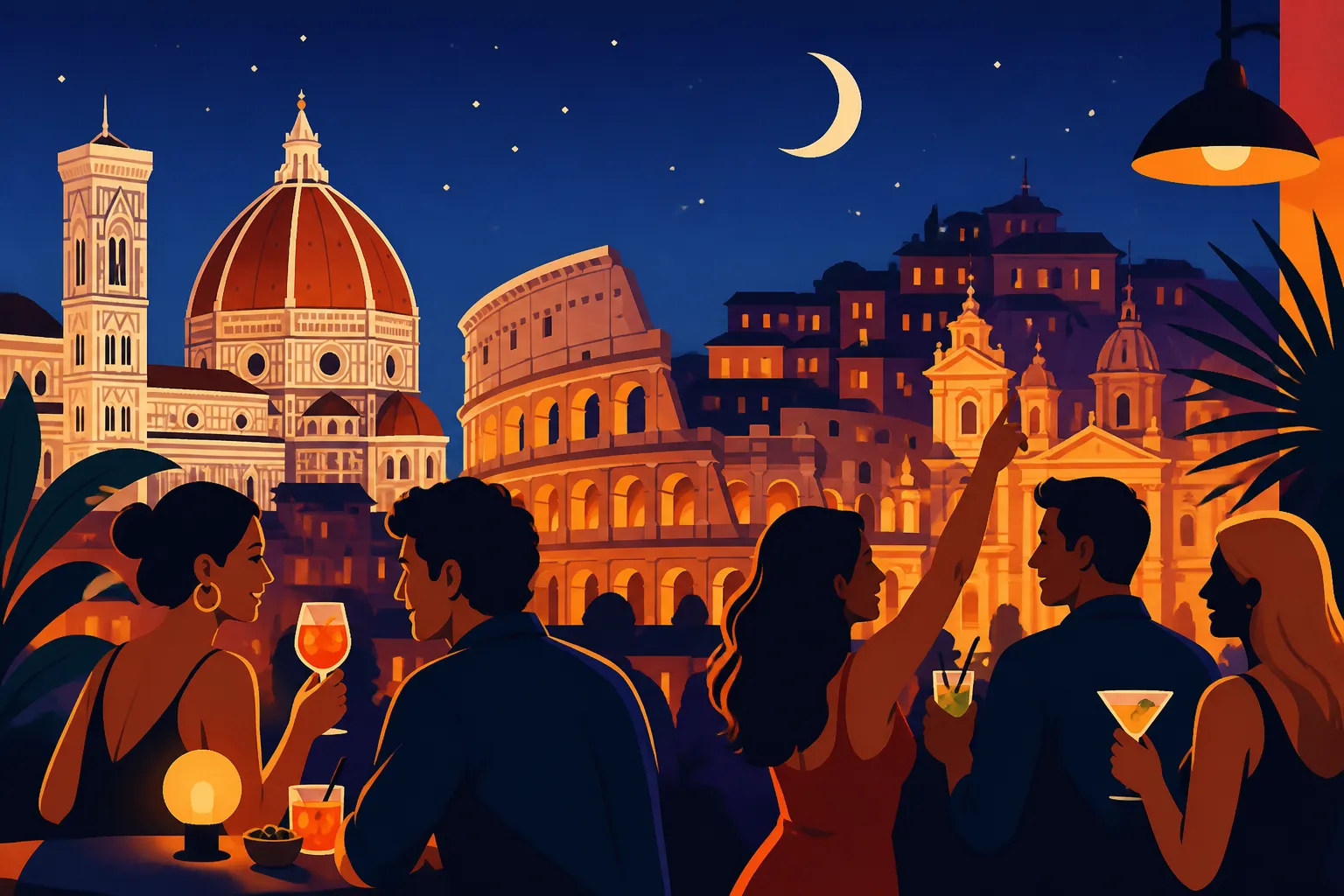
The evening begins around 6:00 PM or 7:00 PM with the passeggiata, the traditional early evening stroll through the town center. Locals spill out onto the main pedestrian avenues to see friends, window shop, and catch up on gossip before dinner. This gracefully evolves into the aperitivo hour. Ordering an Aperol Spritz, a Negroni, or a glass of local wine yields a small plate of snacks—ranging from simple olives and potato chips to elaborate buffets featuring pasta salads, focaccia, and cured meats.
In major university cities and trendy metropolitan neighborhoods, this ritual often transforms into an apericena, a hybrid term combining aperitivo and cena (dinner). For the price of a cocktail, you gain access to a spread generous enough to replace a formal sit-down dinner. If you want to know more about navigating these early evening traditions, check out What Is an Aperitivo and How Do You Order One? to master the ordering process like a seasoned local. The apericena usually winds down around 9:00 PM, creating a brief lull across the city as people head home to refresh or linger over lingering conversation.
Understanding Late-Night Venues and Cover Charges
Real late-night venues do not get moving until well after 11:00 PM. Bars, pub-style establishments, and cocktail lounges fill up between 10:30 PM and midnight, serving as intermediate gathering spots. If you plan on going to a proper nightclub (discoteca), do not arrive before 1:00 AM unless you want to watch the staff set up the soundboard. Peak dance floor energy usually hits between 2:00 AM and 4:00 AM.
Entering these venues often involves cultural norms that surprise newcomers. Many traditional Italian clubs operate on a drink card system. Upon entering, you receive a physical card stamped at the entrance; every beverage ordered at the bar is stamped onto this card, and you pay your cumulative balance at the register before exiting. Losing this card results in a heavy flat-rate fine, so keep it secure in a zipped pocket. Additionally, cover charges (ingresso) usually include one free drink token (consumazione). Be aware that some private cultural associations (circoli privati) require a membership card for entry, which must legally be requested online at least twenty-four hours before arriving.
Late-Night Dining and Cornetti Al Buio
When the clubs close at 4:00 AM or 5:00 AM, the night is still not entirely over. A cherished ritual among Italian revelers is the quest for late-night food, specifically fresh pastry. Long before the city’s regular bakeries open to the public, wholesale bakery laboratories (forni) begin baking sweet pastries for the coming day. These places often sell hot, fresh cornetti (Italian croissants filled with Nutella, pastry cream, or pistachio) directly out of back-alley doors to late-night crowds.
Locals affectionately call this buying cornetti al buio (croissants in the dark). Finding these hidden bakeries usually requires following the sweet aroma drifting down quiet residential streets or asking a taxi driver for their favorite spot. If sweet pastries are not your style, late-night paninoteche (sandwich stands) and kebab shops near major plazas stay open to feed night owls hot sandwiches stacked high with fries, provolone, and cured meats.
Top Italian Cities for Late-Night Energy
Every Italian city has its own distinct nighttime personality. While smaller towns in rural areas quiet down completely by midnight, major urban centers, university hubs, and coastal regions boast vibrant after-dark ecosystems that run straight into dawn.
Milan: Glamorous Clubs, Navigli Bars, and Underground Beats
As Italy’s economic capital, Milan offers the most diverse and commercial nightlife in the country. The vibe ranges from high-fashion rooftop lounges to industrial warehouse techno parties. For a comprehensive overview of the city during both day and night, refer to our Milan City Guide: Fashion, Art, and the Duomo.
The night in Milan typically starts along the canal network of the Navigli or in the chic Corso Como district. Navigli is packed side-by-side with lively bars where people stand outside along the water holding plastic cups long after the indoor seats sell out. For a more trendy, alternative, and bohemian vibe, head to the Isola neighborhood or the area surrounding the Columns of San Lorenzo (Colonne di San Lorenzo), where students gather on the ancient stone pavement.
When it comes to late-night clubbing, Milan hosts world-renowned electronic venues, upscale dance floors with strict dress codes, and multi-story discotheques. Keep in mind that Milanese venues enforce dress codes more strictly than anywhere else in Italy; stylish attire is mandatory if you hope to pass the velvet ropes at popular clubs.
Rome: Historic Piazzas, Testaccio Clubs, and Student Hangouts
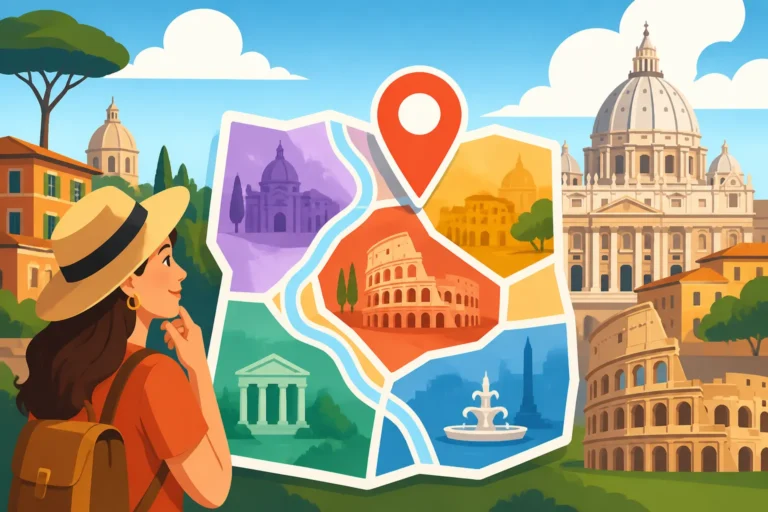
The capital takes a more spread-out, neighborhood-centric approach to after-dark activities. Nightlife in Rome revolves around open-air piazza culture mixed with distinct clubbing hubs tucked away from the main historic sights. Reading about How to Experience a Night Out in Rome Safely can help you plan your route through the capital’s busy midnight streets.
Piazza Trilussa in Trastevere serves as a classic starting point, filled with street performers, students, and tourists sipping craft beers on the fountain steps. Across the river, Campo de’ Fiori turns from a daytime produce market into a packed ring of open-air bars. However, if you want authentic music venues, underground dance floors, and live DJ sets, you need to venture slightly outside the tourist core to Testaccio and Ostiense.
Testaccio features a row of clubs built directly into the side of Monte Testaccio (an ancient hill made of broken Roman amphorae). Here, venue hoppers can easily move between salsa clubs, indie rock bars, and house music rooms on the same street. Meanwhile, the student district of San Lorenzo offers a gritty, bohemian atmosphere with cheap beer, punk venues, and casual student bars that stay lively until the sun comes up.
Bologna and Florence: University Vibes and Bohemian Lounge Culture
Bologna is widely regarded as the ultimate student city in Italy. Home to the world’s oldest university, its streets are constantly filled with young people, creating an energetic after-dark scene that feels accessible, affordable, and vibrant. Learn more about its unique appeal in Turin and Bologna: Two Underrated Italian Cities.
The heart of Bologna’s nightlife is Piazza Verdi and Via del Pratello. Via del Pratello is an endless gallery of historic portico-covered streets packed with wine bars, craft beer pubs, and casual eateries. In Bologna, street drinking in central piazzas is a major part of the culture, with spontaneous music sessions and political discussions carrying on straight through the night.
Florence offers a slightly different, more intimate feel. While space inside the historic city center is tightly constrained, neighborhoods like Oltrarno (across the Arno River) come alive after 10:00 PM. Piazza Santo Spirito is the beating heart of Florentine after-dark life, where locals sit on the church steps drinking wine while ambient music drifts out from surrounding cafe-bars. For late-night music, Florence relies on cozy underground lounges and small rock or jazz clubs carved into historic stone cellars.
Naples and the South: Waterfront Street Parties and Piazza Life
Southern Italy takes piazza culture to an entirely different level. In Naples, nightlife is loud, energetic, chaotic, and almost entirely outdoors. To get a feel for the city’s character, explore our Naples City Guide: Food, History, and the Bay.
In Naples, the epicenter of the night is Piazza Bellini. Lined with historic cafes and ancient Greek ruins exposed in the center of the square, Piazza Bellini is a sprawling open-air party where thousands of people gather every weekend night. Drinks are cheap, sprits are poured generously, and people spill over into surrounding alleyways like Via Sebastiano.
Further down toward the coast, the waterfront promenade along Via Partenope and the Borgo Marinari area below Castel dell’Ovo offer upscale wine bars and lounge seating right next to the sea. Naples also boasts a massive underground electronic and techno scene, with large clubs located in the outskirts and industrial zones host international DJs until late into the morning.
Practical Logistics for Late-Night Revelers in Italy
Enjoying Italy’s late-night offerings requires a bit of practical planning. One of the biggest challenges foreign residents and visitors face is the sudden drop-off in municipal services once the clock strikes midnight.
| City | Primary Nightlife Zones | Peak Operating Hours | Public Transport Night Options |
|---|---|---|---|
| Milan | Navigli, Isola, | 11:00 PM – 5:00 AM | Night buses (N-lines), |
| Corso Como | limited late metro on weekends | ||
| Rome | Trastevere, Testaccio, | 11:30 PM – 4:30 AM | Night bus network (N-routes), |
| San Lorenzo | weekend metro until 1:30 AM | ||
| Bologna | Via del Pratello, | 10:00 PM – 3:30 AM | Night bus lines (N-buses), |
| Piazza Verdi | highly walkable historic center | ||
| Naples | Piazza Bellini, | 11:00 PM – 4:00 AM | Very limited night buses, |
| Vomero, Chiaia | taxi ranks recommended | ||
| Florence | Santo Spirito, | 10:30 PM – 3:00 AM | Compact city center, |
| Santa Croce | mostly navigated on foot |
Getting Around After Dark: Night Buses, Taxis, and Transport Hacks
Public transport options shut down earlier than many expect. In most cities, the underground metro systems stop running around midnight during the week, extending to around 1:30 AM on Friday and Saturday nights. After the metro closes, cities switch to surface night bus networks (often designated with an “N” before the line number). For broader travel advice on daytime and evening transit, see Getting Around Italian Cities: Metro, Tram, and Buses.
Night buses run far less frequently—often every thirty to sixty minutes—and routes differ significantly from daytime lines. Hail-riding apps are available in select major hubs like Rome and Milan, but they are heavily regulated and often expensive. Traditional taxis do not accept street hails; you must either find an official marked taxi rank (posteggio taxi) or call a local taxi dispatch number (radiotaxi).
If you are planning to travel between cities late at night or catch an early morning train after a night out, using multi-modal search engines like Omio can help you check late-night regional bus or early morning high-speed train schedules so you never end up stranded at a closed station.
Accommodation Placement: Staying Near the Action
Where you base yourself heavily dictates your late-night experience. Booking an apartment far in the suburbs might save money on rent or nightly rates, but you run the risk of spending those savings on expensive late-night rides home or getting stuck waiting an hour for a night bus.
When looking for places to stay through platforms like Booking.com, carefully map the distance between your accommodation and the city’s main pedestrian zones. Ideally, pick a central or semi-central neighborhood that lets you walk back safely at 3:00 AM without relying on public transit schedules. However, be cautious when choosing rooms directly above major piazzas or main drinking streets, as thin windows in historic buildings can make sleeping impossible before 4:00 AM. Look for listings in quiet side streets off the primary plazas.
Booking Tours and Evening Experiences Safely
If you want to experience the after-dark charm of Italian cities without diving headfirst into crowded dance floors, organized evening activities provide a structured alternative. Nighttime walking tours, food tastings, and boat cruises offer a totally different perspective on famous monuments illuminated against the dark sky.
You can browse platform options on GetYourGuide to reserve night access tours for landmark sites like the Colosseum in Rome or evening street-food crawls through Naples. These activities usually run between 7:00 PM and 10:00 PM, giving you a safe, expert-guided foundation for the evening before deciding whether to call it a night or head out to the local bars.
Safety, Etiquette, and Cultural Nuances of After-Dark Italy
While Italy’s major cities are generally very safe compared to many international metropolises, navigating the late-night landscape requires an awareness of local laws, social expectations, and personal safety practices.
The Unwritten Code of Piazza Etiquette and Noise Laws
A major component of Italian social life involves sitting outside in historic piazzas, talking, and enjoying drinks. However, residents living above these squares frequently clash with nighttime crowds over noise levels. In recent years, city councils across Italy have introduced strict movida (nightlife) ordinances aimed at curbing late-night public disruptions.
Many cities enforce bans on selling takeaway alcohol in glass bottles after 10:00 PM. Bar staff will hand you your drink in a plastic cup if you plan to step outside. Furthermore, sitting on historic fountains, monuments, or church steps is strictly prohibited in places like Rome and Florence, carrying heavy fines. Keep noise levels reasonable when walking through residential alleys late at night, as locals do not hesitate to call the Carabinieri or throw buckets of water from top-floor balconies on overly rowdy street crowds.
Staying Safe and Avoiding Scams in High-Traffic Nightlife Zones
Violent crime in Italy’s nightlife districts is exceptionally rare, but opportunistic property crime like pickpocketing is common, particularly around packed bars, public transit hubs, and crowded piazzas. To protect your belongings while out, consult our guide on Avoiding Pickpockets in Italy’s Tourist Areas.
Never leave your mobile phone or wallet sitting on an outdoor table while conversing, as distraction thieves can swiftly swipe items off tables. Avoid buying illegal substances, fake designer goods, or unlicensed roses from aggressive street vendors who frequent nightlife plazas. If you are driving a rental car or personal vehicle, never drive into a ZTL (Zona a Traffico Limitato) zone after dark without verifying its active hours; penalties for driving into restricted zones are steep. For more information on road rules, review Renting a Car in Italy: ZTLs, Insurance, and Driving Tips.
Pacing Yourself: The Italian Approach to Drinking
One of the most noticeable aspects of Italian nightlife culture is the rarity of visible intoxication. While drinking is deeply woven into the social framework, public drunkenness (ubriachezza molesta) is culturally frowned upon and socially taboo.
Italians generally practice moderation, drinking alcohol alongside food or pacing cocktails over several hours of animated conversation. Shot culture exists in student bars, but the primary goal of a night out is socialization (fare socialitá) and looking good while doing it—a core element of la bella figura. Pacing yourself with plenty of water, enjoying food throughout the evening, and avoiding excessive drinking will keep you aligned with local social customs and ensure you stay safe throughout the night.
Choosing the Right City for Your Late-Night Style
Italian after-dark culture is far from monolithic. Your ideal evening environment depends heavily on your personal travel style, musical preferences, and tolerance for crowds.
Matching Your Vibe to the Destination
If your idea of a perfect night involves dressing up, sipping high-end mixology cocktails, and dancing to high-production electronic music until sunrise, Milan is your clear destination. The city operates with international polish and caters heavily to fashion, design, and nightlife enthusiasts.
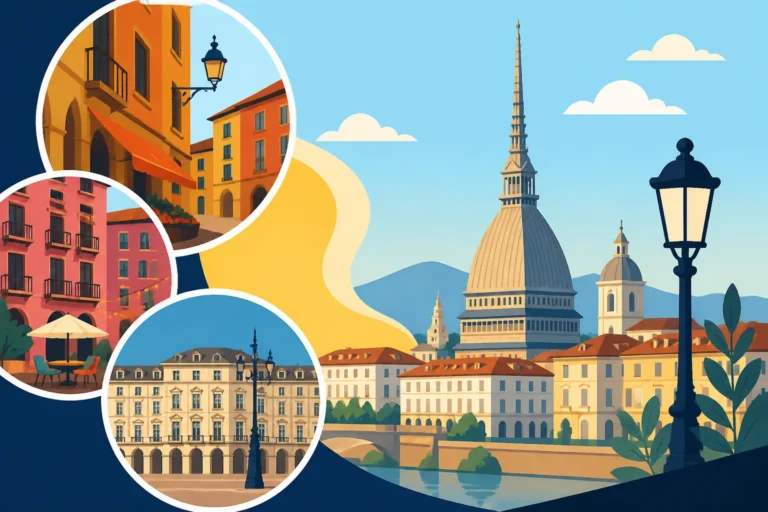
On the other hand, if you prefer casual, budget-friendly street parties, political discussions over affordable local wine, and live acoustic music in historic squares, university hubs like Bologna and student-heavy districts in Rome or Naples offer an authentic, welcoming atmosphere. For those seeking romance, quiet charm, and relaxed outdoor lounge sitting, smaller regional capitals like Florence, Verona, and Turin provide elegant wine bars that stay open comfortably past midnight without the chaos of massive crowds.
Seasonal Differences in Italian After-Dark Culture
It is crucial to note that Italian nightlife shifts dramatically depending on the season. During the muggy summer months of July and August, interior urban centers largely empty out. Air-conditioned indoor clubs close their doors for the season, and the entire nightlife infrastructure migrates to the coast.
In the summer, beach clubs (stabilimenti balneari) along the Italian Riviera, the Tuscan coast, Puglia, and Sicily convert into massive open-air party venues after sunset. Temporary outdoor pop-up bars (chioschi) open along riverbanks—such as along the Tiber in Rome or the Navigli in Milan—offering breezy open-air drinking spaces under the stars. Conversely, during late autumn and winter, the party moves firmly indoors to historic cellars, underground live music venues, and cozy neighborhood pub lounges. Plan your trip itinerary around these seasonal migrations to ensure you find the energy you are looking for.
Disclaimer
This article is for general informational purposes only and does not constitute professional advice. Laws, prices and regulations vary by location and change over time. Consult a qualified professional for guidance on your specific situation.