Via Ferrata and Alpine Hiking in Italy: The Clauses That Void Your Cover
Oh, the sheer exhilaration of clinging to a rock face high above an Italian valley, or trekking across a pristine alpine meadow with snow-capped peaks soaring around you! Italy’s mountains, especially the Dolomites, call to the adventurous spirit like few other places on Earth. But let me tell you, as a fellow expat who’s learned a thing or two (often the hard way) about Italian bureaucracy and risk, the stunning views come with a hefty dose of often-unseen risk – especially when it comes to your travel insurance. You might think your standard policy has you covered, but for activities like via ferrata and serious alpine hiking, there are often sneaky clauses that can leave you high and dry, literally and financially. This guide will delve into those critical insurance blind spots and show you how a reliable option like SafetyWing can actually be your lifeline.
Disclosure: This post may contain affiliate links. We may earn a commission at no extra cost to you if you make a purchase through these links. Read full disclosure.
The Allure of Italy's Vertical World: Via Ferrata and Alpine Trails
Italy offers some of the most spectacular mountain experiences globally, from the dramatic spires of the Dolomites to the rugged trails of the Apennines. For many, these aren't just landscapes to admire from below, but a vertical playground.
What is Via Ferrata, Really? Beyond the Brochure
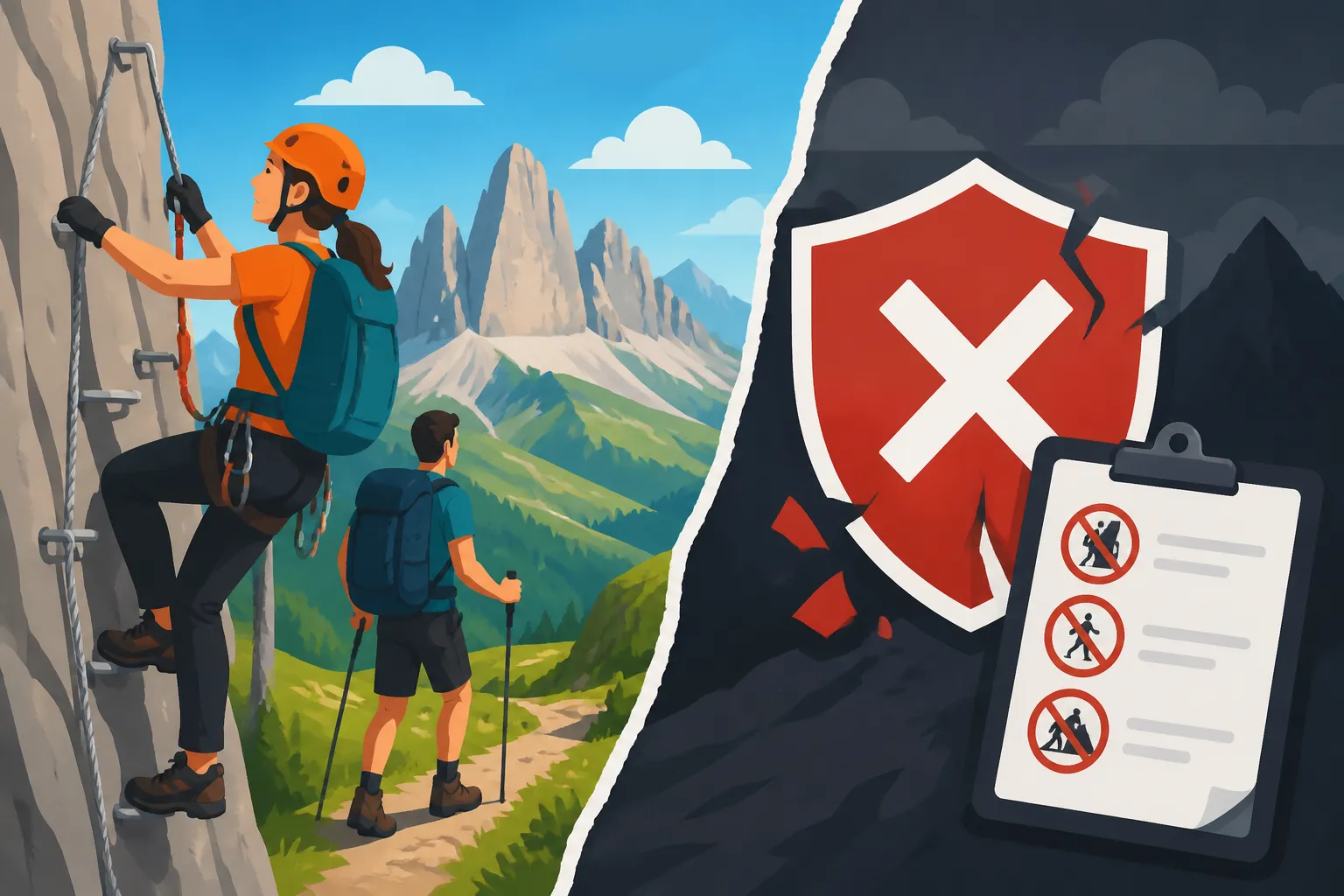
Let's demystify via ferrata. The Italian term translates to "iron path," and that's precisely what it is: a protected climbing route built with steel cables, rungs, ladders, and bridges fixed to the rock face. You're securely clipped into these cables with a special via ferrata kit, which provides continuous protection as you ascend. It’s often described as a hybrid between hiking and rock climbing, offering access to breathtaking viewpoints typically reserved for experienced climbers, but with a degree of engineered safety.
But here's the kicker that many brochure descriptions gloss over: "engineered safety" doesn't mean "zero risk." Via ferratas range vastly in difficulty. Some are relatively easy, more like steep walks with a cable to clip into. Others are incredibly exposed, physically demanding, and require significant strength, head for heights, and good technique. They often cross dizzying drops, traverse sheer rock, and expose you to rapidly changing weather conditions. A simple slip, a rockfall, or a sudden storm can turn a thrilling adventure into a perilous situation. Many standard travel insurance policies, unfortunately, lump all such activities into a broad "extreme sports" category, regardless of their actual difficulty, and then exclude them. This is where you really need to read the fine print of your policy to understand what activities fall under their definition of "safe" versus "too risky."
The Magic (and Peril) of Italian Alpine Hiking
Beyond the iron paths, Italian alpine hiking means tackling trails in high mountain environments, often above tree-line, traversing glaciers, or crossing remote passes. Imagine the Val di Funes, with its iconic church nestled against the Odle peaks, or the wild, untamed beauty of the Gran Paradiso National Park. These are not your average strolls in the park. These trails can be incredibly rewarding, offering unparalleled natural beauty and a profound sense of accomplishment.
However, the peril is ever-present. Alpine hiking involves significant elevation gains and losses, often on uneven, rocky, or scree-covered terrain. Weather in the mountains is notoriously unpredictable, shifting from glorious sunshine to sudden thunderstorms, hail, or even snow in a matter of minutes, even in summer. Navigation can be challenging, especially if fog rolls in or trails are poorly marked. Exhaustion, dehydration, altitude sickness (especially at higher elevations, though less common in most Italian Alps), or a simple misstep can lead to serious injuries. Sprained ankles, broken bones, or worse, can leave you stranded far from immediate help. When you're dreaming of those crisp mountain mornings and panoramic views, remember that the cost of a mountain rescue helicopter or extended medical care, should something go wrong, can be astronomical without the right coverage. For comprehensive information on what medical services are available, you might want to look into "Emergency Medical Services in Italy: 112 and Hospitals".
Why Standard Travel Insurance Often Falls Short in the Alps
You've got your basic travel insurance, right? That little piece of paper tucked away with your passport, giving you a vague sense of security. Well, for anything more adventurous than sipping a spritz in a piazza, that sense of security can be dangerously false.
The "Extreme Sports" Exclusion Clause
This is perhaps the biggest pitfall. Many standard travel insurance policies contain a blanket "extreme sports" or "hazardous activities" exclusion. The problem is, their definition of "extreme" can be surprisingly broad and often encompasses activities you might consider perfectly normal or moderately adventurous, like via ferrata, or even hiking above a certain altitude. What one person considers an invigorating hike, an insurance company might classify as "high-altitude trekking requiring specialized equipment," thereby triggering an exclusion.
I've heard countless stories from fellow expats who assumed they were covered, only to find out after an accident that their policy specifically excluded activities involving ropes, harnesses, or climbing, even if it was a beginner-friendly via ferrata. Or perhaps their policy had a height restriction, say, hiking above 2,500 meters (about 8,200 feet), which is easily reached and surpassed in many Italian alpine areas. These clauses are designed to protect the insurer, not necessarily your adventurous spirit. It's not enough to check if they cover adventure sports; you need to check which specific activities are covered, under what conditions, and what definitions they use for those activities. It can be a real headache trying to decipher it all, but missing this step can mean a huge out-of-pocket expense for medical bills or even a rescue operation. If you're pondering the general costs of medical care, our guide on "Cost of Healthcare in Italy: What Expats Need to Know" can offer some perspective.
Altitude Limits and Unmarked Trails
Beyond the "extreme sports" umbrella, many policies have specific clauses related to altitude or the nature of the trails themselves. It’s not uncommon for policies to state that they won't cover incidents occurring above a certain elevation, say 3,000 meters, unless you've purchased a specific add-on. While many popular via ferratas and day hikes in the Dolomites stay below this, it's easy to exceed this limit on multi-day treks or when summiting peaks.
Another tricky clause revolves around "unmarked trails" or "off-piste" activities. While via ferratas are usually well-marked and maintained, some alpine hiking routes, especially less popular ones or those traversing remote areas, might not be formally marked on official maps or maintained by the local alpine club. If you decide to explore a path that's not officially recognized as a sentiero, or if you stray from a marked route, your insurance could argue that you were engaged in an activity outside the scope of your coverage. This is especially relevant in a country like Italy, where stunning but less trodden paths exist everywhere. Always double-check your itinerary against official mapping and your insurance policy to avoid any nasty surprises.
Navigating the Minefield: Specific Clauses That Can Void Your Coverage
The devil, as they say, is in the details. When it comes to mountain adventures in Italy, these details can be the difference between a minor inconvenience and a financial catastrophe.
Uncertified Guides and Solo Adventures
Many adventure-specific clauses within travel insurance policies will require that certain activities, especially those deemed higher risk, be undertaken with a certified guide or operator. For instance, if you're tackling a more challenging via ferrata or embarking on a glacier traverse, your policy might state that coverage is valid only if you're accompanied by a professionally certified mountain guide (e.g., UIAGM/IFMGA certified). If you go with a local friend who's experienced but not officially certified, or worse, you decide to tackle it solo, you could inadvertently void your coverage.
The temptation to save a few euros or seek a more "authentic" experience by going unguided is understandable, but the financial risk associated with an accident far outweighs any perceived savings. A professional guide not only enhances your safety but also ensures your insurance remains valid, giving you genuine peace of mind. Always ask for credentials and verify them. If you're looking into broader healthcare options in Italy, our guide on "Getting Health Insurance in Italy: Public and Private Options" offers more general advice.
Lack of Proper Equipment
This might seem obvious, but what constitutes "proper equipment" in the eyes of an insurer can be surprisingly stringent. For via ferrata, this typically means a specific via ferrata harness, two lanyards with carabiners designed for dynamic forces (often a Y-shaped laniard with shock absorber), a climbing helmet, and sturdy hiking boots. If you show up with just a regular climbing harness and some quickdraws, an insurer could argue you weren't properly equipped for the specific activity, thereby invalidating your claim.
For alpine hiking, "proper equipment" might extend beyond just good boots and a backpack. Depending on the conditions and altitude, it could include crampons, an ice axe, navigational tools (map, compass, GPS), appropriate layered clothing, and even a satellite communication device for remote areas. If an accident occurs and a review finds you lacked essential safety gear for the prevailing conditions, your claim could be denied. This isn't about being overly paranoid; it's about being prepared and understanding the insurer’s expectations. They won't pay if they can claim negligence due to inadequate preparation.
Rescue and Medical Transport Nuances
This is where the costs really skyrocket in mountain environments. Imagine this: you've had a fall on a remote alpine trail, and you need immediate medical attention. Mountain rescue in Italy, often coordinated by the Corpo Nazionale Soccorso Alpino e Speleologico (CNSAS), is incredibly efficient, but it's not always free. Especially if a helicopter extraction is required, the bill can quickly climb into the tens of thousands of euros. And that's before any medical treatment.
Many standard insurance policies either don't cover mountain rescue at all, or they have very low limits for it. They might cover ambulance transport from the trailhead, but not the helicopter flight from the mountain face. This is a critical distinction for anyone venturing into the Italian Alps. You need a policy that explicitly covers "mountain search and rescue" and "medical evacuation" with sufficiently high limits. This is precisely where a solution like SafetyWing truly shines, often including these crucial elements within their adventure sports coverage. Without it, you could be left with a colossal bill, alongside your injuries. Understanding the local emergency numbers, like 112, is vital, and our guide on "Emergency Medical Numbers in Italy (112, 118, 1500)" can provide valuable context.
Finding Reliable Coverage: Why SafetyWing is a Game Changer for Adventurers
After experiencing the headache of trying to find decent coverage for my own Italian adventures, I can tell you, not all insurance is created equal. For those of us who love the mountains and the thrill of a via ferrata, you need something specifically designed for your lifestyle.
Tailored for the Modern Expat and Adventurer
SafetyWing was created with digital nomads, remote workers, and adventurers in mind – people like us who don't fit neatly into traditional travel insurance boxes. They understand that "travel" isn't just a two-week vacation; it's a lifestyle that often involves engaging in activities beyond lounging on a beach. This fundamental understanding is why their policies are structured differently, often offering more robust coverage for activities that standard insurers shy away from.
They get that you might be abroad for extended periods, and that your idea of a good time might involve a bit of adrenaline. Their approach is fresh and much more aligned with the realities of modern expat life and the desire to truly experience a place, not just observe it. While their general "Travel Insurance for Trips to and Within Italy" coverage is solid, it's their specific add-ons and inclusive nature that make them stand out for activities like those found in the Italian Alps.
Understanding SafetyWing's Adventure Sports Coverage
Now, let’s talk brass tacks. SafetyWing's base policy often includes coverage for a decent range of recreational activities. But for things like via ferrata and serious alpine hiking, you'll typically need to opt for their "Adventure Sports Add-on." This is where the magic happens.
This add-on is specifically designed to cover many activities that are often excluded by other insurers. For via ferrata, this means you can tackle those iron paths knowing that if an accident happens, your medical expenses and emergency evacuation costs are covered. Similarly, for alpine hiking that might venture into more challenging terrain or higher altitudes, SafetyWing's add-on extends coverage where many others would simply say "no." They generally cover activities up to a certain altitude and those that are part of a recognized sport, which via ferrata certainly is.
It's still crucial to read the specific terms and conditions for their Adventure Sports Add-on to understand any limitations (e.g., maximum altitude, requirement for certified guides for specific high-risk activities). However, compared to the labyrinthine exclusions of many traditional policies, SafetyWing offers a much clearer and more comprehensive solution for those wanting to explore Italy's vertical playground. They really make an effort to provide a safety net for those active explorations.
The Peace of Mind You Deserve
Ultimately, investing in proper insurance like SafetyWing isn't just about protecting your wallet; it's about protecting your peace of mind. When you're clipping into a cable high on a via ferrata or navigating a rocky descent in the Dolomites, the last thing you want to be worrying about is whether your insurance company will abandon you if things go south.
Knowing that you have comprehensive coverage for mountain rescue, medical treatment, and emergency evacuation allows you to fully immerse yourself in the experience. It allows you to push your boundaries safely, knowing that a reliable safety net is there. Don't let the fear of what-ifs prevent you from experiencing the incredible beauty and challenge of Italy's mountains. With SafetyWing, you can embrace the adventure, confident that you've got a solid plan in place. This allows you to truly focus on "Staying Safe in Italy: Common-Sense Tips for Travelers" rather than insurance woes.
Essential Preparation Beyond Insurance: Safety First in the Italian Mountains
While sorting out your insurance with SafetyWing is a massive step, it’s just one piece of the puzzle. Being properly prepared for your Italian alpine adventure involves much more.
Planning Your Route and Checking Conditions
Before you even step foot on a trail or via ferrata, meticulous planning is paramount. This isn't just a suggestion; it's a non-negotiable rule in the mountains. Start by thoroughly researching your chosen route. Use up-to-date maps, guidebooks, and online resources. Websites like Sentiero Italia or those of local alpine clubs (CAI – Club Alpino Italiano) are invaluable. Pay close attention to the difficulty ratings, elevation gain/loss, length, and estimated completion time.
Critically, check the weather forecast from reliable mountain-specific sources immediately before and on the morning of your trip. Mountain weather can change rapidly and dramatically, turning a pleasant day into a dangerous ordeal in hours. Be aware of recent conditions too – heavy rains can make paths slippery, or recent snowfall (even in summer at high altitudes) can cover trails and increase avalanche risk (though less common for marked via ferratas). Don’t be afraid to adjust your plans, or even cancel, if conditions aren’t ideal. No summit or view is worth risking your life. For general ideas on mountain adventures, our guide "Hiking in Italy: Popular Trails and How to Prepare" can give you a starting point.
Gear Check and Local Expertise
Your equipment is your lifeline in the mountains. For via ferrata, a certified and properly fitted via ferrata kit (harness, shock-absorbing lanyards, helmet) is non-negotiable. Ensure your carabiners are in good working order and your lanyards aren't worn. For hiking, invest in quality, broken-in hiking boots with good ankle support, layered clothing (synthetic or wool, no cotton!), rain gear, sufficient water and food, a headlamp, a first-aid kit, and a fully charged phone (though signal is not guaranteed in all areas). Sunscreen, sunglasses, and a hat are also crucial, even on cloudy days.
If you’re attempting a challenging route or are new to the area, consider hiring a local, certified mountain guide. They possess invaluable knowledge of the terrain, current conditions, and safety protocols. Their expertise can elevate your experience and, as discussed, may even be a requirement for your SafetyWing adventure sports coverage. Don't underestimate the mountains; they demand respect and thorough preparation.
Comparing Insurance Coverage for Alpine Adventures
Here’s a quick overview of how typical policies might stack up against specialized coverage like SafetyWing's add-on for activities in the Italian mountains:
| Feature | Standard Travel Insurance (Typical) | SafetyWing with Adventure Sports Add-on |
|---|---|---|
| Via Ferrata Coverage | Often excluded under "extreme sports" or specific climbing clauses. | Generally covered; check specific grade/altitude limits. |
| Alpine Hiking | May cover basic hiking, but often excludes high altitude or technical sections. | Generally covered; check specific altitude limits (e.g., 4,500m). |
| Mountain Rescue | Often excluded, limited to ground ambulance, or very low limits. | Typically included with high limits, including helicopter extraction. |
| Medical Evacuation | Limited or excluded, especially from remote mountain locations. | Robust coverage for medical evacuation to appropriate facilities. |
| Equipment Requirement | May deny claims if "improper" gear is used, definitions vary. | Expects proper, safe equipment relevant to the activity. |
| Guide Requirement | May be required for technical activities; often not explicitly stated. | May require certified guide for specific high-risk activities (check policy). |
Disclaimer
Please remember that I am an expat blogger sharing personal experiences and general advice. While I strive for accuracy, insurance policies and regulations in Italy can change. Always consult the official policy documents from SafetyWing or any other provider, and if in doubt, contact their customer service directly to ensure your specific activities are covered. This information should not be taken as legal or financial advice.