Navigating a Hot Housing Market in Italy: Tips
Finding a home in Italy’s most desirable cities requires speed, local knowledge, and a proactive strategy. This comprehensive guide provides expert tips on securing rentals and purchases, decoding market trends, and navigating the competitive landscape of the Italian housing market.
Disclosure: This post may contain affiliate links. We may earn a commission at no extra cost to you if you make a purchase through these links. Read full disclosure.
Introduction
Navigating a high-demand housing market in a foreign country is a daunting task that requires more than just a healthy budget; it requires a tactical approach to search, negotiation, and local bureaucracy. In Italy, the “hot” nature of the market is particularly concentrated in cities like Milan, Rome, Florence, and Bologna. In these areas, a well-priced apartment can appear on a portal in the morning and be under contract by sunset. For an expat, this speed can be overwhelming, especially when combined with language barriers and unfamiliar legal requirements.
Success in the Italian property market is built on three pillars: preparation, persistence, and local networking. You cannot simply rely on scrolling through websites from your home country and expect to find a gem. To beat the competition, you must have your documentation ready, understand the nuances of Italian rental and sales contracts, and know how to present yourself as a “safe” and desirable candidate to landlords and sellers alike.
This guide is designed to serve as your strategic roadmap through the competitive Italian real estate landscape. We will explore the best digital tools for your search, explain how to build a winning “applicant profile,” and provide a detailed breakdown of the different neighborhoods that offer the best value. Whether you are Living in Italy: Finding Your Ideal City or Region or are already on the ground and struggling to find a place, these tips will give you the edge needed to secure your piece of the Italian dream.

Understanding the Current Market Dynamics
To navigate a hot market, you must first understand why it is “hot.” In Italy, the housing crunch is largely a result of structural factors. Many of Italy’s most desirable neighborhoods are historical centers where new construction is strictly prohibited. This fixed supply meets a growing demand from international buyers and renters who are increasingly looking for properties with modern amenities in ancient settings.
The Rise of Digital Nomads
The introduction and stabilization of the Italy Digital Nomad Visa: Eligibility and Application have brought a new wave of long-term residents to the country. These professionals often have higher-than-average budgets and are looking for turnkey apartments in central locations, putting additional pressure on a rental market that was already stretched thin by university students and local workers.
The Short-Term Rental Effect
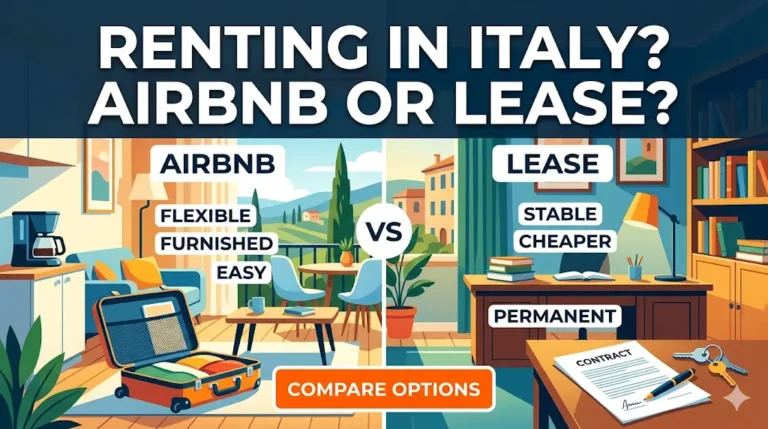
In cities like Florence and Venice, the proliferation of platforms like Airbnb has removed thousands of apartments from the long-term rental market. This “touristification” of housing means that for every ten apartments available for a weekend stay, there may only be one available for a long-term resident. Understanding these localized pressures is essential for managing your expectations regarding the Cost of Living in Italy 2026: Budgeting for Expats.
Preparation: The Key to Moving Fast
In a hot market, the time between a listing going live and the first viewing is often measured in hours. If you wait until you find a property you like to start gathering your paperwork, you have already lost.
Building Your “Dossier”
You should have a digital and physical folder ready to hand to a landlord or realtor the moment you step into a viewing. In Italy, landlords are incredibly risk-averse. They want to see that you are financially stable and legally compliant.
Your dossier should include:
- Codice Fiscale: This is the absolute minimum requirement. Without it, you cannot sign a contract.
- Proof of Income: If you are employed in Italy, this means your buste paga (pay slips). If you are a freelancer, your most recent tax return (Unico). If you are a foreigner, a bank statement showing significant savings or a letter of guarantee from an employer.
- References: A letter from a previous landlord (translated into Italian) can set you apart from other applicants.
Financial Readiness
Ensure your funds are liquid and ready for transfer. In a competitive market, a landlord will choose the tenant who can pay the security deposit and the first month’s rent immediately via a traceable bank transfer (bonifico). Be aware that standard deposits are usually equal to three months of rent.
Search Strategies for High-Demand Cities
Relying solely on major portals like Idealista or Immobiliare.it is rarely enough in a hot market. Everyone else is looking there, too. You need to expand your search horizons.
The “Private” Filter
When using major websites, filter specifically for listings by “Privati” (private owners). Real estate agencies often move slower and charge a fee equivalent to 10% of the annual rent plus 22% VAT. Direct contact with owners can sometimes lead to faster negotiations and a more personal connection, which is often the deciding factor in who gets the apartment.
Facebook Groups: The Local Secret
Almost every Italian city has a dedicated Facebook group for rentals and sales. Search for terms like “Affitto [City Name] Privati” or “Cerco Casa [City Name].” These groups often feature “pre-market” listings where current tenants post that they are moving out before the landlord officially lists the property.
Walking the Neighborhood
In Italy, many landlords—especially older ones—still prefer a “Vendesi” or “Affittasi” sign in the window over an online ad. Pick a neighborhood you like and walk the streets. Talk to the local giornalaio (newsstand owner) or the barista at the corner cafe. They often know who is moving out or which building has an empty unit.
Building a Relationship with Realtors
While avoiding agency fees is great, sometimes working with a realtor is the only way to access high-end or “off-market” listings.
How to Stand Out to an Agent
Realtors in hot markets are flooded with inquiries. A generic message like “Is this still available?” will likely be ignored. Instead, send a detailed introductory message in Italian (even if you use a translation tool) that outlines who you are, what you do for work, your budget, and the fact that you have your documents ready for immediate signing.
The Power of the “In-Person” Visit
If you are serious about a specific city, spend a week there doing nothing but visiting real estate offices. Introduce yourself, leave your business card or dossier, and tell them your specific requirements. When a new property comes across their desk, they are more likely to call the person they’ve met in person than to scroll through a database of thousands of online inquiries.
Navigating the Viewing: What to Look For
When you finally secure a viewing in a hot market, you might feel pressured to sign immediately. However, the unique nature of Italian properties requires a discerning eye.
Structural and Utility Checks
Many Italian homes are centuries old, and while they are charming, their systems can be outdated.
The “APE” Certificate
Every property in Italy must have an Attestato di Prestazione Energetica (APE), which rates its energy efficiency from A to G. In a world of rising energy costs, a home with a low rating (F or G) will be significantly more expensive to heat in the winter and cool in the summer.
Negotiation Tips for Competitive Markets
In a hot market, you rarely negotiate the price down; instead, you negotiate your “desirability” up.
The “Cedolare Secca” Advantage
Ask if the landlord is willing to use the Cedolare Secca tax regime. This is a flat-tax system for landlords that provides them with tax benefits in exchange for not being allowed to raise the rent during the duration of the contract. It’s a win-win: the landlord gets a simpler tax filing, and you get a stable rent.
Offering a Longer Commitment
If you are looking for a long-term home, emphasize your stability. A landlord would often rather take a slightly lower rent from a professional looking for a 4+4 year contract than a higher rent from a student who might move out in 12 months.
Neighborhood Value Comparisons
In a hot market, the “center” is often unaffordable or unavailable. To find success, you must look at the “semi-center” or well-connected suburbs.
| City | The “Hot” Core | The “Smart” Alternative | Why it Works |
| Milan | Brera / Porta Nuova | Isola / Lambrate | Excellent Metro connectivity and local “village” feel. |
| Rome | Trastevere / Prati | Garbatella / San Giovanni | Historic charm without the heavy tourist crowds and lower rents. |
| Florence | Centro Storico | Rifredi / Statuto | Served by the tramway, close to the hospital and university. |
| Bologna | Inside the Walls | Bolognina | Regenerated area with a multicultural vibe and modern lofts. |
| Turin | Centro | Vanchiglia / San Salvario | Vibrant nightlife and proximity to the park and river. |
Buying in a Hot Market: Tactics for Success
If you are looking to purchase, the stakes are even higher. The Italian buying process is notoriously slow, but in a hot market, the initial “offer” phase is incredibly fast.
Get a Mortgage Pre-Approval
If you are financing your purchase, do not start looking at houses until you have talked to an Italian bank. Financing for foreigners can be complex, and a seller will not wait for you to figure out your mortgage. Having a delibera reddituale (income approval) from a bank like Intesa Sanpaolo or UniCredit makes your offer as strong as cash.
The “Proposta d’Acquisto”
In Italy, the offer is a formal, written document accompanied by a small deposit check (caparra). This offer is usually irrevocable for 7 to 14 days. Ensure your offer includes a “subject to mortgage” clause (clausola sospensiva) if you are financing, though be aware that in an ultra-hot market, sellers may prefer cash offers that don’t have this clause.
Work with a Technical Expert
Before signing the final deed, hire a geometra (surveyor) to perform a technical audit. In Italy, it is common for older homes to have “abusi edilizi”—minor structural changes that weren’t officially registered. These must be resolved by the seller before the sale can go through.
Avoiding Scams in High-Demand Areas
Desperation is a scammer’s best friend. In a market where people are desperate for housing, fraudulent listings proliferate.
Red Flags to Watch Out For
- The “Overseas Landlord”: They claim they are abroad and will mail you the keys after you send the deposit via Western Union. Never send money before seeing the property and meeting the owner/agent.
- Suspiciously Low Prices: If a beautiful 2-bedroom in central Milan is listed for €800, it’s a scam.
- Requests for Identity Docs Early: While you need a dossier, do not send a scan of your passport to someone you’ve only met on WhatsApp before a viewing.
Conclusion
Navigating a hot housing market in Italy requires a blend of Mediterranean patience and modern-day hustle. By preparing your documentation in advance, expanding your search beyond the major portals, and understanding the legal protections available to you, you can successfully secure a home even in the most competitive environments.
Remember that the housing market, like much of Italian life, is built on personal relationships. Be polite, be persistent, and don’t be afraid to use the local network. The struggle of the search will quickly fade once you are enjoying your first aperitivo on your own balcony.
References
Primary sources (official)
- Agenzia delle Entrate (Italian Revenue Agency): Official portal for contract registration and tax information. https://www.agenziaentrate.gov.it
- Ministero delle Infrastrutture e dei Trasporti: National guidelines on rental laws and the canone concordato. https://www.mit.gov.it
Other helpful sources
- Idealista News Italy: Real-time market data and neighborhood price trends for 2026. https://www.idealista.it/news/
- SoloAffitti: Specialized rental network providing expert advice on landlord-tenant relations. https://www.soloaffitti.it
Disclaimer
The information provided in this article is for informational purposes only and does not constitute legal, financial, or professional real estate advice. Real estate markets are highly volatile and subject to local municipal regulations. Always consult with a qualified professional, such as an Italian real estate attorney or a licensed realtor, before making significant financial commitments or signing legal documents in Italy. The author is not responsible for any financial losses or legal disputes arising from property searches or transactions.