Florence to Bologna: The Cheapest Short-Hop High-Speed Route
Ah, the classic Florence to Bologna dash! So many of us have found ourselves needing to make this trip, whether it’s for a quick business meeting, catching an international flight from Bologna, or simply exploring more of Italy’s incredible cities. The challenge, as always, is finding that sweet spot: speed without breaking the bank. It's frustrating when you know there are fast trains, but the prices can feel like a lottery. This guide is all about cutting through the noise to help you snag the cheapest high-speed train tickets for this popular short-hop route, making your Italian adventures smoother and more affordable with the help of Omio.
Disclosure: This post may contain affiliate links. We may earn a commission at no extra cost to you if you make a purchase through these links. Read full disclosure.
Why High-Speed Trains from Florence to Bologna Make Sense (and the Cost Challenge)
Let's be real, Italy is a country meant for lingering, but sometimes you just need to get from A to B with efficiency. Florence to Bologna is a prime example of a route where high-speed rail truly shines, despite the occasional headache of pricing.
The Allure of Speed and the Reality of Italian Travel
When you're trying to navigate between major Italian cities, especially for relatively short distances, you quickly learn that time is precious. Driving might seem like an option, but then you're contending with ZTLs (restricted traffic zones) that will hit you with hefty fines, parking nightmares, and the stress of Italian drivers. Regional trains, bless their hearts, are incredibly cheap, but they stop everywhere and can turn a 30-minute journey into a two-hour endurance test. For the Florence-Bologna route, which is approximately 100 kilometers (about 62 miles), a high-speed train is an absolute game-changer.
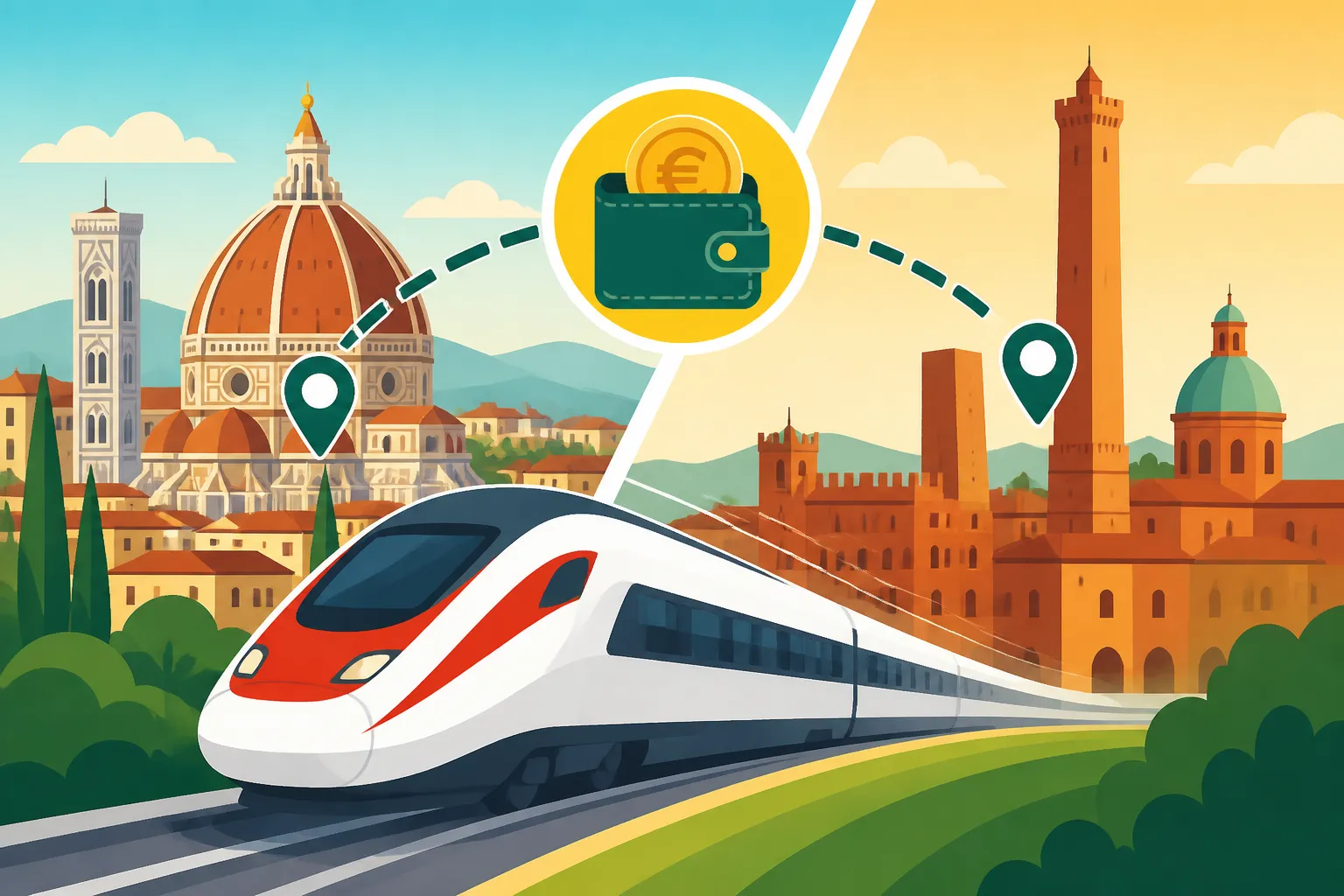
Imagine leaving Florence Santa Maria Novella and pulling into Bologna Centrale a mere 35-40 minutes later. It’s barely enough time to finish your espresso! This speed allows you to maximize your day, whether you're connecting to another train, exploring Bologna's porticoes and tagliatelle al ragù, or making it to an important appointment. The convenience is undeniable, turning what could be a half-day travel ordeal into a simple commute. For expats constantly on the move or tourists trying to pack in as much as possible, this efficiency is worth its weight in gold.
Understanding the Cost Dynamic of Italian High-Speed Rail
Now, for the tricky part: the cost. Unlike regional trains with their fixed, budget-friendly fares, high-speed train tickets in Italy operate on a dynamic pricing model, much like airlines. This means that the price you pay can vary wildly depending on when you book, the time of day you travel, the class you choose, and even the specific train you select. It’s not uncommon to see a ticket jump from €15 to €50 or even higher in a matter of days if you don't play your cards right.
The carriers, Trenitalia and Italo, offer different fare categories such as "Super Economy," "Economy," "Base," "Smart," and "Low Cost." The cheaper tickets are usually non-refundable and non-changeable, which means you need to be confident in your travel plans. Peak travel times – think Friday afternoons, Sunday evenings, or during major holidays like Easter or Ferragosto – will almost always be more expensive. This dynamic pricing can be incredibly frustrating for foreigners who aren't used to it, as it feels like the prices are constantly shifting targets. But don't worry, there are strategies to navigate this.
Navigating the High-Speed Options: Trenitalia vs. Italo
Italy boasts two primary high-speed train operators: Trenitalia, the state-owned national carrier, and Italo, its private competitor. Both offer excellent service on the Florence to Bologna route, but understanding their nuances is key to finding the best deals.
Trenitalia Frecciarossa: The National Carrier's Offering
Trenitalia operates its high-speed services under the "Frecce" brand, with the Frecciarossa (Red Arrow) being the fastest and most prominent. These sleek red trains connect Italy's major cities at speeds up to 300 km/h (about 186 mph). For the Florence to Bologna leg, Frecciarossa trains are incredibly frequent, departing multiple times an hour throughout the day from Florence Santa Maria Novella station. You'll arrive at Bologna Centrale, a major hub for onward travel throughout northern Italy.
Trenitalia offers four classes of service: Standard, Business, Premium, and Executive. While Executive is usually overkill for a short hop like this, Standard and Business class can offer varying levels of comfort and amenities, often reflected in the price. The challenge with Trenitalia, especially if you're booking last-minute, is that the "Base" fares can be quite high, making the cheapest "Super Economy" and "Economy" tickets disappear quickly. Always look for these lower fare options first, and understand that they usually come with strict no-change, no-refund policies.
Italo Treno: The Private Competitor
Italo Treno burst onto the scene as Italy's first private high-speed rail operator, providing a vibrant purple alternative to Trenitalia. Italo often runs on the same high-speed lines and connects the same major stations, including Florence Santa Maria Novella and Bologna Centrale. Their trains are modern and comfortable, and they aim to compete fiercely on price and service.
Italo offers three main travel environments: Smart, Prima, and Club Executive. Smart is their economy option, Prima is comparable to Trenitalia's Business, and Club Executive is their premium offering. For the Florence to Bologna route, Italo can often be a dark horse for finding cheaper tickets, especially when Trenitalia's budget fares are sold out. Their "Low Cost" and "Smart" fares are the ones to target. Italo often has competitive promotions, so it's always worth checking their offerings in parallel with Trenitalia's. Comparing these two effectively is precisely where a tool like Omio becomes indispensable.
The Hidden Gem: Regional Trains (A Cost-Time Trade-off)
While this guide focuses on high-speed options, it's worth a quick mention of regional trains for context. If budget is your absolute top priority and you have hours to spare, a regional train from Florence to Bologna can cost as little as €9-€10. However, the journey will take well over an hour, usually closer to 1 hour and 30 minutes, often requiring a change along the way. These trains don't use the high-speed lines, stopping at every little town. For most people making the Florence-Bologna trip, the incredible time savings offered by high-speed trains – getting you there in under 40 minutes – easily justify the slightly higher cost, especially when you know how to find those cheaper tickets.
Your Secret Weapon for Finding the Cheapest High-Speed Ticket: Omio
This is where your strategy truly takes shape. Gone are the days of flicking between Trenitalia and Italo's websites, trying to cross-reference departure times and prices. There's a much smarter way, and it involves making Omio your go-to booking platform.
Why Omio is an Expat's Best Friend for Italian Train Travel
For anyone navigating the complexities of Italian public transport, Omio is an absolute lifesaver. What makes it so brilliant? It's an aggregation platform that pulls real-time data from both Trenitalia and Italo (and buses, and flights, for longer journeys!) onto a single, user-friendly interface. This means no more guesswork, no more tab-hopping, and no more missed deals. You input your desired route and dates, and Omio presents all available options, clearly showing you who is operating the train, the travel time, and crucially, the exact price for each fare class.
This side-by-side comparison is invaluable. You can immediately see if a Trenitalia Super Economy fare beats an Italo Low Cost fare for your specific travel time. Furthermore, Omio often allows you to book directly through their platform in your preferred currency, simplifying payment and avoiding potential foreign transaction fees from Italian-only sites. It transforms a potentially confusing and time-consuming search into a quick, transparent process. Many expats swear by it for daily commutes and weekend escapes alike because it cuts through the bureaucratic hassle that often accompanies Italian travel planning.
Step-by-Step: Booking Your Florence-Bologna Ticket with Omio
Let's walk through exactly how to use Omio to bag those elusive cheap high-speed tickets:
- Head to the Omio Website or App: Start by opening the Omio website or launching their mobile app. Both are intuitive and easy to use.
- Enter Your Journey Details: In the search bar, type "Florence" (or "Firenze") as your departure point and "Bologna" as your destination. Select your desired travel date(s) and the number of passengers.
- Hit Search and Compare: Click search, and prepare to be amazed. Omio will display a comprehensive list of all available train journeys, often within seconds. Each listing will clearly show:
- The operator (Trenitalia or Italo).
- The departure and arrival times.
- The travel duration (which for high-speed will be around 35-40 minutes).
- The starting price for the cheapest available fare.
- Filter and Refine: On the results page, you'll find handy filters. You can sort by price (lowest first!), departure time, or even fastest journey. If you're flexible, browsing through the day's options will quickly reveal cheaper tickets, which tend to be for earlier morning or later evening trains, or during off-peak midday hours.
- Select Your Ticket and Fare Class: Click on a specific journey to expand the details. Here, Omio will present the various fare classes available (e.g., Trenitalia Standard, Business, Premium or Italo Smart, Prima, Club Executive) and their respective prices. Crucially, it will also show you the fare rules – whether it’s non-refundable, changeable (and for what fee), etc. Always aim for "Super Economy," "Economy," "Smart," or "Low Cost" if flexibility isn't a concern.
- Proceed to Booking: Once you've selected your ideal ticket, simply proceed to the booking stage. You'll enter passenger details and payment information. Omio accepts various payment methods, making the transaction smooth. You'll receive your e-ticket directly to your email, usually as a PDF or accessible via the Omio app, eliminating the need to print or validate a physical ticket – a common point of confusion for newcomers to Italy.
This streamlined process ensures you have all the information at your fingertips, making the search for the cheapest Florence to Bologna high-speed train tickets as painless as possible.
Insider Tips for Scoring the Best Deals via Omio
Even with Omio simplifying the search, a few insider tricks can further increase your chances of snagging a bargain:
- Book Well in Advance: This is the golden rule for Italian high-speed trains. The cheapest "Super Economy" and "Low Cost" fares are released months in advance and sell out quickly. As a general rule, try to book at least 3-4 weeks ahead of your travel date, or even earlier if your plans are firm. The closer you get to the departure date, the higher the prices will climb.
- Be Flexible with Your Travel Times: As mentioned, early morning (before 7:00 AM), late evening (after 7:00 PM), and sometimes midday trains (between 11:00 AM and 2:00 PM) are often cheaper than peak rush-hour services. Use Omio's flexible date search to view a wider range of prices across different times.
- Consider Off-Peak Days: Weekends and national holidays see a surge in demand and prices. If possible, plan your Florence-Bologna trip for a Tuesday, Wednesday, or Thursday for potentially better deals.
- Sign Up for Omio Alerts: If you have a specific route and date in mind but aren't seeing prices you like, set up a price alert with Omio. They'll notify you if the price drops, which can occasionally happen due to cancellations or new allocations of cheaper fares.
- Understand Your Fare Class: While "Super Economy" is great for savings, remember its restrictions. If there's a slight chance your plans might change, sometimes paying a few extra euros for an "Economy" or "Base" fare that allows changes (even with a fee) can save you a much bigger headache and cost later on.
By combining the power of Omio with these strategic booking tips, you'll be well-equipped to consistently find the most budget-friendly high-speed train tickets for your trips between Florence and Bologna.
Practicalities of Your Journey: From Station to Arrival
Booking your ticket is just the first step. Understanding the stations and what to expect on your short journey will ensure everything runs smoothly.
Departure from Florence Santa Maria Novella SMN
Florence Santa Maria Novella (SMN) is Florence's main train station and a beautiful, historic building in itself, located right in the city center. It’s easily accessible by foot from most central accommodations, or by Florence's excellent local bus network. You can find detailed information on how to get around Florence in our guide to Getting Around Italian Cities: Metro, Tram, and Buses. When you arrive at SMN, you'll find the high-speed platforms usually towards the back of the main hall.
Look for electronic departure boards (partenze) to confirm your platform (binario). They usually update about 20 minutes before departure. Since you'll have an e-ticket from Omio, there's no need to validate anything at the little green machines you might see – just board your train with your ticket ready on your phone or printed. Aim to arrive at least 15-20 minutes before your departure, especially if you need to grab a coffee or find your platform in a bustling station.
Arrival at Bologna Centrale
Bologna Centrale is one of Italy's largest and most important railway hubs, a gateway to the north and a crucial interchange point. High-speed trains typically arrive at the dedicated high-speed platforms (often underground or on upper levels), but the station is well-signed. Upon arrival, you'll find escalators and elevators to bring you to the main station concourse. From there, you can easily connect to Bologna's fantastic local bus network, taxi services, or regional trains to other destinations.
If you're spending time in Bologna, the station is a manageable walk to the historic city center, though taking a short bus ride might be more convenient, especially with luggage. Bologna's public transportation system is efficient, and you can learn more about navigating it in our detailed post about Public Transportation in Italian Cities: A Guide.
| Feature | Trenitalia (Frecciarossa) | Italo Treno | Regional Trains (for comparison) |
|---|---|---|---|
| Travel Time | ~35-40 minutes | ~35-40 minutes | ~1h 30m – 2h (with changes) |
| Frequency | Very High (multiple per hour) | High (several per hour) | Moderate (less frequent than high-speed) |
| Starting Price | From €13-€15 (Super Economy, booked in advance) | From €12-€14 (Low Cost, booked in advance) | ~€9-€10 (fixed fare) |
| Flexibility | Low with cheapest fares | Low with cheapest fares | High (tickets valid for a period, changeable) |
| Booking Via | Official website, ticket counters, Omio | Official website, ticket counters, Omio | Official website, ticket counters |
| Comfort | Modern, comfortable seats, amenities | Modern, stylish, comfortable seats, amenities | Basic, often older, no reserved seats |
What to Expect Onboard: Comfort and Amenities
For such a short journey, the high-speed trains are incredibly comfortable. Both Trenitalia and Italo trains offer spacious seating, often with power outlets at each seat, and generally reliable Wi-Fi (though sometimes spotty in tunnels). There's ample luggage space in overhead racks and larger compartments at the ends of carriages. You'll find onboard cafes or bar cars if you fancy another Italian coffee or a quick snack.
The journey itself is smooth and scenic, though a good portion of it will be spent in tunnels as the train slices through the Apennine mountains. Before you know it, you’ll be gliding into Bologna. This ease of travel is precisely why investing a little effort (and using Omio) to find an affordable high-speed ticket is always the best choice for this particular route. It saves you stress, maximizes your time, and helps you truly experience the efficiency of modern Italian travel.
Disclaimer
The information provided in this guide is intended for general informational purposes only and may not be current or applicable to your specific situation. Train schedules, prices, and regulations in Italy are subject to change. Always verify details with the official train operators (Trenitalia, Italo) or your chosen booking platform like Omio. We recommend checking current travel advisories and requirements before planning your journey.