Italy to Slovenia and Croatia: Trieste as a Crossing Point
Oh, the joy, and sometimes the absolute headache, of crossing borders when you're living in or exploring Italy! You’ve probably already mastered the local quirks of getting around this beautiful boot, but when your wanderlust sets its sights slightly further east, towards the stunning landscapes of Slovenia and Croatia, things can feel a little… well, different. The roads, the rules, the language changes – it can be a maze, especially if you’re trying to piece together routes from various Italian cities. But fear not, my fellow traveler! This guide is all about making that leap, specifically using the wonderfully positioned city of Trieste as your launchpad, and showing you how one fantastic tool, Omio, can truly simplify your entire journey.
Disclosure: This post may contain affiliate links. We may earn a commission at no extra cost to you if you make a purchase through these links. Read full disclosure.
Trieste: Your Unofficial Border Czar for Slovenia and Croatia
Trieste. Ah, Trieste! It's a city with a unique vibe, an almost Austro-Hungarian elegance mingled with Italian flair, sitting right on the edge of what feels like a completely different world. For expats and tourists alike, it's not just another charming Italian city; it’s the gateway to the Balkans, a place where the signs start to subtly hint at Slovenian, and the air smells a little bit more like the Adriatic breeze from the east.
A City of Crossroads and Whispers of History
Trieste's history is deeply intertwined with its geographical position. For centuries, it was a crucial port for the Austro-Hungarian Empire, connecting Central Europe to the Mediterranean. This history has left an indelible mark, making it a fascinating blend of cultures. But for us modern-day wanderers, it means excellent transport links were built out of necessity. You’re not just passing through a random town; you’re stepping into a historical crossroads, a place perfectly designed by centuries of trade and travel to facilitate your journey east. It feels less like a border and more like a seam, where cultures gently stitch together.
The Geographic Sweet Spot
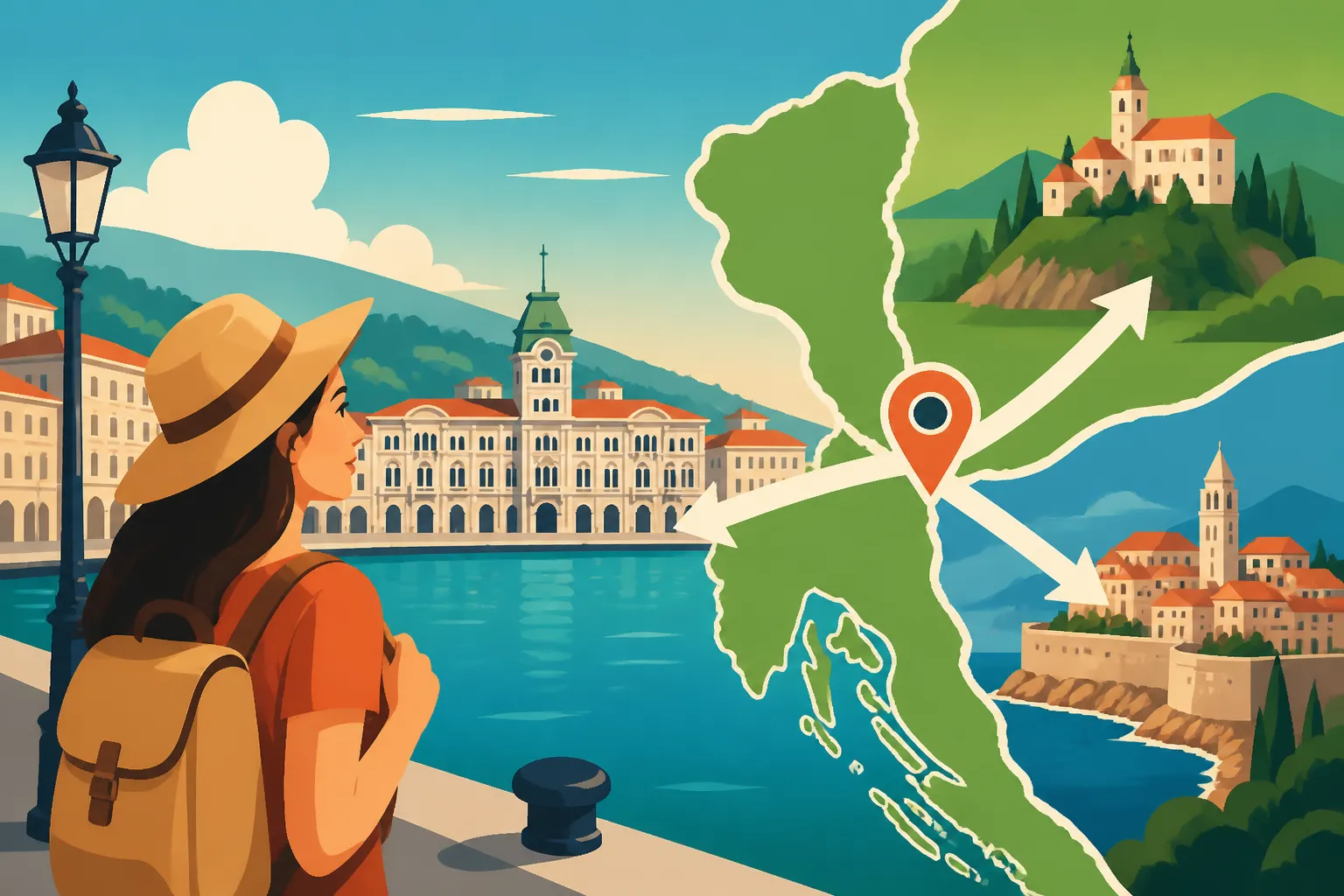
Seriously, look at a map. Trieste is practically hugging Slovenia. The border is just a few kilometers away, making it an incredibly convenient starting point for trips into both Slovenia and, by extension, Croatia. Its main train station (Trieste Centrale) and the central bus station are well-connected hubs, offering direct routes to Slovenian cities and coastal towns, and onwards to Croatia. You'll find that many direct buses from deeper within Italy to Slovenia or Croatia actually pass through Trieste or require a transfer here. It's truly the most logical and least convoluted point to make your international leap, rather than trying to navigate lesser-known border crossings from other parts of Italy.
Crossing into Slovenia: The Quick Hop East
Once you’re in Trieste, getting into Slovenia is often surprisingly straightforward, though the mode of transport can significantly impact your experience. Think of it as a warm-up act for your larger Balkan adventure.
Buses: The Most Direct Route
For most travelers heading from Trieste into Slovenia, the bus is hands down the most convenient and popular option. Companies like FlixBus and the local Slovenian operator, Nomago, offer frequent services from Trieste's central bus station. You can often hop on a bus that will take you directly to Ljubljana, the charming capital of Slovenia, or to coastal gems like Koper and Piran.
- To Ljubljana: You'll find multiple daily departures, and the journey typically takes around 1.5 to 2 hours, depending on traffic and border formalities. The route is pretty scenic, winding through rolling hills and often offering glimpses of the Adriatic.
- To Koper/Piran: If you're looking for a quick coastal getaway, Koper is even closer, often just a 30-40 minute ride. Piran, with its Venetian architecture, is a bit further but still easily accessible by bus, often requiring a quick change in Koper or Portorož, or sometimes even offering direct services.
The beauty of using a platform like Omio here is that you can easily compare departure times, prices, and even specific bus operators all in one place. No need to open ten different tabs or navigate clunky foreign websites. You simply punch in Trieste and your Slovenian destination, and Omio lays out all the best options, ensuring you get the most efficient connection. This is where Omio truly shines, cutting through the potential confusion of multiple transport providers.
Trains: Scenic, but Not Always Simple
While trains offer a wonderfully nostalgic way to travel, direct train connections from Trieste to Slovenia are actually quite limited and often involve changes, making them less straightforward than buses. Historically, there haven't been strong direct rail links between Trieste and Slovenia, a lingering legacy of shifting borders and political landscapes.
If you insist on train travel, you'll likely need to take a regional Italian train to a border town (like Villa Opicina just outside Trieste), and then connect with a Slovenian train. This can add significant time and complexity to your journey. You might even find it's faster and cheaper to take a bus for the primary leg and then connect to a train if you specifically want to experience Slovenian rail. If you are comparing train travel within Italy or even between larger European cities, you might want to check out How to Buy Trenitalia and Italo Tickets and Save Money. For most Italy-Slovenia cross-border trips, however, I’d suggest sticking to the bus for ease and speed. But, again, Omio will show you any viable train options if they exist, making it easy to see all your choices in one simple search result.
Driving Yourself or Sharing a Ride
Renting a car in Trieste and driving into Slovenia is certainly an option, offering maximum flexibility. The roads are generally excellent, and distances are short. However, remember a few key things:
- Vignette: If you drive on Slovenian motorways, you must purchase a vignette (a toll sticker). You can buy these at gas stations near the border. Get caught without one, and you're looking at a hefty fine.
- Rental Car Cross-Border Fees: Always check with your rental car company if there are extra fees for taking the car across international borders. Some companies charge a "cross-border card" fee, and it’s important to declare your intentions beforehand to avoid issues with insurance or breakdown cover.
- International Driving Permit: Depending on your country of origin, you might need an International Driving Permit (IDP) in addition to your national driver's license. Check out "Do You Need an International Driving Permit to Drive in Italy?" as the rules often extend to neighboring countries.
For those who prefer not to drive but like the idea of a car, ride-sharing services like BlaBlaCar can sometimes offer affordable options, connecting you with locals heading in the same direction. It’s a great way to meet people and split costs!
Venturing into Croatia: Adriatic Dreams Just Beyond the Border
Croatia, with its stunning coastline, ancient cities, and vibrant culture, is a fantastic destination. The good news for travelers is that Croatia officially joined the Schengen Area on January 1, 2023, which means border crossings from Slovenia are now much smoother, often without physical passport checks, just like traveling between Italy and Slovenia. This has significantly simplified the journey for expats and tourists alike.
The Bus is King for Croatian Connections
Similar to Slovenia, buses are undoubtedly the most practical and efficient way to reach Croatia from Trieste. Many direct services run to popular Croatian destinations, particularly those in the Istrian peninsula and further south.
- Istrian Peninsula (Pula, Rovinj, Poreč): From Trieste, you can find frequent direct buses to these beautiful coastal cities. The journey to Pula, for example, typically takes around 2.5 to 3 hours, weaving through charming landscapes. Rovinj and Poreč are often served by the same routes or require a simple change in a larger hub like Pula.
- Rijeka and Zagreb: For other major Croatian cities, buses are still your best bet. Rijeka is often reachable within 2-3 hours, while the journey to the capital, Zagreb, will be longer, typically 4-5 hours.
This is another prime example of where Omio becomes an indispensable travel companion. You can effortlessly search for buses from Trieste to Pula, Rijeka, or Zagreb. Omio consolidates all the available routes from various operators – FlixBus, Nomago, and other regional companies – so you can instantly compare prices, journey durations, and even check amenities like Wi-Fi or power outlets. Imagine trying to do that across half a dozen different websites, some in languages you don’t quite grasp! Omio simplifies this, presenting everything clearly and allowing you to book your tickets securely in your preferred language and currency.
Train Travel to Croatia: A More Complex Journey
Just like with Slovenia, direct train routes from Trieste to Croatia are extremely limited, bordering on non-existent for practical purposes. If you were to travel by train, it would involve multiple changes and significantly longer travel times, often making it an impractical choice compared to the ease of bus travel. For complex international journeys, you generally want to minimize transfers unless you're intentionally planning a multi-stop scenic route. If you're intrigued by train travel within Italy itself, you might find Getting Around Italy: Trains, Buses, Flights, and Car Hire useful. But for crossing the border to Croatia, the bus remains the clear victor.
Self-Drive to Croatia: Freedom, But Mind the Details
Driving from Trieste into Croatia offers a fantastic sense of freedom, allowing you to explore the stunning Istrian peninsula and beyond at your own pace. The roads are generally in good condition, and the coastal routes are incredibly scenic.
- Rental Car Considerations: As with Slovenia, remember to inform your rental car company about your cross-border plans. They might have specific policies, charges, or insurance requirements. Always get the "green card" (international motor insurance card) from them.
- Fuel and Parking: Fuel prices can fluctuate, so keep an eye on them. Parking in popular Croatian coastal towns can be challenging and expensive, especially during peak season. Research parking options in advance if you're driving into city centers.
- Border Crossing: Since Croatia is now part of the Schengen Area, border crossings from Slovenia are generally smooth. However, it's always wise to have your passport and vehicle documents readily available, just in case. Unexpected checks can still occur, particularly during busy holiday periods.
- ZTLs: Remember Italy’s ZTLs (Limited Traffic Zones)? Well, Croatia has its own version in some historic city centers. Be aware of these to avoid fines.
Streamlining Your International Journey with Omio
Let's be real: planning a multi-country trip with different modes of transport and operators can be a headache. This is precisely why Omio isn't just a suggestion, it's a game-changer for journeys like the one from Italy to Slovenia and Croatia.
The Single Platform Advantage for Italy to Slovenia & Croatia Trips
Imagine this: you're trying to figure out the best way to get from Florence to Ljubljana. You could take a train to Trieste, then a bus to Ljubljana. Or maybe a direct bus from Florence to Ljubljana via Trieste? How do you compare all these options efficiently? This is where Omio truly becomes your hero. It aggregates data from various train, bus, and even flight operators (though flights aren't typically relevant for Trieste-Slovenia/Croatia direct routes) and presents them in one clean, easy-to-understand interface.
Instead of navigating Trenitalia's site for Italian trains, then FlixBus, then Nomago, then Croatian bus companies, you simply enter your start and end points (e.g., "Trieste" to "Ljubljana" or "Pula"), and Omio does the heavy lifting. It will show you the fastest, cheapest, and most convenient routes, allowing you to mix and match transport types seamlessly. Need to get from, say, Milan to Rovinj? Omio can even help you plan that multi-leg journey, showing you the train to Trieste and then the connecting bus, all bookable in one go.
Real-time Information and Multilingual Support
One of the often-overlooked benefits of using a service like Omio is the access to real-time information and multilingual support. When you're dealing with international travel, delays or changes can happen. Having a platform that provides updated schedules and, crucially, customer support in a language you understand (like English, or many others) can be invaluable. It takes a huge amount of stress out of potential travel snags. This kind of peace of mind is worth its weight in gold when you're far from home. For other general travel safety tips, consider Staying Safe in Italy: Common-Sense Tips for Travelers.
A Word on Booking and What to Expect
Booking through Omio is straightforward. Once you’ve picked your ideal journey, you can purchase your tickets directly through the platform. You'll typically receive e-tickets which you can store on your phone, making paper tickets a thing of the past (though always have a backup, just in case!). On the day of travel, simply show your e-ticket to the driver or conductor. It genuinely streamlines the entire process from planning to execution. It means less time fumbling with language barriers at ticket counters and more time enjoying your adventure. So, for your next cross-border excursion from Italy to Slovenia or Croatia, do yourself a huge favor and check out Omio. It’s the smart way to travel.
Essential Travel Tips for Your Cross-Border Adventure
Embarking on a journey across borders, even short ones, comes with its own set of practical considerations. As an expat who’s done my fair share of hopping across European frontiers, I’ve learned a few things that can make your trip smoother.
Navigating the Schengen Zone Realities
Since both Slovenia and Croatia are now part of the Schengen Area, crossing the borders should be relatively seamless for those who are already legally in the Schengen zone (e.g., on an Italian visa or residence permit, or as an EU citizen). This means fewer (or often no) passport checks at the internal borders. However, always carry your identification (passport or national ID for EU citizens) and any relevant visa or residence permit documents. While routine checks are rare, random spot checks can occur, and it's vital to prove your legal status if asked. For non-EU citizens, understanding your Italian residence permit status is key. If you're unsure about the nuances of your Italian Permesso di Soggiorno, you might want to look at "Permesso di Soggiorno (Italian Residence Permit) Explained".
Currency and Communication: The Practicalities
- Currency: Slovenia uses the Euro (€), just like Italy. This makes life easy! Croatia, however, adopted the Euro on January 1, 2023. So, no more changing money to Croatian Kuna! You can freely use Euros in both countries. Still, it's always a good idea to have some small bills for local markets or smaller establishments. For general money matters as an expat, check out Money Matters in Italy: Banking and Finance for Expats.
- Language: While Italian is spoken in Trieste, you'll immediately notice Slovenian and Croatian influences. English is widely understood in tourist areas, especially among younger generations, but learning a few basic phrases in Slovenian (like Dober dan for hello, Hvala for thank you) and Croatian (like Dobar dan, Hvala) can go a long way. Locals truly appreciate the effort. Our guide to Italian Language and Everyday Communication for Visitors might give you some basic tips for approaching new languages.
- Mobile Data: For communication, if you have an Italian SIM card from a major provider, your data and call plan should work seamlessly in Slovenia and Croatia without extra roaming charges, thanks to EU roaming regulations. However, if you're from outside the EU or on a plan with restrictions, consider getting a local eSIM for travel. This is generally more convenient than swapping physical SIM cards. You can find more specific advice in Mobile Data and eSIMs for Travel in Italy.
Local Logistics: Getting Around Once You Arrive
Upon arrival in cities like Ljubljana, Pula, or Zagreb, you'll find well-organized local public transport systems (buses, trams). Major bus and train stations are usually centrally located or well-connected to city centers. Having a local map (digital or physical) downloaded can be a lifesaver. Keep an eye out for local tourist information centers at stations; they often have free maps and can provide up-to-date information on local transport and attractions. Remember, part of the adventure is figuring things out on the ground, but a little preparation goes a long way!
Disclaimer
The information provided in this guide is intended for general informational purposes only and is subject to change. While we strive to keep details up-to-date, travel regulations, visa requirements, transport schedules, and border policies can change without notice. Always verify the latest information with official government sources, transport operators (like Omio for booking details), and relevant embassies or consulates before making travel plans. We are not responsible for any inaccuracies or outdated information. Travel insurance is highly recommended for all international journeys.