Night Trains in Italy: Intercity Notte Routes and Whether They’re Worth It
Ah, the romance of the rails, especially under a blanket of stars! Moving around Italy can be a breathtaking experience by day, but what about when the sun sets? For many of us living here or just visiting, the idea of traveling through the night, waking up in a new city, is incredibly appealing. However, figuring out if Italy's night train network, particularly the Intercity Notte services, is genuinely worth the hype – or the potential discomfort – can be a real head-scratcher. This guide is here to shed some light on the nocturnal journey, helping you navigate routes, comfort levels, and, most importantly, how to make your booking process as smooth as possible with tools like Omio.
Disclosure: This post may contain affiliate links. We may earn a commission at no extra cost to you if you make a purchase through these links. Read full disclosure.
The Allure and Reality of Night Trains in Italy
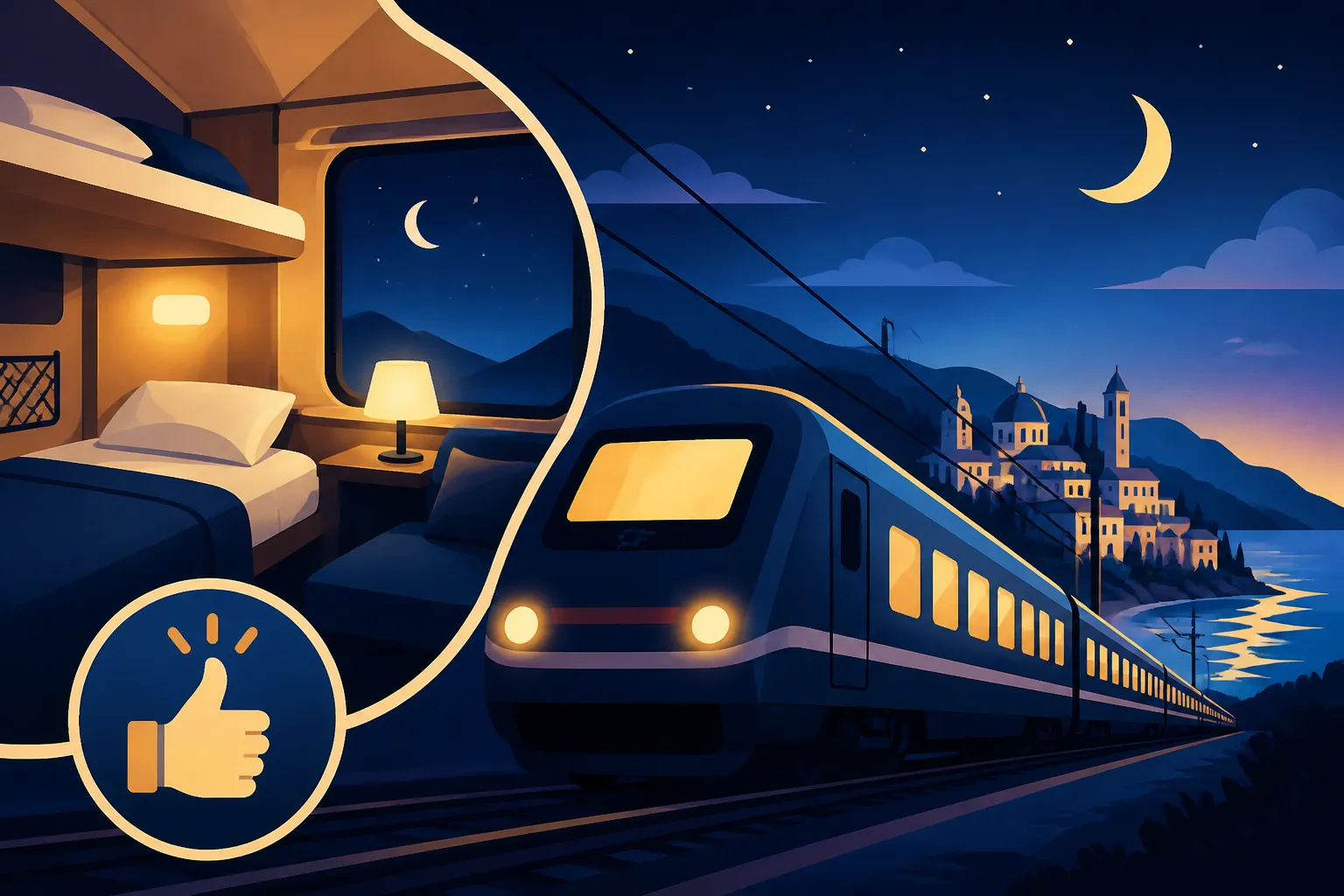
When you first hear about night trains, your mind might conjure images from classic films – elegant carriages, clinking glasses, and scenic views sliding past. While Italian night trains offer a unique charm, it's crucial to separate the romantic ideals from the practical realities for a truly enjoyable trip.
Why Choose a Night Train? Saving Time and Money
Let's be honest, Italy is gorgeous, but traveling across it can eat into your precious holiday time and budget. This is where night trains, specifically the Intercity Notte services run by Trenitalia, truly shine. Imagine boarding a train in Milan after a late dinner and waking up refreshed in Sicily the next morning. You save an entire day of travel, transforming it into a productive night's sleep (or at least, a productive night's journey).
Beyond the time-saving aspect, there's the significant financial benefit. A night train ticket often includes your "accommodation" for the night. This means you're effectively saving the cost of a hotel room, especially in pricy cities like Rome or Venice. For budget-conscious travelers or long-term expats, this can be a game-changer. I remember once needing to get from Turin to Reggio Calabria for a friend's wedding. Instead of a flight, a hotel, and then a daytime regional train, I hopped on an Intercity Notte. It wasn't the Ritz, but I saved a fortune and woke up just a short distance from my destination, ready to enjoy the local cornetto. It's also an eco-friendlier way to travel than flying, which is a bonus for many of us.
Common Misconceptions and Challenges
Now, let's temper that enthusiasm with a dose of reality. Night trains are not for everyone, and they come with their own set of challenges. The biggest misconception is often about the level of comfort. Unless you splurge on a private sleeping cabin (which we'll discuss), don't expect a luxury hotel experience. The movement, the occasional stops, and the ambient train noises can make a full, uninterrupted night's sleep elusive for light sleepers. I've had nights where I felt every bump and heard every announcement, even through earplugs.
Security is another common concern. While train travel in Italy is generally safe, especially on official routes, it's always wise to be vigilant. Keep your valuables close, preferably locked away or on your person, especially if you're in a shared couchette. Trusting strangers with your belongings is never a good idea, no matter how friendly they seem. Furthermore, Italian train services, while generally reliable, can sometimes face delays, especially on longer routes. This can throw off meticulously planned morning connections. And then there's the booking itself – navigating foreign websites can be a pain, but thankfully, platforms like Omio simplify this dramatically, offering clear options and an English interface.
Navigating Intercity Notte Routes: Where Can They Take You?
Italy's night train network, primarily operated by Trenitalia's Intercity Notte, is designed to connect the peninsula's far-flung regions, making those long north-to-south journeys manageable. These aren't the high-speed trains like Frecciarossa that zip between major cities during the day; Intercity Notte trains are a different beast, focusing on overnight travel and covering greater distances.
Key North-South Connections
The core of the Intercity Notte network is its ability to link the bustling north with the sun-drenched south, often traversing the entire length of Italy. These routes are perfect for those who want to avoid multiple changes or long daytime travel.
- Milan/Turin to Sicily (Palermo/Syracuse): This is arguably one of the most iconic Italian night train routes. Imagine leaving the industrial heart of Italy and waking up in the Mediterranean paradise of Sicily. What makes this journey particularly unique is that the train carriages actually get loaded onto a ferry to cross the Strait of Messina! It's a logistical marvel and an unforgettable experience. This route often splits, allowing you to reach both the western (Palermo) and eastern (Syracuse) coasts of the island.
- Milan/Turin to Puglia (Lecce): For those heading to the "heel" of Italy, the Intercity Notte to Lecce is a fantastic option. Puglia is renowned for its trulli, pristine beaches, and incredible food. Traveling overnight means you arrive ready to explore, perhaps after a quick espresso at the Lecce train station.
- Rome to Sicily/Calabria: Even from the Eternal City, you can catch an Intercity Notte south. These routes offer connections to destinations in Calabria (like Reggio Calabria) and continue into Sicily. It’s a great choice if you've already spent some time in Rome and want to delve deeper into Southern Italy without the hassle of flying.
These longer routes can be a godsend for backpackers, families, or anyone trying to squeeze more out of their Italian adventure. Instead of spending hours at airports or driving for an entire day, you let the train do the work while you rest.
Understanding the Italian Night Train Network
Unlike the High-Speed Trains in Italy: Trenitalia, Italo, Routes, and Savings that prioritize speed and frequent connections between major hubs, Intercity Notte trains focus on covering significant distances efficiently overnight. They typically make fewer stops than regional trains, but more than high-speed services. The trains themselves are generally older models, but they are well-maintained and equipped for overnight travel, offering different classes of service from basic seats to private sleeping compartments.
Here's a quick overview of the main destinations these night routes typically serve:
| Departure City | Arrival City (Major) | Key Regions Connected | Unique Features |
|---|---|---|---|
| Milan / Turin | Palermo / Syracuse | Lombardy, Piedmont, Sicily, Calabria | Train carriages loaded onto a ferry across Strait of Messina |
| Milan / Turin | Lecce | Lombardy, Piedmont, Emilia-Romagna, Puglia, Marche | Connects north to the "heel" of Italy |
| Rome | Palermo / Syracuse | Lazio, Campania, Calabria, Sicily | Direct links from capital to the islands |
| Rome | Bolzano | Lazio, Umbria, Tuscany, Emilia-Romagna, Veneto, Trentino-Alto Adige | Connects central Italy to the Dolomite region |
Note: Routes and services can change, so always check the latest schedules through a reliable booking platform like Omio.
When considering where to travel in Italy, knowing that night trains exist can open up new possibilities, allowing you to explore diverse areas, from the bustling north to the tranquil south, seamlessly. It ties in perfectly with planning Italy's Regions: A Traveler's Overview as you can cover vast distances.
Choosing Your Comfort Level: Sleeping Options on Intercity Notte
One of the biggest factors in deciding if an Intercity Notte journey is "worth it" comes down to your chosen level of comfort. Trenitalia offers a range of options, from the most basic seat to a private room, each with a vastly different price point and experience. It's crucial to understand these distinctions before you book to manage your expectations.
Seat (Posto a Sedere): The Budget Option
If you're on a shoestring budget and can sleep anywhere, a regular seat might be your go-to. These are standard train seats, usually in compartments or open-plan carriages, much like you'd find on a daytime regional train. They recline slightly, but don't expect anything approaching a flat bed. You'll be sharing the space with other passengers, and there's no guarantee of quiet or darkness.
- Pros: This is by far the cheapest option. If you're a heavy sleeper or just need to get from A to B as economically as possible, it does the trick. You save on a hostel bed and arrive early.
- Cons: Comfort is minimal. You'll likely be disturbed by other passengers, light, and noise. Security requires extra vigilance as your belongings are exposed. You definitely won't arrive feeling fully refreshed.
- Who it's for: Young backpackers, solo travelers on a very tight budget, or those truly unbothered by discomfort for one night. I've done it once in my early expat days – it was an adventure, but not one I'm eager to repeat often.
Couchettes (Cuccette): Semi-Private and Social
This is the most popular choice for night train travel and offers a significant step up from a seat. Couchettes are shared compartments, typically with 4 or 6 berths (beds). You'll usually get a pillow, sheets, and a blanket. The berths are designed for sleeping, so while not enormous, they offer a horizontal place to rest. The compartment door locks from the inside, providing a basic level of privacy and security for your group (or your new travel companions).
- Pros: Much more comfortable than a seat, allowing you to lie down. You save on accommodation. It's a social experience if you're traveling with friends or meet interesting people. The locked compartment offers better security.
- Cons: You're still sharing with strangers unless you book out the entire compartment. Snoring, different schedules, and general movement can still disrupt sleep. Space is limited, so large luggage can be a challenge.
- Configurations:
- 6-berth (Cuccetta 6): The most economical couchette, with three bunk beds on each side.
- 4-berth (Cuccetta 4): More spacious and generally preferred, with two bunk beds on each side. These are often offered as "women-only" compartments, which is a great option for solo female travelers looking for extra peace of mind.
- Who it's for: Friends or families traveling together (who can book an entire compartment), or solo travelers looking for a balance between cost and comfort, who don't mind sharing. It's what I usually opt for if I'm taking a night train.
Sleeping Cars (Vagoni Letto): Private and Premium
If you crave privacy and a genuinely comfortable sleep, the vagone letto (sleeping car) is your best bet. These are private compartments, typically for 1, 2, or 3 people, offering proper beds, often with sinks and sometimes even private toilets (in the Excelsior class). You'll get fresh linens, towels, and often a complimentary breakfast in the morning.
- Pros: Maximum comfort and privacy. You get a real bed, a lockable door, and often your own washbasin. It's the closest thing to a hotel room on wheels. Arrive genuinely refreshed.
- Cons: This is the most expensive option, often comparable to a budget hotel room or even a flight. Availability can be limited, especially on popular routes.
- Classes:
- Single/Double/Triple: Standard sleeping car compartments with one, two, or three beds.
- Excelsior: The premium class, offering larger beds, a private bathroom (sometimes with a shower), and higher-quality amenities.
- Who it's for: Couples, business travelers, or anyone willing to pay a premium for privacy, comfort, and a good night's sleep. If you've been on a whirlwind tour of Italy and need a truly restful journey, this is the way to go.
The choice really depends on your budget, your need for privacy, and how well you adapt to different sleeping environments. For a smooth booking experience, no matter which option you choose, using a platform like Omio can simplify comparing these options and finding the best fit for your trip.
Booking Your Italian Night Train Adventure: The Omio Advantage
Okay, you've decided a night train is for you. Now comes the arguably most daunting part of any travel in Italy: the booking process. Navigating multiple websites, dealing with Italian-only interfaces, and trying to decipher train types can be a nightmare. This is precisely where a platform like Omio becomes your best friend.
Why Omio Makes it Easy
I've been an expat in Italy for years, and let me tell you, finding the easiest way to book anything is a skill you quickly develop. For train travel, especially when comparing different providers or trying to understand all the options, Omio stands out. What makes it a hero for expats and tourists alike?
- Consolidated Search: Instead of hopping between Trenitalia's site, Italo's site (though Italo doesn't run night trains), and bus companies, Omio pulls all these options into one place. This means you can see all available night train routes, compare prices, and check different comfort levels (seats, couchettes, sleeping cars) side-by-side. It saves immense time and frustration.
- User-Friendly Interface: The website and app are incredibly intuitive. It’s designed for international users, which means clear language (hello, English!), straightforward navigation, and transparent pricing. No more trying to Google Translate every little button or second-guessing what you're actually booking.
- Real-Time Availability and Pricing: Omio connects directly to the train operators' systems, so you're seeing up-to-the-minute availability and the best possible prices. This is crucial for night trains, which can sometimes sell out, especially popular routes or specific sleeping compartments.
- Mobile Ticketing: Once you book, your tickets are usually delivered electronically to your phone, making it super convenient. No need to print anything or fuss with ticket machines at the station. This is a blessing, as you'll learn when Getting Around Italy: Trains, Buses, Flights, and Car Hire.
Using Omio means you spend less time wrestling with booking logistics and more time planning the fun parts of your Italian adventure.
Step-by-Step Booking with Omio
Let's walk through a hypothetical scenario of booking a night train from Milan to Palermo using Omio:
- Visit the Omio Website or App: Open Omio and enter your departure (Milan) and arrival (Palermo) stations, along with your desired travel date. Make sure to specify an overnight journey if you have a preference.
- Filter for Night Trains: Omio will show you all available options: high-speed trains, regional trains, and sometimes buses. Look for the Intercity Notte (often abbreviated as IC Notte) options. You can usually filter by "duration" or "transport type" to narrow it down.
- Compare Comfort Options: Once you find an Intercity Notte route that works for you, click on it to see the different comfort levels. This is where you'll see "Posto a Sedere" (seat), "Cuccetta" (couchette, usually 4 or 6 berth, sometimes with a 'donna' – woman-only option), and "Vagone Letto" (sleeping car).
- Select Your Preference: Choose the option that best suits your budget and comfort needs. For example, if you're a group of four, selecting a 4-berth couchette might be ideal, and Omio will clearly show you the total price.
- Add Passenger Details: Enter the names and other required information for all travelers.
- Review and Pay: Double-check all your details, especially the dates and times, and then proceed to payment. Omio accepts various payment methods, making it easy for international travelers.
- Receive Your Ticket: Your e-ticket will be sent to your email and often stored within the Omio app. Present this on your phone to the train conductor when asked.
It's truly that simple. I've often used Omio for my last-minute weekend trips or when planning longer journeys for friends visiting from back home. It takes the guesswork out of booking, which is a huge relief when dealing with Italian bureaucracy in general.
Tips for Securing the Best Deals
Even with a fantastic tool like Omio, a few insider tips can help you snag the best night train deals:
- Book in Advance: This is probably the most crucial tip. Night train tickets, especially couchettes and sleeping cars, operate on a dynamic pricing model. The earlier you book, the cheaper they tend to be, and the more likely you are to get your preferred option. As with How Early Should You Book High-Speed Trains in Italy?, the same principle applies here.
- Be Flexible with Dates: If your travel dates aren't set in stone, play around with different days of the week. Mid-week travel (Tuesday, Wednesday, Thursday nights) is often cheaper than weekends or public holidays.
- Consider Off-Peak Seasons: Traveling during the shoulder seasons (spring or autumn) or winter (excluding holidays) will generally yield better prices and more availability than the busy summer months.
- Compare All Options: Don't just jump for the cheapest seat. Use Omio to quickly compare the price difference between a seat and a 6-berth couchette. Sometimes, for just a few extra euros, you can get a significantly more comfortable journey.
- Look for Special Offers: Keep an eye out for promotions. Trenitalia occasionally runs deals, and these will often be reflected on Omio.
By leveraging Omio and these tips, you'll be well on your way to a hassle-free and potentially budget-friendly night train adventure across Italy.
Practical Tips for a Smooth Journey
A night train journey, while exciting, requires a bit more preparation than a standard day trip. Thinking ahead can make all the difference between a cramped, restless night and a relatively peaceful passage.
What to Pack for an Overnight Trip
Packing smart is key for maximizing comfort and security on an Intercity Notte.
- Valuables First: Always keep your passport, money, phone, and other essential valuables in a small bag that stays with you, preferably strapped to your body, even when you sleep. A small cross-body bag or a fanny pack under your clothes works wonders. Avoid leaving your wallet in your pants pocket if you're sleeping in a couchette. Staying Safe in Italy: Common-Sense Tips for Travelers applies even more when you're vulnerable in sleep.
- Comfort Essentials:
- Earplugs and Eye Mask: Non-negotiable! These are your best defense against noise from other passengers, train announcements, and light filtering into the carriage.
- Travel Pillow: A neck pillow can be a lifesaver, even in couchettes, to support your head.
- Warm Layers: Train cabins can sometimes be chilly, even in summer, or conversely, too warm. Layers allow you to adapt. A light blanket or large scarf can also double as a privacy screen.
- Entertainment: Books, podcasts, downloaded movies or series (don't rely on Wi-Fi, it's rare), and headphones. Make sure your devices are fully charged or bring a power bank.
- Basic Toiletries: A toothbrush, toothpaste, face wipes, and hand sanitizer are highly recommended. You'll feel much fresher upon arrival.
- Snacks and Drinks: While some night trains have a mini-bar or vending machine, their offerings are often limited and overpriced. Bring your own water, juice, and easily packable snacks like fruit, crackers, or a sandwich. This is where Italian Food Culture: Eating Well as a Visitor can still come into play, even on the train.
Safety and Security Onboard
Your safety is paramount. While incidents are rare, it's always better to be prepared.
- Compartment Locks: If you're in a couchette or sleeping car, make sure the door is locked from the inside before you go to sleep. Most compartments have a simple latch or bolt.
- Luggage Placement: Store larger luggage in the designated areas or under your berth, if possible. For smaller bags, keep them visible or secured to your person. Some travelers use a small cable lock to secure their backpack zippers.
- Be Aware of Your Surroundings: When the train stops at stations, keep an eye on who is boarding or disembarking, especially if your compartment door is open.
- Trust Your Gut: If a situation or person makes you feel uneasy, don't hesitate to move to another part of the train (if available) or speak to a conductor.
Food and Amenities
Don't expect a full-service restaurant car on an Intercity Notte.
- Onboard Services: Some trains might have a small bar carriage offering coffee, soft drinks, and pre-packaged snacks. Sleeping car passengers usually receive a simple complimentary breakfast (coffee/tea and a pre-packaged pastry) in the morning.
- Bringing Your Own Provisions: This is highly recommended. Stock up on water, juice, and snacks before you board. There's nothing worse than waking up thirsty in the middle of the night with no options.
- Toilets: Standard train toilets are available in each carriage. They can be basic, so hand sanitizer is your friend.
- Charging Points: Some newer Intercity Notte trains, particularly in sleeping cars and couchettes, have charging sockets, but don't count on them. A power bank is a safer bet, especially for those long journeys.
Remember, a little planning goes a long way in ensuring your night train experience is memorable for the right reasons. And if you're connecting to other train services, platforms like Omio are also great for booking your subsequent Regional Trains in Italy: How to Use Them and Save.
The Verdict: Are Italian Night Trains Worth It for Expats and Tourists?
So, after all this, the million-dollar question remains: are night trains in Italy truly worth it? Like many things in Italy, the answer isn't a simple yes or no. It depends heavily on your travel style, budget, and expectations.
Weighing the Pros and Cons
Let's break it down one last time:
Pros:
- Time-Saving: You travel while you sleep, making long-distance journeys efficient and maximizing your daylight hours at your destination.
- Cost-Effective: Combines travel and accommodation, potentially saving you the cost of a hotel night, especially when booked through Omio to find the best deals.
- Unique Experience: There's a certain old-world charm to overnight train travel that's unlike any other mode of transport. Crossing the Strait of Messina on a train ferry is a memory you won't soon forget!
- Eco-Friendly: A greener alternative to flying for long distances.
- Arrival Ready to Explore: Wake up in the heart of a new city, avoiding airport transfers and check-in times.
Cons:
- Comfort Varies: Unless you spring for a sleeping car, comfort can be basic, and a perfect night's sleep isn't guaranteed.
- Privacy Issues: Shared couchettes mean sharing space with strangers, which isn't for everyone.
- Potential Noise/Disturbance: Train sounds, fellow passengers, and station stops can interrupt sleep.
- Security Concerns: Requires vigilance with valuables, especially in shared compartments.
- Limited Routes/Frequency: The network is focused on major north-south connections, unlike the extensive daytime network.
Personal Anecdotes and Recommendations
From my own experience as an expat, Italian night trains are absolutely worth it under the right circumstances.
I've taken the Intercity Notte from Rome to Palermo a couple of times. The first time, I was in a 6-berth couchette with some friends. It was cramped, a bit noisy, and we probably only got a few hours of proper sleep, but the adventure of it all, playing cards until late, and then waking up seeing the Sicilian coast out the window? Priceless. We saved on a hotel and arrived in Palermo ready for our cannoli.
Another time, I booked a 4-berth couchette for myself and a colleague going from Milan to Lecce for a work trip. We snagged the 'women-only' compartment, and it was significantly more peaceful. The sense of security and being able to lie down flat made a huge difference. We were able to work a bit on our laptops before dozing off, then woke up to the beautiful Puglian landscape.
My recommendation?
- For budget travelers and adventurers: Go for a couchette. It's the sweet spot between cost and comfort, especially if you're traveling with friends and can book out a whole compartment. Just remember your earplugs and eye mask! Use Omio to compare the prices between 6-berth and 4-berth.
- For those who prioritize sleep and privacy: If your budget allows, a sleeping car is a fantastic option. It genuinely feels like a mini-hotel room, ensuring you arrive well-rested.
- Avoid if…: You're a very light sleeper who needs absolute silence and darkness, or if you have severe claustrophobia. For shorter distances, a fast daytime train might be a better use of your travel time.
Ultimately, night trains in Italy offer a unique slice of travel life. They're not always glamorous, but they are efficient, often cost-effective, and provide a memorable journey. Don't be afraid to try it out, especially when you can easily plan and book your trip with a user-friendly platform like Omio. Happy travels under the Italian stars!
Disclaimer
The information provided in this guide is for general informational purposes only and does not constitute professional advice. Train schedules, prices, and regulations in Italy can change frequently. While we strive to provide accurate and up-to-date information, it is highly recommended to verify all details, especially regarding bookings, routes, and specific requirements, with the official operators or a reliable booking platform like Omio before making any travel arrangements. We are not responsible for any inaccuracies or changes that may occur.