Italian Train Price Curves: How Fares Move From 90 Days Out to Departure
Oh, the joy and exasperation of booking train tickets in Italy! It’s a journey in itself, often feeling like a high-stakes game of chance where the prices shift faster than a Roman taxi driver changes lanes. If you've ever found yourself staring at a train fare that quadrupled overnight, wondering what dark magic is at play, you're not alone. This guide is going to pull back the curtain on how Italian train prices dance from the moment tickets go on sale to the dreaded last-minute dash, equipping you with the insider knowledge to save your sanity and your euros.
Disclosure: This post may contain affiliate links. We may earn a commission at no extra cost to you if you make a purchase through these links. Read full disclosure.
The Italian Train Ticketing Landscape: Trenitalia and Italo
Before we dive into the fascinating world of price curves, it’s crucial to understand the main players in Italy’s railway system. Think of them as two major empires, each with its own territories and pricing strategies. Mastering these differences is your first step to becoming a savvy train traveler.
Trenitalia: The Grand Dame of Italian Rails
Trenitalia is the national train operator, the undisputed matriarch of Italian railways. It’s been around forever, and its network covers pretty much every corner of the country. When you're thinking about Italian train travel, Trenitalia is likely what first comes to mind. They operate a vast array of services, from the lightning-fast high-speed Frecciarossa trains that zip between major cities, to the slightly slower but still efficient Intercity lines, and finally, the ubiquitous Regionale trains that connect smaller towns and villages.
Their pricing model is complex, primarily due to the different types of trains they run. For high-speed and Intercity services, you’ll encounter various fare classes like Super Economy, Economy, and Base. Super Economy tickets are usually the cheapest, but they're highly restrictive – non-refundable and non-changeable. Economy offers a bit more flexibility, allowing changes for a fee, while Base fares are the most flexible (and most expensive), offering changes and refunds, often with minimal fuss. On the other hand, Regionale train prices are fixed. They don't change whether you buy them three months in advance or five minutes before departure. This fixed pricing is a huge relief for short, spontaneous trips, but remember, these trains are often slower, make more stops, and don't offer reserved seating in the same way high-speed trains do.
Italo: The Modern Challenger
Then there’s Italo, the sleek, modern challenger to Trenitalia’s long-standing dominance. Italo exclusively operates high-speed trains, primarily connecting major Italian cities like Milan, Rome, Florence, Naples, and Venice. They position themselves as a premium, comfortable, and often slightly more contemporary alternative. You might find their carriages a bit more stylish, with some extra perks depending on your class of service.
Italo's pricing structure mirrors Trenitalia’s high-speed services but with its own terminology: Low Cost, Economy, and Flex. Similar to Trenitalia, Low Cost tickets are your cheapest bet, but they come with significant restrictions on changes and refunds. Economy fares offer a bit more wiggle room, while Flex fares are, as the name suggests, the most flexible and pricier option. What’s interesting about Italo is that they often compete head-to-head with Trenitalia on popular routes, which can sometimes lead to surprising price wars if you know how to look. This competitive dynamic is exactly why using a comparison tool like Omio becomes invaluable; it allows you to see both operators’ prices side-by-side, ensuring you always find the best deal, whether it's a Frecciarossa or an Italo train.
The Booking Window Sweet Spot
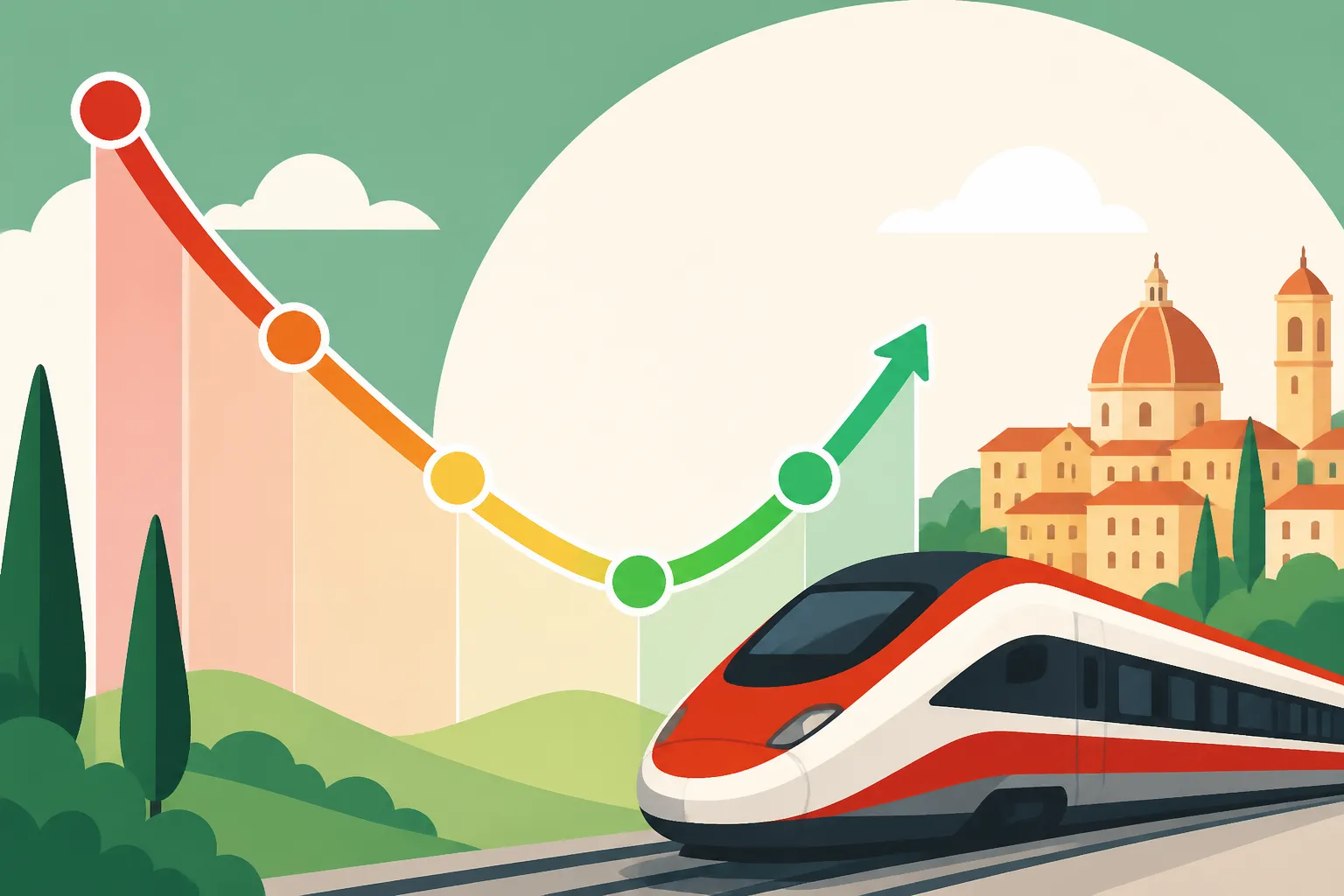
Now, for the million-dollar question: when do these tickets actually go on sale? Generally, both Trenitalia and Italo release their high-speed and Intercity train tickets about 90 to 120 days in advance. This four-month window is your golden opportunity, especially if you're aiming for those coveted Super Economy or Low Cost tickets. The moment these tickets are released, the lowest prices appear, available in limited quantities.
For those planning to travel around Italy, keeping an eye on this window is paramount. If you're hoping to snag a bargain for a popular route during peak season, say a trip from Rome to Venice in August, marking your calendar for that 90-120 day pre-sale period is a non-negotiable step. The prices literally begin their upward climb from day one. You can find more detailed information on specific train services and how to maximize your savings in our guide on High-Speed Trains in Italy: Trenitalia, Italo, Routes, and Savings.
Understanding Price Dynamics: Early Birds vs. Last-Minute Scramblers
The train ticket market in Italy, especially for high-speed routes, operates on a dynamic pricing model. This means prices aren't fixed; they fluctuate based on demand, availability, and how far in advance you book. Understanding this ebb and flow is key to mastering the system.
The "Super Economy" and "Low Cost" Game
Let's talk about the absolute cheapest tickets: Trenitalia’s Super Economy and Italo’s Low Cost. These are the golden tickets everyone is after. When they first become available, typically 90-120 days before departure, you'll see a healthy number of them at incredibly attractive prices. Imagine hopping on a Frecciarossa from Florence to Rome for a fraction of the Base fare – that’s the Super Economy dream.
However, these tickets are like fleeting moments of sunshine on a rainy day: they disappear fast. There’s a limited inventory for each train, and once those lowest tiers are sold out, they're gone for good. There’s no secret restock, no hidden cache. This rapid vanishing act is why it’s so critical to book as early as possible if price is your primary concern. These fares also come with very strict conditions: no refunds, and usually no changes or changes only at a significant cost. So, while they're cheap, they demand certainty in your travel plans. Don't even think about booking these if your itinerary is still up in the air!
Economy Fares: A Bit More Flex, Still Time-Sensitive
Once the Super Economy or Low Cost fares are snapped up, the next tier you’ll encounter is the Economy fare. These are still a good deal compared to the Base or Flex prices, but they're a step up in cost. You’ll find more availability for Economy tickets than Super Economy, and they typically offer a slightly better flexibility policy, such as allowing you to change your ticket for a fee.
This tier represents a compromise: you pay a bit more, but you get a little bit of breathing room. They also tend to stick around longer than the absolute cheapest tickets, but they are by no means immune to the dynamic pricing monster. As the departure date draws closer, and as more seats are booked, even Economy fares will start to climb or completely sell out, pushing you towards the higher-priced options. It's like watching a tide come in; the water (or in this case, the prices) keeps rising, and you're either on the shore with your cheap ticket, or you're wading deeper into your wallet.
Base Fares: The Ever-Present but Priciest Option
Finally, we arrive at the Base (Trenitalia) and Flex (Italo) fares. These are the most expensive standard tickets, but they offer maximum flexibility. With a Base or Flex ticket, you can usually change the time or date of your journey, sometimes even the route, often without additional fees (though fare differences might apply) and sometimes even get a full refund up until a certain point before departure. These are the "walk-up" prices you'll encounter if you try to book a high-speed ticket at the station a few hours before the train leaves.
While these fares provide peace of mind for those with unpredictable schedules, they come at a significant premium. For a trip from Milan to Naples, a Base fare could easily be double or triple the initial Super Economy price for the same seat on the same train. So, while they're always available (unless the train is completely sold out), relying on them means you're almost certainly paying more than you need to. It's a trade-off between convenience and cost, and for many budget-conscious travelers, it's a trade-off to be avoided. Knowing this, it becomes even more compelling to utilize platforms like Omio early on, so you can compare these different fare types and make an informed decision based on your budget and flexibility needs. This way, you understand exactly what you're paying for and what restrictions, if any, come with your chosen ticket.
Factors Influencing Italian Train Prices Beyond Time
The 'how far in advance' rule is a big one, but it’s not the only variable playing into the complex algorithm of Italian train ticket pricing. Other external factors can dramatically swing prices, often catching unsuspecting travelers off guard. Being aware of these elements can give you an even sharper edge in your quest for affordable travel.
Route Popularity and Time of Day/Week
It’s no surprise that some train routes are simply more in demand than others. The high-speed lines connecting Italy’s major economic and tourist hubs – think Rome-Milan, Florence-Venice, or Naples-Rome – are consistently the priciest and sell out the quickest. These are the arteries of Italy, teeming with business travelers, tourists, and locals alike. If you're traveling on one of these popular routes, especially during peak hours (early morning and late afternoon commutes, or midday on weekends), expect prices to be higher and the cheapest fares to disappear even faster.
Consider a Friday evening train from Milan to Florence compared to a Tuesday afternoon journey. The Friday train, packed with weekenders, will undoubtedly be more expensive. Similarly, trains departing at 7 AM or 6 PM often carry a premium over those leaving at 11 AM or 2 PM. Even within the 90-day booking window, these popular time slots will see their Super Economy and Economy tickets vanish long before their less convenient counterparts. Regional trains, as mentioned, maintain fixed prices regardless of popularity, but they might be standing-room-only during peak times on popular local routes.
Seasonal Peaks and Public Holidays
Italy lives by its calendar, and so do its train prices. The country observes numerous public holidays, and Italians are keen travelers within their own borders during these periods. Ferragosto (August 15th), Easter, Christmas, New Year's, and long weekend holidays like Festa della Repubblica (June 2nd) are prime examples of when train travel demand skyrockets. During these periods, you'll not only see prices at their absolute highest but also find trains selling out completely, sometimes weeks in advance.
Tourists flock to Italy during summer (June-August) and around Christmas and New Year's. This high demand during peak seasons naturally drives up prices across the board for all high-speed and Intercity services. Trying to book a Frecciarossa from Milan to the Dolomites in late December or early January, for instance, without booking well in advance, is a surefire way to pay top dollar or find no tickets at all. It’s a classic supply and demand scenario, but amplified by Italy’s cultural love for travel and celebration. Knowing these key dates and planning your travel around or far in advance of them is crucial. Our guide on Italian Public Holidays: What Services Are Closed can provide a helpful calendar for planning.
Special Offers and Promotions
While the general trend is for prices to increase, both Trenitalia and Italo do occasionally run special offers and promotions. These can be seasonal sales, last-minute deals to fill unsold seats, or specific promotions like "2-for-1" tickets on Saturdays (Promo A/R in giornata or similar). These offers are usually advertised on their respective websites or through newsletters.
However, finding these deals can sometimes feel like searching for a needle in a haystack, especially if you don't speak Italian or aren't constantly checking multiple sites. This is another area where a comprehensive booking platform like Omio truly shines. Omio aggregates all available tickets and promotions from both Trenitalia and Italo, presenting them in one easy-to-understand list. This means you don’t have to manually scour each operator’s website for the best price or worry about missing a flash sale. Omio does the heavy lifting, comparing the options for you, including any applicable promotions, so you can see the true cheapest option available at that moment. This makes it incredibly easy to compare not just standard fares but also any special offers, saving you both time and money.
Strategies for Snagging the Best Train Deals in Italy
Navigating the Italian train ticketing system might seem daunting at first, but with a few clever strategies, you can consistently land excellent deals and avoid those wallet-draining surprises. It's all about playing smart, not hard.
Be an Early Bird: The Golden Rule
Seriously, if you take away one thing from this guide, let it be this: book as far in advance as humanly possible. For high-speed trains like Frecciarossa or Italo, this means aiming for the 90 to 120-day window when tickets are first released. This is when those glorious Super Economy and Low Cost fares are at their most abundant. By booking early, you're not just potentially saving a few euros; you're often saving a significant chunk of change that could be better spent on a delicious gelato or an extra glass of Prosecco.
Think of it this way: the train companies are rewarding you for helping them fill seats in advance. The more certainty they have, the better prices they offer. Waiting until a month or even a few weeks before your trip to book a popular route during peak season is almost guaranteeing you'll be paying Base or Flex prices, if you can even find a seat. So, once your travel dates are firm, don’t procrastinate. Get on your preferred booking platform and secure those tickets! This early bird approach is particularly vital for long-distance journeys and travel during major holidays or festivals, as mentioned earlier in the section on seasonal peaks.
Flexibility is Your Friend
If your travel dates aren't set in stone, or if you have some wiggle room in your schedule, leverage that flexibility to your advantage. As we discussed, prices fluctuate not only by how far in advance you book but also by the day of the week and even the time of day. Traveling mid-week (Tuesday, Wednesday, Thursday) is almost always cheaper than weekend travel. Similarly, avoiding peak commuter times (early morning and late afternoon) can yield significant savings.
Sometimes, shifting your travel by just a few hours can move you into a completely different pricing tier. Instead of aiming for the 9 AM train, check the 11 AM or 2 PM options. If you're really budget-conscious, consider overnight trains (though these are less common on high-speed routes) or even breaking up your journey with a stop in a less popular city if the cost savings are substantial. This strategy works particularly well when combined with an early booking, as it expands the number of cheap fares available to you.
Leveraging Booking Platforms like Omio
This is where a tool like Omio becomes your absolute best friend. While you could technically go to the individual websites of Trenitalia and Italo, compare prices, and manually cross-reference schedules, that sounds like a job for someone who loves administrative headaches! Omio streamlines this entire process, making it incredibly easy to find the best deals without all the hassle.
When you search for a route and date on Omio, it aggregates all available train tickets from both Trenitalia and Italo, along with bus options, showing you the different fare types and their respective prices in one clear, concise view. You can instantly see if a Super Economy fare is available on Trenitalia versus a Low Cost fare on Italo, and compare their prices and restrictions. This comparison capability is crucial because one operator might have a better deal for your specific journey, or a particular time slot might be cheaper across the board. Omio saves you valuable time and ensures you’re making an informed decision, always presenting you with the cheapest available options first. It simplifies the complex Italian train system into a user-friendly interface, allowing you to quickly secure your preferred ticket type at the best possible price.
| Operator | Fare Name (Trenitalia) | Fare Name (Italo) | Flexibility | General Price | Ideal Booking Time |
|---|---|---|---|---|---|
| High-Speed | Super Economy | Low Cost | Very Restricted (No refunds/changes) | Lowest | 90-120 days out |
| Economy | Economy | Limited (Changes for fee) | Moderate | 60-90 days out | |
| Base | Flex | High (Changes/refunds, fare difference) | Highest | Anytime | |
| Regional | Regionale | N/A | High (Fixed price, no reservation) | Fixed, Low | Anytime |
Omio allows you to filter by different criteria too, letting you prioritize speed, price, or even specific amenities. It truly empowers you to take control of your train travel budget.
What Happens if You Need a Last-Minute Ticket?
We’ve all been there: a sudden change of plans, an unexpected opportunity, or simply a moment of forgetfulness. Whatever the reason, needing a train ticket at the eleventh hour in Italy can feel like stepping into a financial minefield. It's not impossible, but you need to manage your expectations and be prepared for what it entails.
The Cost of Procrastination
If you find yourself needing a high-speed train ticket just a few days or even hours before departure, brace yourself. The Super Economy and Low Cost fares will be long gone. Even most Economy fares will have likely vanished or shot up in price. What you’ll be left with are primarily the Base or Flex fares. These tickets, as we’ve discussed, are designed for maximum flexibility, and that flexibility comes at a significant cost.
Imagine trying to book a Frecciarossa from Rome to Milan for tomorrow morning. You could be looking at €100-€150 for a standard seat, whereas that same journey could have been secured for €30-€50 if booked months in advance. The difference can be stark, especially for popular routes during busy times. In some cases, if a train is particularly in demand, even Base fares might only be available in higher classes of service (e.g., Executive or Business class), further inflating the price. It's a harsh lesson in dynamic pricing, and it’s why being proactive usually pays off handsomely.
Regional Trains: Your Last-Minute Lifeline
Here’s where the unsung heroes of Italian railways – the Regionale trains – come into their own. Unlike their high-speed counterparts, Regionale train prices are fixed. They don’t change based on demand or how close you are to departure. A ticket from, say, Florence to Pisa will cost the same whether you buy it today for next month or five minutes before the train leaves.
This fixed pricing makes Regionale trains an invaluable last-minute option, especially for shorter distances or if you’re not in a hurry. The trade-off, of course, is time. Regionale trains are slower, make more stops, and don't offer the same level of comfort or amenities as high-speed services. They also don't have reserved seating, so during peak times, you might find yourself standing. However, if you're stuck and need to get from point A to point B without breaking the bank, a Regionale train is often your best, and sometimes only, affordable solution. Don't underestimate the utility of Regional Trains in Italy: How to Use Them and Save when plans go awry!
Using Omio for Quick Comparisons on the Fly
Even in a last-minute scramble, Omio remains an incredibly useful tool. When you're standing at the station, feeling the pressure, the last thing you want to do is navigate two different Italian train operator websites or try to decipher complex fare rules. Omio cuts through all that.
With a quick search on Omio, you can immediately see what high-speed and Regionale options are still available, comparing their prices and journey times side-by-side. It will show you if the Frecciarossa is prohibitively expensive but an Italo train has a slightly cheaper Flex fare, or if a Regionale train, while slower, offers a much more palatable price point. It’s perfect for those moments of panic when you need clear, actionable information fast. Omio helps you make the most informed decision even when time is not on your side, potentially saving you from overpaying or missing a connection. So, even if you couldn’t be an early bird, having Omio in your pocket ensures you’re still a smart scrambler.
Navigating Changes, Cancellations, and the Fine Print
Booking train tickets in Italy is one thing; dealing with changes or cancellations is another beast entirely. The flexibility (or lack thereof) of your ticket can profoundly impact your travel experience and your wallet. Understanding the fine print before you commit is crucial.
Understanding Fare Rules
Each fare type – Super Economy, Economy, Base for Trenitalia, and Low Cost, Economy, Flex for Italo – comes with its own set of rules regarding changes and cancellations. This is where those initial savings can either be maintained or completely negated if your plans shift.
- Super Economy / Low Cost: These are generally non-refundable and non-changeable. If you miss your train or your plans change, that ticket is usually a write-off. There are very few exceptions, typically only in cases of major train disruptions by the operator itself. This is why these tickets are so cheap – you're essentially committing fully.
- Economy: These fares offer a bit more leniency. You can often change the time or date of your ticket, but typically for a fee, and you might also have to pay the difference to the current Base or Flex fare if your new ticket is more expensive. Refunds are usually not permitted, or only allowed under very specific conditions.
- Base / Flex: These are the most forgiving. You can generally change your ticket multiple times, often up to a certain point before departure, without incurring additional change fees (though you might still pay a fare difference if the new ticket is more expensive). Refunds are usually available, often with a small deduction, again up until a specified time before the train leaves.
For Regionale tickets, things are simpler: they're valid for a specific period (e.g., 4 hours from validation for a specific day) but are tied to a route, not a specific train time. Once validated (stamped at a machine or checked in online), they cannot be refunded or changed. Be sure to validate physical Regionale tickets before boarding, or you risk a hefty fine!
The Importance of Travel Insurance
Given the restrictive nature of many of Italy's cheapest train tickets, particularly for those long-distance high-speed routes, considering travel insurance is a wise move, especially for international visitors or those with complex itineraries. A good travel insurance policy can provide coverage for non-refundable tickets if your trip is canceled or significantly delayed due to unforeseen circumstances like medical emergencies, lost passports, or severe weather.
While it won't cover a casual change of mind, it can be a financial lifeline if something genuinely goes wrong, saving you the sting of losing hundreds of euros on pre-booked tickets. It's one of those things you hope you never need, but are incredibly grateful for if you do. Our guide on Travel Logistics in Italy: Money, Safety, and Connectivity touches upon the broader aspects of travel preparedness, including insurance considerations.
Omio's Support and Easy Access to Tickets
Dealing with changes or cancellations directly with Italian train operators can be a bit of a bureaucratic maze, especially if there's a language barrier. This is where using a platform like Omio can add another layer of convenience. While Omio adheres to the fare rules set by Trenitalia and Italo, it centralizes your booking information.
When you book through Omio, all your tickets are stored digitally within the app, making them easy to access and present. If you need to make changes or inquire about a refund (where permitted by your fare type), Omio's customer support can often assist you in navigating the operators' policies. They act as an intermediary, which can be invaluable when you're trying to understand complex rules in a foreign language. Furthermore, having all your bus, train, and even flight tickets in one place on Omio simplifies your overall travel management, reducing stress and helping you stay organized throughout your journey in Italy.
Disclaimer
The information provided in this guide is for general informational purposes only and is based on typical practices and recent data available at the time of writing. Train schedules, fare structures, pricing policies, and availability are subject to change by Trenitalia, Italo, and other transport operators. It is always recommended to check the most up-to-date information directly on the official operator websites or through a reputable booking platform like Omio before making travel plans. Travel insurance terms and conditions vary by provider; always read your policy carefully.