HIV Testing and Care Options in Italy
Navigating HIV testing and care in Italy as an expat can seem daunting, but the country offers robust, confidential, and highly accessible medical services. This comprehensive guide outlines testing locations, treatment protocols, preventative care like PrEP, and privacy protections.
Disclosure: This post may contain affiliate links. We may earn a commission at no extra cost to you if you make a purchase through these links. Read full disclosure.
Introduction to HIV Testing and Care Options in Italy
Italy boasts a highly developed, progressive medical infrastructure that is fully equipped to handle infectious diseases with world-class standards of care. Over the past few decades, the Italian government and various medical institutions have made monumental strides in combatting the spread of HIV, prioritizing patient education, early detection, and the destigmatization of the virus. Today, the approach to HIV in Italy is defined by strict confidentiality, widespread testing availability, and a firm commitment to providing state-of-the-art treatment to everyone residing within its borders.
For expatriates, international students, and digital nomads, it is crucial to understand that an HIV diagnosis or the need for preventative care is not a barrier to living a full, healthy life in Italy. The Italian healthcare system ensures that life-saving antiretroviral therapy and preventative medications are accessible. Furthermore, strict national privacy laws protect your medical status, ensuring that your health records cannot be used against you in matters of employment or immigration.
This extensive guide is designed to demystify the landscape of HIV testing and care options in Italy. We will explore exactly how the national healthcare system integrates sexual health, where you can go for free and anonymous testing, the legal protections surrounding your privacy, and the step-by-step processes for accessing treatments such as Antiretroviral Therapy, PrEP, and PEP. Whether you are seeking a routine screening, looking to continue an existing treatment plan, or exploring preventative measures, this article will provide you with the comprehensive knowledge needed to navigate the Italian medical system with confidence and peace of mind.
Understanding the Italian National Healthcare System
To effectively access HIV testing and care, you must first understand the foundational structure of the Italian medical system. Healthcare in Italy is primarily delivered through the Servizio Sanitario Nazionale, the national public health service. This system provides universal coverage to citizens and legal residents, funded largely through national and regional taxation.
For expatriates, integrating into this system is a priority. Once you possess a valid residence permit and have completed the necessary bureaucratic steps, you are eligible to register with the Servizio Sanitario Nazionale and receive your Tessera Sanitaria, or health card. If you are unfamiliar with this administrative process, you can consult our detailed guide on Healthcare in Italy: An Expats’ Guide to ensure you are properly enrolled.
Once registered, you have the right to access the vast majority of public health services either completely free of charge or for a nominal co-payment known as a ticket. This includes consultations with infectious disease specialists, comprehensive laboratory blood testing, and the provision of chronic medications.
However, the Italian system is also deeply pragmatic regarding public health. Recognizing that infectious diseases do not check immigration status, the Ministry of Health has established protocols to ensure that even undocumented immigrants, tourists, or expatriates who are still waiting for their official residency documents can access vital testing and emergency care. Through a temporary access code known as the Straniero Temporaneamente Presente code, non-registered individuals can receive urgent and essential continuous care, which specifically includes HIV testing and treatment, without fear of being reported to immigration authorities.
Where to Get an HIV Test in Italy
Finding an HIV test in Italy is a straightforward process, offering multiple avenues that cater to different needs regarding speed, environment, and absolute anonymity. Depending on your comfort level and residency status, you can choose from public hospitals, community-based organizations, or the privacy of your own home.
Public Hospitals and ASL Clinics
The most traditional route for HIV testing is through the public healthcare infrastructure. Every major Italian city has local health authority clinics, known as Aziende Sanitarie Locali, as well as large public hospitals with dedicated infectious disease departments.
Under Italian law, HIV testing at public facilities is completely free of charge and can be performed anonymously. You do not need a referral from a general practitioner to request an HIV test at these specific testing centers. When you arrive, you simply request the test, and a healthcare professional will draw a small vial of blood. Public hospitals generally use fourth-generation laboratory tests, which look for both HIV antibodies and the p24 antigen, offering highly accurate results. The turnaround time for these laboratory tests is typically a few days, and you will be required to return in person to receive your results, as hospitals will not give HIV test results over the phone to ensure privacy and provide immediate counseling if necessary.
Community Based Organizations and Checkpoints
For many expatriates and locals alike, the clinical environment of a public hospital can feel intimidating. To bridge this gap, Italy has a robust network of non-governmental organizations and community checkpoints that offer fast, friendly, and peer-led testing environments.
Organizations such as LILA (Lega Italiana per la Lotta contro l’Aids) and Arcigay operate testing centers in major urban hubs like Rome, Milan, Bologna, and Florence. Furthermore, specialized community centers known as “Checkpoints” (such as the Milano Checkpoint or the BLQ Checkpoint in Bologna) have revolutionized sexual health screening in the country.
These checkpoints operate outside the traditional hospital setting and are often run by trained volunteers and medical peers from the LGBTQ+ community. They offer rapid capillary tests, which involve a simple finger prick, providing results in about twenty minutes. The services are entirely free, fully anonymous, and include comprehensive pre-test and post-test counseling. Because these spaces are designed specifically for sexual health, the staff is highly knowledgeable, non-judgmental, and frequently fluent in English, making them an exceptional resource for foreign residents navigating STD Testing and Confidentiality in Italy.
Pharmacies and At Home Testing Kits
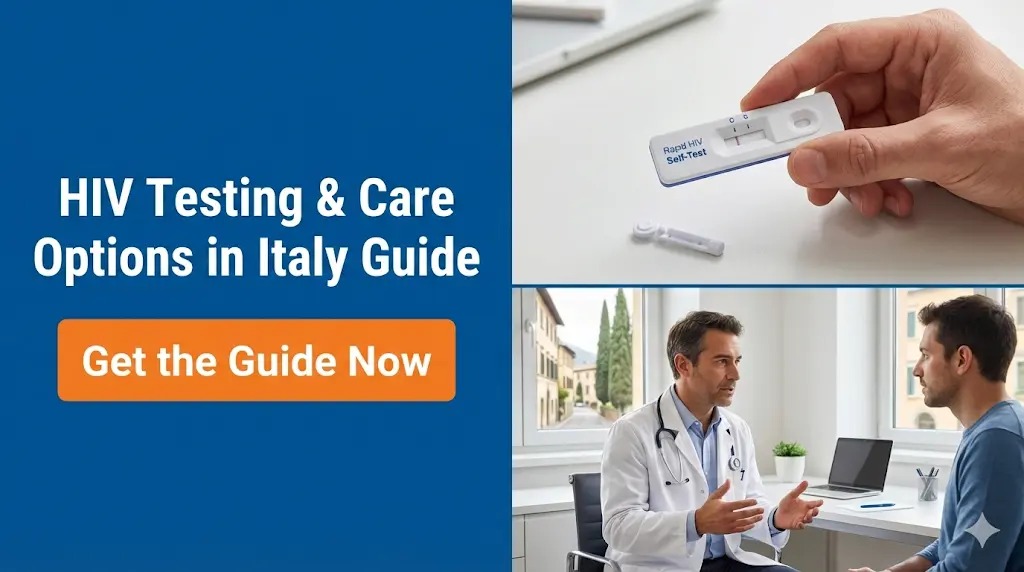
If you prefer complete privacy, Italy allows the sale of over-the-counter HIV self-testing kits. You can walk into any licensed Italian pharmacy and purchase an “Autotest HIV.”
These kits cost approximately twenty euros and do not require a prescription. The kit involves a rapid finger-prick blood test that you administer yourself in the privacy of your home, with results appearing in about fifteen minutes. It is crucial to note that these at-home kits are generally third-generation tests, meaning they rely solely on detecting HIV antibodies. Because it takes time for the human body to produce these antibodies, the “window period” for these self-tests is typically ninety days. If you suspect an exposure occurred more recently than ninety days, an at-home kit may yield a false negative, and you should seek a fourth-generation laboratory test instead.
Privacy and Anonymity Protections in Italy
A common and completely understandable fear among expatriates seeking an HIV test is the potential impact on their visa, employment, or social standing. It is essential to understand that Italy possesses some of the strictest medical privacy laws in the world regarding HIV.
The cornerstone of these protections is Law 135 of 1990. This historic legislation was enacted specifically to combat the stigma surrounding the AIDS epidemic and to protect the civil rights of those living with the virus. Under this law, it is strictly forbidden for any employer, whether public or private, to require an HIV test as a condition of employment, except in extremely rare and highly specific military or specialized surgical roles.
Furthermore, your HIV status is protected by absolute medical confidentiality. A doctor cannot disclose your status to your employer, your landlord, or even your family members without your explicit, written consent. Regarding immigration, the Italian government does not require an HIV test for the issuance of a standard tourist, student, work, or elective residence visa. Your HIV status has no bearing on your ability to legally enter, reside, or remain in the Italian Republic.
HIV Treatment and Care Pathways
If you receive a positive HIV diagnosis in Italy, or if you are relocating to the country and are already living with HIV, you will find a highly structured and supportive pathway for medical care. The Italian standard of care aligns with global best practices, ensuring that patients achieve viral suppression quickly and maintain an undetectable status.
The Role of the Infectious Disease Department
HIV care in Italy is managed almost exclusively by specialized infectious disease specialists within the public hospital system, rather than by general practitioners. Upon a positive diagnosis, you will be referred to the Reparto di Malattie Infettive (Infectious Disease Department) at a major local hospital.
During your initial intake, a specialist will conduct a comprehensive panel of blood tests to determine your viral load, CD4 count, and overall health profile. They will also perform resistance testing to ensure that the medication prescribed is highly effective against the specific strain of the virus you carry. The specialists in these departments are top-tier medical professionals, and because they regularly attend international medical conferences, a significant percentage of them speak excellent English.
Accessing Antiretroviral Therapy
Antiretroviral Therapy (ART) is the global standard for HIV treatment, and in Italy, it is provided as a fundamental healthcare right. For individuals enrolled in the national healthcare system, ART medications are completely free of charge.
However, the dispensing of these medications operates differently than standard prescriptions. You cannot take an HIV medication prescription to a normal corner pharmacy. Because these drugs are highly specialized and strictly monitored by the state, they are dispensed exclusively through the Farmacia Ospedaliera (Hospital Pharmacy).
Typically, your infectious disease specialist will write a prescription for a two-to-three-month supply of your medication. Following your consultation, you will walk to the pharmacy located within the same hospital complex to collect your pills. This centralized distribution system ensures that the state can monitor the supply chain and maintain the complete confidentiality of the patients receiving the medication. For more detailed information regarding the administrative steps of managing chronic medications in the country, you can read our comprehensive overview on Coverage for HIV/AIDS Treatment in Italy.
Preventative Options PrEP and PEP in Italy
In recent years, Italy has taken significant, progressive steps to expand access to preventative sexual healthcare, aligning with the global goal of ending new HIV transmissions. Understanding how to access Pre-Exposure Prophylaxis (PrEP) and Post-Exposure Prophylaxis (PEP) is vital for comprehensive sexual health management.
Accessing PrEP
Pre-Exposure Prophylaxis is a daily medication taken by individuals who do not have HIV to prevent them from contracting the virus. In a monumental public health decision in May 2023, the Italian Medicines Agency (AIFA) officially made PrEP reimbursable by the national healthcare system. This means that PrEP is now available completely free of charge to individuals residing in Italy.
To obtain PrEP, you must undergo a specific medical protocol. You cannot simply ask a general practitioner for the pills. You must book an appointment at a public hospital’s infectious disease department or an accredited PrEP clinic. During the visit, the doctor will conduct an HIV test to confirm your negative status, assess your kidney function, and screen for other sexually transmitted infections. Once cleared, the doctor will issue a prescription, and similar to ART medications, you will collect your PrEP from the hospital pharmacy. You will be required to return for follow-up testing and prescription renewals every three months.
Accessing PEP
Post-Exposure Prophylaxis is an emergency medical intervention. It involves taking antiretroviral medicines after a potential exposure to HIV to prevent becoming infected. To be effective, PEP must be started as soon as possible, and absolutely within seventy-two hours of the potential exposure.
In Italy, PEP is considered an emergency treatment and is provided free of charge. If you believe you have been exposed to HIV through unprotected sex, a condom failure, or a needle stick injury, you should go immediately to the Pronto Soccorso (Emergency Room) of a major public hospital. The emergency triage nurses will direct you to an infectious disease specialist on call, who will evaluate the risk of your exposure. If the specialist deems the risk significant, they will prescribe a twenty-eight-day course of PEP medication on the spot.
The Role of Private Healthcare
While the public healthcare system provides exceptional, free treatment for HIV and preventative care, some expatriates choose to utilize the private healthcare sector for specific reasons.
The primary advantage of private healthcare is the speed of access. Public hospitals can sometimes have long waiting lists for initial, non-emergency consultations to begin the PrEP protocol. By booking a private infectious disease specialist, you can secure an appointment within days. Furthermore, private clinics often offer a more luxurious, comfortable environment and guarantee consultations with highly fluent English-speaking doctors.
It is important to note that while you can pay for private consultations and private laboratory testing, the actual antiretroviral medications for HIV treatment and PrEP are still predominantly dispensed through the public hospital network. Private doctors will often write a referral that allows you to transition back into the public system to collect your free medications.
Summary Comparison of HIV Testing Options
To assist you in choosing the best route for your specific needs, the following table summarizes the different HIV testing options available in Italy.
| Testing Method | Location | Estimated Cost | Turnaround Time | Anonymity Level |
| Laboratory Blood Test | Public Hospitals / ASL Clinics | Free | 2 to 5 Days | High (Anonymous options available by law) |
| Rapid Capillary Test | NGO Checkpoints (LILA, Arcigay) | Free | 15 to 20 Minutes | Absolute Anonymity |
| Self-Testing Kit | Standard Pharmacies | ~ €20 | 15 Minutes | Absolute Anonymity (At home) |
| Private Lab Testing | Private Medical Clinics | €30 – €60 | 24 to 48 Hours | Confidential (Requires ID for billing) |
Managing Stigma and Finding Support Communities
While the legal and medical frameworks surrounding HIV in Italy are highly progressive, the social reality can sometimes lag behind. In major metropolitan areas like Milan, Rome, and Bologna, sexual health is discussed openly, and the LGBTQ+ community is highly visible and integrated. In these cities, the stigma surrounding HIV has diminished significantly, replaced by a culture of routine testing and proactive health management.
However, in smaller provincial towns or deeply traditional rural areas, conservative attitudes may still prevail. The lingering ghost of older stigmas can sometimes make individuals hesitant to discuss their status or seek support locally.
For expatriates managing a diagnosis, the combination of culture shock and a chronic health condition can feel isolating. It is imperative to remember that you do not have to navigate this alone. Italy hosts numerous non-profit organizations dedicated to providing safe, confidential spaces for individuals living with HIV. Organizations like LILA offer localized support groups, legal counseling regarding workplace rights, and peer-to-peer emotional support.
Furthermore, prioritizing your psychological well-being is just as important as managing your physical health. Connecting with a therapist who understands the nuances of expatriate life and chronic condition management can be profoundly beneficial. If you are seeking professional counseling, reviewing our directory on Mental Health Support and Services in Italy will provide you with valuable resources for finding English-speaking therapists and psychological support networks.
Essential Vocabulary for Navigating Care
When navigating the Italian healthcare system, knowing a few key terms can dramatically reduce miscommunication and anxiety. Here is a brief glossary of essential Italian medical vocabulary related to sexual health and HIV care:
- Hiv / Aids: Pronounced acca-i-vu / a-i-di-esse.
- Sieropositivo: HIV-positive.
- Test Rapido: Rapid test.
- Prelievo di Sangue: Blood draw.
- Malattie Infettive: Infectious diseases (the hospital department you will need).
- Impegnativa / Ricetta: A doctor’s medical referral or prescription.
- Terapia Antiretrovirale: Antiretroviral therapy.
- Farmacia Ospedaliera: Hospital pharmacy (where you collect ART and PrEP).
- Pronto Soccorso: Emergency Room (where you go for emergency PEP).
Conclusion
Managing your sexual health or navigating an HIV diagnosis while living as an expatriate in Italy does not have to be an overwhelming ordeal. The Italian medical establishment is fundamentally structured to prioritize public health, confidentiality, and universal access to life-saving treatments. With its vast network of anonymous testing centers, the recent mandate making preventative PrEP free for all residents, and state-of-the-art infectious disease departments, Italy stands as a profoundly safe and medically advanced country for individuals managing HIV.
By taking the time to understand how the Servizio Sanitario Nazionale operates, familiarizing yourself with your legal rights under Italian privacy laws, and connecting with local community support organizations, you can take absolute control of your health. Your expatriate journey should be defined by the beauty of the Italian landscape, the richness of its culture, and the pursuit of your personal goals, safe in the knowledge that your health and well-being are thoroughly protected.
References
Primary sources (official)
- Ministero della Salute: The official portal of the Italian Ministry of Health, detailing national policies on HIV/AIDS prevention, the legal frameworks of Law 135/1990, and the provision of free antiretroviral therapies. https://www.salute.gov.it/
- Istituto Superiore di Sanità (ISS): The Italian National Institute of Health, providing epidemiological data, scientific research updates, and the official operational guidelines for national infectious disease departments. https://www.iss.it/
Other helpful sources
- LILA (Lega Italiana per la Lotta contro l’Aids): The premier Italian non-governmental organization offering comprehensive guides on living with HIV, national directories for free testing checkpoints, and legal support services. https://www.lila.it/
- Arcigay: Italy’s foremost LGBTQ+ non-profit organization, providing regional community resources, peer-led rapid testing initiatives, and advocacy for sexual health awareness. https://www.arcigay.it/
Disclaimer
The information provided in this article is intended for general educational and informational purposes only and does not constitute official medical, legal, or administrative advice. Healthcare regulations, the availability of specific medications, and the bureaucratic requirements for accessing the Italian public healthcare system are subject to change. Always consult directly with a licensed Italian infectious disease specialist or a registered medical doctor for personalized clinical advice, diagnosis, and treatment planning. In the event of an emergency requiring Post-Exposure Prophylaxis (PEP), proceed immediately to the nearest public hospital emergency room.