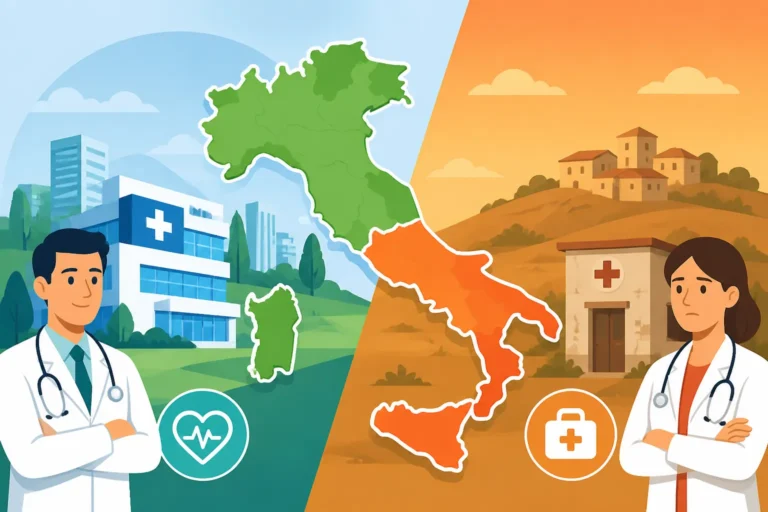
Mandatory Vaccinations for Living in Italy
Planning a move to Italy? Understanding local healthcare regulations is crucial. This comprehensive guide explains Italy’s mandatory vaccination laws, school enrollment requirements, how to transfer foreign immunization records, and how expats access free vaccines through the national system.
Disclosure: This post may contain affiliate links. We may earn a commission at no extra cost to you if you make a purchase through these links. Read full disclosure.
Introduction to Mandatory Vaccinations for Living in Italy
In recent years, the Italian government has taken a firm and proactive stance on public health, significantly tightening its regulations regarding routine immunizations. Following a concerning drop in national herd immunity and subsequent outbreaks of highly contagious diseases, legislators recognized the urgent need to protect the most vulnerable members of society. This realization led to the implementation of sweeping reforms that directly impact anyone residing within the country’s borders, regardless of their nationality, background, or citizenship status.
For expatriates, these rules are particularly relevant when interacting with state institutions. Whether you are enrolling your child in a local daycare, navigating the public school system, or simply registering your family with the regional health authority, compliance with national immunization schedules is strictly non-negotiable. While the prospect of translating medical records and scheduling appointments at foreign clinics might seem daunting, the Italian healthcare system provides a clear, accessible pathway to ensure that everyone is properly protected.
The Legal Framework of Italian Immunizations
The foundation of current Italian immunization policy is Law 119 of 2017, widely known across the country as the Lorenzin Decree, named after the Minister of Health who championed the legislation. Prior to the enactment of this decree, the country maintained a somewhat more relaxed approach to public health inoculations, with only four vaccines being strictly required by law. The 2017 legislation dramatically expanded this list, establishing ten mandatory inoculations for all minors aged zero to sixteen years old.
The primary objective of the Lorenzin Decree is to guarantee maximum coverage across the population and achieve the safety thresholds recommended by the World Health Organization. The law operates on the fundamental principle that individual health choices have a direct and profound impact on collective public health. By mandating a comprehensive schedule of inoculations, the government aims to eradicate localized disease outbreaks and protect individuals who cannot be vaccinated themselves due to severe medical conditions, such as pediatric cancer patients or those with compromised immune systems. For anyone moving to the country, acknowledging and respecting this legal framework is the first crucial step toward successful integration into the Italian community.
Comprehensive List of Mandatory Inoculations for Minors
According to the current regulations enforced by the Italian Ministry of Health, there are ten compulsory immunizations for children and adolescents living in the country. These requirements apply equally to native Italian citizens and foreign residents alike. The mandatory list is designed to target diseases that pose severe risks to childhood development and public safety. The required inoculations include:
- Anti-poliomyelitis (Polio)
- Anti-diphtheria (Diphtheria)
- Anti-tetanus (Tetanus)
- Anti-hepatitis B (Hepatitis B)
- Anti-pertussis (Whooping cough)
- Anti-Haemophilus influenzae type b (Hib)
- Anti-measles (Measles)
- Anti-rubella (Rubella)
- Anti-mumps (Mumps)
- Anti-varicella (Chickenpox)
To minimize the discomfort for young children and streamline the administration process, these inoculations are typically administered through advanced combination shots rather than individual injections. For example, the hexavalent vaccine covers polio, diphtheria, tetanus, hepatitis B, pertussis, and Hib in a single, highly effective dose. Similarly, the quadrivalent shot combines the necessary protections for measles, mumps, rubella, and varicella into one appointment.
| Age Range | Administered Vaccines | Type of Shot |
| 3 Months | Polio, Diphtheria, Tetanus, Hepatitis B, Pertussis, Hib | Hexavalent (1st Dose) |
| 5 Months | Polio, Diphtheria, Tetanus, Hepatitis B, Pertussis, Hib | Hexavalent (2nd Dose) |
| 11 Months | Polio, Diphtheria, Tetanus, Hepatitis B, Pertussis, Hib | Hexavalent (3rd Dose) |
| 13 to 15 Months | Measles, Mumps, Rubella, Varicella | Quadrivalent (1st Dose) |
| 5 to 6 Years | Diphtheria, Tetanus, Pertussis, Polio + MMRV | Boosters |
| 12 to 18 Years | Diphtheria, Tetanus, Pertussis | Boosters |
School Enrollment and Immunization Requirements
The most immediate and visible consequence of the Lorenzin Decree is seen within the educational sector. The Italian educational system is deeply intertwined with public health mandates, and school administrators serve as the frontline enforcers of the law. How the law is applied depends heavily on the age of the child in question.
For children aged zero to six years old, compliance is an absolute prerequisite for educational access. If a child in this age bracket is not fully vaccinated according to the national schedule, they are legally barred from attending public or private nurseries (asilo nido) and preschools (scuola dell’infanzia). The government holds firm on this rule to protect infants who are too young to have received their full course of shots.
For children between the ages of six and sixteen, the rules shift slightly to accommodate the constitutional right to compulsory education. Unvaccinated children in this older age group cannot be expelled or prevented from attending elementary, middle, or high school. However, school administrators are legally required to report non-compliant families to the local health authority (Azienda Sanitaria Locale). The health authority will then summon the parents for a formal interview to provide education on the importance of the mandates. If the parents continue to refuse compliance after this intervention, they will be subjected to significant financial penalties, which can range from one hundred to five hundred euros, and they will continue to be fined until compliance is met. Understanding these nuances is critical when researching Education Options: Schools and Daycare for Expat Children.
Highly Recommended but Non Mandatory Inoculations
While the ten inoculations listed above are strictly enforced by law, the Italian Ministry of Health also issues strong recommendations for several other vaccines. These are offered completely free of charge to specific age groups through the public health system and are considered vital components of a comprehensive preventive care strategy.
Pneumococcal and Rotavirus inoculations are heavily encouraged during a child’s first year of life to prevent severe respiratory and gastrointestinal distress. Meningococcal vaccines, specifically those covering strains B and C, are actively promoted by pediatricians to prevent severe bacterial meningitis, which can spread rapidly in school environments. Furthermore, the Human Papillomavirus (HPV) vaccine is offered and strongly recommended for both boys and girls around their twelfth birthday. This proactive measure is a key public health strategy aimed at preventing various forms of cancer later in life. Expatriate parents are highly encouraged to discuss these optional but incredibly beneficial protections with their assigned pediatrician to ensure their children receive the maximum level of preventative care available in their new home.
Translating and Transferring Foreign Medical Records
One of the most common sources of anxiety for families moving from abroad is figuring out how to prove that their children have already received the necessary inoculations in their home country. Italian health authorities will not simply take your word for it, nor will they automatically accept a foreign medical booklet without proper verification and localization.
To successfully transfer your medical history, you must obtain a complete, official immunization record from your previous healthcare provider before leaving your home country. Once you arrive in Italy, this document needs to be translated into Italian. While a sworn, notarized translation is not always strictly required by every single local health office, relying on Using Medical Translation and Interpretation Services is highly recommended to avoid any bureaucratic misunderstandings regarding complex medical terminology or specific chemical formulations of the vaccines administered abroad.
After securing an accurate translation, you must schedule an appointment with the vaccination office at your local Azienda Sanitaria Locale (ASL). The medical staff will carefully cross-reference your foreign records against the Italian national schedule. If your child is missing a specific dose required by Italian law—even if that dose was not legally required in your home country—the health authority will create a personalized catch-up schedule. It is vital to complete this process well in advance of the academic year to ensure you have the necessary compliance certificates ready for school enrollment.
Adult Immunization Recommendations for Expatriates
While the rigid legal mandates and school enrollment restrictions are focused entirely on minors, adults moving to the country should not ignore their own preventive care. Unlike children, adults are generally not legally required to prove their immunization status to obtain residency, secure a standard job, or access basic public services. The notable exceptions to this rule are individuals working in the healthcare sector or the public education system, who face their own specific occupational health mandates.
However, the national health service strongly encourages all adults to stay up to date with their booster shots to maintain herd immunity. The decennial Diphtheria, Tetanus, and Pertussis (DTaP) booster is highly recommended for all adults, particularly those who are planning to become parents or who frequently interact with infants and young children. Additionally, the annual influenza shot is offered free of charge to individuals over the age of sixty-five, pregnant women, and adults with chronic health conditions.
For expatriates arriving from regions where certain diseases are not endemic, it is also incredibly wise to ensure you are protected against illnesses like Hepatitis A and B, especially if you plan on traveling extensively throughout the Mediterranean basin or rural areas. Establishing a trusting relationship with a local doctor is the best way to review your adult medical history and receive tailored advice on maintaining your health as you age abroad.
Accessing Services Through the Public Health System
Navigating the logistics of a foreign public healthcare system can seem incredibly complex at first glance, but accessing preventive inoculations in Italy is generally a highly streamlined process once you are properly registered. To take advantage of the free services offered by the state, you must be a legal resident equipped with a valid health card, known as the Tessera Sanitaria.
For children, the entire process begins with selecting a public pediatrician, officially known as a Pediatra di Libera Scelta. After Registering with an Italian Family Doctor (Medico di Base) or pediatrician, this doctor will guide you through the national schedule and advise you on exactly when specific doses are due for your child. However, it is important to note that the pediatrician generally does not administer the shots in their own private office. Instead, inoculations are administered at a dedicated public clinic operated by the local health authority, typically referred to as the Centro Vaccinale.
Under normal circumstances, you will receive a formal letter in the mail from the regional health authority containing your appointment date, time, and location. If you do not receive a letter, or if you need to proactively schedule a catch-up dose for a newly arrived foreign child, you can book an appointment directly through the regional centralized booking system (Centro Unico di Prenotazione) or by visiting the vaccination clinic in person. Furthermore, Italy has digitized much of this process; once administered, your vaccines are recorded in your Fascicolo Sanitario Elettronico (Electronic Health Record), providing you with instant digital proof of compliance whenever it is requested.
Managing Medical Exemptions and Special Circumstances
While the immunization laws are undeniably strict, the Italian healthcare system is inherently compassionate and rigorously accounts for individuals with genuine medical vulnerabilities. It is crucial for expatriates to understand that the Italian legal framework does not recognize philosophical, ideological, or religious exemptions for mandatory vaccines. The only legally acceptable reason to bypass the mandatory schedule is a documented, severe medical contraindication.
If a child has a compromised immune system due to an illness like leukemia, a severe allergy to a specific vaccine component, or has previously experienced a severe, documented adverse reaction to an inoculation, they can be granted a formal medical exemption. This exemption cannot be written by a private doctor or a foreign physician; it must be officially certified by a specialist working within the Italian public health system or by your officially assigned public pediatrician.
Once the medical exemption is certified and registered with the local health authority, the child is legally permitted to attend school without facing any penalties or restrictions. In fact, the Lorenzin Decree specifically aims to protect these vulnerable children by ensuring that the rest of the school population is fully immunized, thereby creating a localized bubble of herd immunity that shields those who cannot safely receive the shots themselves.
Conclusion
Moving to a new country requires adapting to fundamentally different societal norms and legal frameworks, and Italy’s rigorous approach to public health is a prime example of this transition. The country’s mandatory immunization laws are comprehensive, strictly enforced, and designed with the singular, noble goal of protecting the collective well-being of the entire population. By taking the time to understand the specific requirements of the Lorenzin Decree, navigating the school enrollment prerequisites, and proactively translating your foreign medical records, you can ensure a seamless and stress-free transition for your family.
While the Italian bureaucracy may occasionally require patience and persistence, the profound peace of mind that comes from knowing your children are protected against preventable diseases—and that they are actively contributing to the health of their new community—is truly invaluable. Embrace the extensive support offered by the public healthcare system, establish a solid relationship with your local pediatrician, and take comfort in the fact that Italy prioritizes the safety and health of all its residents.
References
Primary sources (official)
- Ministero della Salute: The official portal for the Italian government’s health policies, providing detailed breakdowns of the national immunization schedule, guidelines for parents, and the legal text of the 2017 decree. https://www.salute.gov.it
- Gazzetta Ufficiale: The official journal of record of the Italian government, containing the full, unedited publication of Law 119/2017 regarding mandatory preventive health measures and school compliance. https://www.gazzettaufficiale.it
Other helpful sources
- EpiCentro (Istituto Superiore di Sanità): The national epidemiology portal, offering in-depth scientific resources, outbreak data, and public health statistics related to vaccine-preventable diseases in Italy. https://www.epicentro.iss.it
- European Centre for Disease Prevention and Control (ECDC): A comprehensive resource for comparing European immunization schedules, offering valuable context and guidance for expats moving between different EU nations. https://www.ecdc.europa.eu
Disclaimer
The information provided in this article is for general informational and educational purposes only and should not be construed as professional medical, legal, or administrative advice. Healthcare regulations, national immunization schedules, and bureaucratic procedures in Italy are subject to frequent updates and regional variations depending on your specific Azienda Sanitaria Locale. Always consult directly with a licensed Italian medical professional, your assigned public pediatrician, or your local health authority to obtain the most accurate, up-to-date guidance regarding your family’s specific healthcare needs and legal compliance for school enrollment.