Carbon Monoxide and Fire Safety in Italian Rentals
Ensuring your safety in an Italian rental is paramount. This comprehensive guide covers essential fire prevention strategies, the dangers of carbon monoxide, legal requirements for landlords, and practical tips for securing your Mediterranean home against common household hazards.
Disclosure: This post may contain affiliate links. We may earn a commission at no extra cost to you if you make a purchase through these links. Read full disclosure.
Introduction
Safety standards in Italy have evolved significantly over the last few decades, but the implementation of these standards can vary greatly between a newly constructed complex and a historical “palazzo.” For many expatriates, the nuances of Italian utility systems and property laws can be confusing. Unlike in some countries where smoke detectors are legally mandated in every room of a private rental, Italian laws have historically been more focused on the certification of heating and electrical systems rather than individual detection devices.
Navigating the responsibilities of a tenant versus a landlord is a key part of Settling In Italy: Daily Life Tips for Expats. While the landlord is responsible for ensuring that the property is “habitable” and that systems are up to code, the daily maintenance and vigilance required for fire and carbon monoxide safety often fall to the occupant. Understanding the unique risks associated with Italian gas boilers (caldaie), historical fireplaces, and aging electrical grids is essential for your peace of mind.
This guide explores the legal requirements for safety in Italian rentals, the physical signs of danger to watch for, and the specific equipment every expat should install to stay safe. By taking a proactive approach to safety, you can focus on enjoying the “Dolce Vita” without worrying about the unseen hazards that might be lurking in your utility cupboard.
Understanding Carbon Monoxide Risks in Italy
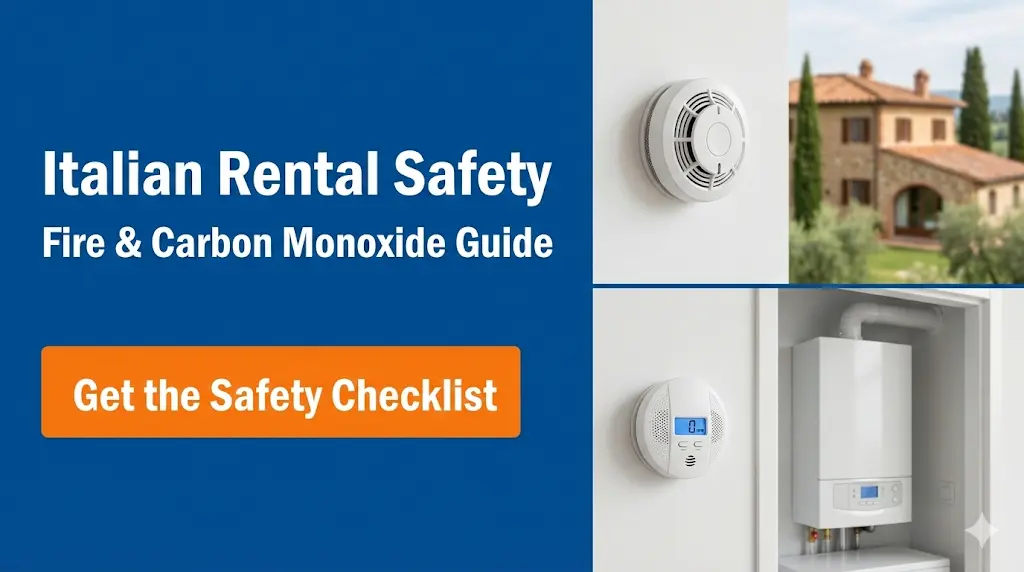
Carbon Monoxide (CO) is a colorless, odorless, and tasteless gas produced by the incomplete combustion of fuels like natural gas, wood, oil, and charcoal. In Italy, the primary source of CO in residential rentals is the gas boiler. Because many Italian homes rely on individual gas-powered systems for both heating and hot water, the risk is persistent, particularly during the winter months.
The Role of the Caldaia (Gas Boiler)
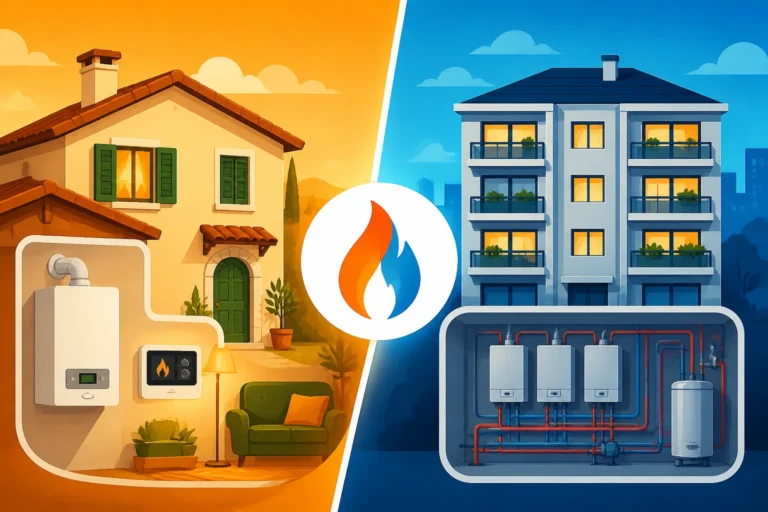
In most Italian apartments, you will find a wall-mounted unit known as a caldaia. These units are often located in the kitchen or on an outdoor balcony. If a boiler is poorly maintained, incorrectly installed, or lacks proper ventilation, it can begin leaking CO into the living space. Italian law is quite strict regarding boiler maintenance, but as a tenant, you must verify that these checks have been performed.
If you are just moving in, one of your first tasks should be to check the “Libretto di Impianto” (System Logbook). This document tracks the technical history of the boiler and records the mandatory “Bollino Blu” or “Bollino Verde” inspections. Failing to maintain the boiler not only poses a health risk but can also lead to significant fines from local authorities during spot checks.
Traditional Fireplaces and Wood Stoves
Historical rentals, especially in rural areas, often feature beautiful traditional fireplaces. While these provide unmatched ambiance, they are also potential CO sources if the chimney is blocked by bird nests, soot, or debris. Before lighting your first fire of the season, ensure the flue is clear and that the room has adequate “presa d’aria” (air intake) vents. These vents are small, often circular holes in the wall covered by a plastic grate, and they are legally required to ensure fresh air circulation.
Fire Safety Standards in Italian Residential Buildings
Fire safety in Italy is governed by a complex set of national regulations that differentiate between private homes and commercial or large-scale residential complexes. While modern high-rise apartments in cities like Milan must adhere to strict fire escape and suppression laws, smaller historical buildings often lack integrated fire alarms.
Electrical System Compliance
A frequent cause of household fires in older Italian rentals is the “impianto elettrico” (electrical system). Overloading old circuits with modern high-draw appliances like air conditioners, dryers, and electric kettles can lead to overheating and electrical fires.
Landlords are required to provide a “Dichiarazione di Conformità” (Declaration of Conformity) for the electrical system, proving it meets safety standards (Law 37/08). This includes the presence of a “salvavita” (circuit breaker), which is designed to trip and cut power in the event of a surge or short circuit. For more information on managing your home’s infrastructure, check out Italian Utilities: Electricity, Water, Gas, Internet.
Smoke Detectors and Fire Extinguishers
Surprisingly, there is no national Italian law that mandates smoke detectors in every private residential rental. While they are required in hotels and B&Bs, private landlords often do not provide them. As a tenant, it is highly recommended that you purchase and install your own battery-operated smoke and CO detectors immediately upon arrival. These are readily available at hardware stores like Leroy Merlin or Brico.
Tenant vs. Landlord Responsibilities
In the Italian rental market, the division of labor regarding safety maintenance is defined by the distinction between “ordinary” and “extraordinary” maintenance. Disputes over who pays for what are common, so it is helpful to refer to Handling Tenant or Landlord Disputes: Resources if a conflict arises.
Landlord Obligations
The landlord is legally bound to provide a property that is “fit for use.” This means:
- System Certification: All gas and electrical systems must be certified and safe at the start of the lease.
- Structural Safety: Ensuring the chimney flues are structurally sound and that the building meets basic fire safety codes.
- Extraordinary Repairs: Replacing a broken boiler or fixing a dangerous electrical fault is the landlord’s financial responsibility.
Tenant Obligations
Once you have the keys, you are responsible for the daily and periodic upkeep that ensures safety:
- Routine Maintenance: The annual technical check for the gas boiler is typically paid for by the tenant.
- Correct Usage: Not blocking air vents and not overloading electrical circuits.
- Chimney Sweeping: Regular cleaning of a fireplace you use frequently is generally considered a tenant expense.
| Feature | Responsible Party | Frequency |
| Boiler Safety Check (Controllo Fumi) | Tenant | Every 1-2 years (varies by region) |
| Electrical Conformity Certificate | Landlord | At start of lease |
| Battery Replacement in Alarms | Tenant | Every 6-12 months |
| Chimney Sweeping | Tenant | Annually (if used) |
| Major System Replacement | Landlord | As needed |
Essential Safety Equipment for Your Italian Home
Because Italian rentals may not come “pre-equipped” with safety gear, you should create your own safety kit. This is a small investment that can save lives, particularly in older buildings where fire spreads quickly.
- Dual-Sensor Alarms: Purchase detectors that sense both smoke and carbon monoxide. Place them near sleeping areas and at least 5 meters away from the boiler to avoid false alarms.
- Fire Extinguisher: Keep a small (2kg) powder or CO2 extinguisher in the kitchen. Ensure it is rated for electrical fires.
- Fire Blanket: A fire blanket is an excellent tool for kitchen grease fires, which are a common occurrence in any household.
- Emergency Lighting: In many Italian cities, power outages are common during storms. Having plug-in emergency lights that turn on when the power cuts can help you navigate a dark house in an emergency.
Identifying the Signs of a Carbon Monoxide Leak
Since you cannot see or smell CO, you must rely on physical symptoms and mechanical clues to identify a leak. In the tight-knit communities of Italy, look out for neighbors or pets also showing signs of illness, as CO can sometimes travel through shared ventilation shafts in older buildings.
Physical Symptoms
If you experience the following “flu-like” symptoms only while at home, you may be suffering from CO poisoning:
- Persistent headaches
- Dizziness or lightheadedness
- Nausea and vomiting
- Shortness of breath
- Confusion or blurred vision
- Loss of consciousness
Clues Around the Boiler
- Flame Color: A healthy gas flame should be crisp and blue. A lazy, yellow, or orange flame is a major warning sign of incomplete combustion.
- Soot Stains: Look for black or brown soot marks on the wall above or around the boiler or fireplace.
- Condensation: Excessive moisture on the windows in the room where the boiler is located can indicate poor ventilation.
Dealing with Emergencies: Who to Call
In the event of a fire or a suspected gas leak, you must act quickly. Italy has a centralized emergency system that is easy to remember.
- 112: The general European emergency number. Operators can connect you to the fire department, police, or ambulance services.
- 115: The direct number for the “Vigili del Fuoco” (Fire Brigade). They handle both fires and suspected gas or CO leaks.
- Gas Provider Emergency Line: Every gas bill in Italy lists a “Pronto Intervento Gas” number. If you smell gas (which has an added odorant), call this number immediately. They will send a technician to shut off the supply and verify the leak.
For a broader understanding of Italian healthcare and emergency responses, you should familiarize yourself with Emergency Medical Services in Italy: 112 and Hospitals.
Legal Protections and Insurance for Tenants
While you can take every physical precaution, financial protection is also necessary. In Italy, tenants can be held liable for damage to the building caused by their negligence (e.g., leaving a stove on).
Home Insurance (Rischio Locativo)
Many Italian rental contracts require the tenant to hold a “Rischio Locativo” (Rental Risk) insurance policy. This covers damage to the landlord’s property caused by fire, water leaks, or gas explosions. It is relatively inexpensive and provides an essential layer of protection.
Habitability Certificates
Before signing a lease, ensure the property has a “Certificato di Agibilità.” This document confirms that the building meets the legal requirements for safety, hygiene, and energy efficiency. If a landlord cannot provide this, the building might not be up to code, and your safety—as well as your ability to register residency—could be at risk.
Conclusion
Safety in an Italian rental is a shared journey between the history of the building, the legal obligations of the landlord, and the active vigilance of the tenant. While the charm of a centuries-old apartment is part of the allure of living in Italy, it requires a modern approach to fire and carbon monoxide prevention. By installing your own detectors, verifying boiler maintenance, and understanding the local emergency protocols, you can ensure that your Italian experience remains a dream rather than a disaster.
Italy is a wonderful place to call home, and with a few proactive steps, you can make your rental a safe sanctuary. Always remember that bureaucratic requirements like the “Bollino Blu” are not just red tape; they are essential checks designed to keep you and your neighbors safe. Stay informed, stay equipped, and enjoy your new life in the “Bel Paese” with total peace of mind.
References
Primary sources (official)
- Vigili del Fuoco (Official Site): National fire safety guidelines and emergency protocols for residential buildings. https://www.vigilfuoco.it/
- Normattiva (Law 37/08): The official Italian legislative database detailing the safety requirements for domestic electrical and gas systems. https://www.normattiva.it/
Other helpful sources
- The Local Italy: Practical expat guides on dealing with Italian landlords and home maintenance. https://www.thelocal.it/
- SoloAffitti: A leading Italian rental portal providing insights into tenant rights and safety obligations. https://www.soloaffitti.it/
Disclaimer
The information provided in this article is for informational purposes only and does not constitute legal, professional, or technical advice. Safety regulations in Italy can vary by region and municipality. Always consult with a certified technician or a legal professional regarding the specific safety requirements and systems in your rental property. The author and publisher are not responsible for any accidents or legal disputes arising from the use of this information.