How to Bring a Spouse to Italy on a Family Visa
The most heart-wrenching part of moving to Italy isn't the chaotic bureaucracy or the confusing tax laws; it is the months spent sitting in a beautiful piazza alone while your spouse is stuck thousands of miles away waiting for a visa stamp. I spent nearly half a year navigating this exact administrative labyrinth, feeling the weight of every delayed email from the consulate. This guide solves that frustration by breaking down the precise steps, financial requirements, and paperwork hurdles you need to clear to bring your spouse to Italy.
Disclosure: This post may contain affiliate links. We may earn a commission at no extra cost to you if you make a purchase through these links. Read full disclosure.
Distinguishing Between the Two Main Legal Paths
Before you start scanning every document you own, you need to identify which legal "track" you are on. In Italy, the process for bringing a spouse differs significantly depending on whether you are already a resident or if you are moving together. The most common route is Ricongiungimento Familiare (Family Reunification), which applies if you are already living in Italy with a valid residence permit. This requires you to obtain a Nulla Osta (entry clearance) from the Sportello Unico per l’Immigrazione (SUI) before your spouse can even apply for a visa at the consulate in their home country.
The second path is for those who are moving to Italy simultaneously or if the primary applicant is an EU citizen. If you are an EU citizen, the process is much simpler and falls under the EU Family Permit (Family Member Card) in Italy Explained guidelines. For non-EU citizens already working or studying in Italy, the process is more rigorous and focuses heavily on your ability to provide for your partner. I remember the shock of realizing that my status as a worker didn't automatically grant my husband the right to join me; I had to prove, essentially, that I was a "stable" enough resident to host him.
If you are a highly skilled worker, you might be looking at the EU Blue Card in Italy: Requirements and Process. This specific permit often allows for a slightly smoother family track, but the underlying requirement for a marriage certificate that Italy actually recognizes remains the same. Regardless of the permit type, your spouse will eventually need to apply for their own Permesso di Soggiorno once they land on Italian soil.
The Financial Thresholds and Income Requirements
Italy wants to ensure that you can support your spouse without relying on the state’s social welfare systems. To do this, they use a specific financial metric based on the Assegno Sociale (Social Allowance), which changes slightly every year. For a spouse to join you, your annual gross income must be at least 1.5 times the annual amount of the Social Allowance. If you are bringing children as well, that multiplier increases.
It is not enough to simply show a high balance in your savings account. The Italian authorities want to see "stable and regular" income. This usually means providing your Certificazione Unica (CU) if you are an employee, or your latest tax return if you are a freelancer. I’ve seen many expats get rejected because they tried to use foreign income that hadn't been declared to the Italian tax authorities. You must prove that your Italian-taxed income meets the threshold.
| Family Members to Join | Minimum Annual Gross Income (Approximate) | Required Documentation |
|---|---|---|
| Spouse only | €9,500 – €10,000 | Last 3 payslips + Employment Contract |
| Spouse + 1 Child | €12,500 – €13,000 | UNICO or 730 Tax Return |
| Spouse + 2 Children | €15,500 – €16,000 | Statement of Social Security Contributions |
Keep in mind that if your spouse also intends to work, they will eventually have the right to do so under a family-type permit. However, for the initial application, the burden of financial proof lies entirely on the resident spouse. For more details on managing these costs, you might find our guide on the Cost of Living in Italy 2026: Budgeting for Expats helpful for planning your post-reunification life.
The Infamous Housing Suitability Certificate
One of the biggest "gotchas" in the Italian family visa process is the Certificato di Idoneità Alloggiativa. This document confirms that your apartment or house meets the minimum health and safety standards and is large enough for the number of people living there. It isn't just a copy of your lease; it is a specific certificate issued by the local Comune (Town Hall) or the ASL (Local Health Authority).
In my experience, this was the most time-consuming part of the process. An official might actually need to visit your home to measure the rooms and check for things like proper ventilation and heating. If you are renting, you will need your landlord's cooperation, which can be a hurdle if they haven't properly registered the lease. If you are still searching for a place, make sure to read Italian Rental Contracts Explained: 3+2, 4+4, Transitorio to ensure your contract is valid for this purpose.
The certificate has an expiration date, usually six months. If your Nulla Osta application takes too long, you might find yourself needing to re-apply for the housing certificate. Pro tip: start this process the moment you decide to bring your spouse over, as the Comune can take anywhere from 30 to 90 days to issue the final paper. You will also need a Codice Fiscale: Why It’s Essential for Finance in Italy for your spouse fairly early in the process to handle various local registrations.
Documentation, Apostilles, and Professional Translations
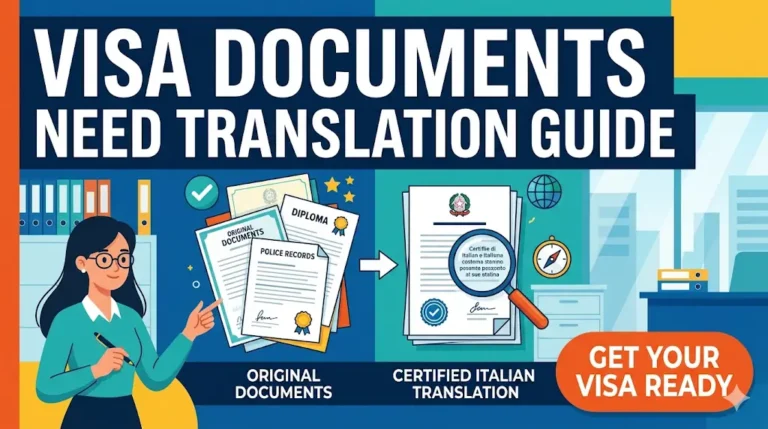
The Italian government loves paper, but only if that paper has been "legalized" for use in Italy. To bring your spouse, you must provide an official marriage certificate. If you were married outside of Italy, this document must be apostilled (or legalized by the Italian embassy in the country of issuance) and then translated into Italian.
This is where many people stumble. A standard translation isn't enough; it must be a "certified" or "sworn" translation. For high-quality, reliable results that meet consulate standards, many expats use services like RushTranslate or Translayte. These agencies are familiar with the specific formatting requirements that Italian bureaucrats look for. Using RushTranslate ensures that your marriage certificate is translated accurately, which is vital because even a small typo in a name or date can lead to an immediate rejection at the Questura.
I personally used Translayte for my own documents because they offer a streamlined process for obtaining the necessary certifications. Remember, if your documents are in a language other than English or Italian, the complexity increases. RushTranslate and Translayte can handle a wide variety of languages, ensuring that the Italian consulate in your spouse’s home country accepts the file without question. Once translated and apostilled, these documents are the bedrock of your Family Reunification Italy: Bringing Your Spouse and Kids application.
The Step-by-Step Roadmap to the Nulla Osta
Once you have your income proof, your housing certificate, and your translated marriage records from RushTranslate or Translayte, you are ready to hit the digital portals. The process begins online via the Ministry of the Interior's website. You will fill out "Modello S" (or the relevant form for your permit type) and upload your scans.
- Online Submission: You submit the request for the Nulla Osta through the SUI portal. You will need your SPID (Digital Identity) to log in.
- The Waiting Game: The SUI will check your records and your employer's standing. They may request additional documents.
- Issuance of the Nulla Osta: If approved, the SUI sends the clearance directly to the Italian consulate in your spouse's country of residence. They will also give you a copy.
- The Visa Interview: Your spouse makes an appointment at the consulate. They will bring the Nulla Osta (though the consulate should have it electronically), their passport, and the original apostilled/translated marriage certificate.
- Entry and the Kit Postale: Within 8 days of arriving in Italy, your spouse must go to a post office and send off the "Kit Giallo" to apply for their Italian Residence Permit (Permesso di Soggiorno) Explained.
During this period, communication with the consulate is key. Make sure your spouse is prepared for the Italian visa interview: common questions and answers to avoid any last-minute hiccups. The entire process, from SUI submission to the visa in hand, can take anywhere from three to eight months depending on the specific region in Italy and the workload of the consulate.
Health Insurance and Settling into Italian Life
As soon as your spouse arrives, they are technically in a bit of a "legal limbo" while waiting for their physical residence permit card. However, they are entitled to healthcare. While the Italian National Health Service (SSN) is excellent, the registration process for a spouse on a family visa can't be fully completed until they have their ricevuta (the receipt from the post office) and often their final permit.
During this transition, or if you prefer private care with shorter wait times, having international coverage is a lifesaver. I highly recommend Cigna Global for this specific period. Cigna Global provides the comprehensive coverage required for the initial visa application and ensures your spouse can see English-speaking doctors immediately upon arrival. Having Cigna Global means you don't have to worry about the complexities of the Emergency Medical Services in Italy: 112 and Hospitals while you are still trying to figure out where the local pharmacy is.
Once you have the final permit, you can look into How to Register for Italian Healthcare (SSN) as a Foreigner for long-term public coverage. Cigna Global remains a popular choice for expats who want to maintain access to private specialists and avoid the sometimes long public waiting lists. Having that insurance card in your wallet provides a significant peace of mind while you are navigating the stress of a new country.
Common Pitfalls and Troubleshooting
The Italian immigration system is famous for its "discretionary" nature. This means that an officer in Milan might ask for a document that an officer in Naples wouldn't dream of requesting. One common issue is the "Proof of Accommodation." Even with the housing suitability certificate, the consulate may ask for a formal letter of invitation or a copy of the host's ID.
Another hurdle is the "Consular Legalization" of translations. If you didn't use a service like Translayte or RushTranslate to ensure the translation is properly sworn in court (traduzione giurata), the consulate might reject the document. If you find yourself in a bind, it is often faster to re-order a professional translation through Translayte than to try and argue with a consular official.
Finally, don't forget the Codice Fiscale: Why It’s Essential for Finance in Italy. Your spouse will need this for everything—from getting a SIM card to being added to your Getting Health Insurance in Italy: Public and Private Options policy. You can often apply for this at the consulate at the same time as the visa, which saves a massive amount of time once they actually land in Italy.
Disclaimer
The information provided in this guide is for educational and informational purposes only and does not constitute legal advice. Immigration laws and consulate requirements in Italy are subject to frequent changes. Always consult with the official website of the Italian Ministry of Foreign Affairs (Esteri) or the Ministry of the Interior, or seek advice from a qualified immigration lawyer before beginning your application. Professional services mentioned, such as translation and insurance providers, are recommendations based on common expat usage and do not guarantee visa approval.