How to Register as an EU Citizen Living in Italy
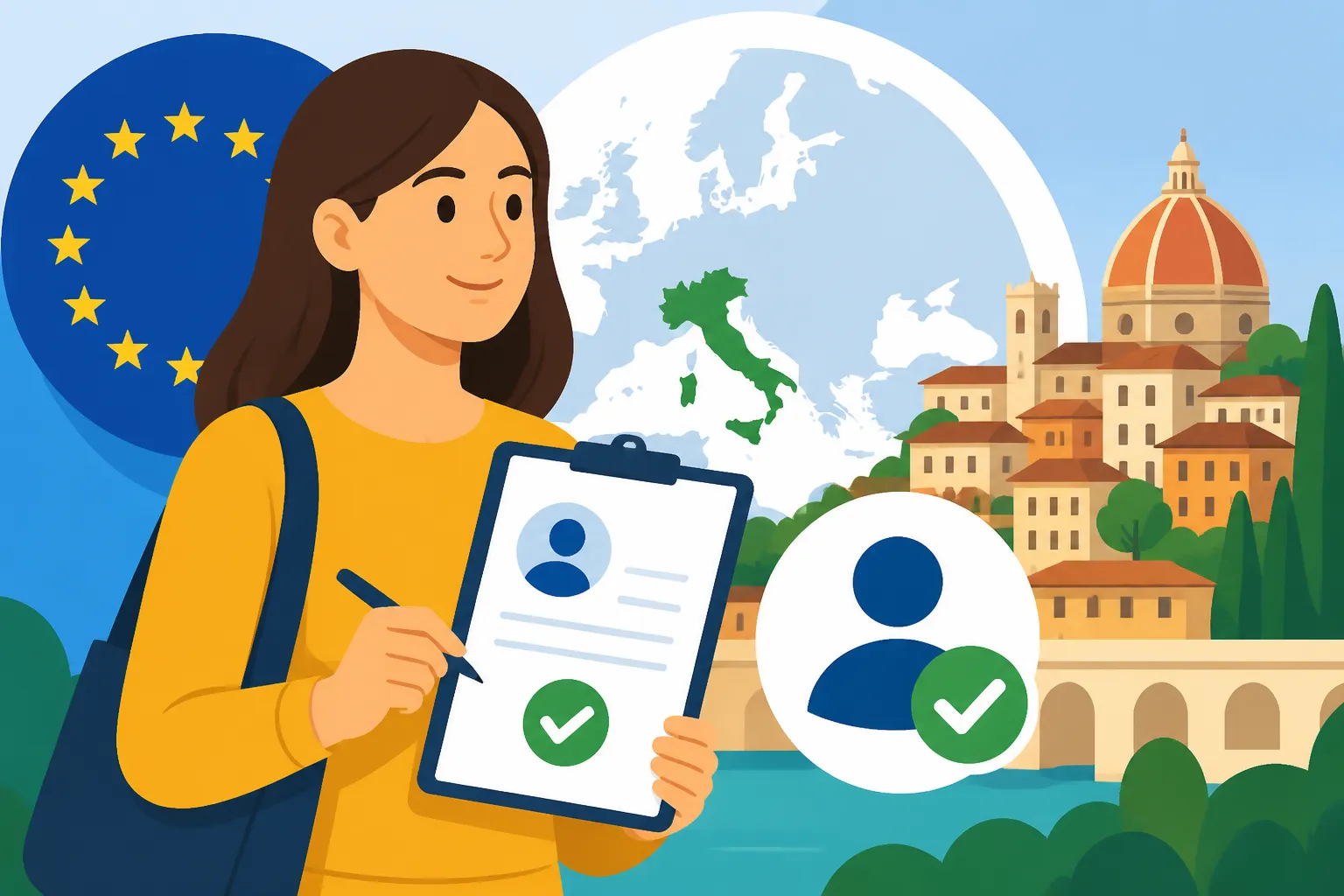
Many EU citizens arrive in Italy under the impression that "freedom of movement" means they can simply unpack their bags and start their new life without checking in with the local authorities. I once made the same mistake, assuming my passport was the only key I needed, only to find myself unable to sign a gym contract or open a local bank account months later. This guide provides the exact steps on how to register as an EU citizen living in Italy, ensuring you navigate the bureaucracy with your sanity intact.
Disclosure: This post may contain affiliate links. We may earn a commission at no extra cost to you if you make a purchase through these links. Read full disclosure.
The Three-Month Threshold: When "Visiting" Becomes "Living"
As an EU citizen, you have the right to stay in Italy for up to 90 days without any formalities other than having a valid identity document. You are effectively a tourist during this window. However, the moment you intend to stay longer than three months, Italian law—specifically Legislative Decree No. 30/2007—requires you to register with the local population registry, known as the Anagrafe.
This transition from visitor to resident is where the administrative gears start to turn. It is not just a suggestion; it is a legal requirement that unlocks almost every essential service in the country. Without this registration, known as iscrizione anagrafica, you technically do not exist in the eyes of the Italian state. This means no access to the national health system, no ability to buy a car with Italian plates, and significant hurdles when trying to sign long-term utility contracts.
The process is handled by the Comune (town hall) of the city where you reside. If you are living in a major hub like Milan, Rome, or Florence, be prepared for a digital booking system that might have wait times of several weeks. In smaller villages, you might be able to walk right into the office, but the clerk might be less familiar with the specific requirements for EU citizens. In either case, the core of the process remains the same: you must prove that you are not going to be a "burden" on the Italian social assistance system.
Gathering Your Dossier: The Essential Document List
Before you even think about booking an appointment at the Comune, you need to gather a specific set of documents. Italian bureaucracy thrives on physical paper, and missing even one photocopy can result in being sent home to start the process over. I learned this the hard way after standing in line for two hours only to be told my rental contract wasn't "properly registered" with the tax office.
First and foremost, you need a Codice Fiscale. This is your Italian tax code, and it is the alpha and omega of your life in Italy. You cannot rent an apartment or even get a SIM card easily without it. You should ideally obtain this from the Agenzia delle Entrate as soon as you land. For a detailed breakdown of this step, see our guide on How to Get a Codice Fiscale in Italy (and Why You Need One).
Next, you must prove that you have a place to live. This cannot just be a handshake agreement with a friend. You need a formal lease agreement that has been registered with the Agenzia delle Entrate. The clerk will look for the registration stamp or the electronic receipt. If you have recently moved, make sure you understand the nuances of your lease by reading How to Understand an Italian Rental Contract Clause by Clause.
The documentation you provide next depends entirely on your "status" in Italy. The requirements are generally categorized into four groups:
- Employees: You need your latest payslip (busta paga) or a declaration from your employer stating that you are currently working for them.
- Self-employed: You must show proof of your Partita IVA registration and evidence of your professional activity.
- Students: You need a certificate of enrollment from an Italian educational institution and proof of health insurance.
- Non-working (Elective Residence): This is the trickiest category. You must prove you have "sufficient resources" and comprehensive health insurance.
Proving Financial Independence and Health Coverage
If you aren't working for an Italian company, the government wants to ensure you can support yourself. The "sufficient resources" threshold is generally tied to the annual amount of the Italian social allowance (assegno sociale). For 2026, this is about 7,101 Euro per year for a single person, though the amount increases if you are bringing family members. You can prove this through bank statements from the last few months.
If your bank statements are in a language other than Italian, the Anagrafe clerk will likely demand a certified translation. This is not the time for Google Translate. Using a professional service like RushTranslate or Translayte is highly recommended to ensure the translation is legally recognized and meets the local Prefettura standards. If the documents are from outside the EU, you might even need an apostille, which you can learn more about in our article on How to Get a Sworn (Giurata) Translation for Italy.
Health insurance is the other non-negotiable pillar. As an EU citizen, if you are not yet working and contributing to the Italian system, you cannot immediately access the "free" public healthcare. You must show a private policy that covers all risks on Italian territory and has a duration of at least one year. Many expats opt for Cigna Global because their policies are specifically designed to meet the rigorous requirements of European residency applications. Having a clear, comprehensive policy certificate from a recognized provider like Cigna Global often smooths over any objections from the clerk at the Anagrafe.
Once you are registered and have your residency, you can then look into Enrolling in Italy’s National Health System (SSN) to get your health card. Until then, your private insurance is your lifeline and your ticket to residency.
The Appointment and the "Vigile" Visit
Once you have your folder of documents—including your passport, your Codice Fiscale, proof of housing, and proof of income/insurance—you will submit your application to the Comune. Some cities allow this via email or a dedicated portal, while others require an in-person visit.
After you submit the paperwork, you are technically a "temporary" resident. The Comune has 45 days to verify your claims. During this time, a local police officer, known as the Vigile Urbano, will physically come to your home to verify that you actually live there. This is a quirk of Italian law that often surprises foreigners. I remember frantically making sure my name was on the doorbell and the mailbox the morning I expected them.
If the Vigile finds you at home and confirms you are living there, they report back to the Anagrafe, and your residency is backdated to the day you applied. If they miss you, they might leave a note, or they might simply report that you don't live there, which can cancel your application. It is vital to ensure your name is clearly visible on your entrance to avoid any confusion.
| Document Category | Key Evidence Required | Common Pitfall |
|---|---|---|
| Identity | Valid EU Passport or National ID | Expired documents or photocopies only |
| Tax | Codice Fiscale | Assuming a foreign tax ID works |
| Housing | Registered Lease or Property Deed | Unregistered "black market" rentals |
| Financials | Bank Statements / Payslips | Falling below the Assegno Sociale threshold |
| Health | Private Policy or S1 Form | Policy not covering "all risks" or <1 year |
Life After Registration: The Rewards of Bureaucracy
Once the 45-day window passes and no objections are raised, you are officially a resident of Italy. You can now go back to the Comune and request your Carta d’Identità (Identity Card). This card is your primary ID within the country and is much easier to carry around than a passport.
More importantly, being a registered resident allows you to finally access the public healthcare system. Depending on your situation, you may have to pay a small annual fee or it may be free if you are employed. You will need to navigate the process of How to Choose a Medico di Base (Family Doctor) in Italy to ensure you have a primary care physician. Be aware that wait times can vary significantly; for more on this, read How Long Is the Waiting List to Register with an Italian Doctor?.
You should also be aware that residency brings responsibilities. You are now part of the Italian tax system, and you will be expected to pay local taxes like the TARI (trash tax). You also gain the right to vote in local and European Parliament elections. If you plan on driving, you can keep using your EU license, but eventually, you might find it easier to register your car locally, which requires residency.
If you are moving to a specific part of the country, keep in mind that Regional Healthcare Differences in Italy: North vs South can affect how quickly you get your health card or how the local Comune handles your file. In the North, things tend to be more digitized, while in the South, personal interaction and patience are often the keys to success.
Final Practical Tips for Success
Don't let the paperwork intimidate you. Thousands of EU citizens complete this process every year. The key is to be over-prepared. Bring two photocopies of everything. If you are using a service like Translayte for your translations, keep the digital and physical copies organized.
When you go to your appointments, be polite but firm. The clerks are often overworked, and a friendly "Buongiorno" goes a long way. If you find the system overwhelming, you can use the digital tools available. For example, learning How to Use SPID to Book Health Appointments in Italy will save you hours of sitting in waiting rooms once your residency is finalized.
Also, make sure you understand the costs involved. While the registration itself is usually just the cost of a few "marca da bollo" (revenue stamps), the healthcare side involves Understanding the Italian Health Ticket (Co-Payment) System. Being prepared for these small costs prevents surprises at the pharmacy or the clinic later on.
Italy is a country that rewards those who respect its traditions—even the bureaucratic ones. Once you have that Certificato di Residenza in your hand, the country opens up to you in a way it never does for tourists. You aren't just a visitor anymore; you are a neighbor.
Disclaimer
The information provided in this article is for informational purposes only and does not constitute legal or professional advice. Immigration laws and local administrative procedures in Italy are subject to frequent change. Always consult with the official website of your local Comune, the Ministero dell'Interno, or a qualified legal professional before making any residency applications.