Italy to Switzerland: Milan to Zurich, Geneva, and the Bernina Line
Leaving the familiar chaos and beauty of Italy to explore new horizons is always an adventure, but crossing borders, even within Europe, can feel like stepping into a bureaucratic maze. You’re dreaming of the crisp mountain air, the pristine lakes, and the efficient trains of Switzerland, but figuring out how to get there from a major Italian hub like Milan can quickly turn that dream into a logistical headache. This guide is here to untangle the complexities, showing you not only the best routes to Zurich, Geneva, and the breathtaking Bernina Line, but also how to simplify your journey every step of the way with a powerful tool like Omio.
Disclosure: This post may contain affiliate links. We may earn a commission at no extra cost to you if you make a purchase through these links. Read full disclosure.
Why Switzerland from Milan? The Perfect Gateway
Milan isn't just Italy's fashion capital; it's also a major international transport hub, making it an ideal starting point for your Swiss adventure. For us expats, it’s a brilliant launching pad, connecting Italian charm directly to Swiss precision.
Milan's Strategic Location
Nestled in the Lombardy region, Milan sits strategically close to the Swiss border. This geographical advantage means that you're just a few hours away from some of Switzerland's most iconic cities and scenic routes. For those of us living in northern Italy, it's often the most convenient international rail gateway, offering direct connections that other Italian cities simply don't. Think about it: a quick metro ride to Milano Centrale, and you’re suddenly whisked away to a completely different cultural and linguistic landscape in no time. It’s truly remarkable how quickly the scenery changes from bustling Italian piazzas to serene Swiss landscapes.
The city's extensive public transportation network means reaching Milano Centrale, the main train station, is usually a breeze, whether you're coming from within Milan or from nearby Italian towns. This accessibility is a huge plus for expats who might not have a car or prefer to avoid driving through unfamiliar mountain passes. Plus, you get that wonderful feeling of seamless transition from one distinct European culture to another, all within a few hours.
The Allure of Swiss Destinations
Switzerland, just a stone's throw away, offers a compelling contrast to Italy. Imagine swapping the ancient ruins of Rome or the artistic masterpieces of Florence for the sleek modernity of Zurich, the international diplomacy of Geneva, or the awe-inspiring alpine vistas of the Bernina Line. Each destination offers a unique experience, whether you're seeking cosmopolitan city life, serene lakeside relaxation, or an unforgettable journey through breathtaking mountain scenery.
Zurich, with its vibrant financial district, stunning lake, and charming Old Town, is a hub of culture and efficiency. Geneva, perched on the shores of Lake Geneva and surrounded by the Alps, is a truly international city, home to numerous global organizations. And then there's the Bernina Express, a true bucket-list experience, winding its way through glacial landscapes and over spectacular viaducts. These are not just places to visit; they are experiences that round out your European life, offering a different flavor of continental living that complements your Italian base perfectly. It's a fantastic way to recharge and explore without having to plan an epic, transatlantic journey.
Navigating the Milan to Zurich Route
Traveling from Milan to Zurich is one of the most straightforward and popular cross-border journeys, offering efficiency and comfort. It's a route many expats take for business or leisure, and it's surprisingly easy once you know the ropes.
Direct Train Services and Operators
The primary way to travel from Milan to Zurich is by direct EuroCity (EC) train. These trains are operated jointly by Trenitalia, the main Italian railway company, and SBB (Swiss Federal Railways), Switzerland’s national train service. You can expect frequent departures throughout the day, typically every two hours, making it incredibly convenient to plan your trip. The journey itself is a delight, usually taking between 3 hours 30 minutes and 4 hours, depending on the specific train and number of stops.
What I love about these EuroCity trains is the comfort. They’re modern, spacious, and offer amenities like dining cars where you can grab a coffee or a meal, and often Wi-Fi and power outlets, which are crucial for staying connected or getting some work done. The scenery as you approach Switzerland, especially around the lakes and through the Gotthard Base Tunnel (one of the longest railway tunnels in the world!), is simply stunning. When you’re looking to book these seamless connections, I highly recommend using Omio. It gathers all the available train options from both Trenitalia and SBB, presenting them in one easy-to-understand format, so you can compare prices and times without hopping between different websites.
Booking Your Journey: Tips and Tricks
When it comes to booking your train tickets from Milan to Zurich, a bit of foresight can save you money and stress. Like many European long-distance routes, prices tend to be cheaper if you book in advance, sometimes several weeks or even months ahead. You'll find various fare types, often categorized as "Super Economy," "Economy," and "Standard" or similar, with the cheaper options usually being non-flexible and non-refundable.
Using a platform like Omio really shines here. Instead of wrestling with two different national railway websites (Trenitalia's can be a bit… Italian, and SBB's, while efficient, is still another site to navigate), Omio brings all the options directly to you. You can easily compare prices across different departure times and fare classes, making sure you snag the best deal. Plus, having your tickets stored digitally in the Omio app means no fumbling with printouts, and if there are any last-minute schedule changes, the app often provides real-time updates. It truly takes the guesswork out of international rail travel, which is a massive relief when you’re dealing with different languages and booking systems. For more on planning your train adventures within Italy, you might want to read our guide on High-Speed Trains in Italy: Trenitalia, Italo, Routes, and Savings.
Onboard Experience: What to Expect
The EuroCity trains traversing the Milan-Zurich route are designed for international comfort. Expect clean carriages, comfortable seating, and often a level of spaciousness that makes the journey feel far less cramped than a short-haul flight. Many trains feature large windows perfect for admiring the passing landscapes, from the Italian plains to the Swiss Alps. You'll usually find a bistro or dining car serving snacks, drinks, and light meals, which can be a lovely way to break up the journey and experience a mini-culinary tour.
The border crossing itself is generally very smooth, especially within the Schengen Area. You might not even notice it, or a border official might simply walk through the train to check passports without requiring you to disembark. This seamless transition is one of the great joys of European train travel. Just ensure you have your passport or national ID card readily accessible, alongside your ticket. The whole experience, particularly when booked and managed through a streamlined service like Omio, is geared towards relaxation, allowing you to simply enjoy the ride and the stunning views.
From Milan to Geneva: A Journey Through Lakes and Mountains
While Zurich is a direct shot, reaching Geneva from Milan requires a little more planning, often involving a scenic transfer. But don't let that deter you; the journey itself is part of the charm.
Train Connections to Geneva
Unlike the direct route to Zurich, traveling from Milan to Geneva typically involves at least one change. The most common routes involve taking a EuroCity train from Milan towards destinations like Brig (Switzerland) or even a direct train to Lausanne, and then connecting to Geneva. The total journey time can range from 4 to 5 hours, depending on the connections. These routes often take you along the northern Italian lakes and then through picturesque Swiss valleys, offering plenty of breathtaking scenery.
The beauty of these multi-leg journeys is often overlooked. You're not just traveling; you're embarking on a mini-tour of diverse landscapes. For instance, the route that skirts Lake Geneva (Lac Léman) before arriving in the city is particularly stunning, with views of the water and the surrounding mountains. Finding and coordinating these connections manually across different operators can be a bit of a headache. This is precisely where Omio becomes an invaluable ally. It will automatically search for and present the most efficient and convenient multi-leg options, showing you transfer times and platform information, so you don't have to piece it together yourself. It truly simplifies what could otherwise be a very confusing booking process.
Planning Your Geneva Trip
Geneva is a fantastic city to visit, known for its international atmosphere, beautiful lake, and proximity to the Alps. When planning your trip, consider what you want to experience. Perhaps you're interested in visiting the United Nations European headquarters, strolling along the Jet d'Eau, or exploring the charming Old Town. Depending on the season, you might even consider a day trip to Mont Blanc or a lakeside cruise.
Booking your train tickets to Geneva, especially if you're traveling during peak tourist seasons or major international events, should be done well in advance. Just like with Zurich, early booking on Omio can unlock better fares. Having all your tickets in one place on the Omio app means you can easily track your journey, receive notifications about any delays or platform changes, and generally travel with a lot more peace of mind. For those thinking about exploring other parts of Italy first, our guide to Getting Around Italy: Trains, Buses, Flights, and Car Hire might also be helpful.
The Majestic Bernina Express: Milan's Scenic Link to Switzerland
If you're looking for a truly unforgettable journey through the Alps, then the Bernina Express is an absolute must-do. It’s not just a train ride; it’s an experience that will leave you breathless.
The Bernina Express Experience
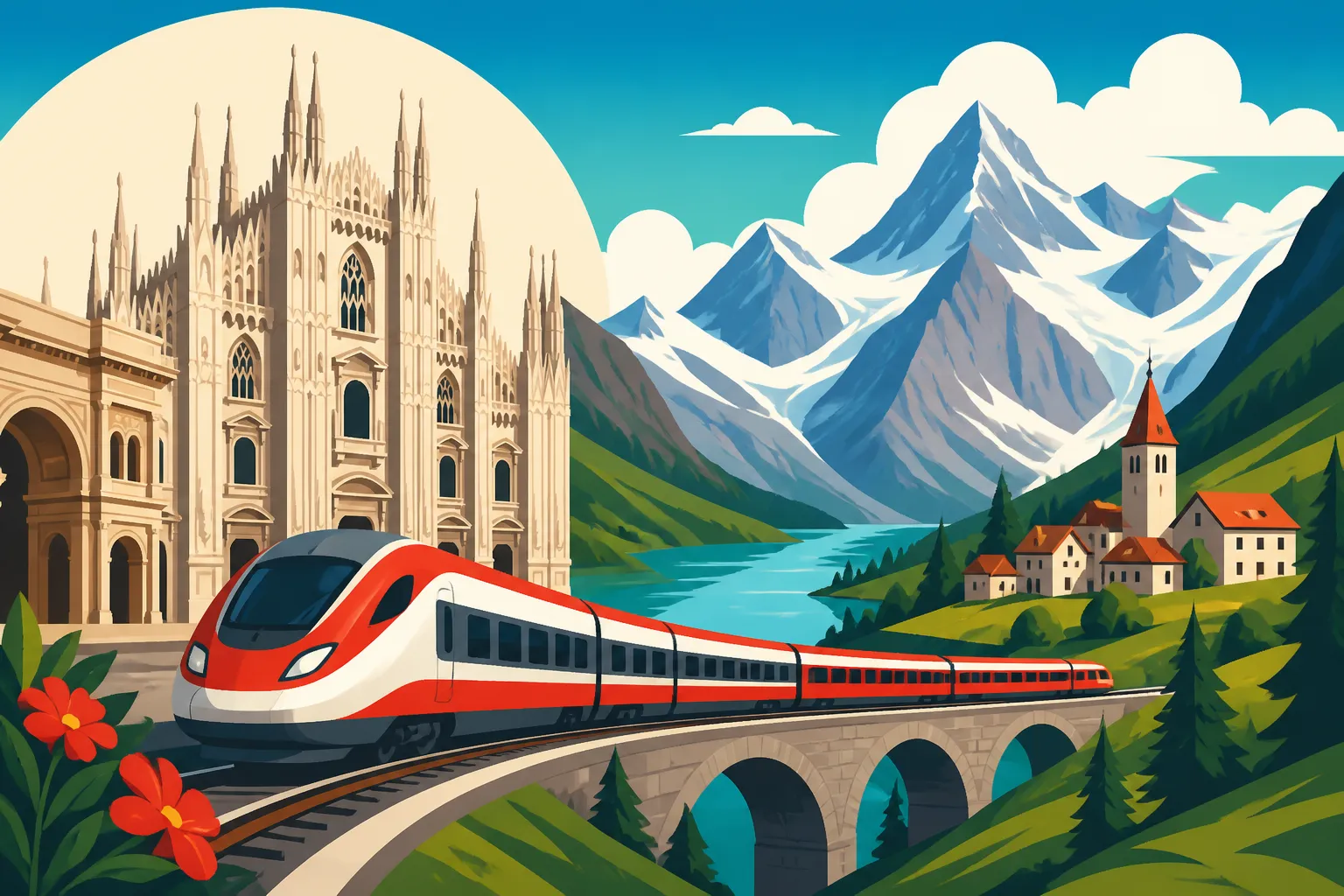
The Bernina Express is a UNESCO World Heritage route renowned for its dramatic ascent into the mountains without the use of cogwheels, crossing impressive viaducts and winding through helical tunnels. Starting from Tirano, a small Italian town just across the Swiss border, the train takes you through spectacular landscapes, including glaciers, pristine lakes, and charming alpine villages, all the way to St. Moritz or Chur in Switzerland. The panoramic carriages are designed to offer unobstructed views, making you feel completely immersed in the scenery.
The journey from Milan to the starting point of the Bernina Express involves two distinct parts. First, you need to get from Milan to Tirano. This leg is typically covered by a regional Trenord train, which departs from Milano Centrale and takes about 2.5 to 3 hours. It’s a pleasant ride through the Valtellina valley. Once you arrive in Tirano, you then board the iconic red Bernina Express. This is where the real magic begins. The engineering marvels of the railway, combined with the raw beauty of the Alps, make it an unparalleled experience. And yes, Omio is brilliant for helping you book both these separate tickets seamlessly.
Booking the Bernina Line: Practicalities
Booking the Bernina Express isn't quite like booking a regular train ticket. While you can often buy tickets for the regional Milan-Tirano leg on the day, the Bernina Express itself requires advance booking, especially if you want to secure a seat in one of the coveted panoramic carriages. These special carriages often come with an additional reservation fee on top of the regular ticket price. It's highly advisable to book your Bernina Express seats several weeks, or even months, in advance, particularly during peak summer or winter seasons.
When you use Omio, you can search for the entire journey from Milan to your chosen Swiss destination on the Bernina line (like St. Moritz or Chur). Omio will often present you with the various components of the trip – the Trenord train to Tirano and then the Bernina Express itself – making it incredibly clear what you’re booking. It streamlines the process of finding both parts of your journey, showing you available times and helping you coordinate your connections. Trust me, trying to navigate the Trenord and Rhaetian Railway (the operator of the Bernina Express) websites separately can be a real headache, especially with language differences. Using Omio to manage this complex booking means less stress and more time to dream about those incredible views.
Why Omio is Your Best Travel Companion for Italy to Switzerland
In the world of international travel, juggling different websites, currencies, and booking systems can be a nightmare. This is exactly why Omio has become my go-to for planning cross-border adventures from Italy. It simplifies everything and puts the power back in your hands.
Seamless Multi-Modal Search
One of Omio's greatest strengths is its ability to perform a truly multi-modal search. When you enter "Milan to Zurich" (or any other destination), it doesn't just show you train options. It instantly compares prices and travel times across trains, buses, and even flights, giving you a holistic view of all your transportation possibilities. This is incredibly helpful because sometimes a bus might be cheaper, or a flight might be faster, depending on your priorities. You can filter by price, duration, and even mode of transport, allowing you to tailor your journey exactly to your needs.
For an expat living in Italy, especially if you're still getting the hang of the local language, having a single, intuitive platform that consolidates all these options in English (or your preferred language) is invaluable. No more opening multiple tabs or trying to decipher foreign booking interfaces. Omio puts everything on one screen, making informed decisions easier and much less stressful. It truly feels like having a personal travel agent, but one that’s always available at your fingertips.
Comparing Prices and Operators Effortlessly
Let’s be honest, trying to compare train ticket prices between Trenitalia and SBB on their individual websites can be time-consuming, frustrating, and prone to errors. They might have different fare classes, promotions, or even slightly different schedules for the same route. Omio cuts through all that. It pulls live data from both operators (and others!) and displays all the available fares and timings side-by-side.
This means you can see at a glance if booking a slightly earlier or later train will save you a significant amount, or if there's a cheaper option with a different provider you hadn't even considered. This transparency is a massive advantage, ensuring you always get the best deal without feeling like you've missed something. It takes away the anxiety of "what if there was a cheaper ticket?" because Omio has already done the legwork for you. For insights on managing your budget, you might check out our article on Cost of Living vs Salary: Budget Tips for Italy Expats.
Digital Ticketing and Support
Gone are the days of printing out multiple tickets or worrying about losing a paper copy. With Omio, your tickets are conveniently stored digitally in their user-friendly app. You simply show your mobile ticket to the conductor, and you’re good to go. This means less fumbling at the station, instant confirmations, and the peace of mind that your tickets are always with you.
Beyond just digital convenience, Omio also provides robust customer support. If you have questions about your booking, need to make changes, or encounter any issues during your international travel, their support team is there to help. This kind of reliable assistance is especially important when you’re traveling between countries, where different regulations and languages can add layers of complexity. Knowing you have that backup makes an already smooth booking experience even better. It’s also wise to consider Travel Insurance for Trips to and Within Italy when planning international travel.
Essential Italian to Swiss Rail Journey Details
To help you visualize your options, here's a quick overview of the key routes:
| Route | Operators | Approx. Travel Time | Typical Transfers | Highlights | Best Booking Method |
|---|---|---|---|---|---|
| Milan to Zurich | Trenitalia, SBB | 3h 30m – 4h | 0 (Direct) | Efficient, scenic Gotthard Base Tunnel | Omio |
| Milan to Geneva | Trenitalia, SBB | 4h – 5h | 1 (e.g., Brig) | Lake Geneva views, Swiss valleys | Omio |
| Milan to Tirano | Trenord | 2h 30m | 0 (Direct) | Valtellina valley scenery | Omio |
| Tirano to St. Moritz | Rhaetian Railway (Bernina Express) | 2h 30m – 3h | 0 (Direct) | UNESCO Bernina Line, panoramic views | Omio |
| Milan to St. Moritz (via Bernina) | Trenord, Rhaetian Railway | 5h – 6h+ | 1 (Tirano) | Iconic alpine journey, engineering marvels | Omio (both legs) |
Note: Travel times are approximate and can vary based on specific train schedules and connections. Booking in advance is generally recommended for better prices.
Remember, while traveling, always have your documents handy. Even within the Schengen area, border checks can occur, and having your passport or valid ID readily accessible is key. Consider getting an Obtaining the Italian Health Card (Tessera Sanitaria) if you’re a resident, and check if you need to carry your Using Your European Health Insurance Card (EHIC) in Italy for medical emergencies in Switzerland. It’s always better to be prepared.
Enjoying Your Italian-Swiss Adventure
Stepping from the bustling streets of Milan into the serene landscapes of Switzerland is an experience everyone should have at least once. Whether you’re heading for a business meeting in Zurich, a diplomatic visit to Geneva, or a breathtaking scenic ride on the Bernina Express, the journey is just as much a part of the adventure as the destination.
The Swiss rail network is world-renowned for its punctuality and efficiency, a welcome change for those of us accustomed to the occasional sciopero (strike) in Italy! You’ll find that Italian, German and French are all spoken in different parts of Switzerland, but English is widely understood in tourist areas and on international trains. If you're keen to brush up on some phrases before you go, our guide to Italian Language and Everyday Communication for Visitors might give you a head start, though for Switzerland, a little German or French might also come in handy depending on your destination.
Exploring beyond Italy offers such a rich perspective on European life. These trips not only provide a change of scenery but also a deep dive into different cultures and organizational systems. By leveraging tools like Omio, you can spend less time stressing about booking logistics and more time soaking in the incredible experiences that await you, whether that's the chic city life of Zurich, the international vibe of Geneva, or the stunning natural beauty of the Bernina Alps. So go ahead, plan that Swiss escape. You deserve it!
Disclaimer
The information provided in this guide is for general informational purposes only and is subject to change. While we strive to keep the content up-to-date and accurate, travel regulations, schedules, and prices can vary. Always verify the latest information with official sources, such as national railway operators and government websites, before making travel plans. Specific visa requirements and entry conditions for Switzerland may apply depending on your nationality and residency status; always check these in advance.